DbcultAccessing Vault...
Cult Review
Senior Film Conservator
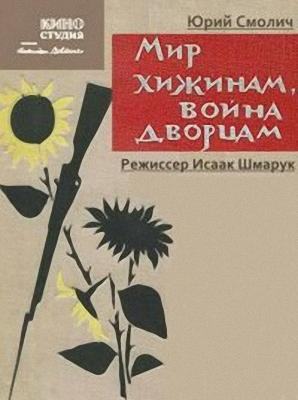
The cinematic landscape of early Soviet Russia was a fertile ground for narratives that resonated with the revolutionary fervor of the era. Among these, Mir khizhinam, voyna dvortsam, or “Peace to Huts, War to Palaces,” stands as a monumental testament to the artistic and ideological currents that shaped a nascent nation’s self-perception. This isn’t merely a film; it’s a visceral chronicle, an impassioned polemic, and a stark historical document all rolled into one. Directed with an uncompromising vision, it plunges the viewer headfirst into the tumultuous crucible of class struggle, depicting with unblinking candor the brutal realities faced by the oppressed and the inexorable rise of their collective will.
From its very inception, the film declares its allegiance, its title a direct echo of revolutionary slogans that galvanized millions. It eschews subtlety for impact, painting a broad, yet deeply affecting, tableau of human suffering and eventual uprising. The narrative arc, crafted by the perceptive minds of Boris Leonidov and Lev Nikulin, is a masterclass in escalating tension, meticulously building from the quiet desperation of the peasantry to the thunderous roar of their rebellion. Their screenplay is not just a plot; it’s a manifesto, articulated through compelling character arcs and meticulously staged set pieces that convey a profound sense of historical inevitability. It begins with the grim portrayal of a village, its inhabitants toiling under the yoke of an unseen, yet omnipresent, aristocratic hand. The daily grind, the meager harvests, the casual cruelty of the overseers – all are rendered with an almost ethnographic detail, establishing the oppressive backdrop against which the drama unfolds. This meticulous groundwork ensures that when the spark of rebellion finally ignites, its roots are deeply felt and logically earned.
At the heart of this cinematic maelstrom is the towering performance of M. Bonch-Tomashevsky. His portrayal of the central revolutionary figure is nothing short of electrifying. Bonch-Tomashevsky doesn’t just act; he embodies the spirit of an era. With a gaze that burns with conviction and a physical presence that commands the screen, he transforms his character into an archetype, a symbol of the awakened masses. His performance is a symphony of simmering rage, strategic intellect, and unwavering resolve. He navigates the emotional complexities of leadership, from inspiring hope in the downtrodden to making agonizing decisions for the greater good of the revolution. One can draw parallels to the powerful, almost mythical figures seen in other revolutionary dramas, where individual will becomes synonymous with collective destiny. His work here elevates the film beyond mere propaganda, imbuing it with a raw, human core that resonates long after the credits roll. Through his eyes, we witness the transformation of despair into defiance, a silent resolve hardening into an unstoppable force. The nuances he brings to the role — a flicker of doubt, a moment of profound empathy, followed by unshakeable determination — prevent the character from becoming a mere ideological mouthpiece, instead crafting a compelling, multifaceted leader.
The film’s visual language is as potent as its narrative. Shot with an eye for stark contrasts, the cinematography pits the squalor of the “huts” against the opulent, yet ultimately fragile, grandeur of the “palaces.” Shadows cling to the faces of the weary peasants, emphasizing their arduous existence, while the sun, when it appears, often bathes scenes of collective action in a hopeful, almost sacred glow. The use of montage, a hallmark of early Soviet cinema, is employed with devastating effectiveness, juxtaposing images of aristocratic excess with scenes of abject poverty, thereby sharpening the film’s ideological edge. The editing creates a rhythm that pulsates with the heartbeat of the revolution, accelerating during moments of conflict and slowing to underscore poignant instances of human connection or despair. Consider the sequence where the villagers, after a particularly brutal incident, gather in secret; the low-angle shots and tight framing amplify their solidarity and the burgeoning sense of shared injustice. This visual rhetoric is far more impactful than any spoken word, conveying the film’s core message through sheer, unadulterated imagery. This mastery of visual storytelling sets it apart, demonstrating a sophistication that transcends its era and aligns it with the bold experiments of early cinematic pioneers.
The writers, Leonidov and Nikulin, demonstrate an exceptional understanding of the socio-political climate they sought to depict. Their dialogue, even in a silent film context where intertitles carry the weight, is sharp, incisive, and imbued with the fiery rhetoric of the period. They do not shy away from the brutality of class warfare, nor do they romanticize the sacrifices demanded by revolution. Instead, they present a narrative that acknowledges the immense human cost while reaffirming the perceived necessity of the struggle. Their craft ensures that the philosophical underpinnings of the revolution are not lost amidst the action, but rather, are woven into the very fabric of the story, making it a didactic yet profoundly dramatic experience. This meticulous approach to storytelling ensures that the film’s message remains clear and impactful, a stark contrast to more whimsical social commentaries like The Merry Jail, which often approached institutional critique with a lighter, satirical touch rather than the raw, confrontational energy seen here. Leonidov and Nikulin’s script ensures that every plot point, every character interaction, serves to deepen the audience’s understanding of the revolutionary imperative, making the transition from passive suffering to active resistance feel both inevitable and deeply human.
The thematic richness of Mir khizhinam, voyna dvortsam extends beyond a simple good-versus-evil dichotomy. It delves into the psychology of oppression, the insidious ways in which power corrupts, and the extraordinary resilience of the human spirit when pushed to its limits. The film explores the transformation of individual fear into collective courage, and the moral ambiguities inherent in any radical societal restructuring. There are moments of profound tragedy, showcasing the personal losses incurred during such monumental upheavals, alongside scenes of exhilarating triumph as the downtrodden find their voice and agency. This nuanced portrayal, while clearly leaning into a specific ideological viewpoint, ensures that the characters feel authentic, their struggles deeply resonant. It forces viewers to confront uncomfortable truths about power, privilege, and the lengths to which people will go to preserve or overturn established orders. The film’s exploration of collective identity and the forging of a new social consciousness is particularly compelling, mirroring the broader societal shifts occurring in the Soviet Union during its production.
Comparatively, while films like Mother o' Mine might explore the hardships faced by common people through a more intimate, familial lens, Mir khizhinam, voyna dvortsam broadens its scope to encompass an entire societal transformation. It’s less about individual suffering as an isolated incident and more about how that suffering fuels a collective movement. The emotional intensity is dialed up, not just for a single family, but for an entire populace yearning for a different future. Similarly, while a film like Transgression might explore the breaking of social boundaries on a personal level, this film depicts a systemic, revolutionary transgression against an entire established order. It’s also worth noting the contrast with films like Moderne Töchter, which might focus on individual women challenging societal norms; here, the challenge is collective, a seismic shift rather than a personal rebellion. The comparison highlights the grand scale of ambition within Soviet cinema to depict societal metamorphosis, rather than mere individual defiance.
The film’s direction is marked by a relentless dynamism. Crowd scenes are handled with remarkable skill, transforming disparate individuals into a unified, formidable force. The camera is often an active participant, sweeping across battlefields of class struggle, capturing the chaos and the determination with equal measure. The pacing, though deliberate in its build-up, explodes into frenetic energy during confrontations, reflecting the raw, untamed power of a people in revolt. This kinetic energy is a hallmark of the period, a visual language designed to stir emotions and galvanize audiences towards a shared understanding of their historical moment. It’s a powerful tool, utilized to its fullest extent to ensure the film’s message is not merely heard, but felt. Even in its silent form, one can almost hear the clamor of the uprising, the cries of the oppressed, and the thunder of their collective march, a testament to the evocative power of its visual composition and the implied, often dramatic, musical accompaniment that would have been a standard part of its exhibition.
What truly distinguishes Mir khizhinam, voyna dvortsam is its unwavering commitment to its vision. It doesn't flinch from depicting the harsh realities of its chosen subject matter, nor does it dilute its ideological message for broader appeal. Instead, it leans into its revolutionary core, creating a work that is both a product of its time and a timeless exploration of power dynamics. It invites reflection on the nature of justice, the catalysts of rebellion, and the enduring human quest for dignity and autonomy. The film's legacy lies not just in its historical importance as a piece of early Soviet cinema, but in its continued ability to provoke thought and discussion about the forces that drive societal change. It is a powerful example of how art can be both a mirror reflecting its society and a hammer shaping its future. The film’s boldness in its portrayal of revolutionary violence, not as mere chaos but as a necessary, albeit brutal, step towards a perceived utopia, is particularly striking and indicative of the period’s prevailing ethos.
The performances supporting Bonch-Tomashevsky, while perhaps less prominent, are uniformly strong, contributing to the authenticity of the world depicted. Each villager, each aristocrat, each soldier feels like a cog in the larger historical machine, playing their part in the grand drama unfolding. The ensemble cast works in concert to create a believable microcosm of a society on the brink. There's a raw, almost documentary-like quality to some of these portrayals, grounding the epic narrative in relatable human experiences. This collective effort ensures that the film’s message is delivered with a weight that resonates deeply, making the struggle feel immediate and urgent. The aristocratic characters, though often depicted as caricatures of decadence and cruelty, serve their purpose in solidifying the ideological opposition, their exaggerated villainy fueling the audience’s empathy for the revolutionary cause. This stark delineation of good and evil, while simplistic, was remarkably effective for the film’s intended audience and purpose.
In conclusion, Mir khizhinam, voyna dvortsam is more than just a historical artifact; it is a vibrant, compelling piece of cinema that continues to speak volumes about the human condition under duress and the potent allure of radical change. It’s a film that demands attention, not merely for its place in cinematic history, but for its sheer power as a narrative. It reminds us of a time when cinema was a potent weapon in the ideological arsenal, capable of shaping perceptions and inspiring movements. With its unforgettable performances, masterful storytelling, and audacious visual style, it remains a seminal work, a fiery beacon from an era defined by profound transformation, urging us to remember that the peace of huts often comes at the price of war on palaces. Its enduring impact lies in its raw portrayal of a people awakening, demanding their rightful place in a world that had long denied it. The film is a powerful reminder that the echoes of revolution, once set in motion, reverberate through generations, shaping the contours of nations and the collective memory of humanity. It’s a testament to the enduring power of cinematic art to capture, interpret, and influence the grand narratives of human history.
IMDb 6.6
1934
Community
Log in to comment.