DbcultAccessing Vault...
6.4/10
Senior Film Conservator

A definitive 6.4/10 rating for a film that redefined the boundaries of cult cinema. The Count of Ten remains a cornerstone of transgressive art.
Is "The Count of Ten" worth digging up today? Well, that really depends on what you're looking for on a Friday night.
If you’re into old-school melodrama, the kind where bad decisions spiral fast and facial expressions do all the talking, then yeah, maybe give it a shot.
But if silent films aren't your jam, or you need fast-paced action and snappy dialogue, you'll probably find this one a bit of a slog, honestly. 🥊
The story itself is classic stuff: a promising boxer, played by Charles Ray, gets his life tangled up.
He’s this earnest, hopeful guy, and you see it in his eyes, even through the decades-old film grain.
Then he falls for a woman, marries her, and boom – here come the in-laws. This is where the film really starts to dig its heels in.
I mean, the moment his wife's father and that no-good brother show up at their door? You just know it’s going to be trouble.
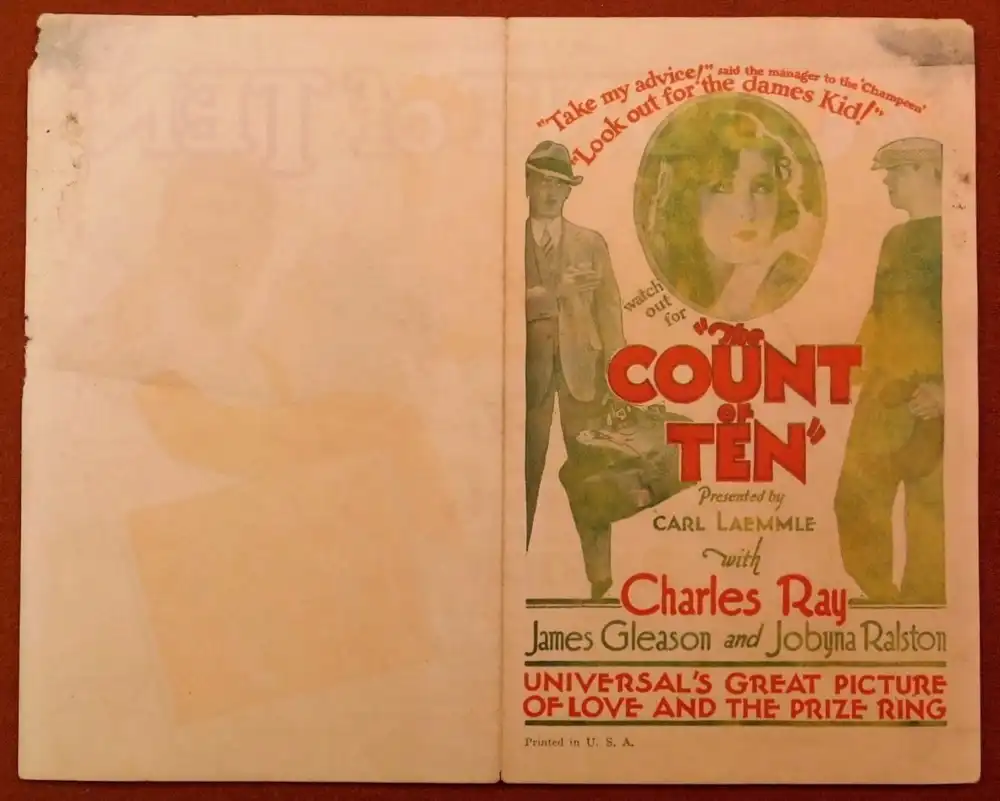
It’s not subtle, not at all.
The way they just settle in, like they own the place, it’s almost comical how brazen they are.
The camera seems to linger on their smug faces a bit too long, just so you get the picture. They’re basically human anchors, dragging our hero, Kid Hogan, down.
You can feel the weight of them.
Ray, as Hogan, starts off with this bright, energetic confidence in the ring. He’s quick, he’s got heart.
But as the in-laws start to drain him, both financially and emotionally, you see the change. His shoulders slump a little more.
His gaze gets a bit distant. It’s not just the boxing matches he’s losing; it’s his spirit.

There's this one scene where he's just sitting at the dinner table, and the father-in-law is chattering away, and Hogan just looks exhausted. Like, truly, deeply tired.
It’s a quiet moment, but it speaks volumes.
The boxing sequences themselves are... well, they're of their time. Lots of flailing arms and exaggerated falls.
You don’t really believe the punches connect, but you do believe the crowd's reactions, those wide-eyed extras in the stands.
It’s less about the realism of the fight and more about the consequences of the fight.
Every loss feels heavy, not because of the knockout, but because you know what it means for Hogan back home, with those freeloaders waiting.
It's interesting how the film portrays the wife, Jobyna Ralston. She’s not outright malicious, but she’s definitely caught between her family and her husband.
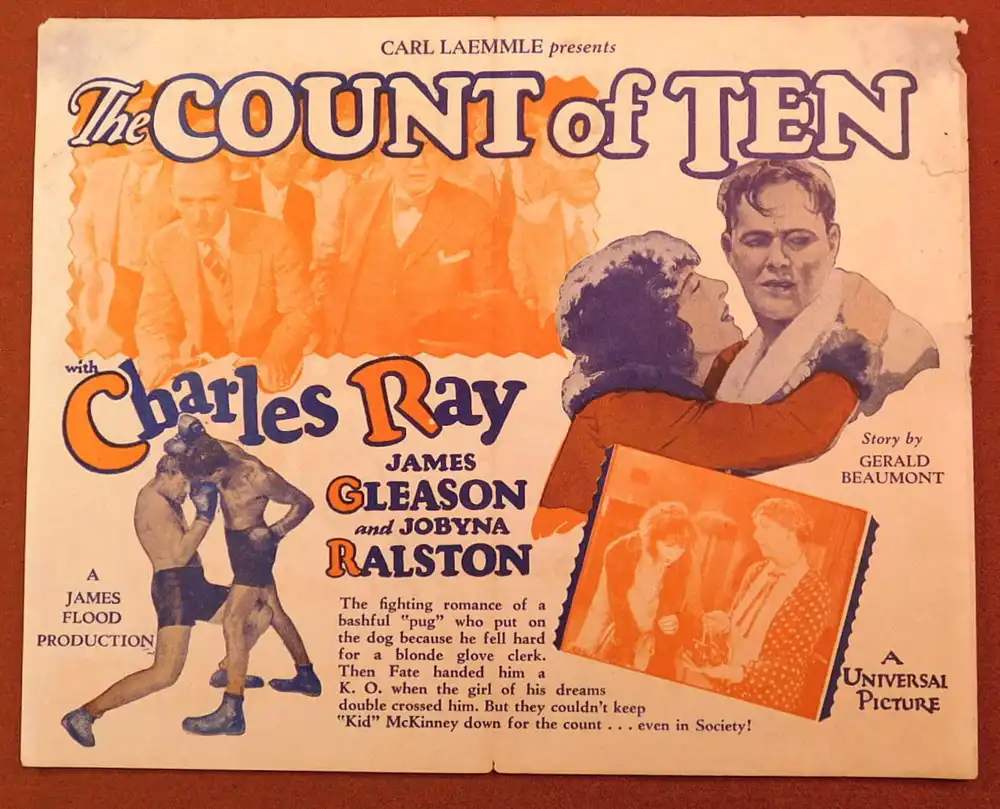
You see her torn expressions, trying to mediate.
Ultimately, she seems pretty powerless to stop her relatives from sucking the life out of Hogan's career. Her character is a little frustrating because you want her to stand up for him more.
But then, it’s 1928, and women's roles were... different. It makes you think about how much pressure was on people back then.
There’s a clear message here about ambition and responsibility, and how easy it is to lose your way when you let others dictate your path.
The film doesn't exactly *subtle* about it, but it gets its point across.
The "count of ten" isn't just about being knocked out in the ring; it's about life knocking you down and whether you can get back up.
One moment that stuck with me was just a small thing, after a particularly bad fight. Hogan's walking home, and the streetlights cast these long, lonely shadows.
It's a simple shot, but it really nails that feeling of isolation and despair. No fancy tricks, just good old-fashioned cinematography.
It's definitely a film that makes you appreciate the dramatic acting of the silent era. Ray really carries a lot with just his expressions.
You feel for the guy, even when you want to shake him and tell him to kick those relatives out! It doesn't break new ground, no, but it tells a solid, if a little predictable, story about a good man getting a raw deal. And sometimes, that's enough.
IMDb —
1918
Community
Log in to comment.