DbcultAccessing Vault...
Cult Review
Senior Film Conservator
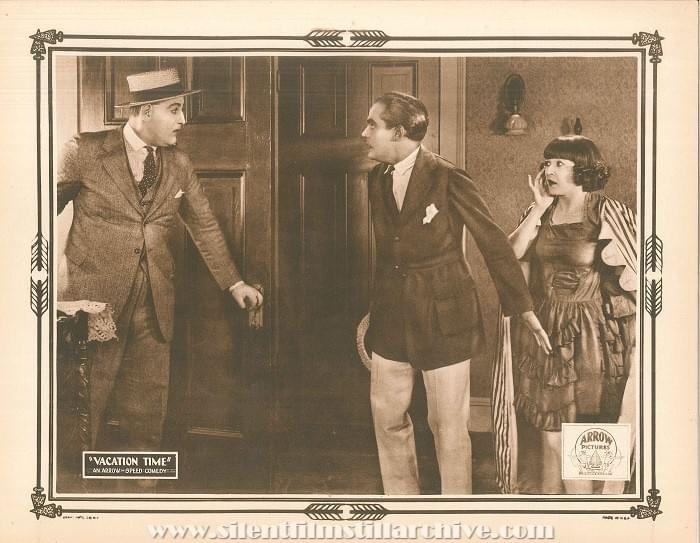
There exists a peculiar, almost masochistic ritual in the human condition: the vacation. In the 1920 gem Vacation Time, this ritual is dissected with the precision of a surgeon and the whimsy of a court jester. While modern audiences might be accustomed to the high-octane spectacle of something like Marvelous Maciste, there is a distinct, visceral charm in the low-stakes, high-impact blunders of Margaret Cullington and her cohort. The film doesn't merely aim for laughs; it aims for a recognition of our collective incompetence when stripped of our urban armaments.
The cinematography, though constrained by the technical limitations of its epoch, manages to evoke a sense of claustrophobia within the wide-open spaces of the countryside. This irony is the film's strongest asset. We see characters who are ostensibly 'free' from the city, yet they are more shackled than ever by the logistics of their own recreation. It is a thematic cousin to the domestic struggles seen in Home Wanted, yet it trades the sentimental for the slapstick, ensuring that every emotional beat is followed by a literal stumble.
Margaret Cullington possesses a face that was built for the silent screen—a canvas of exaggerated anxiety and fleeting hope. Her performance here is a masterclass in reaction. When she looks at a collapsing tent, you don't just see a woman looking at a tent; you see the collapse of the American Dream in miniature. Beside her, Eddie Baker provides the gravitational pull of the film's physical comedy. His timing is impeccable, a stark contrast to the more somber, dramatic weight one might find in The Life Story of David Lloyd George. Baker understands that in comedy, the body is a weapon, and he wields his with self-deprecating brilliance.
"The genius of 'Vacation Time' lies not in the destination of its characters, but in the spectacular disintegration of their journey. It is a film that finds poetry in the pothole and grace in the pratfall."
Charlotte Merriam and Jay Belasco round out the quartet, providing the necessary social friction that elevates the film from a mere series of gags to a coherent social satire. Their interactions are peppered with the kind of subtle class signaling that would be right at home in The Fall of a Saint, though here the 'sins' are far more pedestrian and relatable. The way they navigate the rural landscape—clumsily, arrogantly, and ultimately unsuccessfully—serves as a poignant reminder of our alienation from the soil.
One cannot discuss Vacation Time without acknowledging the sheer craftsmanship of its visual storytelling. In an era before the crutch of synchronized dialogue, directors had to rely on the 'show, don't tell' philosophy with religious fervor. The editing in this film is remarkably brisk, reminiscent of the rhythmic pacing found in Some Job. Every cut serves a purpose, building tension until the inevitable release of a well-timed gag.
The use of depth of field is also noteworthy. Often, the foreground contains the immediate chaos of our protagonists, while the background offers a serene, mocking view of the nature they cannot seem to master. This layering of imagery creates a sophisticated visual irony that is often missing from contemporary comedies. It shares a certain aesthetic DNA with Opened Shutters, particularly in how it uses light to delineate between the safety of the indoors and the unpredictable brightness of the exterior world.
To truly appreciate the levity of Vacation Time, one must contrast it with the more aggressive cinematic offerings of its time. Where the Nelson-Wolgast Fight captures the raw, unadulterated violence of the ring, this film captures the more subtle, psychological violence of a failed picnic. Both are spectacles of struggle, but 'Vacation Time' finds the humor in the defeat rather than the glory in the victory.
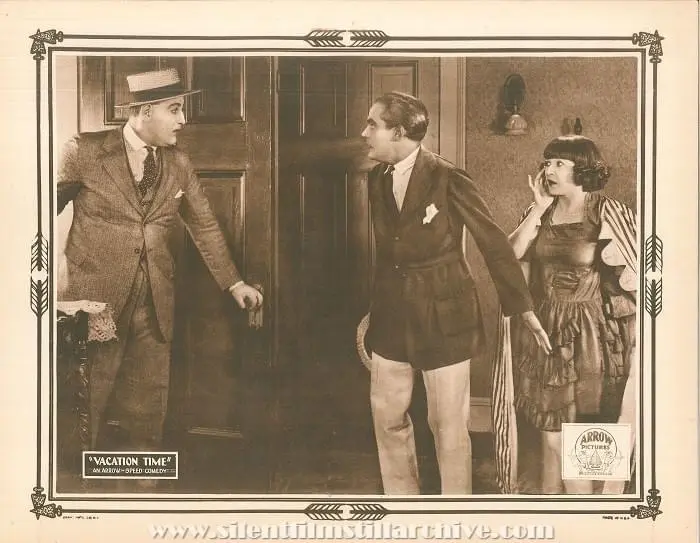
Furthermore, the film's flirtation with the 'back-to-nature' theme invites comparison to A Hoosier Romance. However, while the latter leans into the sentimentality of the rural life, 'Vacation Time' treats the countryside as a beautiful, indifferent antagonist. It is less about the romance of the farm and more about the reality of the mosquito. This groundedness is what keeps the film from feeling like a relic; the frustrations of a modern traveler stuck in a WiFi-less cabin are not so different from the frustrations of Eddie Baker trying to fix a crank-start engine.
Beneath the surface of the slapstick, there is a lurking commentary on the 'new' morality of the 1920s. We see echoes of the era's anxieties, perhaps less dark than those in Whispering Devils or the existential dread of Dionysus' Anger, but present nonetheless. There is a sense that these characters are trying to outrun something—be it the ghost of the Great War or the encroaching pressure of modern capitalism. Their 'vacation' is a desperate attempt to reset their internal clocks, an endeavor that is doomed from the start because they bring their city-bred anxieties with them.
In one particularly telling sequence, the group encounters a local whose simplicity baffles them. It is a moment of pure cultural collision, similar to the thematic underpinnings of La llaga, though played for laughs rather than pathos. The urbanites' inability to communicate with the 'real' world outside their social bubble is as much a source of comedy as it is a subtle indictment of their provincialism.
The direction (often uncredited or obscured by the studio system of the time) shows a surprising amount of restraint. There are moments where the camera lingers just long enough to let the absurdity of a situation sink in. This isn't the frantic, often messy direction seen in The Kids Find Candy's Catching; instead, it is a deliberate, choreographed dance. The set pieces—ranging from rickety bridges to treacherous campsites—are built with a precariousness that keeps the audience on edge.
The film also avoids the trap of being 'nice' just for the sake of it. Like Nice and Friendly, it uses its title as something of a lure, only to reveal a much more cynical and sharp-witted interior. The 'vacation' is anything but relaxing, and the film is all the better for it. It understands that peace is boring, but a tent falling on a man's head is eternally cinematic.
Why does Vacation Time still resonate a century later? Perhaps because our relationship with leisure has only become more fraught. We still pack too much, we still plan too much, and we still find ourselves at the mercy of elements we don't understand. The film serves as a timeless reminder that the best-laid plans of mice and men are no match for a flat tire or a sudden downpour. It lacks the overt political mission of La mission du Docteur Klivers, but its mission of humanizing our failures is no less noble.
In the grand tapestry of silent cinema, this film might be a smaller thread, but it is a brightly colored one. It doesn't have the epic scope of The Trigger Trail, but it has a density of wit that makes it infinitely rewatchable. To watch Vacation Time is to witness the birth of the 'modern' comedy of errors, a lineage that continues through the screwball comedies of the 30s and 40s right up to the cringe-humor of today.
Ultimately, the film concludes not with a resolution, but with a weary acceptance. The characters haven't conquered nature; they've simply survived it. As they head back to the city, battered and bruised, there is a sense that the office—with all its monotony—is finally the sanctuary they were looking for. It is a cynical, hilarious, and profoundly human ending to a journey that we have all, in some form, taken ourselves.
Final Verdict: A sparkling example of silent comedy that turns the mundane into the monumental. Required viewing for anyone who has ever had a holiday go horribly wrong.

IMDb 6
1933
Community
Log in to comment.