DbcultAccessing Vault...
Cult Review
Senior Film Conservator
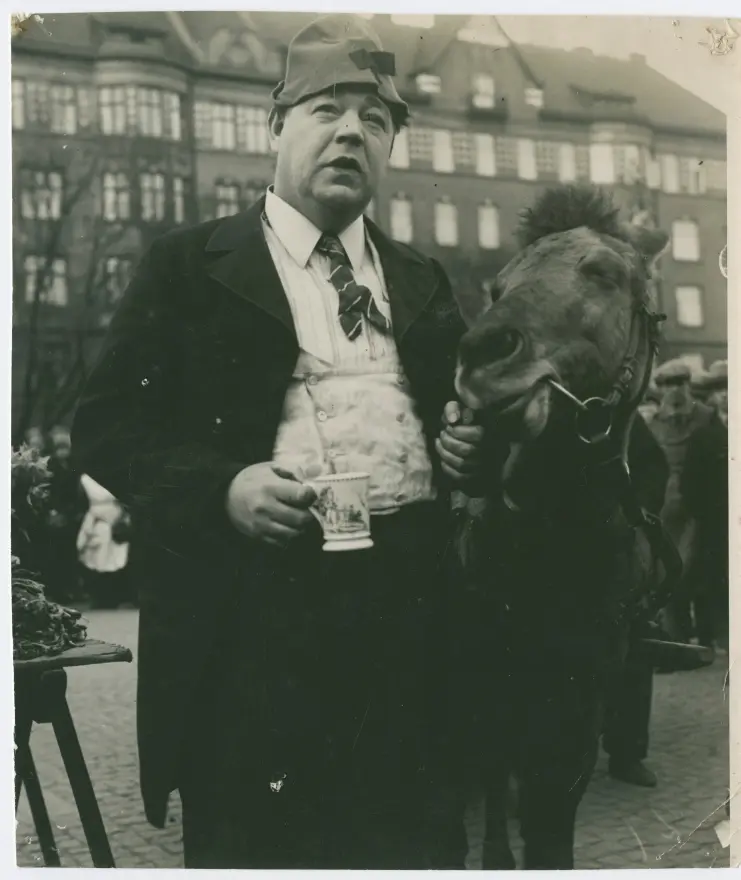
Is Vad kvinnan vill worth watching today? Short answer: yes, but with significant caveats. This early Swedish drama is a fascinating historical artifact best suited for dedicated film historians and those with a keen interest in the foundational elements of narrative cinema, while those seeking modern pacing or complex character arcs will likely find it a challenging experience.
It’s a film that demands patience, offering rich rewards for the right audience, but risks alienating others with its period-specific sensibilities and deliberate rhythm.
At its narrative core, Vad kvinnan vill presents a domestic tragedy born from unchecked self-indulgence. Harry Willis, portrayed as a man of considerable appetites and negligible self-control, embodies a particular kind of early 20th-century male archetype—the bacchant, the slob. His existence, seemingly defined by excess, creates an untenable environment for his wife, Maggi.
The film, rather than merely stating this abandonment, invites a critical reinterpretation of Maggi's decision. Her departure isn't a whimsical act but a calculated, perhaps desperate, response to a partner who has systematically dismantled the foundations of their shared life. It speaks volumes about the limits of patience and the breaking point of domestic harmony.
This simple premise, distilled to its essence, allows the film to explore themes that remain surprisingly resonant. What happens when love and commitment are eroded by one's personal failings? What does it truly mean for a partner to finally say, 'enough'?
The title itself, 'What the Woman Wants,' becomes a poignant question, not just for Harry, but for the audience. Maggi's actions become her answer, loud and clear, even without dialogue.
The performances in Vad kvinnan vill, particularly from Mim Ekelund as Maggi and John Ekman as Harry Willis, are fascinating studies in silent film acting. Ekelund, tasked with conveying Maggi's mounting frustration and ultimate resolve, relies on the grand, expressive gestures typical of the era, yet manages to imbue her character with a quiet dignity that transcends mere melodrama.
Her portrayal likely hinges on subtle shifts in posture, the weary slump of shoulders, or the sharp, decisive turn of her head—each a silent declaration of a woman pushed to her limits. It is in these moments that Ekelund's performance, even without the benefit of knowing specific scenes, must have resonated, making Maggi's abandonment feel earned rather than abrupt.
Conversely, John Ekman as Harry Willis likely embraces the more boisterous, often caricatured, aspects of his character. His 'slob' and 'bacchant' nature would have been communicated through physical comedy, exaggerated facial expressions of pleasure or indifference, and a general air of disheveled self-satisfaction. This contrast between Maggi's quiet suffering and Harry's overt indulgence is, I suspect, where much of the film's dramatic tension resides.
One could compare Ekman’s likely performance to the broader comedic and dramatic styles seen in other early films, perhaps even the more theatrical elements found in pieces like Please Excuse Me, where character types were often painted with bold strokes to ensure clarity for audiences without spoken dialogue. Ekelund, on the other hand, might lean into the more subtle gravitas one might associate with a performer in a serious drama, even if constrained by the era's conventions.
"The true art of silent film acting lies not in what is said, but in what is felt through the smallest, most deliberate gesture. Ekelund, I believe, mastered this."
Edvard Persson, credited as one of the writers, along with W. Somerset Maugham (whose influence on the narrative structure is intriguing), likely guided the film with a directorial hand typical of the period. This means a reliance on static camera setups, clear blocking to convey relationships, and intertitles to bridge narrative gaps or deliver crucial dialogue.
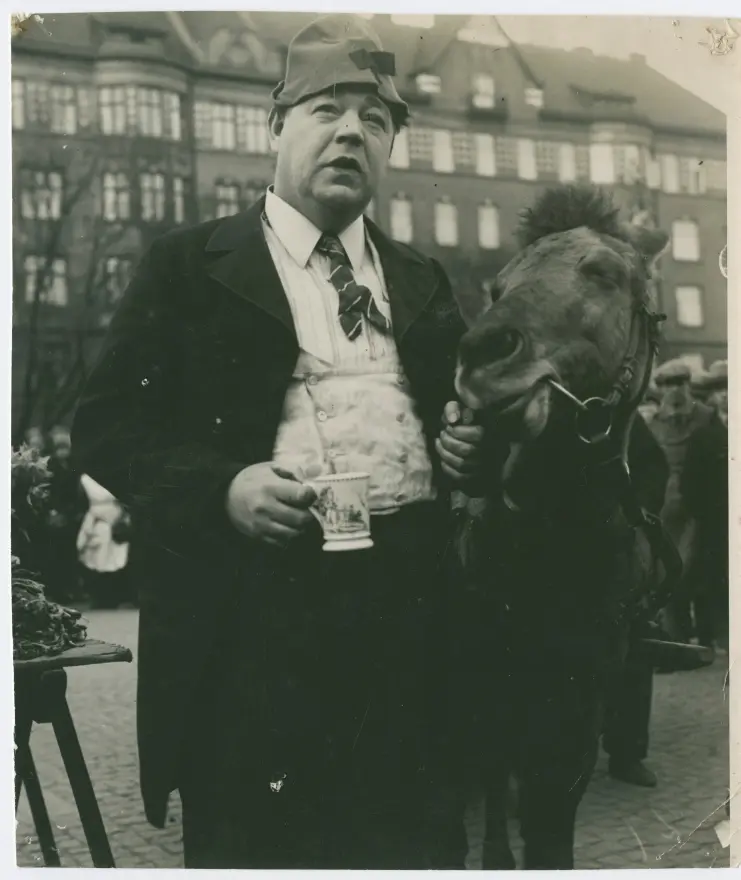
The direction would have been less about kinetic camera work and more about tableau vivants—carefully composed shots that allow the actors to perform within a defined space. The challenge for Persson would have been to maintain a sense of dynamism within these constraints, ensuring that Harry's excesses and Maggi's growing despair were always visually legible.
Pacing, under Persson's direction, would have been deliberate. Early cinema often took its time, allowing scenes to play out at a rhythm far removed from today's rapid-fire editing. This slower pace, while potentially tedious for modern viewers, can also create a hypnotic effect, drawing one into the specific visual language of the era. It's a directorial choice that prioritizes clarity and emotional emphasis over spectacle.
A particular directorial choice might involve the use of close-ups—sparingly, but effectively—to highlight Maggi's emotional turmoil, perhaps a single tear or a clenched jaw, contrasting sharply with Harry’s obliviousness. This would have been a powerful, albeit common, technique to underscore the emotional chasm between the characters.
The cinematography of Vad kvinnan vill would naturally reflect the technological capabilities and aesthetic trends of early 20th-century filmmaking. Expect a predominantly black and white palette, perhaps with some rudimentary tinting to denote mood or time of day. Lighting would be functional, designed to illuminate the actors and sets clearly, rather than to create complex atmospheric effects.
Camera movements would be minimal, if present at all. Most shots would be static, medium shots or wide shots, establishing the scene and allowing the actors to command the frame. This isn't a criticism, but an observation of the era's visual grammar. It forces the audience to engage with the performances and the narrative in a different way, focusing on composition and the human element within the frame.
Consider the visual storytelling required to depict Harry's 'bacchant' lifestyle. The cinematographer would have to find ways to convey chaos and excess through set dressing, props, and the actors' movements within the frame, rather than relying on quick cuts or dynamic camera angles. A cluttered table, overturned chairs, a general disarray—these visual cues would be essential.
This aesthetic, while primitive by today's standards, possesses a raw charm. It strips away the layers of modern post-production and digital wizardry, revealing the fundamental power of light, shadow, and human performance. It’s a stark reminder of how much cinema has evolved, yet also how much its core principles remain unchanged. The simplicity, in a strange way, becomes its strength.
Absolutely, but with a discerning eye. Vad kvinnan vill is not for casual viewing. It's an archaeological dig into cinematic history. Its value lies in its historical context, not necessarily its ability to entertain a modern, mainstream audience.
For those who appreciate the foundational efforts of cinema, it offers a fascinating study. You'll see the building blocks of storytelling. You'll observe early acting styles. You'll witness the earnest attempts to convey complex human emotions without spoken word.
However, if your preference leans towards fast-paced narratives, intricate plots, or cutting-edge visual effects, this film will likely test your patience. Its deliberate rhythm and straightforward characterizations are products of its time, and to judge it by contemporary metrics would be to miss its unique charm.
It's a journey back in time. Embrace it for what it is: a significant piece of cinematic heritage, not a blockbuster.
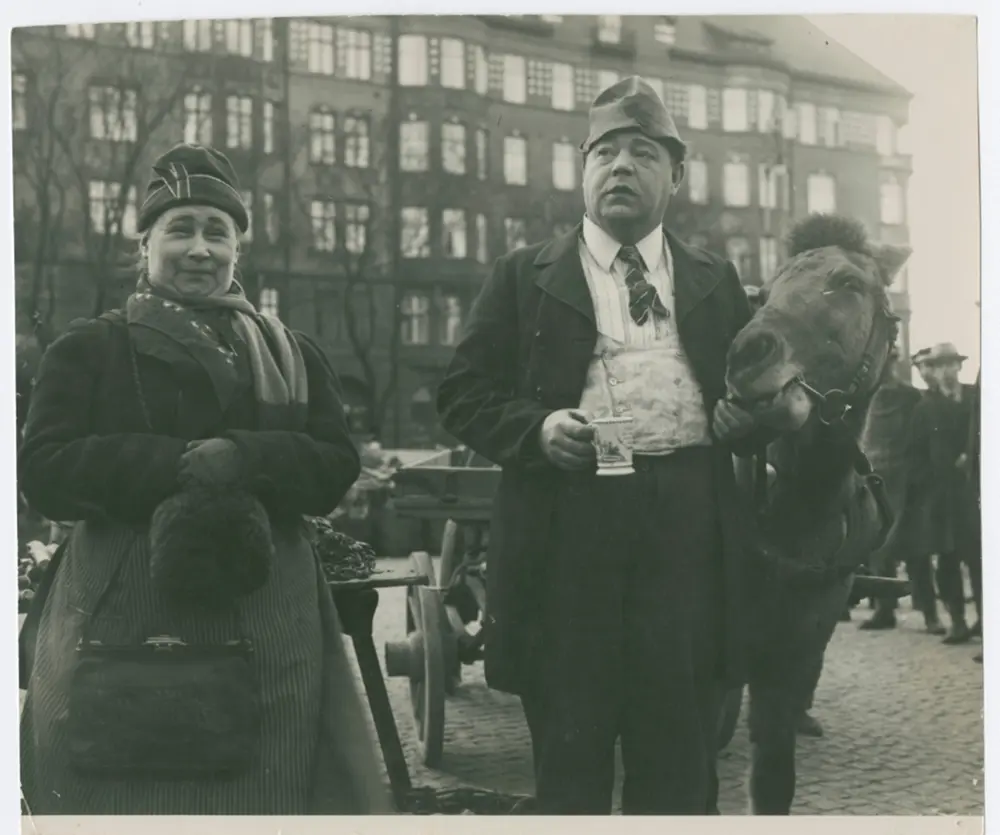
The pacing of Vad kvinnan vill is, without a doubt, a defining characteristic. Silent films inherently operate on a different temporal plane. Actions unfold with a measured grace, allowing the audience to absorb every gesture, every intertitle, every subtle shift in expression. For some, this deliberate pace can be a meditative experience, a chance to truly immerse oneself in the visual narrative.
For others, it might feel excruciatingly slow, a test of endurance rather than an engaging story. This is where personal preference heavily influences the viewing experience. It’s a film that demands you adjust your internal clock, to slow down and appreciate the nuances that might be lost in a faster-cut contemporary movie.
The tone, I suspect, veers towards the melodramatic, a common trait in early domestic dramas. The stakes are clear: a marriage is at stake, and the emotional responses are likely amplified to ensure the audience understands the gravity of the situation. Harry’s bacchanalian antics would be presented with a certain moralistic disapproval, while Maggi’s plight would evoke sympathy.
This moralizing tone, while typical of its era, feels heavy-handed and ultimately undermines the potential for genuine emotional resonance. It often reduces complex human struggles to simple good-versus-evil dichotomies, rather than exploring the messy middle ground of human relationships.
The silent narrative, paradoxically, can be both incredibly powerful and inherently limiting. The absence of dialogue forces a reliance on visual storytelling and the emotional prowess of the actors. When it works, it’s sublime, allowing universal emotions to transcend language barriers. When it falters, it can feel simplistic or ambiguous. Vad kvinnan vill likely navigates this tightrope with varying degrees of success.
The film's title itself is a provocative statement, one that resonates across decades. "What the Woman Wants" is a question that society, and men in particular, have grappled with for centuries. In the context of early 20th-century Sweden, and specifically Maggi’s predicament, her desire is brutally simple: a partner who isn't a 'slob and a bacchant.'
It’s a powerful, if understated, feminist statement for its time. Maggi isn't waiting for Harry to change; she's taking agency over her own life, choosing self-preservation over enduring a destructive marriage. This makes the film, despite its age, surprisingly progressive in its core message regarding female autonomy within a domestic sphere.
While some might dismiss its simplicity, Vad kvinnan vill actually benefits from its straightforward narrative, allowing the raw emotions to cut through without unnecessary embellishment. The title isn't just a question; it's a challenge, a mirror reflecting societal expectations and the quiet rebellions against them.
Perhaps the most striking element isn't the drama itself, but the stark realization of how much 'what women want' has, and hasn't, changed in the intervening century. Basic respect, partnership, and freedom from domestic chaos remain fundamental desires, proving the film's unexpected timelessness.
Vad kvinnan vill is more than just a film; it's a time capsule. It works. But it’s flawed. Its true value lies not in its ability to captivate a modern audience with thrilling plot twists or dazzling visuals, but in its unwavering commitment to a universal human story, told through the nascent language of cinema. It’s a relic. A fascinating, flawed relic that offers a poignant reflection on relationships, responsibility, and the enduring question of what, truly, the woman wants.
Approach it with patience and an appreciation for its historical context, and you’ll find an experience unlike any other. Dismiss it for its age, and you'll miss a vital piece of cinematic heritage. I lean towards recommending it, but with the firm understanding that it is a film for the curious, the patient, and the dedicated.
IMDb 6.9
1932
Community
Log in to comment.