DbcultAccessing Vault...
Cult Review
Senior Film Conservator
Spoiler-rich, opinionated, and lit like a Times Square marquee—proceed accordingly.
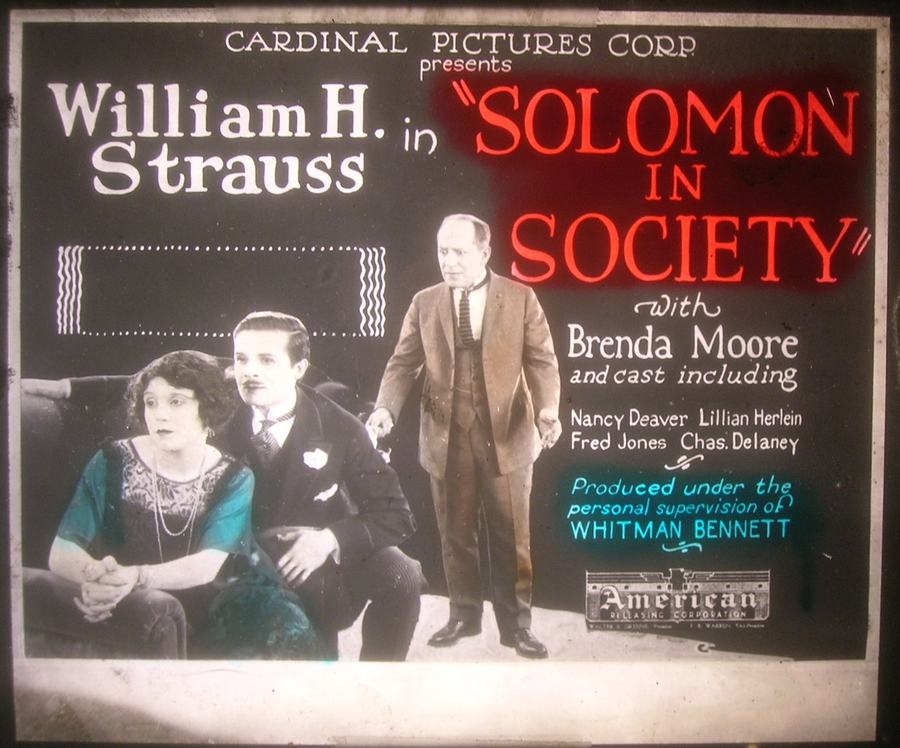
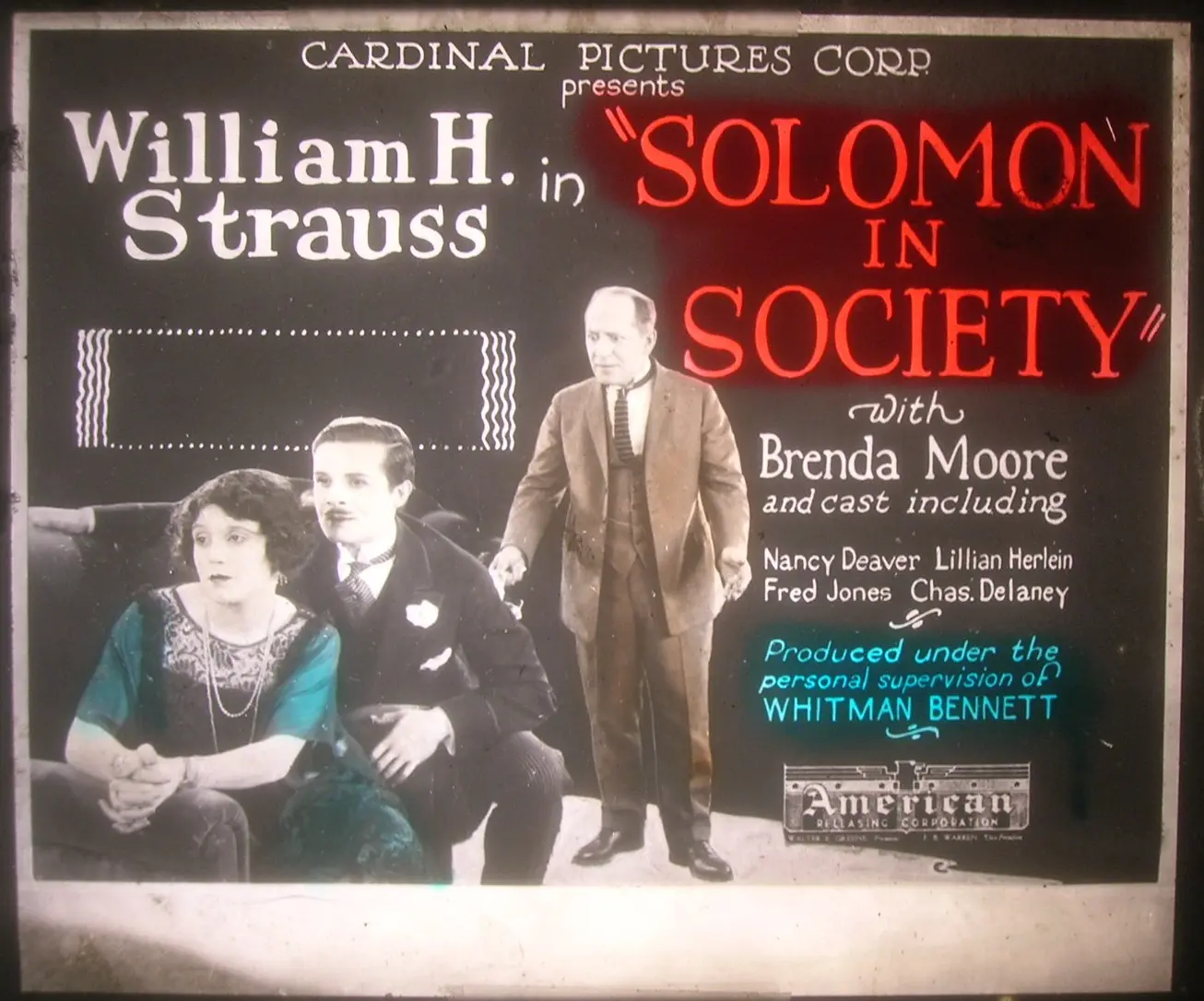
Call it the glittering hinge between gabardine and gilded exile: Carl Krusada’s Solomon in Society stitches a humble immigrant tailor’s ascent into a jazz-age parable so frenetic it feels stitched with lightning rather than thread. Produced in that vertiginous moment when hems were rising, morals were allegedly falling, and the nickelodeon was mutating into a cathedral of communal dreams, the film lands like a bolt of scarlet silk on the ash-gray pile of 1922 releases.
New York, 1919: pushcarts clatter, mothers haggle over a penny’s worth of parsley, and the air is thick with pickle brine and possibility. Krusada’s camera—nimble for an indie pocketed between loftier Paramount behemoths—glides past linen-clad shoulders, finally resting on Solomon’s attic workroom, a garret so cramped the shadows have to fold themselves in half. Charles Delaney plays our hero with the wiry alertness of a man who has sewn his own armor out of sheer chutzpah; every time he bites off a thread you sense he’s also gnawing at destiny.
Compare this to the open-prairie stoicism of The Great Adventure or the Continental despair of Zwei Menschen, and you realize how insistently urban, how caffeinatedly American, this narrative is. The Lower East Side sequences are shot in a chiaroscuro so tactile you can almost smell the herring; when Mary Bell—played by Lillian Herlein with the coltish effervescence of a girl who knows suds better than stardom—twirls in Solomon’s revolutionary drop-waist frock, the screen combusts into magnesium-white flare. It’s the moment a garment transcends utility and becomes myth.
Krusada, who also penned the script, understands that in the age of ready-to-wear, fashion is democracy’s newest weapon. The dress in question—an audacious collage of midnight gabardine and champagne chiffon—functions like a passport from anonymity to iconography. Cue montage: Mary’s face on newsprint, lobby cards, cigarette cases; Solomon’s fingers sewing labels that read “Solomon of Fifth Avenue” while the clang of the elevated train syncopates his heartbeat. The film’s editorial rhythm here is proto-Kuleshov: each cut lands like a champagne pop, effervescent and slightly lethal.
Yet the picture refuses to become a mere capitalist valentine. Note the sly insert shot of a sweatshop girl asleep at her machine, her foot still on the treadle—Krusada winks at the labor that underpins every sequin. The juxtaposition is as subtle as a needle in a finger, and twice as painful.
Fast-forward three narrative years. Solomon now presides over a salon where the mirrors are taller than the Statue of Liberty’s torch and twice as blinding. Rosie—once his needle-sharp confidante—finds herself drowning in velvet swatches and luncheon invitations she can’t pronounce. Enter Orlando Kolin, portrayed by Charles Brook with the lacquer-haired sleaze of a man who plays Ravel in boîtes where the absinthe flows greener than jealousy. Kolin doesn’t seduce Rosie so much as weaponize her disorientation; their trysts are staged in cramped Village apartments where the ceilings seem to press down like moral judgment.
What’s fascinating is how the film aligns spatial altitude with emotional freefall: the higher Solomon climbs, the more vertiginous Rosie’s dread. The Fifth Avenue atelier, flooded with topaz light, becomes a gilded cage; the Village basement, all flickering gaslight and sour wine, becomes a perverse sanctuary. It’s Upstairs/Downstairs without the English restraint.
Rather than succumb to cuckoldry, Solomon—ever the tailor—elects to tailor the truth. With Mary’s complicity, he orchestrates a tableau of adultery so convincingly lurid it could headline the Police Gazette: silk stockings flung across chaise, lipstick on a highball glass, Mary in a robe that slips just enough shoulder to scandalize a bishop. The plan is ruthless, compassionate, and quintessentially immigrant-logic: if the garment of marriage is torn beyond darning, one must cut a new pattern.
Yet the film never judges him. Krusada’s lens lingers on Solomon’s face in the aftermath—Delaney lets the corner of his mouth twitch, half grimace, half grin—as if to ask: Is honesty more sacred than kindness? It’s a moral ambiguity as delicate as chiffon and twice as liable to tear.
Just as the divorce decree is about to be notarized, Rosie—peering through a shop-window—sees Solomon’s original dress displayed like a holy relic. Something in the drape of that sleeve, the memory of shared pickle-barrel ambition, detonates her delusion. She sprints through traffic in a sequence shot with handheld fervor unusual for 1922: car horns dissolve into silence, the city blurs, her tears become the film’s only slow-motion. When she crashes into Solomon’s arms, the camera tilts skyward to catch the sun glinting off a skyscraper like a needle threading heaven.
Mary, ever the pragmatist, shrugs off her own heartbreak and pivots to Solomon’s lawyer—an endearing cad who has spent the entire picture adjusting his tie in every mirror he passes. It’s a coupling so pragmatic it feels almost European, reminiscent of the unsentimental pairings in Man and Woman or the fatalistic grace of Zwei Menschen.
Though filmed in monochrome, the picture drips with chromatic suggestion. Intertitles—hand-lettered in a font that resembles embroidery stitches—flash “SCARLET” when referencing the dress, “ABSINTHE” when Rosie succumbs to Kolin’s poison-green charm, “CHAMPAGNE” whenever success effervesces. The conceit is clever enough to make modern viewers wish for a Technicolor print that never existed.
Delaney’s Solomon is all contained fire—watch how he calibrates his gait, shoulders squared against tenement wind, then later glides through marble halls as though born in spats. Herlein’s Mary toggles between washer-girl gumption and starlet sparkle without ever betraying the seams; her smile arrives like a streetcar—bright, sudden, a little dangerous. As Rosie, Nancy Deaver performs the film’s most thankless arc: the woman who mistakes comfort for happiness. She underplays magnificently, letting her eyes do the collapsing while her mouth stays corseted in polite bewilderment.
Brook’s Kolin is the jazz-age Mephistopheles, all arpeggios and pomade; when he leans over Rosie at the piano, the shadows form a treble clef across his face—an exquisite visual pun by cinematographer Fred T. Jones, whose camera work here rivals the urban poetry of Here Comes the Bride.
Carl Krusada—largely forgotten outside archival circles—writes with the brisk economy of a man who’s had to sell a screenplay to pay the rent. His intertitles crackle with Bowery idioms: “She traded suds for spotlight—can starch hold a candle to stardust?” Yet beneath the patter lies a moral inquisitiveness closer to Dickens than to, say, the sentimental gloss of Everybody's Girl. He’s fascinated by the price of ascent, by the way a city can stitch you into a prince one day and unravel you into a pauper the next.
Place it beside The Conquest of Canaan’s small-town boosterism or the pastoral innocence of The Lonesome Pup, and Solomon in Society emerges as the brassy urban cousin—jazz-born, subway-bred. Its closest tonal sibling might be A Fallen Idol, another tale of public masks and private rips. Yet whereas Idol wallows in Gothic gloom, Solomon crackles with electric optimism: the immigrant conviction that tomorrow’s hemline can be higher, richer, brighter.
The nitrate negative is lost; what survives is a 16 mm reduction print discovered in a Newark synagogue basement—warped, water-stained, yet humming with life. The George Eastman Museum oversaw a 4K scan in 2021, accompanied by a commissioned score that fuses klezmer clarinet with downtown stride piano. Streaming rights are fractured, but you can occasionally catch it on Criterion Channel under their “Silent Shadows of Broadway” carousel. Arrive for the frocks, stay for the existential hem-stitching.
Great films, like great garments, conceal their labor. Solomon in Society hides its sociological seamwork behind a dazzle of beadwork and banter, yet every scene vibrates with the unspoken truth that in America you can sew a kingdom from rags—but the thread always costs something, sometimes your heart, sometimes your illusions. View it not as antique curio but as ancestor to every later parable of ambition, from Wall Street to The Devil Wears Prada. And next time you zip up a dress or button a shirt, remember Solomon’s whispered credo, flickering between the intertitles: “We are all tailors of our own fate—just pray the seams hold when the dance begins.”
Rating: 4.5 out of 5 bobbins—missing half solely because the final reel’s frenetic reconciliation could use an extra beat to breathe.
IMDb —
1924
Community
Log in to comment.