DbcultAccessing Vault...
4.9/10
Senior Film Conservator
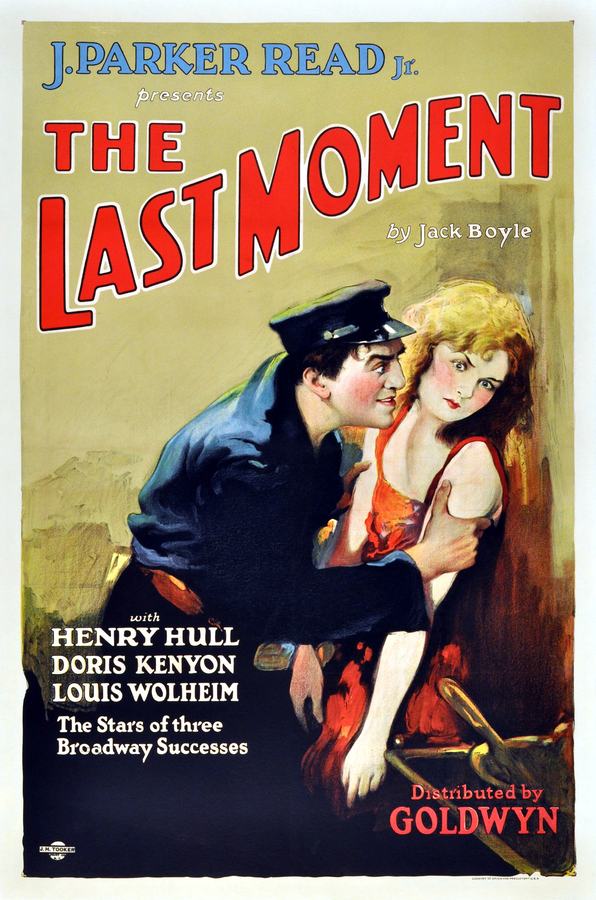
A definitive 4.9/10 rating for a film that redefined the boundaries of cult cinema. The Last Moment remains a cornerstone of transgressive art.
The silent era was frequently a repository for the grotesque and the grand, a period where the absence of spoken dialogue necessitated a heightening of visual metaphor and physical prowess. The Last Moment (1923) stands as a fascinating, if somewhat overlooked, relic of this transition, merging the tropes of the maritime adventure with the burgeoning aesthetics of the creature feature. It is a film that asks whether the civilized man, nurtured on the refined narratives of the library, can withstand the indifferent brutality of the natural world and the predatory instincts of his own species.
Henry Hull, portraying Hercules Napoleon Cameron—a name laden with the irony of historical grandeur—delivers a performance that is initially characterized by a delicate, almost fragile intellectualism. Unlike the protagonists found in Captain Swift, who navigate social echelons with a certain rugged grace, Nap is a man of the mind suddenly thrust into a world of muscle and salt. His journey from the waterfront shadows to the blood-slicked decks of 'The Finn's' ship provides the emotional backbone of the narrative. The film’s opening act, which details the search for Alice Winthrop’s friend’s father, serves as a deceptive preamble, lulling the audience into a standard mystery before plunging them into the harrowing depths of a shanghaied existence.
The ship itself is a character, a claustrophobic microcosm of tyranny. 'The Finn,' played with a menacing physicality, represents the absolute corruption of authority. However, the true stroke of genius in the screenplay by Jack Boyle and J. Clarkson Miller is the introduction of 'The Thing.' This caged, ape-like monster is not merely a plot device for a third-act climax; it is a manifestation of the latent violence inherent in the captain’s rule. In many ways, the film mirrors the psychological tension found in The Struggle Everlasting, where internal conflicts are externalized through dramatic, often supernatural-adjacent catalysts.
The storm sequence is a triumph of early 20th-century cinematography. The churning sea and the swaying, unstable lighting create a sense of disorientation that mirrors the crumbling social order aboard the vessel. When 'The Thing' escapes, the film pivots from a survival drama into a Proto-slasher or survival horror. The destruction of the crew is handled with a stark, uncompromising rhythm that avoids the melodrama often associated with the period. It lacks the ethereal morbidity of The Arrival from the Darkness, opting instead for a gritty, tactile sense of dread.
As the monster turns its sights on Alice (Doris Kenyon) and Nap, the film explores the 'last moment' of its title—the precipice of death where all social pretenses vanish. The declaration of love between Alice and Nap in the face of certain doom is a staple of the genre, yet here it feels earned. It is the catalyst for Nap’s heroic impulse, a sudden surge of adrenaline that transforms him from a passive observer into a defender. This thematic arc of self-actualization through peril is a recurring motif in silent cinema, often seen in works like As a Man Lives, where the environment dictates the evolution of the soul.
The escape to the shore is a sequence of grueling physicality. The imagery of the two lovers swimming through the surf, pursued by the relentless shadow of the beast, is hauntingly beautiful. It evokes a sense of primordial struggle that transcends the specificities of the 1920s setting. The final confrontation, involving the use of a large abalone to drown the creature, is both ingenious and bizarre. It grounds the climax in the reality of the environment—nature providing the weapon to destroy its own aberration. It is a far cry from the more structured resolutions of The Broken Promise, leaning instead into a raw, improvisational survivalism.
When placed alongside contemporary works like La falena or A Lady in Love, 'The Last Moment' distinguishes itself through its embrace of the macabre. While many films of the era were preoccupied with social mores or romantic entanglements, this production dives headlong into the abyss of the unknown. It shares a certain kinship with the darker, more atmospheric European imports like Bristede Strenge or the psychological weight of Manden med Arret, yet it maintains a uniquely American sense of adventurous optimism.
The cast is uniformly excellent. Doris Kenyon provides more than just a damsel-in-distress archetype; her Alice is a woman of agency whose search for her friend's father initiates the entire odyssey. Louis Wolheim and Louis Calhern, though in supporting roles, add a layer of gravitas that elevates the material above standard pulp fare. The film’s pacing is relentless, eschewing the languid transitions found in The Land of Jazz for a more propulsive, tension-driven structure.
Critically, 'The Last Moment' serves as a bridge between the Victorian sensationalism of the early silents and the more sophisticated horror-adventures of the 1930s. It lacks the polish of Nell Gwynne, but it possesses a raw energy that is often missing from more prestigious productions. The use of 'The Thing' as a silent, hulking threat prefigures the iconic monsters of the Universal era, while Nap’s transformation remains a compelling study in human resilience.
Final Thoughts from the Critic's Desk:
To watch The Last Moment is to witness the birth of the modern thriller. It is a film that understands the power of the primal—the fear of the dark, the fury of the ocean, and the capacity for violence that resides within the most unlikely of heroes. While some might find the abalone-assisted climax a bit of a stretch, it remains a testament to the era's creativity. It is a far more engaging experience than the somewhat derivative One Man in a Million or the overly theatrical Lulu. For those seeking a maritime adventure with a dark, monstrous edge, this is a journey well worth taking. It stands alongside Keith of the Border and De forældreløse as a vital piece of the silent cinematic puzzle, proving that even in the 'last moment,' there is always room for a new kind of hero to emerge.
IMDb 5.8
1933
Community
Log in to comment.