DbcultAccessing Vault...
6.6/10
Senior Film Conservator
A definitive 6.6/10 rating for a film that redefined the boundaries of cult cinema. Varhaník u sv. Víta remains a cornerstone of transgressive art.
If you are into those old, moody silent movies that feel like a fever dream, you should definitely give Varhaník u sv. Víta a look. It is basically a thriller from 1929 that skips all the boring stuff and goes straight for the anxiety.
Who will hate it? People who need explosions or fast talking. Who will like it? Anyone who appreciates a dark story about a man making the worst possible choices for the best possible reasons.
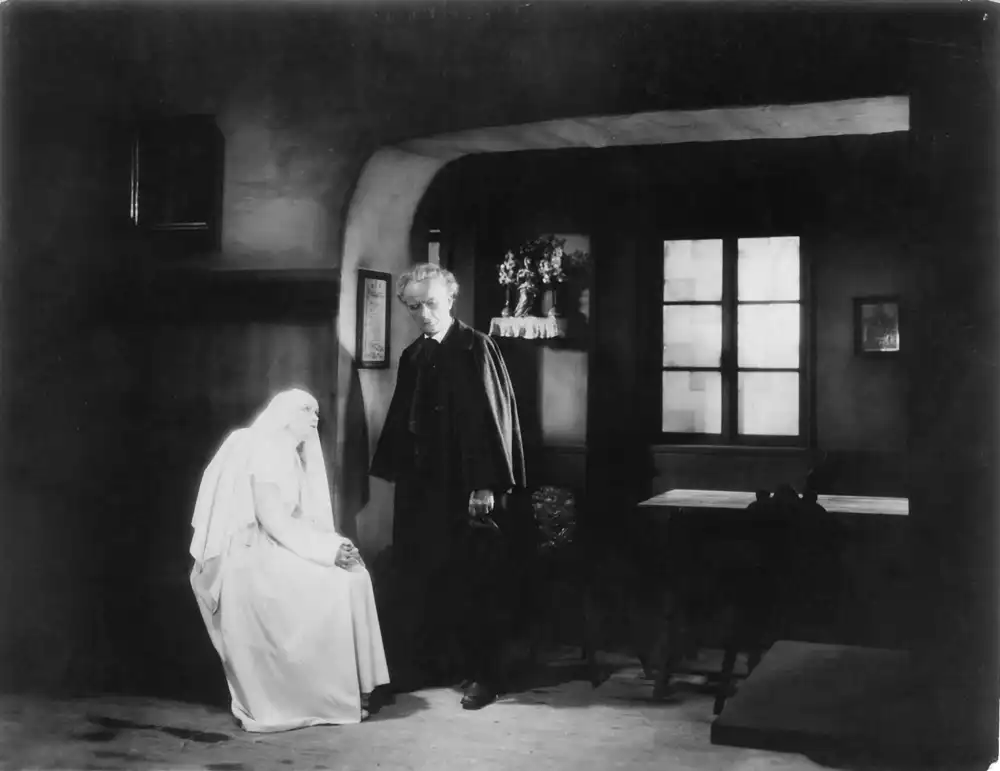
The movie starts with this old organist—played by Karel Hašler—who sees a guy kill himself. It is pretty grim right from the jump. The dying man gives him an envelope with money for his daughter, Klara, who is living in a monastery. The organist wants to help, but for some reason, he decides the best move is to hide the dead guy in his cellar. Why do they always do that?
Seriously, if he just called the cops, the movie would be five minutes long. But instead, we get this heavy, claustrophobic feeling as he drags the body away. You can almost feel the dust and the dampness in that cellar. It reminds me a bit of the tension in The Blizzard, but way more focused on one guy's guilt.
The real problem is the neighbor. He is a shoe shiner and he is a total creep. He sees the organist hiding the body and immediately starts the blackmail. It is not even subtle blackmail either. He just leans into it.
I found myself getting really annoyed at the organist for being so soft. But then you look at Karel Hašler’s face and he just looks so tired. Like his whole life has been just playing music in a cold church and he doesn't know how to handle a real-world disaster. He has these eyes that seem to sink into his skull as the movie goes on.
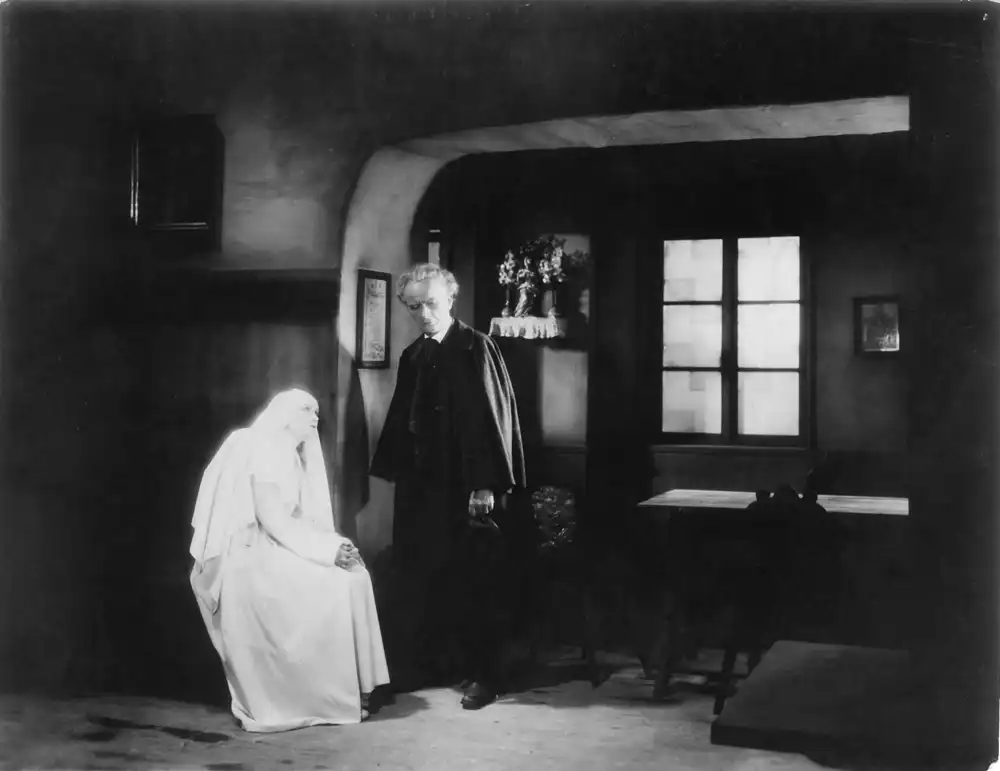
The daughter, Klara, is played by Suzanne Marwille. She is also in My Girl Suzanne, and she is fine here, but she doesn't have a ton to do. She is mostly there to be the person the organist is trying to protect. Her scenes in the monastery are a weird contrast to the grimy cellar scenes.
The St. Vitus Cathedral is like a character itself. It is huge and cold and makes the organist look like a tiny ant. There is one shot of the organ pipes that lingers just a bit too long, but it looks cool so I didn't mind. The lighting is very 1920s—lots of deep shadows and faces lit from below to make them look scary.
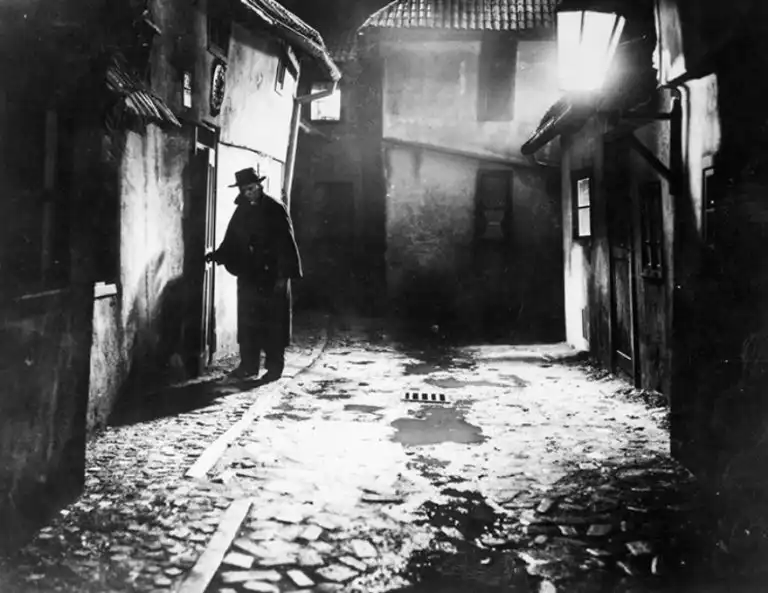
There is a scene where the shoe shiner is just watching through a window. He doesn't move. He just stands there. It is actually more effective than most modern horror movie scares because it feels so grounded. You know that guy is just waiting to ruin someone's life.
I noticed a small detail where the organist's hands shake when he is trying to play the music later. It is a nice touch. It shows he is losing his grip on everything. The movie is full of these little human moments that make it feel less like a "classic" and more like a real story about a guy who messed up.
It is definitely more interesting than something like The Wrecker if you prefer character drama over big stunts. The script had Vítězslav Nezval involved, and he was a legit poet, which might explain why it feels so atmospheric. It is not just a plot; it is a vibe. A very stressful, sweaty vibe.
One thing that felt a bit off was the pacing in the middle. It sort of circles the same idea for a while. Organist feels guilty, shoe shiner acts like a jerk, organist feels more guilty. We get it. But the ending makes up for the slow parts.
The way the blackmail builds up is actually quite clever. It is not just about the money; it is about the power.
Is it a masterpiece? Maybe not. But it is a very solid example of how you can tell a gripping story with almost no words. Just a lot of staring and very dramatic music. If you can find a version with a good organ score, it really adds to the experience. ⛪️
I would say it is worth it just to see the locations in Prague back then. The streets look so empty and strange. It makes the whole situation feel even more isolated. Just don't expect a happy ending where everyone gets a hug.
Also, the shoe shiner's outfit is weirdly specific. I kept looking at his tools. He seems more interested in the organist's shoes than the actual crime at one point. Small things like that make the movie feel real. Like someone actually observed how people act when they are being opportunistic.
Anyway, give it a shot if you have an hour to spare and want to feel slightly uneasy. It is a good one for a rainy night when you feel like being a bit miserable. 📽️
IMDb 3.6
1928
Community
Log in to comment.