DbcultAccessing Vault...
Cult Review
Senior Film Conservator
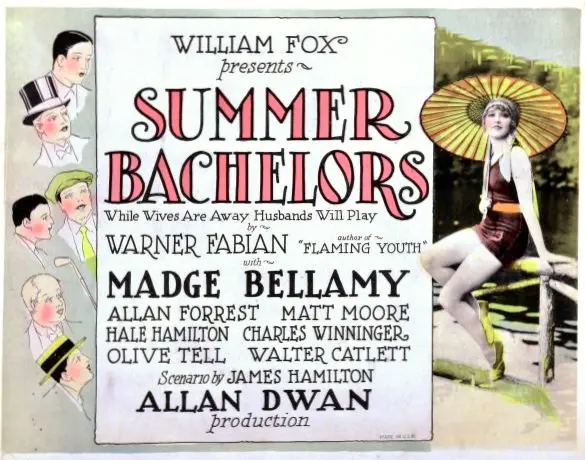
Is Summer Bachelors a film that demands your attention in the 21st century? Short answer: Yes, but primarily as a fascinating sociological artifact of the pre-Depression era rather than a narrative powerhouse.
This film is for the cinephile who craves a window into the evolving gender dynamics of the 1920s and those who enjoy seeing the 'independent woman' archetype in its infancy. It is definitively NOT for viewers who require fast-paced action or those who find the theatrical gestures of silent-era acting to be a barrier to emotional engagement.
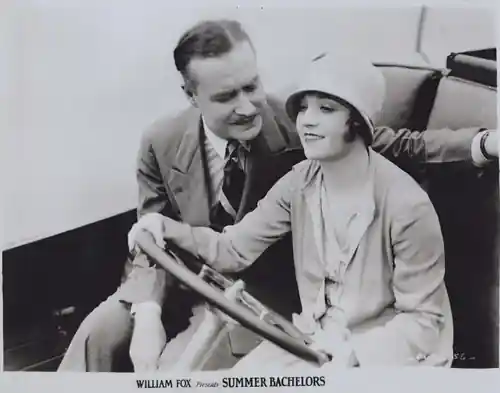
1) This film works because it captures the genuine cynicism of the 'Lost Generation' regarding the institution of marriage, using the 'Summer Bachelor' trope as a clever vehicle for social commentary.
2) This film fails because it eventually flinches, retreating from its radical premise into a conventional romantic resolution that feels unearned given Derry's early convictions.
3) You should watch it if you want to see a rare, early portrayal of a woman who prioritizes her career and personal freedom over societal expectations.
Madge Bellamy delivers a performance that is surprisingly grounded for 1926. As Derry Thomas, she doesn't play the victim or the vamp; she plays a woman with a plan. In an era where films like The Virgin Queen often leaned into historical melodrama, Summer Bachelors feels refreshingly modern in its urban setting. Derry’s disillusionment isn't born of a broken heart, but of observation. She sees the 'Summer Bachelors' for what they are: men who are only 'good' when their wives are watching. This observation is a sharp needle pricking the balloon of Victorian morality.
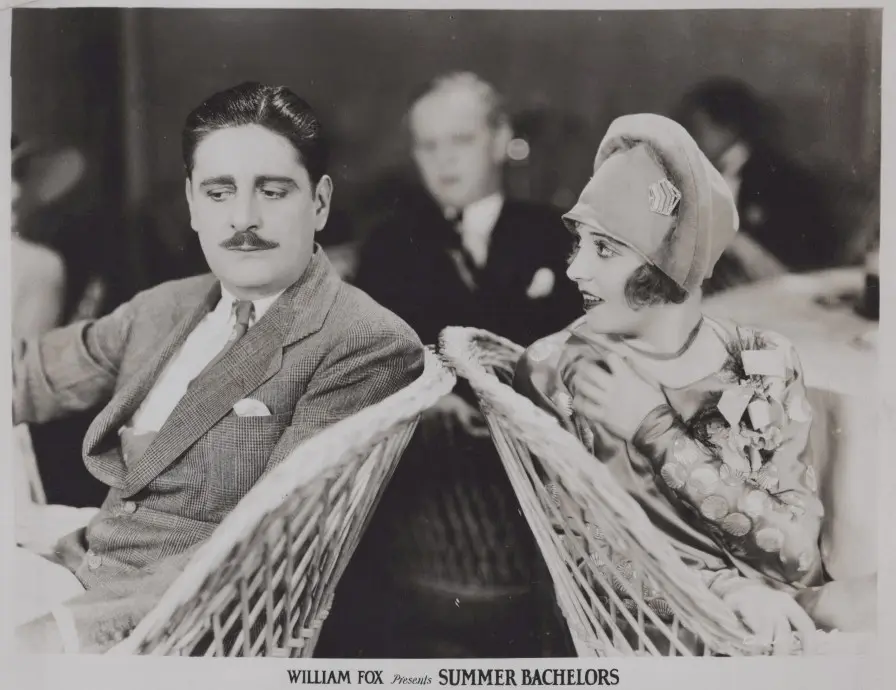
Take, for instance, the scene in the New York nightclub where Derry observes the middle-aged businessmen acting like schoolboys. The direction captures the frantic, almost desperate energy of their leisure. It’s a moment that mirrors the social observations found in Politics, where the personal and the public are inextricably linked. Bellamy’s expressions in these moments—a mix of amusement and pity—elevate the film above standard slapstick or romance. She is the audience's surrogate, the sane person in a room full of seasonal madness.
The film’s portrayal of the 'roadhouse' culture is where it finds its visual rhythm. These aren't just sets; they are characters. The contrast between the stuffy, respectable estates and the wild, neon-soaked nightclubs provides a visual shorthand for the internal conflict Derry faces. While films like On a Summer Day might focus on the pastoral ideal, Summer Bachelors is obsessed with the asphalt and the electric light. It’s gritty in its own high-society way.

The cinematography, though standard for the time, excels in capturing the scale of the parties. There is a sense of claustrophobia in the fun. The men, played with varying degrees of buffoonery by the likes of Walter Catlett and Hale Hamilton, represent a specific type of American masculinity that was emerging at the time: the bored, wealthy provider looking for a temporary escape. Their interactions with Derry are fraught with a tension that the film doesn't always know how to resolve. Are they predators, or are they just pathetic? The film suggests both, which is a surprisingly nuanced take for a 1920s comedy.
Should you invest your time in this silent-era exploration of bachelorhood? You should watch this film if you are a student of film history or someone interested in the roots of the modern romantic comedy. It offers a rare, cynical glimpse into 1920s views on marriage that predates the strict enforcement of the Hays Code. However, if you are looking for a story that maintains its subversive edge until the final frame, you may find the ending disappointing. It is a vital piece of the puzzle for understanding how women were portrayed before the industry became more conservative in the 1930s.
The supporting cast is a 'who's who' of silent-era character actors. Walter Catlett brings a manic energy that provides much-needed levity, while Olive Tell offers a more grounded, traditional foil to Derry’s radicalism. However, the pacing often stutters. Much like News in Brief, the film sometimes feels like a series of vignettes rather than a cohesive narrative. It wanders. It lingers on party scenes that, while visually interesting, don't always move the needle on Derry's character development.
The writing by Samuel Hopkins Adams is the film's secret weapon. Adams, who would later write the story for the legendary It Happened One Night, has a gift for dialogue—even when it's confined to title cards. The wit is sharp, and the 'situations and contradictions' mentioned in the plot are handled with a sophisticated touch. It lacks the heavy-handed moralizing found in The Slacker, opting instead for a more observational, almost journalistic tone.
Technically, Summer Bachelors is competent but not revolutionary. The lighting in the nightclub scenes is effective, creating a sense of smoky atmosphere despite the limitations of black-and-white film. The editing is functional, though it lacks the experimental flair seen in European films of the same year, such as Der verlorene Schuh. It’s a very American film: straightforward, glossy, and focused on the stars.
The biggest technical flaw is the repetitive nature of the 'party' sequences. By the third nightclub, the visual language has been exhausted. We see the same types of shots, the same frenetic dancing, and the same wide-eyed reactions from the supporting cast. It becomes a bit of a slog in the middle act. It works. But it’s flawed. The film’s ambition to be a social satire is occasionally undermined by its need to be a crowd-pleasing entertainment.
To truly appreciate Summer Bachelors, one must understand the 'New Woman' of the 1920s. Derry Thomas is the cinematic embodiment of this shift. She isn't just looking for a husband; she’s looking for a life. This puts the film in conversation with other works like Borrowed Clothes, which also dealt with the performative nature of social class and gender. In Summer Bachelors, marriage is treated as a performance that Derry refuses to audition for.
This film also serves as a precursor to the screwball comedies of the 1930s. You can see the DNA of future classics in the way Derry banters with her suitors. It’s a bridge between the Victorian melodrama of the early silent era and the sophisticated 'battle of the sexes' that would define the next decade. While it doesn't have the emotional depth of A Cumberland Romance, it has more 'bite' in its social observations.
Summer Bachelors is a fascinating, if slightly uneven, journey into the heart of 1920s social anxiety. It dares to ask if marriage is a necessary component of a woman's happiness, even if it eventually settles for a traditional answer. Madge Bellamy is a revelation, providing a performance that feels years ahead of its time. While the film occasionally loses its way in the champagne bubbles of its own party scenes, its central premise remains a compelling look at independence and its costs. It is a flawed but essential watch for anyone interested in the evolution of the American romantic comedy. It’s a snapshot of a world on the brink of change, captured with wit and a surprising amount of heart.
IMDb 6.8
1929
Community
Log in to comment.