DbcultAccessing Vault...
7.4/10
Senior Film Conservator
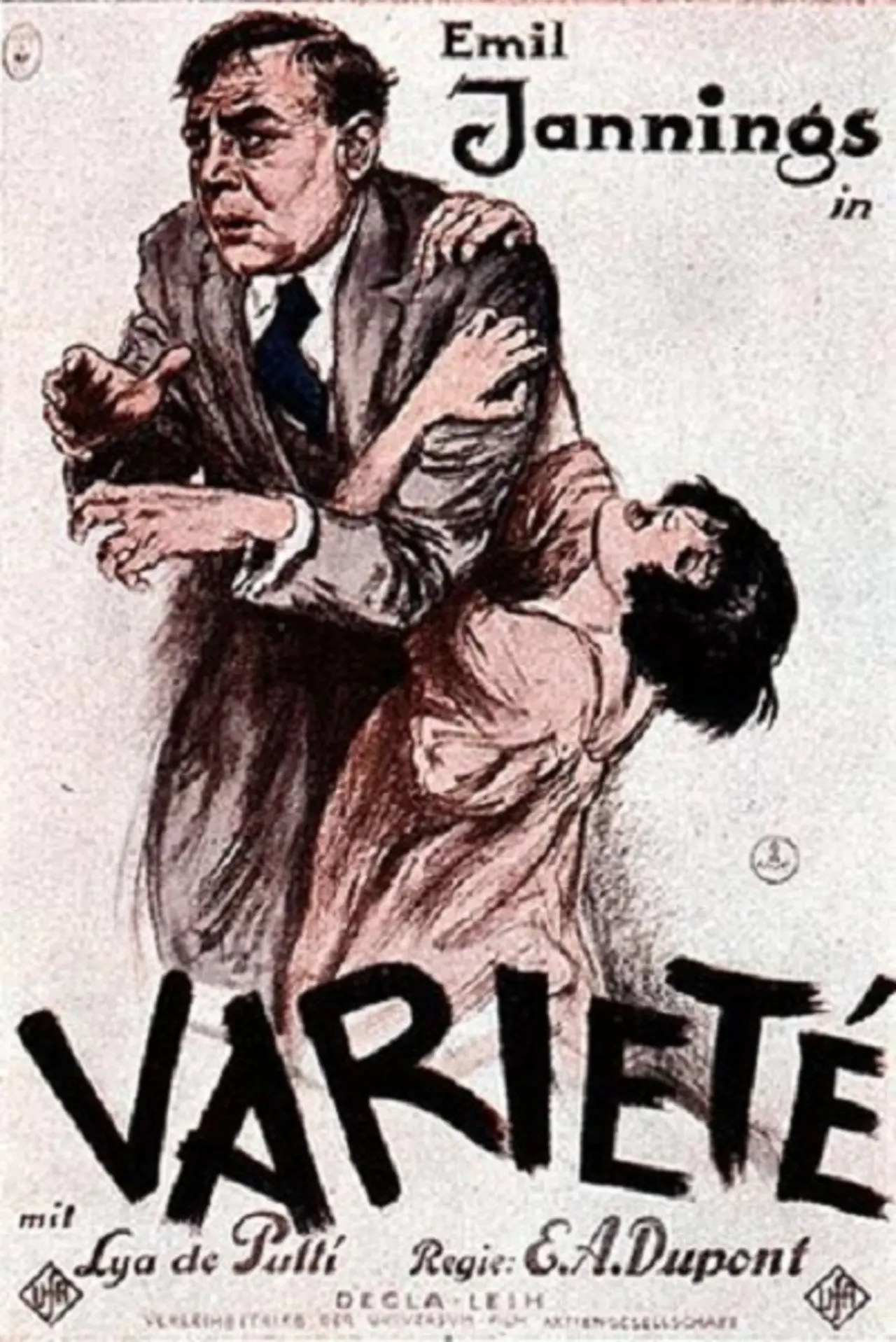
A definitive 7.4/10 rating for a film that redefined the boundaries of cult cinema. Variety remains a cornerstone of transgressive art.
The year 1925 marked a tectonic shift in the grammar of visual storytelling, and at the epicenter of this seismic event stood Variety (Varieté). Directed by Ewald André Dupont, this film isn't merely a relic of the Weimar Republic; it is a pulsating, sweat-soaked testament to the power of the moving image. While contemporary audiences might be accustomed to the kinetic frenzy of modern action, the sheer audacity of Karl Freund’s 'unbound camera' in this silent epic remains a staggering achievement that dwarfs much of today's digital artifice.
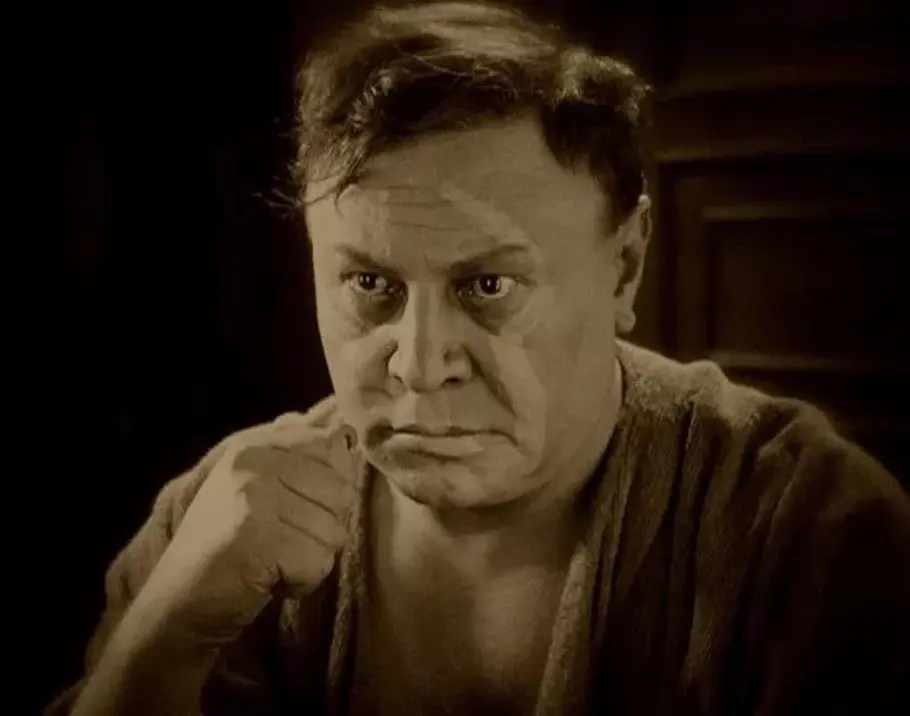
At the center of this maelstrom is Emil Jannings, an actor whose physicality was his greatest instrument. In Variety, Jannings portrays 'Boss' Huller with a bovine intensity that is both terrifying and heartbreaking. We first encounter him from behind—a massive, hunched mountain of a man in a prison cell. This framing is crucial; it establishes the theme of the 'look' and the 'gaze' that permeates the entire film. Huller’s transition from a contented, if bored, proprietor of a carnival 'erotic sensation' tent to a man possessed by the siren call of the high wire is rendered not through dialogue, but through the shifting planes of his face.
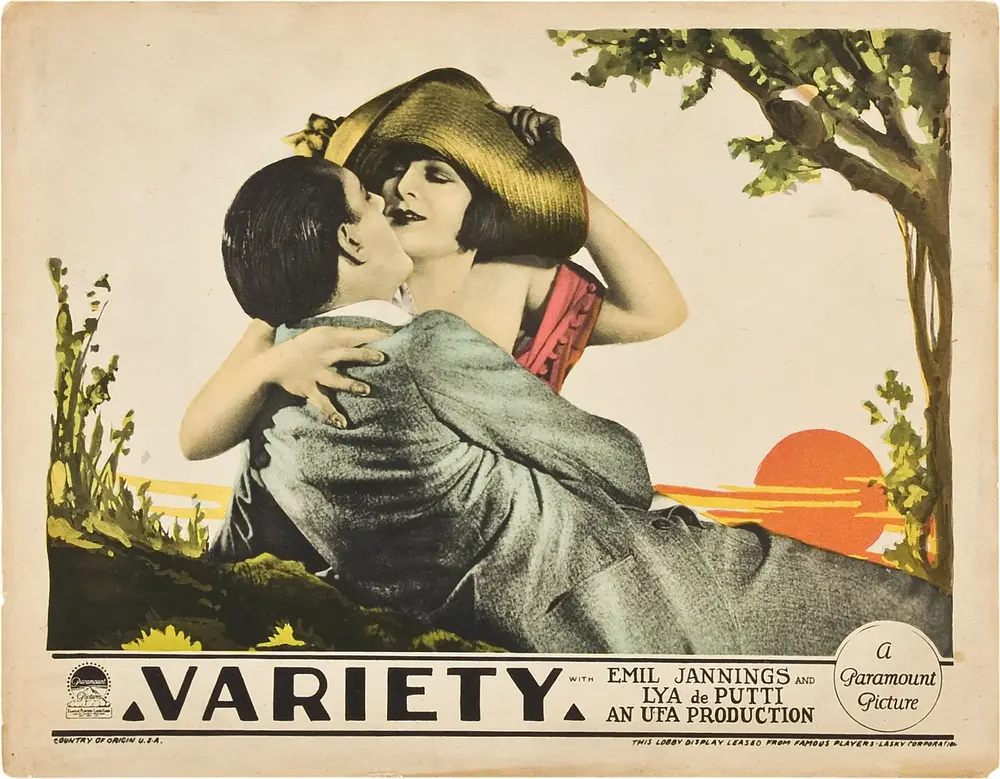
When he encounters Berta-Marie, played with a feline, opportunistic grace by Lya De Putti, the film shifts from a gritty realist drama into something far more feverish. Their chemistry is not the sanitized romance of Hollywood’s Golden Age; it is a raw, transactional magnetism. Much like the characters in The Jungle Child, they are driven by instincts that bypass the intellect entirely. Huller’s abandonment of his wife and child isn't portrayed as a noble pursuit of art, but as a pathetic, desperate grab at a vanishing youth.
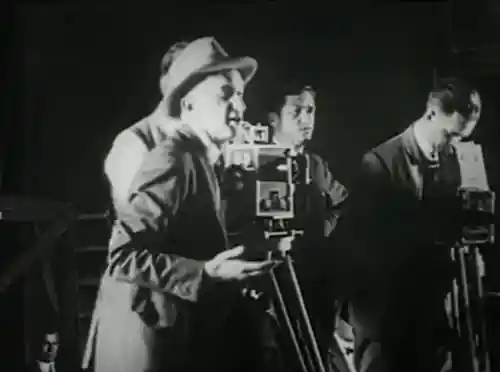
If Jannings is the soul of the film, Karl Freund is its nervous system. Before Variety, the camera was largely a static observer, a theatrical proxy. Freund shattered this convention. In the Berlin Wintergarten sequences, the camera becomes an acrobat itself. It swings from the trapeze, dives into the audience, and swirls around the performers in a dizzying display of subjective cinematography. This 'entfesselte Kamera' (unbound camera) was revolutionary, placing the viewer not in the safety of the stalls, but in the terrifying vacuum of the 'Salto Mortale'.
The visual language here communicates the internal state of the characters. When Huller realizes Artinelli’s betrayal, the world tilts. The camera mimics his vertigo, his mounting nausea. It is a technique that predates Hitchcock’s obsession with psychological POV by decades. This isn't just technical showboating; it’s a necessary expansion of the medium to express the inexpressible. Unlike the more traditional framing found in The Inner Voice, Variety demands a visceral reaction from its audience, forcing them to feel the wind of the swing and the cold sweat of the performer.
Warwick Ward’s Artinelli is a masterpiece of understated villainy. He is the antithesis of Huller’s brute strength—refined, cold, and devastatingly precise. His seduction of Berta-Marie is not a grand passion but a calculated exercise in power. The way he looks at her, and the way the camera captures his predatory gaze, creates an atmosphere of mounting dread. The trio’s dynamic is a ticking time bomb. Every night, Huller must trust his life to the man who is systematically destroying his soul. The trapeze act becomes a nightly ritual of potential murder.
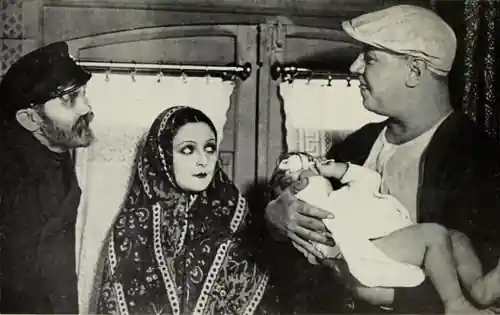
This psychological tension is far more sophisticated than the melodramatic tropes often found in films of the era, such as Foolish Lives. In Variety, the conflict is internal and unspoken. The tragedy isn't that Huller is a victim of a villain, but that he is a victim of his own obsession. He has traded his domestic peace for a fleeting moment of glory and a woman who views him as a stepping stone. The irony is as thick as the circus dust.
The film’s middle act in Berlin is a stunning portrayal of the city as a labyrinth of vice and spectacle. The Wintergarten is rendered as a cathedral of light and shadow, where the elite gather to watch the desperate risk their lives for entertainment. Dupont captures the voyeuristic nature of the audience with a cynical eye. We see the faces in the crowd—distorted, hungry, and ultimately indifferent to the human cost of the performance. This social commentary elevates Variety above a simple love triangle; it becomes a critique of the spectacle itself.
The use of the Original New York Jazz Orchestra adds a layer of contemporary grit to the setting. This was the 'Roaring Twenties' in its most European, decadent form. The contrast between the tawdry, rural fairgrounds of the first act and the polished, lethal glamour of Berlin is stark. It mirrors Huller’s own journey from a man who controlled his small world to a man who is swallowed whole by a much larger, colder machine. In many ways, it shares a thematic DNA with the exploration of societal shifts seen in The Love Letter, though Variety is far more aggressive in its execution.
The climax of the film is a masterclass in suspense. The 'Salto Mortale'—the leap of death—is no longer just a circus trick; it is the moment of truth. As Huller stands on the platform, the camera lingers on his hands, his eyes, and the dizzying drop below. The audience knows what he knows. The tension is unbearable because the film has spent so much time establishing the physical stakes of the act. When the final confrontation occurs in the cramped, shadowy confines of their living quarters, it feels inevitable. The violence is not choreographed for excitement; it is clumsy, heavy, and final.
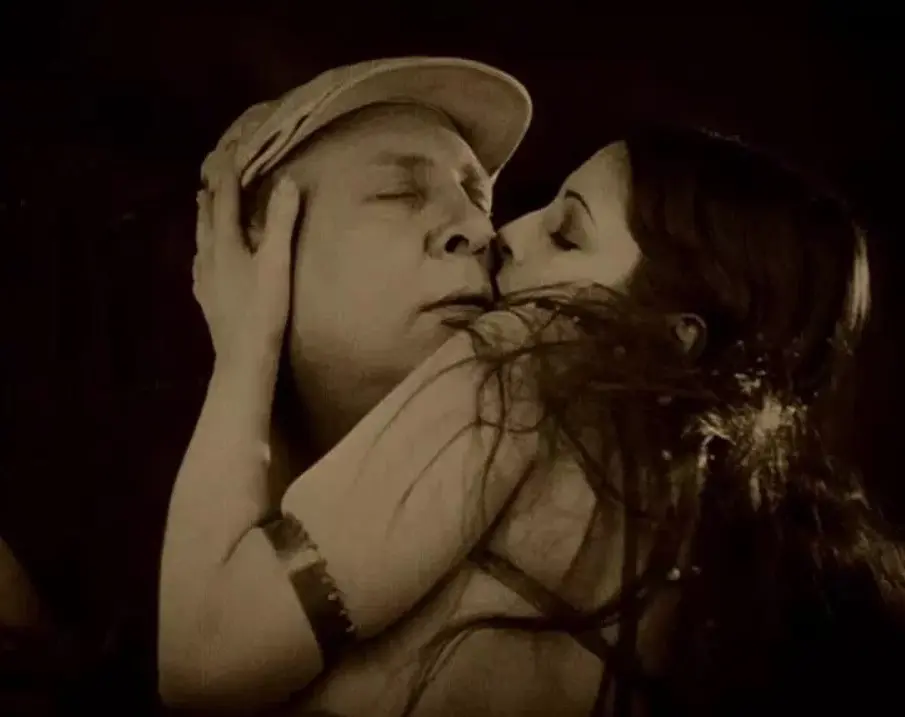
The framing of the story as a confession to a warden adds a layer of tragic fatalism. Huller is not seeking forgiveness; he is simply recounting the mechanics of his own destruction. The final shots of the prison gates closing are a somber echo of the film’s beginning. The cycle of 'variety'—the endless search for new sensations—has led him to a place of absolute stasis. It’s a haunting conclusion that lingers long after the screen goes dark, much like the somber reflections in Lest We Forget (1924).
To watch Variety today is to witness the birth of modern cinema. Every 'shaky cam' in a contemporary thriller, every POV shot in a horror movie, and every sweeping crane shot in a blockbuster owes a debt to Dupont and Freund. They proved that the camera could do more than record; it could interpret. It could feel. The film’s influence can be seen in the works of Hitchcock, Murnau, and even the noir directors of the 1940s. It remains a high-water mark of the silent era, a film that doesn't need intertitles to explain the agony of a man who has lost everything.
Variety is a visceral, intoxicating experience that transcends its age. It is a film of shadows and sweat, of soaring heights and crushing depths. Emil Jannings delivers a performance of monumental scale, while the cinematography of Karl Freund remains one of the greatest technical achievements in history. If you wish to understand the true potential of cinema as a visual medium, look no further than this tragic masterpiece of the Weimar era.
IMDb 6
1925
Community
Log in to comment.