DbcultAccessing Vault...
Cult Review
Senior Film Conservator
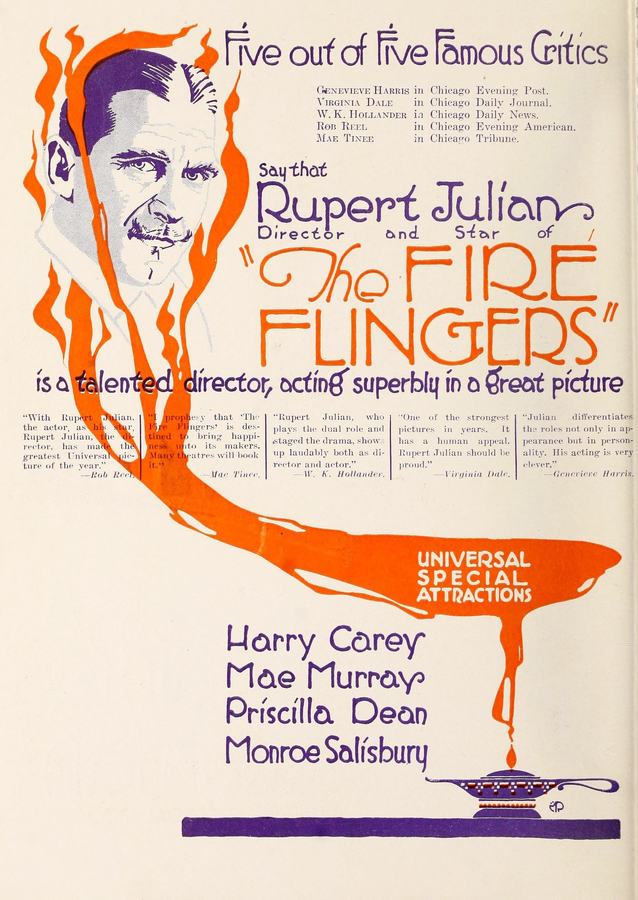
Silent cinema, often dismissed by the uninitiated as a relic of a bygone era, possessed an unparalleled capacity for exploring the intricate labyrinths of human psychology with a raw, visceral intensity. Stripped of dialogue, these early narratives relied on the expressive power of performance, the evocative sweep of cinematography, and the universal language of gesture to convey profound emotional truths. Among the myriad treasures unearthed from this fertile period, 1919's The Fire Flingers stands as a particularly fascinating specimen, a narrative that, despite its century-old vintage, still crackles with a contemporary relevance, delving into themes of identity, social mobility, and the mutable nature of love. It's a film that asks us to ponder how much of our essence is intrinsic and how much is merely a performance, dictated by circumstance and expectation.
At its core, The Fire Flingers presents a premise that is both audacious and deeply unsettling: a man of meager means, burdened by an existence of unending struggle and domestic discord, finds himself inadvertently responsible for the death of his wealthy doppelgänger. This isn't merely a convenient plot device; it's a cosmic intervention, a cruel twist of fate that offers a desperate soul an escape hatch, a chance to shed his old skin and don a new, far more appealing, one. The film, penned by Waldemar Young and William J. Neidig, navigates this treacherous moral landscape with a compelling blend of melodrama and psychological insight, avoiding easy answers and instead embracing the ambiguities inherent in such a radical transformation. It’s a narrative that, for its time, pushed boundaries, daring to suggest that a man, through sheer force of will and a fortuitous accident, could literally reinvent himself, not just his circumstances.
The success of such a high-concept narrative hinges almost entirely on the lead performance, and E. Alyn Warren rises to the challenge with an astonishing display of versatility and nuance. Warren, tasked with portraying not one, but two distinct individuals, and then a third, hybrid persona, delivers a performance that is nothing short of captivating. Initially, he embodies the downtrodden, perhaps even brutish, poor man, conveying his desperation and simmering resentment through subtle shifts in posture and a haunted gaze. His wealthy counterpart, on the other hand, is painted with broader strokes of arrogance and entitlement. The true magic, however, unfolds as Warren's character assumes the identity of the deceased. Here, he is forced to perform wealth, to mimic the mannerisms and expectations of a class to which he does not belong. This isn't just a physical transformation; it's a profound psychological undertaking, and Warren conveys the constant internal tension of a man perpetually on the brink of exposure, yet simultaneously blossoming under the unexpected benefits of his new station. It's a performance that resonates with the complexity seen in films like The Pretenders, where characters frequently grapple with the masks they wear.
What truly elevates Warren's portrayal is the way he allows the new identity to subtly reshape the core of the character. The imposter, freed from the crushing weight of poverty and the internal pressures that made him abusive, begins to exhibit traits of kindness and consideration. This isn't merely a calculated act; it feels like a genuine evolution, a man discovering a better version of himself under the guise of another. This intricate dance between assumed identity and genuine self-improvement is where The Fire Flingers truly shines, prompting viewers to question whether environment and circumstance are more defining than inherent character. The film suggests that perhaps, given different conditions, even a morally compromised individual might find a path towards a more humane existence, a notion that feels remarkably progressive for its time.
Equally compelling is Fritzi Ridgeway's performance as the wife, a character whose journey is perhaps even more tragic and emotionally resonant than that of her husband. Her initial despair, born from a life of hardship and an abusive spouse, is palpable. Ridgeway masterfully conveys the quiet suffering and resignation of a woman who has learned to expect little from life. However, her transformation upon encountering the 'new' version of her husband is a marvel of understated acting. The hesitant hope, the burgeoning affection, and the ultimate, tender love she develops for this kinder, gentler man are portrayed with a delicate sensitivity that is profoundly moving. She falls in love not with a different person, but with a different version of the man she married, unaware of the profound deception at play. This central romantic entanglement, built on a foundation of lies, creates an excruciating tension that permeates every frame of the film.
Ridgeway's character embodies the film's most poignant question: Can love truly blossom from deceit, and if so, what does that say about the nature of love itself? Her unwitting preference for the imposter highlights the transformative power of kindness and respect, even when delivered by a man living a lie. The film doesn't judge her for this shift in affection; rather, it invites empathy for a woman who, for the first time, experiences genuine warmth and consideration from the man she believes is her husband. It’s a narrative thread that could easily become mawkish, but under the direction, and with Ridgeway's nuanced performance, it becomes a heartbreaking exploration of human need and resilience. One might draw parallels to the complexities of relationships under duress found in films like His Convict Bride, where circumstances heavily dictate emotional landscapes.
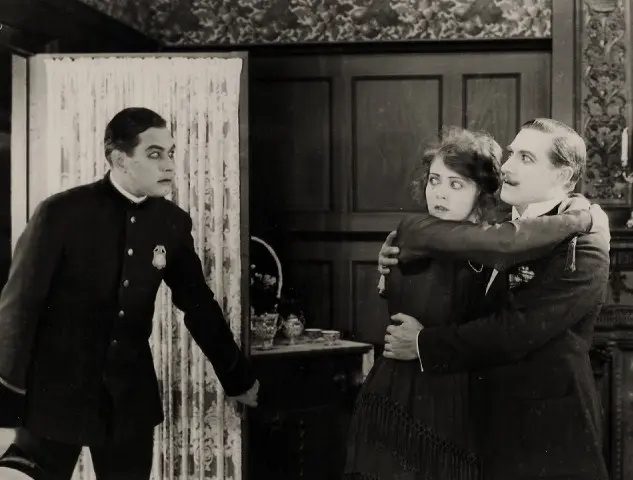
The ensemble cast, though often overshadowed by Warren and Ridgeway's central performances, contributes significantly to the film's rich tapestry. Fred Kelsey, Will Jeffries, Rupert Julian, Clyde Fillmore, William Lloyd, Jane Novak, and Fay Tincher each inhabit their roles with a distinct presence, adding layers of intrigue and social commentary. From the suspicious gaze of a detective to the unsuspecting trust of friends and servants, these characters serve as crucial anchors in the imposter's increasingly elaborate charade. Their reactions, their acceptance, and their occasional moments of doubt underscore the precariousness of the deception, ratcheting up the tension and reminding the audience of the ever-present threat of exposure. The film excels in portraying how the imposter must navigate not just one, but a whole network of relationships, each with its own set of expectations and potential pitfalls. This intricate social web is reminiscent of the detailed world-building seen in serials like Fantômas: In the Shadow of the Guillotine, where a protagonist's actions ripple through an entire societal structure.
The writers, Waldemar Young and William J. Neidig, deserve immense credit for crafting a narrative that, while rooted in a fantastical premise, maintains a strong sense of psychological realism. They meticulously build the world around the imposter, ensuring that his new life, though seemingly idyllic, is constantly fraught with the danger of discovery. The plot twists are not merely for shock value; they serve to deepen the thematic exploration of identity and morality. The film doesn't shy away from the darker implications of its central conceit, nor does it offer a simplistic moral resolution. Instead, it invites the audience to grapple with the complex ethical dilemmas presented, a hallmark of thoughtful storytelling that transcends its era. The narrative craftsmanship here is particularly sharp, avoiding the more episodic or simplistic structures sometimes found in other films of the period, such as the more straightforward romantic tales like Polly of the Circus or the melodramatic turns of The Red, Red Heart.
Visually, The Fire Flingers employs the expressive techniques characteristic of early silent cinema to great effect. The cinematography, though perhaps not as overtly experimental as some European contemporaries like Der Teufelswalzer, is nonetheless effective in conveying mood and narrative progression. The stark contrast between the impoverished settings of the initial scenes and the lavish interiors of the wealthy man's estate visually reinforces the chasm the protagonist must cross. Lighting plays a crucial role, often highlighting the internal turmoil of Warren's character, casting him in shadows when doubt creeps in, or illuminating him when he feels a surge of confidence in his new persona. The film's aesthetic choices are never arbitrary; they are always in service of the story, enhancing the emotional impact and thematic depth.
The themes explored in The Fire Flingers are remarkably prescient. It's a profound meditation on the malleability of identity, suggesting that our sense of self is not fixed but can be profoundly altered by external circumstances and internal choices. The film challenges the notion of inherent evil or goodness, positing that a man's behavior can be a direct product of his environment and the opportunities afforded to him. It also provocatively questions the foundations of love: is it truly an immutable connection to a soul, or is it a response to the qualities and actions a person exhibits, regardless of their true identity? This philosophical quandary elevates the film beyond a simple crime drama, positioning it as a thoughtful exploration of existential questions. It forces us to consider the ethical implications of such a deception and the profound impact it has on all involved, particularly the wife, whose newfound happiness is predicated on a fundamental lie.
While The Fire Flingers may not enjoy the same widespread recognition as some of its more celebrated silent contemporaries, its thematic richness and compelling performances ensure its place as a significant piece of cinematic history. It's a film that speaks to the universal human desire for escape, for a better life, and the lengths to which individuals might go to achieve it. Its exploration of mistaken identity and the psychological toll of living a lie predates and resonates with countless films that would follow, from noir thrillers to modern psychological dramas. Its narrative sophistication is a testament to the ingenuity of early filmmakers who, despite technological limitations, crafted stories that continue to provoke thought and stir emotions.
Comparing it to other films of its era, one can see both its uniqueness and its shared lineage. While it lacks the fantastical elements of something like Skazka mira or the overt adventure of Nugget Nell, it shares a keen interest in human drama and social commentary with films like The Fifth Wheel or The Innocence of Ruth. The moral ambiguity and the exploration of a 'wolf in sheep's clothing' motif can even be distantly related to the themes in The Wolf, albeit with a unique spin. The film’s dramatic tension, driven by the imposter’s precarious situation, is a masterclass in suspense, keeping the audience on edge throughout. The very concept of a physical likeness dictating destiny also echoes in narratives like Sleeping Beauty, though in a vastly different genre, where appearance plays a pivotal role in a character's fate.
In an age where visual effects and rapid-fire dialogue often take precedence, The Fire Flingers reminds us of the enduring power of a well-told story, compelling performances, and a narrative that dares to delve into the complex, often uncomfortable, truths of the human condition. It's a film that, despite its silent nature, speaks volumes, inviting viewers to reflect on the masks we wear, the identities we project, and the profound impact of both circumstance and choice on the trajectory of our lives. It’s a compelling argument for revisiting the rich archives of silent cinema, where gems like this await rediscovery, offering insights that remain surprisingly fresh and thought-provoking. The film is not just a historical artifact; it is a vibrant, living narrative that continues to spark conversation about what it truly means to be oneself, or indeed, someone else entirely.
IMDb —
1930
Community
Log in to comment.