DbcultAccessing Vault...
Cult Review
Senior Film Conservator
Is this film worth watching today? Short answer: Yes, but primarily as a historical curiosity and a masterclass in juvenile ensemble timing. This film is for those who find joy in the unrefined anarchy of 1920s slapstick and for collectors of silent-era 'gang' comedies, but it is NOT for viewers who demand a cohesive plot or emotional depth in their romantic narratives.
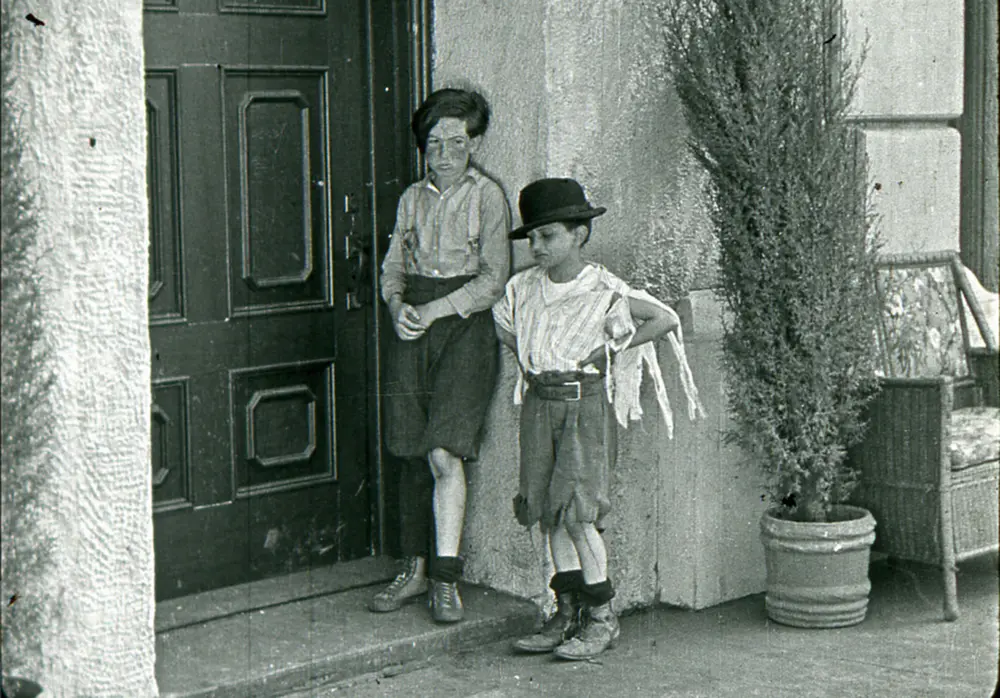
Getting Hitched functions less as a movie and more as a controlled riot. While the premise suggests a sentimental look at childhood sweethearts finally reaching the altar, the film quickly abandons its leads to focus on the destructive potential of the McDougall Alley Kids. It is a fascinating, if occasionally repetitive, look at how early cinema used children to poke holes in the balloon of upper-class dignity.
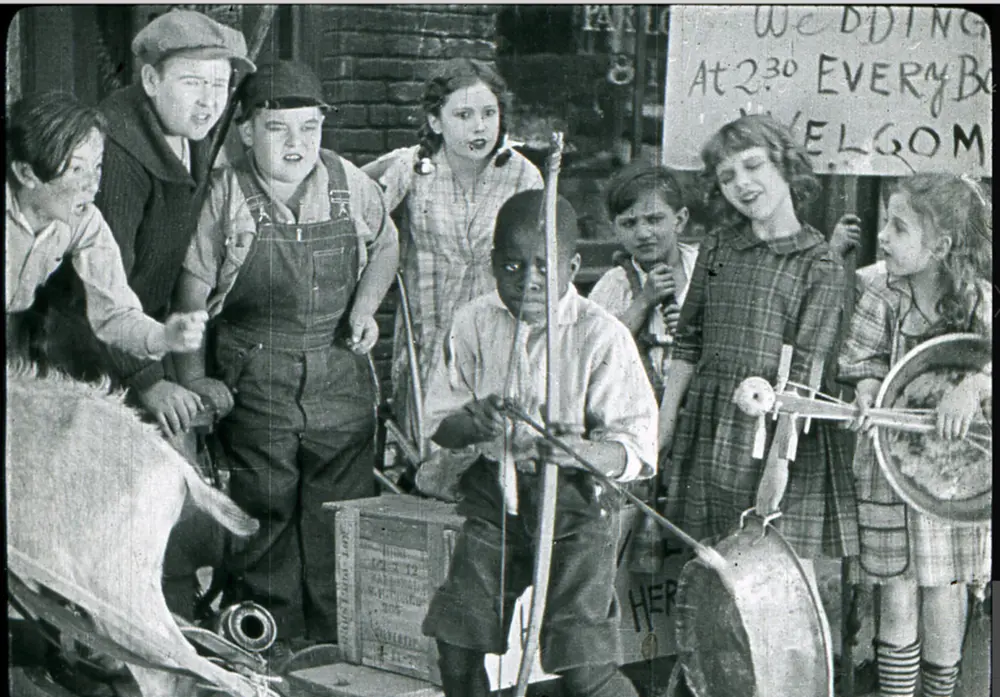
1) This film works because of the relentless energy of the McDougall Alley Kids, who bring a sense of genuine, unscripted chaos to the meticulously designed Tilford mansion set.
2) This film fails because the central romance between the two 'favorites' is completely sidelined, serving as nothing more than a thin clothesline to hang various gags upon.
3) You should watch it if you enjoy the 'Our Gang' style of comedy and want to see how silent filmmakers handled complex group choreography in a single interior location.
The most striking element of Getting Hitched is how it utilizes the Tilford mansion. In many films of this era, such as The Dragon Painter, the environment is a source of beauty or spiritual reflection. Here, the mansion is a jungle gym. The long, winding staircase is not a symbol of elegance; it is a slide. The banister becomes the primary vehicle for the kids' introduction to the high-society world, and the film plays this for all it is worth.
There is a specific moment where the kids line up to slide down the banister that feels like a precursor to modern 'stunt' comedy. The rhythm of the sliding, the landings, and the eventual escalation leads to the film's most visceral gag: Fatty falling through the floor. This isn't just a pratfall; it’s a structural failure. When Fatty descends from the balcony and ends up in the cellar, the film is making a brutally simple point: the working-class energy of the Alley Kids is literally too heavy for the fragile floorboards of the elite.
The pacing of these sequences is frantic. Unlike the more measured beats found in Pilar Guerra, Getting Hitched relies on a rapid-fire delivery of physical gags. Directorially, the choice to keep the camera mostly static allows the audience to appreciate the full scale of the ensemble's movement. It’s a busy frame, often filled with half a dozen children moving in different directions, yet it never feels cluttered—a testament to the blocking of the 'McDougall Kids'.
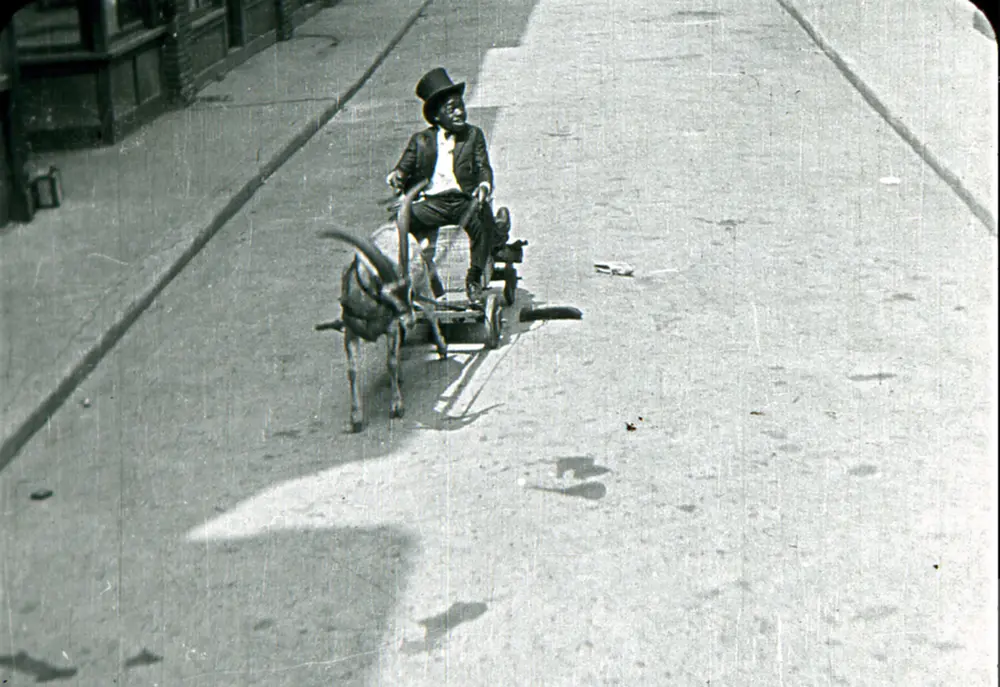
The performances by the McDougall Alley Kids—particularly Bubbles, Barney, and Faye—are remarkably naturalistic for the 1920s. While silent acting often veered into the theatrical, these children behave like actual children. They are distractible, impulsive, and occasionally cruel. Their decision to 'hitch' the wedding wagon to a tree isn't played as a malicious act, but as a simple, logical extension of their play.
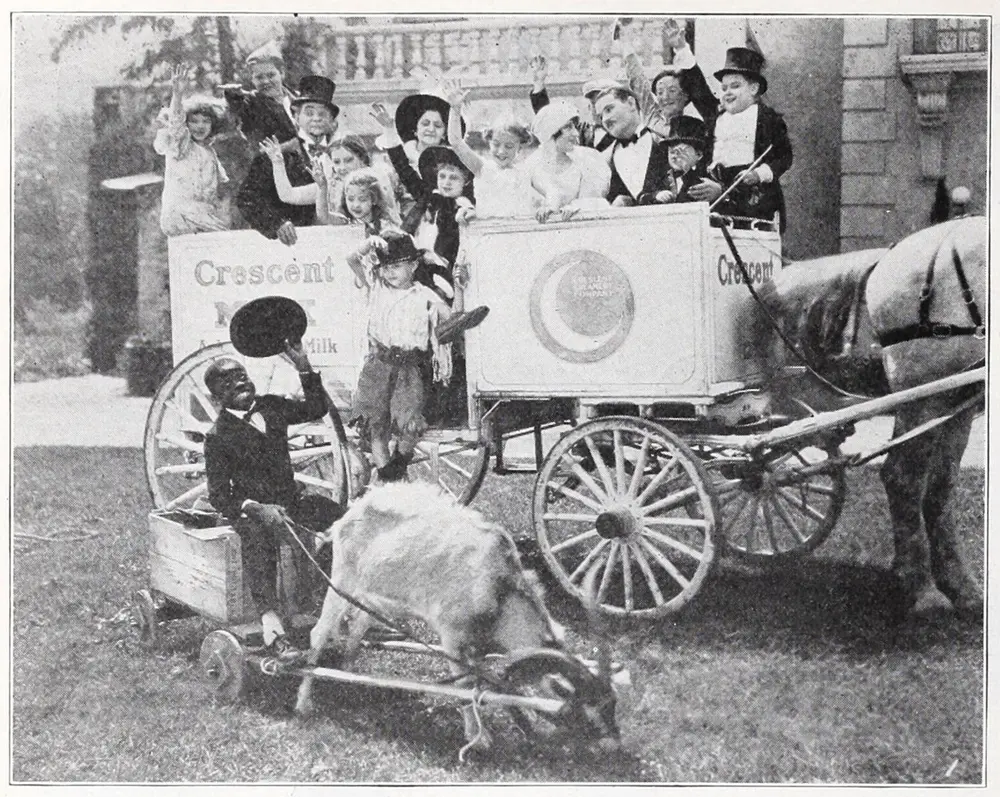
Compare this to the more stylized performances in The Battling Orioles. While that film also deals with group dynamics and physical competition, Getting Hitched feels more grounded in a specific type of urban folklore. The kids are a collective unit, a force of nature that the 'charity worker' Miriam Tilford mistakenly believes she can curate and display in her home. The comedy arises from her hubris.
The standout performer is arguably Donald Haines. His timing during the banister sequence is impeccable. There is a look of pure, unadulterated focus on his face as he prepares for his 'stunt' that captures the essence of childhood play. It’s these small, human moments that prevent the film from becoming a mere series of accidents. We are not just watching kids fall; we are watching kids enjoy the fall.
Yes, Getting Hitched is worth watching if you are interested in the evolution of the 'kid comedy' subgenre. It provides a bridge between the early short-form slapstick and the more sophisticated feature-length comedies that would follow. It is a short, punchy experience that doesn't overstay its welcome, clocking in with a runtime that respects the viewer's attention span.
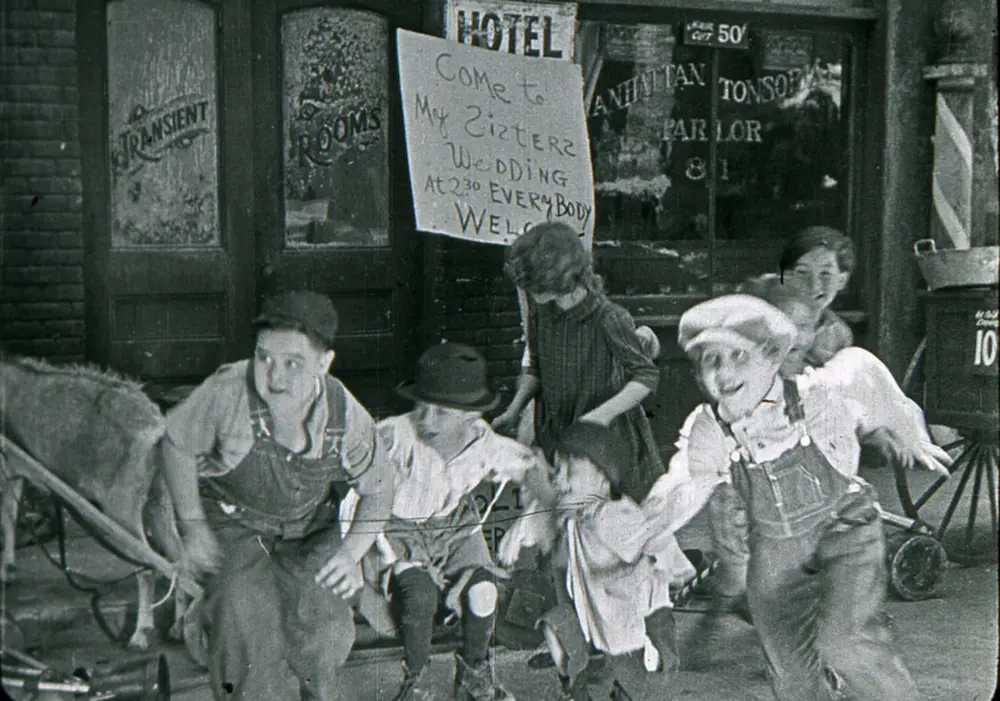
However, it is not a film for those seeking deep character arcs. The 'favorites' who are getting married are almost entirely forgotten by the second act. If you are looking for a romance, look elsewhere, perhaps toward The Girl from Nowhere. But if you want to see a car tied to a tree, this is your movie.
The tone of Getting Hitched is surprisingly cynical for a 'wedding' movie. There is an undercurrent of class resentment that the film never explicitly addresses but constantly illustrates. The Alley Kids don't belong in the Tilford mansion, and they know it. Their 'antics' are a form of territorial marking. By the time they are 'looking on from the sidelines' at the actual ceremony, they have already fundamentally altered the space.
The pacing is the film's greatest strength. It starts with a slow, sentimental buildup—the 'shadow of McDougall Alley' romance—but once the kids arrive at the mansion, the throttle is wide open. The transition from the drawing room to the balcony to the cellar is handled with a fluid logic that keeps the viewer engaged. It lacks the experimental flair of something like No Money, No Fun, but it makes up for it with sheer momentum.
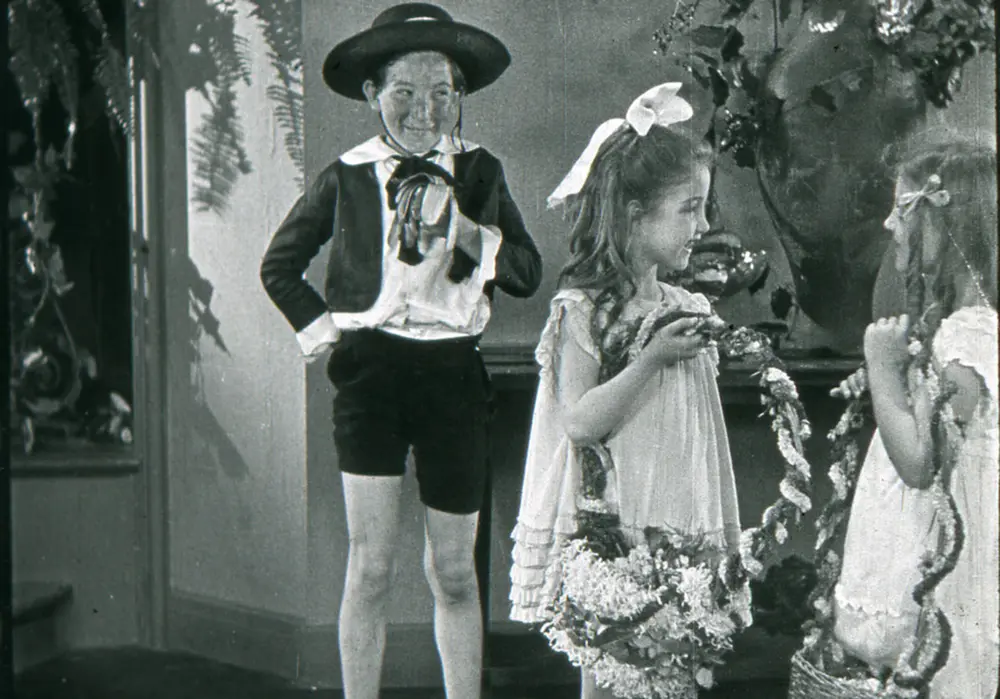
The cinematography is functional rather than poetic. It serves the comedy. The camera placement is designed to capture the full trajectory of a fall or the wide-angle chaos of the kids running through the drawing room. It’s effective, if uninspired. The real 'art' here is in the editing and the physical performance of the children.
Pros: High-energy performances; excellent use of interior space for comedy; a genuinely funny final prank; short and digestible runtime.
Cons: Thin plot; repetitive gags in the middle section; the 'romance' feels like an afterthought; some of the physical humor is dated by modern safety standards.
Getting Hitched is a fascinating relic. It’s a film that understands the inherent comedy of putting 'low-class' energy into a 'high-class' setting. While it lacks the emotional resonance of some of its contemporaries, like Love's Sweet Piffle, it excels in pure, unadulterated movement. It works. But it’s flawed. It is a movie that celebrates the messiness of life over the tidiness of tradition. If you can forgive its narrative shortcomings, you will find a joyful, chaotic experience that still manages to raise a smile nearly a century later. It is a reminder that in the world of cinema, a well-timed fall through a floor is often more memorable than a 'I do'.
IMDb —
1919
Community
Log in to comment.