DbcultAccessing Vault...
4.7/10
Senior Film Conservator
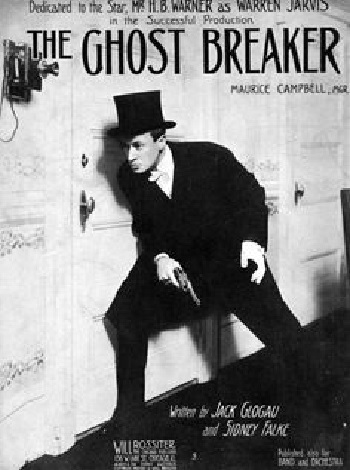
A definitive 4.7/10 rating for a film that redefined the boundaries of cult cinema. The Ghost Breaker remains a cornerstone of transgressive art.
A locket, a lethal paper chase, and a princess who learns that every treasure map ends in a heartbeat.
Cecil B. DeMille’s fifth feature—shot in the autumn of 1914 when Hollywood was still a sun-blistered fruit grove—feels like a parchment soaked in absinthe: brittle, hallucinatory, reeking of old-world rot and new-world adrenaline. The Ghost Breaker is not merely a proto-horror romp through corridors of counterfeit ghosts; it is a cinematic séance where inherited guilt, colonial plunder, and the first flickers of American swagger collide inside a Spanish castle that never existed outside a Los Angeles backlot.
The film survives only in fragmentary 35mm reels stored at the Library of Congress, yet what remains detonates across the screen with a nitrate hiss: candle-lit armor that moves like a suit of skin emptied of its knight; a princess who pockets a pistol beneath her lace mantle; a southern gentleman who believes honor is something you reload. DeMille, still shy of the biblical bombast that would later cleave seas and topple empires, already understood that the most intoxicating special effect is the human face when it realizes the past is never past.
The castle’s phantoms are not the wispy superimpositions Méliès loved, but lumbering, clanking laborers paid in pieces of eight. Their breastplates catch the moon like bruised mirrors; their footsteps echo with the thud of wages rather than wrath. DeMille stages these apparitions in depth: foreground torches spit sparks toward the lens while background shadows scale stone walls like black ivy. The result is a proto-noir chiaroscuro that makes every corridor a moral ledger—one misstep and the dark closes its account.
Compare this to the pastel chintz of Hoodman Blind or the drawing-room piety of The Vicar of Wakefield, contemporaneous melodramas that treat death like an inconvenient caller. DeMille drags mortality center-stage, strips it of etiquette, and makes it dance in chain-mail.
The locket itself—no bigger than a communion wafer—contains a cartographer’s fever dream: inked fault-lines beneath the castle’s foundation where the Aragon fortune sleeps with the bones of dissidents. Once the trinket crosses the Atlantic, it mutates from dynastic key to curio, a metamorphosis DeMille tracks with sly cross-cuts. In Spain, the camera genuflects before relics; in New York, shop-window mannequins wear the same jewels like seasonal fashion. The critique is whispered yet lethal: heritage, once commodified, becomes costume jewelry for the highest bidder.
When the Princess finally reclaims the locket in a Manhattan hotel corridor, DeMille withholds close-ups; we glimpse the exchange only through a reflection in a brass elevator panel, warped and ghostly. Possession, the shot implies, is itself a kind of haunting.
H.B. Warner’s Warren Jarvis predates the swaggering cynicism of later DeMile antiheroes; he plays the fugitive with the bone-tired grace of a man who has read too many revenge tragedies and found them underwhelming. Watch the way he removes his gloves—slow, deliberate, as if skin itself were a social contract he is about to breach. Opposite him, Rita Stanwood’s Princess oscillates between hauteur and panic without ever slipping into the fainting tropes that hobble The Sin of a Woman. In the trunk-smuggling sequence, she delivers a silent monologue with only her eyes: calculation, fear, and a flicker of erotic curiosity as the lid closes on her stowaway.
Lucien Littlefield’s Rusty, the comic retainer, could have been the film’s Achilles heel—yet his pratfalls are timed like percussion in a funeral march, providing not levity but a grotesque counterpoint to the carnage. When he polishes a pair of blood-spurred boots while humming Swanee River, the joke lands with a thud of historical irony: the unpaid body remembers what the ledger omits.
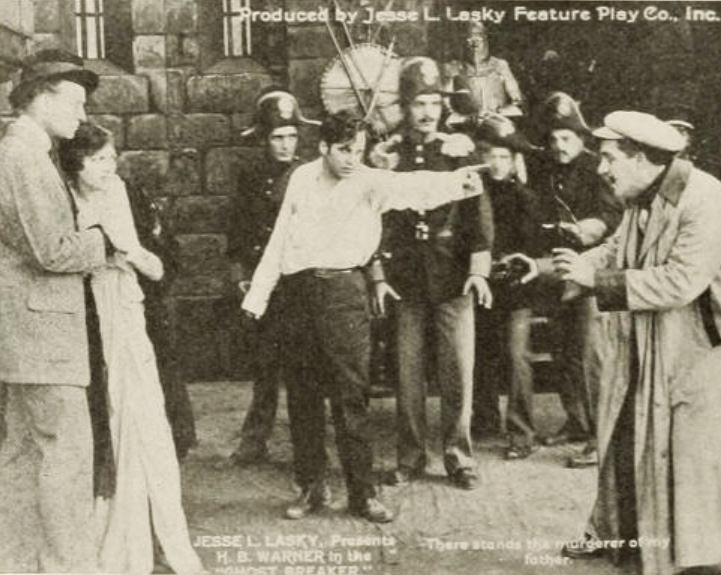
Charles W. Goddard’s intertitles—often lampooned in later DeMille retrospectives—here possess a haiku brutality. “Carmencita, dying, sold your future for a smile and a dollar.” Each card appears on screen just long enough for the mind to photograph it, then vanishes like the flick of a guillotine. The typography itself is spindly, almost anorexic, as if words were afraid to occupy too much colonial space.
Shot on the Lasky ranch what is now Hollywood Forever Cemetery, the castle is a plywood façade draped in moonlit gauze. Yet DeMille’s camera refuses to fetishize authenticity; instead it weaponizes artifice. When the Princess kneels on the chapel’s stone floor, the echo is too hollow, the candlelight too buttery—every sensory cue reminds us that empire, like cinema, is built on painted flats. The film becomes a palimpsest: beneath the Iberian legend lurk the freshly drawn lines of Manifest Destiny.
This thematic double-exposure anticipates the post-colonial guilt that haunts The Cheat (1915), where Japanese debt becomes a moral brand. In The Ghost Breaker, the brand is literal: a scar on the Duke’s shoulder shaped like the Aragon coat of arms, burned there by his own conspirators—ownership turned into scar tissue.
The shootout between Jarvis and Robledo lasts eleven seconds at silent speed—eighteen frames per second—but DeMille elongates time through diagonal staging: muzzle flash top-left, body fall bottom-right, smoke drifting like a lazy comet across the anamorphic matte. The wound is not shown; we see only Robledo’s glove unfurling, fingers splayed against wet flagstones, a gesture so intimate it feels obscene. Death, in this universe, is not the grand guignol of The Port of Doom but a hushed accounting error.
When the Duke plummets through the trapdoor into the oubliette, the camera does not follow him. It lingers on Princess and Jarvis, their faces flickering in torchlight, the locket now irrelevant. DeMille cuts to an extreme close-up—rare for 1914—of their entwined hands: alabaster meets sun-browned, both streaked with someone else’s blood. The film’s last intertitle reads simply, “To possess is to be possessed,” words superimposed over a slow dissolve to the castle’s moonlit battlements, empty at last.
This is not the matrimonial clinch demanded by exhibitors; it is a mutual surrender to the gravitational pull of shared culpability. Compare the finale of Alone in New York, where reconciliation arrives gift-wrapped in middle-class morality. DeMille offers no dowry, no kingdom, only the vertiginous possibility that love itself is the final ghost to be broken.
The negative was lost in the 1937 Fox vault blaze, so today we piece together the narrative from souvenir programs, censor cards, and a 9-minute fragment discovered in a Buenos Aires attic in 1978. Yet absence has only amplified the film’s mythic voltage. Contemporary critics—hunting for DeMille’s “mature” spectacles—dismiss this early work as a mere blueprint. They overlook how completely The Ghost Breaker anticipates the moral ambiguities of post-war noir: the anti-hero on the lam, the woman who bargains with her body for a future not yet invented, the villain whose evil is less metaphysical than administrative.
Even the title is a sleight of hand. The ghosts are not banished; they are re-employed, given 401(k)s and Sunday off. To break a ghost, DeMille implies, is to teach it the profit motive.
Queue the surviving fragments on the Library of Congress streaming portal, but sync the playback to a metronome set at 60 bpm—the approximate heartbeat of a fugitive in hiding. Dim lights until wall textures vanish; let the screen’s silver bloom like phosphor on retinas. When the trunk lid slams, slam your laptop shut. Wait sixty seconds in darkness. When you reopen, imagine the remainder of the film unreeling inside the black—every lost frame a small, irreparable death.
Only then will you understand why The Ghost Breaker still clanks across the parapets of cinema history—not as relic, but as prophecy: every treasure we unearth is someone else’s curse, every love we claim a debt we spend the rest of our lives repaying.
IMDb —
1916
Community
Log in to comment.