DbcultAccessing Vault...
Cult Review
Senior Film Conservator
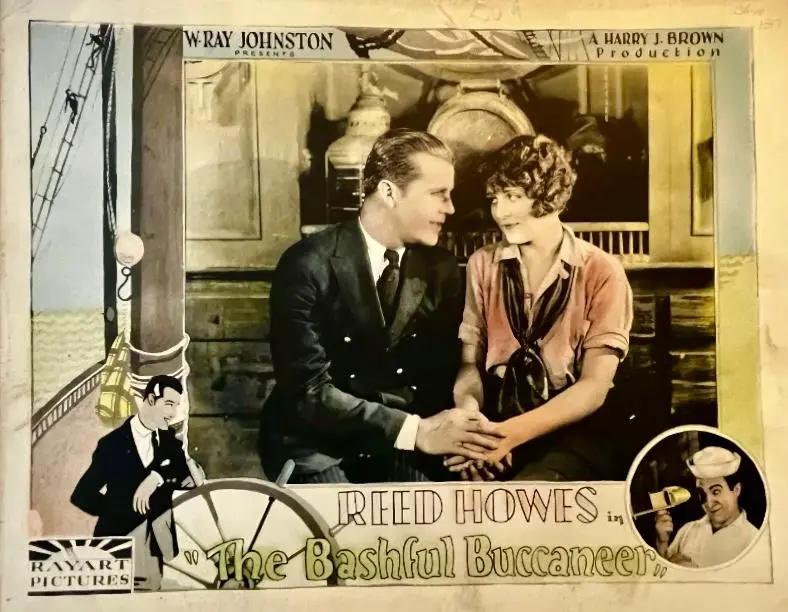
In the bustling tapestry of early 20th-century cinema, a period often characterized by its burgeoning genres and experimental narrative forms, there emerged a delightful gem that effortlessly straddled the line between rollicking adventure and poignant self-discovery: the 1925 silent film, 'Bashful Buccaneer'. Directed with a keen eye for both spectacle and character, this feature stands as a testament to the era's capacity for crafting compelling stories without the benefit of spoken dialogue, relying instead on the expressive power of its performers, the evocative sweep of its cinematography, and the pithy precision of its intertitles. It's a film that, even a century later, still manages to captivate with its charming premise and the sheer, unadulterated escapism it offers, inviting audiences to embark on a journey far beyond the confines of their mundane realities.
At the heart of this maritime romp is Jerry Logan, portrayed with a nuanced blend of timidity and burgeoning courage by the ever-engaging Sam Allen. Logan is an anomaly: a prolific writer of sensational seafaring potboilers, whose vivid narratives of swashbuckling heroes and perilous voyages have captivated countless readers, yet whose personal experience with the ocean extends no further than the printed page. This inherent irony forms the comedic bedrock of the film, setting the stage for a character arc that is both deeply humorous and surprisingly resonant. Logan is a man trapped between the romanticized ideals of his own creation and the stark, unvarnished truth of his sheltered existence. His decision to finally taste the salt spray and feel the deck beneath his feet isn't merely a whim; it's an existential crisis masquerading as an adventure, a desperate plea for authenticity in a life built on fantastical fabrication. This yearning for genuine experience, for a life lived rather than merely imagined, speaks to a universal human desire, rendering Logan’s initial naiveté endearing rather than merely foolish.
Logan’s fateful encounter with two opportunistic sailors serves as the catalyst for his grand undertaking. These seasoned sea dogs, with a twinkle in their eyes and a calculated glint of avarice, concoct a tale as old as time: a legendary buried treasure. Their motives, however, are far from altruistic. This elaborate ruse is a means to an end, a clever stratagem to persuade Logan to charter the boat of a financially struggling young woman. This subplot introduces a layer of social commentary, subtly highlighting the economic precarity faced by many in the era, and the lengths to which individuals would go to secure their livelihoods. The unnamed young woman, though initially a pawn in the sailors' scheme, quickly emerges as a figure of quiet resilience, her plight adding a tangible, human stakes to Logan’s otherwise whimsical quest. Her boat, a symbol of her desperate circumstances, becomes the unwitting vessel for a journey into the unknown.
The film deftly navigates the moral ambiguities of this deception. Are the sailors villains, or simply resourceful pragmatists navigating a harsh world? Their actions, while manipulative, are presented with a light touch, ensuring that the audience remains invested in the overall comedic and adventurous tone rather than descending into heavy drama. This delicate balance is crucial, preventing the narrative from becoming cynical and instead allowing the audience to delight in the unfolding farce. One might draw a thematic parallel to other films of the period that explored the consequences of elaborate ruses, such as The Prodigal Liar or Bluff, both of which similarly played with the audience's understanding of truth and fabrication, albeit perhaps with different dramatic weight.
With the promise of glittering gold shimmering on the horizon, Logan, despite his lack of practical experience, embraces his newfound role as an intrepid explorer. He assembles a crew of genuinely tough, weathered sailors, a stark contrast to his own sheltered persona. This juxtaposition provides endless opportunities for physical comedy and character-driven humor, as Logan attempts to assert authority in an environment utterly alien to him. The initial voyage, undoubtedly envisioned by Logan as a stately progression towards mythical riches, quickly veers off course. The film brilliantly uses the narrative device of 'more adventure than he was looking for' to pivot from a simple treasure hunt to a series of genuinely thrilling and unexpected escapades. This isn't just about finding gold; it's about finding oneself amidst the chaos.
What begins as a somewhat naive pursuit transforms into a crucible of true peril. The seas themselves become a character, tempestuous and unforgiving, testing Logan’s mettle in ways his fictional heroes could only dream of. The 'adventure' he encounters is manifold: treacherous storms that threaten to capsize their vessel, encounters with genuine pirates or rival treasure hunters, internal conflicts among his tough-as-nails crew, and perhaps even a mutiny or two. Each challenge forces Logan to shed another layer of his literary affectations, compelling him to confront his own fears and discover an inner reservoir of courage he never knew he possessed. The physical comedy, so prevalent in silent films, is here elevated by the genuine stakes involved. Every misstep, every clumsy attempt at heroism, is imbued with a newfound significance as Logan grapples with the harsh realities of maritime life. This transformation from a bumbling academic to a man capable of facing down danger is the true treasure unearthed in 'Bashful Buccaneer'.
The cast of 'Bashful Buccaneer' is a masterclass in silent film acting, where exaggerated gestures, expressive facial contortions, and precise body language conveyed entire emotional landscapes. Sam Allen, as Jerry Logan, carries the film with an impressive range, moving seamlessly from wide-eyed innocence to determined resolve. His physical comedy is impeccable, eliciting genuine laughter, while his moments of fear and courage are equally convincing. Dorothy Dwan, whose role is pivotal in grounding the narrative, imbues her character with a quiet strength and resourcefulness that belies her initial portrayal as a damsel in distress. She is not merely a plot device but an active participant in the unfolding drama, her presence adding a layer of pragmatic sensibility to Logan’s idealistic quest.

The supporting cast, a veritable rogues' gallery of character actors, further enriches the film's texture. Gunboat Smith, George B. French, Reed Howes, and the formidable Bull Montana bring a palpable sense of rugged authenticity to the crew. Montana, in particular, with his imposing physique and menacing screen presence, often provided a dramatic foil to Allen's more delicate demeanor, creating a dynamic tension that was a hallmark of silent-era ensembles. Their collective performances, often without the aid of intertitles for long stretches, communicate camaraderie, suspicion, and loyalty through purely visual means, a testament to their craft. The direction by Burke Jenkins and Krag Johnson is remarkably fluid, utilizing dynamic camera angles and intelligent editing to maintain a brisk pace, crucial for an adventure film. The cinematography, while perhaps not groundbreaking, effectively captures the vastness of the sea and the claustrophobia of the ship's interior, enhancing the sense of immersion. The use of lighting to create dramatic shadows and highlight key emotional beats is also noteworthy, demonstrating a sophisticated understanding of visual storytelling.
In comparing the physical prowess and ruggedness displayed, one might consider films like The Wolver, which similarly explores themes of survival and masculine fortitude in challenging environments. However, 'Bashful Buccaneer' sets itself apart by juxtaposing this raw strength with Logan's initial fragility, making his eventual triumph all the more satisfying. The pacing of the film, a critical element in silent cinema, is expertly handled, ensuring that the audience remains engaged through both the comedic interludes and the more suspenseful action sequences. The intertitles are judiciously used, providing just enough information to advance the plot without bogging down the visual flow, a common pitfall in less accomplished silent features.
Beyond the surface-level adventure, 'Bashful Buccaneer' delves into profound themes that resonate even today. The central conflict between reality and illusion, between the romanticized ideal and the harsh truth, is explored with both humor and depth. Logan’s journey is a powerful metaphor for shedding the protective layers of fantasy and embracing the messy, unpredictable beauty of real life. His transformation from a bookish recluse to a man capable of navigating genuine peril is the film's most compelling achievement. It speaks to the idea that true courage isn't the absence of fear, but the willingness to confront it, even when unprepared.
The film also subtly critiques the very nature of storytelling, particularly the 'potboiler' genre Logan writes. While his stories are exciting, they lack the unpredictable grit and genuine human emotion that he experiences firsthand. This self-referential aspect adds a meta-layer to the narrative, prompting viewers to consider the difference between vicarious experience and lived reality. The financially struggling girl's narrative thread, too, adds a touch of realism, reminding us that while Logan's adventure is self-imposed, others face genuine struggles for survival. This contrast prevents the film from becoming merely a frivolous escapade, imbuing it with a surprising amount of heart and social consciousness for its time.
In an era that produced countless films, many of which have faded into obscurity, 'Bashful Buccaneer' retains a remarkable vitality. It’s a film that manages to be both a product of its time and surprisingly timeless in its themes and execution. Its blend of comedic charm, thrilling adventure, and genuine character development makes it a standout entry in the silent era's adventure genre. For enthusiasts of early cinema, it offers a window into the narrative sophistication and technical prowess that defined the period. For newcomers, it serves as an accessible and thoroughly entertaining introduction to the magic of silent storytelling.
The film's exploration of deception and its consequences, while lighthearted, also echoes themes found in more dramatic works. It’s a testament to the power of a well-crafted narrative that even a 'concocted' treasure hunt can lead to genuine personal growth and profound self-discovery. Much like the unexpected turns in The High Life, where characters navigate complex social landscapes, Logan navigates the treacherous waters of both the ocean and his own psyche. The enduring appeal of 'Bashful Buccaneer' lies not just in its thrilling set pieces or its humorous moments, but in its heartfelt portrayal of a man who dares to step out of his comfort zone and, in doing so, finds a richer, more authentic version of himself. It’s a film that reminds us that sometimes, the greatest treasures are not buried in the ground, but discovered within ourselves through the crucible of experience.
Ultimately, 'Bashful Buccaneer' is more than just a silent film; it’s a vibrant, exhilarating journey that proves the enduring power of visual storytelling. Its legacy is one of joy, adventure, and the timeless message that true living often begins when we dare to venture beyond the familiar horizon.
IMDb 6.4
1932
Community
Log in to comment.