DbcultAccessing Vault...
Cult Review
Senior Film Conservator
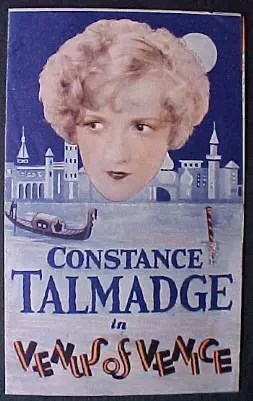
Is Venus of Venice a silent classic worth your time today? Short answer: yes, but only if you have a high tolerance for the manic, often exhausting energy of 1920s flapper comedies. This film is a definitive showcase for the 'light' side of silent cinema, trading the heavy expressionism of the era for a breezy, if somewhat repetitive, romantic heist aesthetic.
This film is for the dedicated cinephile who enjoys the 'Talmadge brand' of comedy—specifically Constance’s brand of mischievous, high-octane gamine energy. It is absolutely not for viewers who demand narrative logic or a plot that moves beyond the surface level of 'reforming the bad girl.' It works as a historical artifact of how Hollywood romanticized Europe, but as a piece of dramatic storytelling, it is as thin as the silk in Carlotta’s borrowed finery.
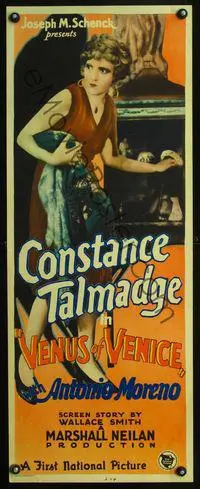
1) This film works because Constance Talmadge is a force of nature who understands the precise geometry of a physical gag better than almost any of her contemporaries.
2) This film fails because the 'reform' subplot feels paternalistic and dated, even by 1927 standards, stripping the female lead of her agency to make her a 'project' for a boring male protagonist.
3) You should watch it if you want to see a masterclass in silent-era charisma and some of the most lavish set pieces of the late 1920s.
To talk about Venus of Venice is to talk about Constance Talmadge. While her sister Norma often took the heavy dramatic roles in films like The Misfit Wife, Constance was the queen of the high-society romp. Here, as Carlotta, she is a whirlwind. The opening scene at the wedding—where she fakes a swoon to allow Marco to pick pockets—is a perfect example of her skill. She doesn't just faint; she performs a choreographed collapse that is both graceful and ridiculous.
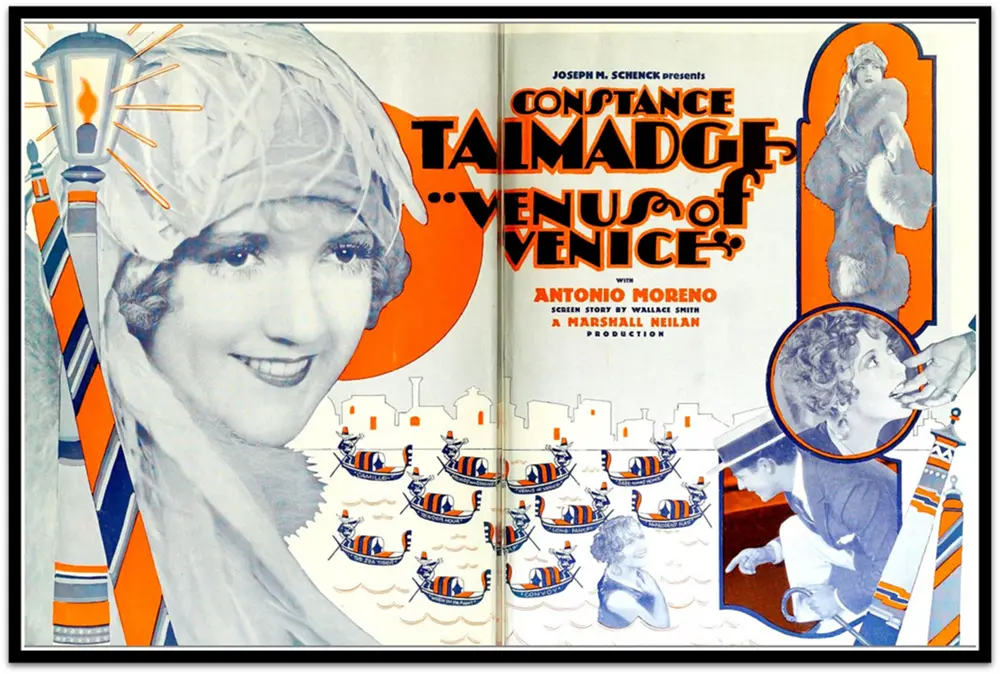
Her performance is grounded in her eyes. In an era where many actors over-gestured with their hands, Talmadge used her gaze to signal her true intentions to the audience while deceiving the characters on screen. When she enters Kenneth Wilson’s gondola, her transition from 'hunted criminal' to 'innocent waif' happens in a split second. It is a cynical, brilliant piece of acting that reminds us why she was a top-tier star. Compared to the more grounded performances in Painted People, Talmadge feels like she is operating on a different frequency entirely.
However, this energy can occasionally become grating. There is a sequence where she evades a journalist by jumping into the canal, and while the physical stunt is impressive, the subsequent scenes of her 'outwitting' her pursuers through various disguises start to feel like a repetitive loop. It is a common trope in silent comedy, but here, it lacks the rhythmic escalation found in the works of Keaton or Lloyd. It works. But it’s flawed.
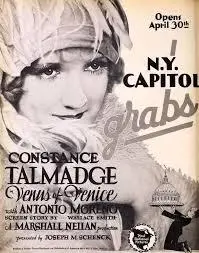
Director Marshall Neilan, a frequent collaborator with the industry's biggest stars, brings a certain slickness to the production. The Venice depicted here is not the gritty, damp city of reality, but a Hollywood dreamscape of shimmering water and endless masquerades. The cinematography, handled by George Barnes, captures the play of light on the canals with a soft-focus romanticism that makes the film feel more expensive than it likely was.
The pacing in the first act is impeccable. The robbery sequence is edited with a sharpness that rivals modern heist films. We see the 'blind' beggar Marco—played with a sinister edge by Michael Vavitch—and Carlotta working in tandem, their movements synchronized like a dance. This level of technical coordination is a testament to Neilan’s control over the frame. Even in a film that feels lightweight, the craftsmanship is undeniable.
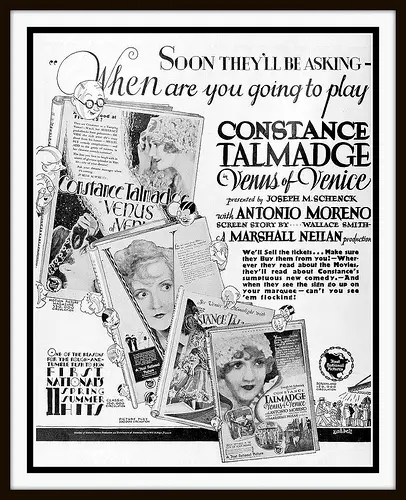
Where the direction falters is in the middle act. Once Carlotta is ensconced in Kenneth’s home, the film slows to a crawl. The 'reforming' scenes, where Kenneth (Antonio Moreno) tries to teach her the ways of 'proper' society, lack the comedic bite of the earlier sequences. Moreno is a fine actor, having shown his range in films like Sahara, but here he is relegated to the 'straight man' role, which gives him very little to do other than look concerned and handsome. The chemistry between the two is lopsided; Talmadge is a bonfire, and Moreno is a damp log.
One of the more debatable aspects of Venus of Venice is its central theme of moral reform. Kenneth Wilson is presented as a savior, an American artist who sees the 'true' Carlotta beneath the grime of the canals. This setup is inherently condescending. The film posits that Carlotta’s thievery is a result of her environment and the influence of Marco, which is a fair narrative point, but it strips her of her sharpest tools—her wit and her self-reliance—to make her 'worthy' of Kenneth’s love.
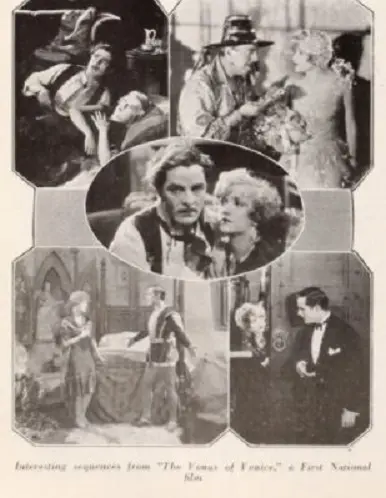
The introduction of Jean, Kenneth’s fiancée (played by the legendary Hedda Hopper), adds a layer of class conflict that the film doesn't quite know how to handle. Hopper is fantastic, bringing a cold, aristocratic detachment that makes you root for the thief. When Jean’s pearls go missing, the film moves into a standard 'whodunit' mode. The surprising observation here is that the film actually treats the 'low-life' Carlotta with more empathy than the 'high-society' Jean, even if that empathy is wrapped in a layer of patronizing 'reform.'
The Carnival sequence acts as the film’s visual climax, and it is here that the tone shifts back into high gear. The use of masks and costumes allows Carlotta to regain some of her agency. She isn't just a 'project' anymore; she is a player in a larger game. The way she eventually outmaneuvers Marco is satisfying, but it feels like it happens despite Kenneth’s influence, not because of it. The film wants to have its cake and eat it too—it wants a reformed heroine, but it only likes her when she's being a rebel.
If you are looking for a deep, philosophical exploration of crime and punishment, look elsewhere—perhaps toward The Scarlet Oath. However, if you want a visual feast and a performance that defines the 'Jazz Age' spirit, Venus of Venice is a must-see. It represents a specific moment in film history where the 'New Woman' was being explored through the lens of comedy, even if the scripts hadn't quite caught up to the actresses' capabilities.
The film is a breezy 70 minutes (depending on the cut) and never overstays its welcome. The canal jump scene alone, where Carlotta dives into the water to escape a lecherous journalist, is a highlight of physical comedy. It is a reminder that before CGI, actors had to actually get wet, cold, and dirty for our entertainment. There is a tactile reality to these scenes that modern comedies often lack.
Pros:
• Stunning visual recreation of Venice.
• High-energy performance by the lead actress.
• Excellent pacing in the heist and carnival sequences.
• Hedda Hopper’s scene-stealing turn as the fiancée.
Cons:
• The 'reforming the thief' plot is a tired cliché.
• Antonio Moreno is largely wasted in a passive role.
• Some repetitive chase sequences in the middle of the film.
Venus of Venice is a charming, if slightly hollow, vessel for the immense talent of Constance Talmadge. While it doesn't reach the heights of the era's greatest masterpieces, it offers a vibrant look at the intersection of Hollywood glamour and European exoticism. It is a film of moments—a look, a jump, a stolen pearl—rather than a cohesive emotional journey. But in those moments, it sparkles. The bottom line? It’s a delightful romp that proves you don't need sound to tell a story, but you do need a star. And Talmadge is a star of the highest magnitude.
IMDb 6.9
1934
Community
Log in to comment.