DbcultAccessing Vault...
Cult Review
Senior Film Conservator
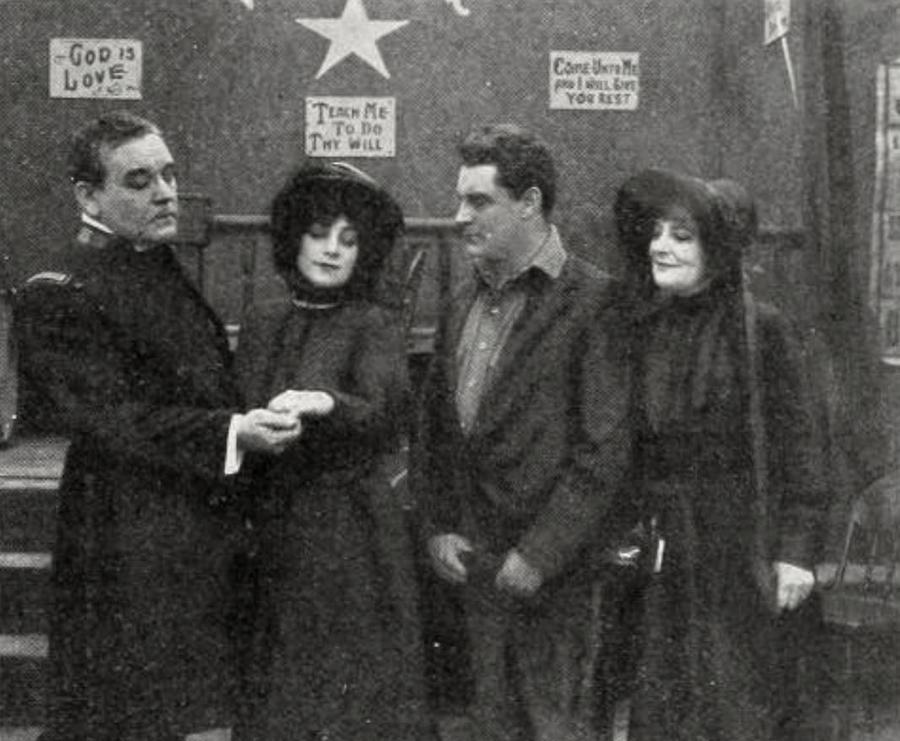
Stepping back into the nascent years of cinema, one occasionally stumbles upon a narrative that, despite its antiquity, pulsates with a timeless emotional vigor. Salvation Nell, a cinematic offering from 1915, stands as a poignant testament to the era's burgeoning capacity for profound storytelling. Far from being a mere historical curiosity, this film, based on the play by Edward Sheldon and adapted for the screen by Leslie T. Peacocke, delves into the grittier realities of urban existence, exploring themes of poverty, crime, and spiritual redemption with an earnestness that transcends its silent medium. It's a journey into the heart of human struggle, illuminated by the flicker of a projector and the expressive gestures of its performers.
In an age when film was still discovering its voice, relying heavily on visual metaphor and melodramatic performance, Salvation Nell manages to articulate a complex moral landscape. It invites us to consider the societal forces that push individuals to the brink, and the transformative power of faith and unwavering compassion. The film doesn't shy away from depicting the harshness of life for the working poor, nor does it offer simplistic solutions. Instead, it presents a nuanced portrait of human resilience and the arduous path toward moral reclamation, making it a compelling piece for both silent film aficionados and those interested in the social commentary embedded within early cinematic works.
The narrative core of Salvation Nell is inherently dramatic, focusing on the titular character, Nell, whose life is a relentless succession of misfortunes. Her initial dismissal from employment, quickly followed by the loss of her home, paints a bleak picture of urban destitution. This precipitous descent into poverty is exacerbated by the incarceration of her father, a man seemingly trapped in a cycle of petty criminality. These opening acts establish a harrowing backdrop against which Nell's subsequent spiritual awakening unfolds. The film masterfully portrays the crushing weight of circumstance, demonstrating how easily individuals can be marginalized and stripped of dignity in a society marked by stark inequalities.
Nell’s encounter with the Salvation Army is presented not merely as a plot device but as a profound turning point. It is here, amidst the fervor and fellowship of this benevolent organization, that she finds not just a new community, but a renewed sense of self and purpose. This segment of the film subtly explores the appeal of such movements during periods of social upheaval, offering solace and direction to those abandoned by conventional institutions. The contrast between Nell’s earlier despair and her nascent hope is palpable, a testament to the film's ability to convey complex emotional states without dialogue.
The true moral crucible, however, arrives with her father's release from prison. Instead of emerging chastened and reformed, he remains stubbornly entrenched in his criminal inclinations. This refusal to abandon his past sets the stage for the film's central conflict: Nell's unwavering commitment to his redemption versus his entrenched resistance. Her journey becomes less about her own salvation and more about extending that grace to someone seemingly beyond its reach. This struggle is portrayed with an affecting sincerity, highlighting the profound difficulty of changing long-ingrained habits and the immense power of persistent, unconditional love. It’s a narrative arc that explores the very essence of human agency and the potential for spiritual transformation, even in the face of overwhelming odds.
The success of Salvation Nell hinges significantly on the performance of Myrtle Newman in the titular role. In an era where acting was often characterized by broad gestures and exaggerated expressions, Newman delivers a performance of remarkable subtlety and emotional depth. Her portrayal of Nell is not merely sympathetic; it is a nuanced study of resilience and inner strength. One can discern the weight of her initial despair in her downcast gaze, the flicker of nascent hope in her tentative smiles, and the fierce determination in her steadfast resolve to save her father. Newman's ability to convey such a wide spectrum of human emotion, sans spoken word, is nothing short of masterful. She imbues Nell with a quiet dignity that prevents her from becoming a mere victim of circumstance, transforming her into an active agent of her own, and eventually her father's, destiny.
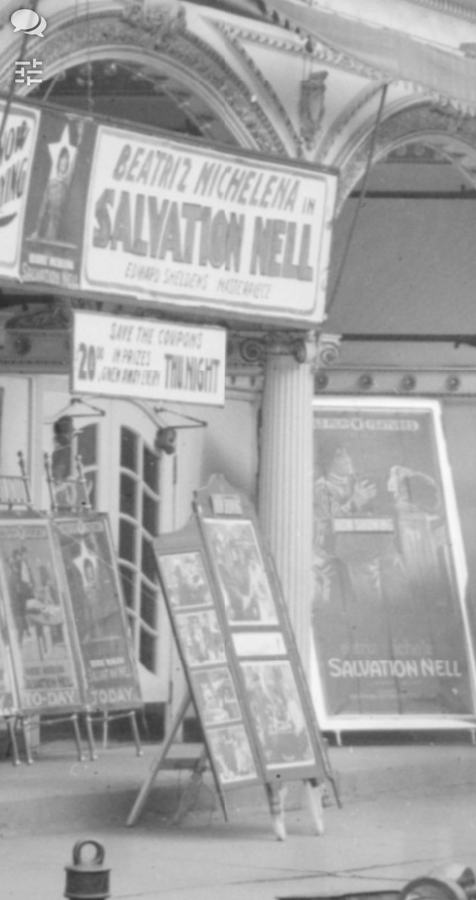
The supporting cast, including Frank Hollins as Nell's recalcitrant father, also contributes significantly to the film's emotional veracity. Hollins embodies the struggle of a man caught between the allure of his criminal past and the possibility of a better future, his internal conflict vividly etched across his features. His performance provides the necessary counterpoint to Newman's earnestness, making the father-daughter dynamic a truly compelling spectacle. The ensemble, featuring names like D. Mitsoras, William Pike, Beatriz Michelena, and Clarence Arper, collectively create a believable world, populating it with characters that feel authentically human, from the stern but ultimately benevolent figures of the Salvation Army to the shadowy denizens of the criminal underworld. Their collective efforts elevate the film beyond simple melodrama into a genuine exploration of character and moral choice.
The narrative strength of Salvation Nell owes much to its literary origins and the screen adaptation. Edward Sheldon's original play, renowned for its realistic portrayal of urban poverty and its spiritual themes, provided a robust framework. Sheldon was known for his social realism, a quality that translates remarkably well to the silent screen, which often relied on visual starkness to convey grim realities. Leslie T. Peacocke, in adapting the play, demonstrated a keen understanding of cinematic language, translating theatrical dialogue and stage directions into compelling visual sequences. The skill lies in maintaining the emotional core and social commentary of the source material while transforming it into something inherently cinematic.
The writers' ability to craft a story that resonates without the crutch of spoken words is a testament to their storytelling prowess. They understood that the power of silent film lay in its capacity for universal gestures and archetypal struggles. The screenplay for Salvation Nell is a masterclass in visual narrative construction, where every intertitle serves to advance the plot or deepen character, rather than merely explain. This meticulous approach ensures that the emotional beats land with precision, allowing the audience to empathize deeply with Nell's plight and her spiritual journey. The pacing, the development of character arcs, and the escalation of dramatic tension are all handled with a sophistication that belies the film's early production date, underscoring the foundational importance of a strong script.
While specific directorial credits for many early silent films can be elusive, the overall cinematic execution of Salvation Nell speaks volumes about the burgeoning artistry of the era. The film employs a visual vocabulary that, while perhaps rudimentary by today's standards, was remarkably effective in its time. The use of location shooting, capturing the authentic grit of urban environments, lends a powerful sense of realism to Nell's struggles. The cinematography, though monochrome, skillfully uses light and shadow to enhance mood and emphasize character emotions. Close-ups are utilized judiciously to highlight moments of intense feeling, drawing the audience into the characters' inner worlds.
The editing, too, demonstrates an evolving understanding of cinematic rhythm. Scenes transition smoothly, guiding the viewer through the narrative without abruptness. The visual storytelling is remarkably clear, ensuring that the audience can follow the complex emotional journey of Nell and her father. This clarity is crucial for silent films, where misinterpretation could easily derail the narrative. The film's aesthetic choices, from set design to costume, all contribute to a cohesive and believable world, grounding the spiritual drama in a tangible reality. It's a testament to the collective craftsmanship of the production team that such a compelling and coherent vision was brought to the screen during a period of rapid cinematic experimentation.
Placing Salvation Nell within the broader context of early cinema reveals its unique position. While films like The Ventures of Marguerite might explore the trials of a woman navigating societal expectations, Salvation Nell delves deeper into the moral fabric of society and the individual's capacity for spiritual metamorphosis. Its gritty realism and focus on the urban poor align it with a nascent tradition of social commentary in film, distinguishing it from more purely escapist fare or historical epics like Bismarck or even the travelogue style of Glacier National Park.
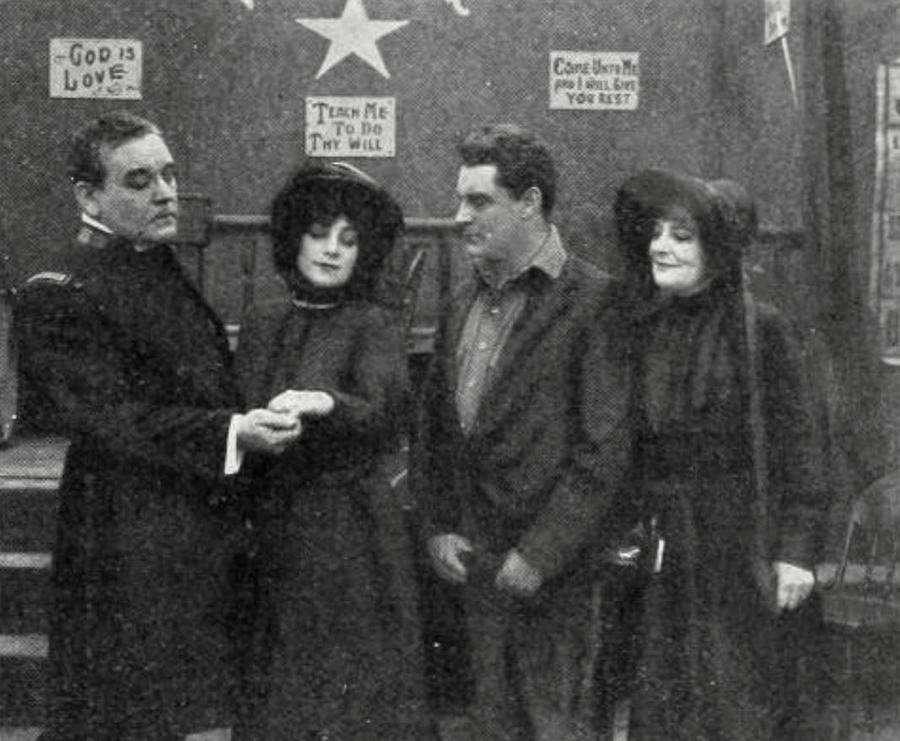
The struggle between ingrained criminality and the pull of redemption finds echoes in later, more overt crime dramas, though Salvation Nell frames it through a distinct spiritual lens. One might draw a thematic parallel to the moral dilemmas explored in films like As a Man Sows, where the consequences of one's actions and the potential for change are central. While films like Fantômas: In the Shadow of the Guillotine revel in the grandiosity of crime, Salvation Nell grounds its criminal element in a more stark, human reality. It's less about the thrill of the chase and more about the corrosive effect of a life of crime on the human spirit and familial bonds.
Furthermore, the film's depiction of a woman's unwavering commitment to a loved one's salvation resonates with the timeless narrative of sacrifice and unconditional love, themes that transcend specific genres. It avoids the more cynical portrayals of human nature sometimes seen in early melodramas, opting instead for a narrative imbued with a genuine sense of hope and the potential for betterment. While Fine Feathers might explore moral compromise, Salvation Nell champions an uncompromising pursuit of moral rectitude, even in the most challenging circumstances. This makes it a significant precursor to later social dramas that would continue to explore the intricate relationship between individual morality and societal pressures.
Even a century after its release, Salvation Nell retains a surprising degree of relevance. The issues it tackles – poverty, crime, the search for meaning, and the transformative power of compassion – are not confined to the early 20th century. In an age grappling with persistent social inequalities and the urgent need for empathy, Nell's journey serves as a powerful reminder of the human spirit's capacity for resilience and selflessness. The film’s message, delivered with earnest simplicity, advocates for understanding and intervention rather than judgment and abandonment.
It’s a narrative that implicitly asks its audience to consider their own roles in fostering a more compassionate society. Nell's tireless efforts to redeem her father are a vivid illustration of the idea that no one is beyond salvation, and that a single individual's unwavering belief can indeed instigate profound change. This enduring moral core, delivered through the expressive artistry of silent film, ensures that Salvation Nell transcends its historical context to speak to contemporary audiences about the timeless virtues of hope and humanitarianism. It's a cinematic experience that leaves one pondering the intricate dance between personal responsibility and the societal structures that shape our lives.
In conclusion, Salvation Nell is far more than a relic of early cinema; it is a vibrant, emotionally resonant work that continues to captivate and provoke thought. Its unflinching portrayal of social hardship, coupled with its optimistic message of redemption, makes it a compelling watch. The stellar performance by Myrtle Newman, the thoughtful adaptation by Leslie T. Peacocke from Edward Sheldon's play, and the sophisticated visual storytelling combine to create a film of enduring power. It serves as a potent reminder of the foundational strengths of silent cinema – its ability to communicate universal truths through pure visual artistry and the raw emotion of its performers.
For those willing to engage with its particular language, Salvation Nell offers a rich, rewarding experience, a window into both the past and the perennial struggles of the human condition. It stands as a testament to the idea that even in the bleakest of circumstances, the seeds of hope and transformation can take root, nurtured by an unyielding spirit and the profound power of love. Don't let its age deter you; this is a film that speaks with a clarity and passion that many modern productions struggle to achieve.

IMDb 6.6
1932
Community
Log in to comment.