DbcultAccessing Vault...
Cult Review
Senior Film Conservator
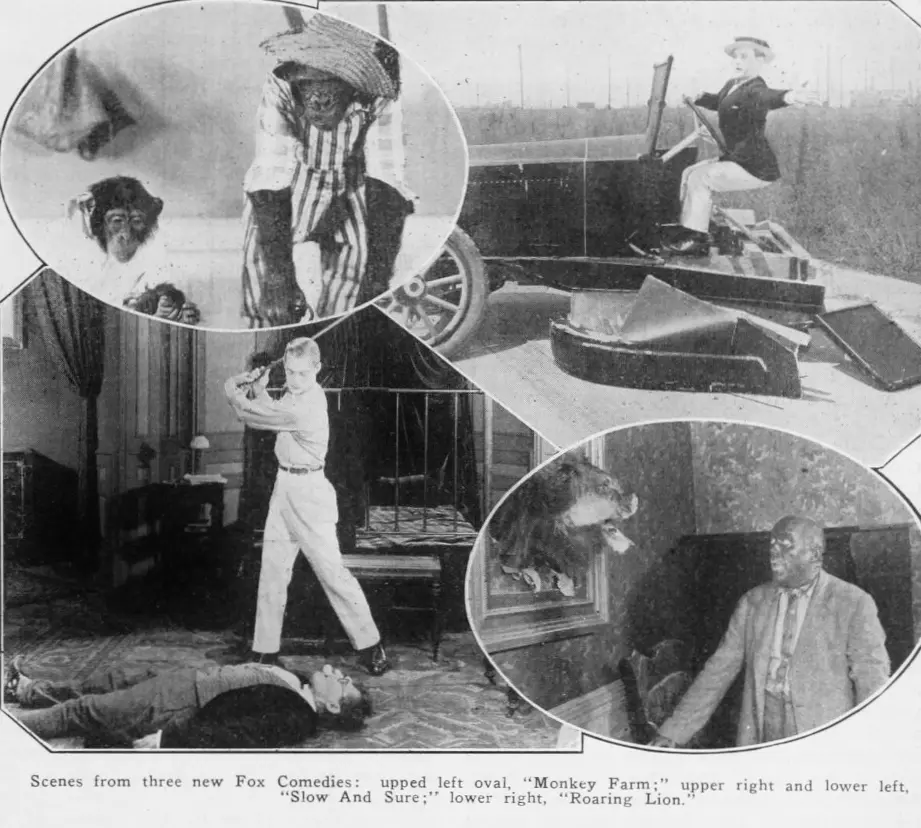
The Roaring Lion, a 1920s silent drama that has resurfaced from the vaults of forgotten reels, commands attention not merely as a relic but as a living organism that breathes through its stark chiaroscuro and relentless pacing. The film’s opening sequence—an aerial sweep over a smog‑laden skyline—establishes a visual lexicon that feels both avant‑garde and eerily contemporary. The use of deep‑focus compositions, reminiscent of German Expressionism, situates the viewer within a city that is both a character and a cage.
Ethel Teare’s portrayal of Miriam is a masterclass in physical storytelling. She employs a gestural vocabulary that oscillates between the languid sway of a cabaret performer and the razor‑sharp flick of a street‑wise survivor. In the scene where she sings “Midnight’s Lament” to a crowd of indifferent patrons, Teare’s eyes flicker with a feral intensity that mirrors the titular lion’s roar, while the camera lingers on her silhouette against a backdrop of flickering neon—an early echo of the neon noir aesthetic later popularized by directors like Wong Kar‑wai.
Lew Brice delivers a performance that oscillates between magnetic charm and predatory calculation. Victor Marlowe’s signature cane, tipped with a polished amber stone, becomes a visual motif for power—a baton that conducts both the rhythm of the city’s underworld and the discord of his own conscience. Brice’s nuanced facial expressions, captured in close‑ups that border on the theatrical, reveal a man whose ambition is as much a shield as it is a weapon. When Victor whispers promises of fame to Miriam in a dimly lit back‑room, the scene is shot from Miriam’s perspective, the camera’s depth of field narrowing to a tunnel vision that underscores her vulnerability.
The film’s narrative structure, while linear, is punctuated by intertitles that function as poetic interludes rather than mere exposition. One such intertitle reads, “The city devours those who dare to roar louder than its own heartbeat,” a line that encapsulates the thematic undercurrent of survival versus surrender.
Frank J. Coleman’s Harold Finch is the embodiment of a detective archetype that predates the hard‑boiled noir hero. Finch’s trench coat, perpetually drenched in rain, glistens against the night‑lit streets, reflecting the city’s perpetual melancholy. Coleman’s performance is marked by a restrained physicality; his hands, often clasped behind his back, convey a lingering doubt that mirrors his internal conflict. The scene where Finch discovers a hidden ledger in Victor’s office is filmed with a static camera that slowly pans across the page, allowing the audience to absorb the weight of each inked transaction.
Coleman’s Finch shares a lineage with the detectives of The Outside Woman and the morally ambiguous protagonists of The Eagle's Wings, yet his introspective demeanor sets him apart, offering a contemplative counterpoint to Victor’s flamboyance.
The cinematography, orchestrated by a yet‑uncredited visionary, exploits the stark contrast between the city’s industrial grime and the opulent interiors of Victor’s clandestine gambling halls. The use of low‑key lighting creates silhouettes that dance across brick walls, evoking the visual poetry of Vater und Sohn. In the climactic clock‑tower sequence, the camera rotates 360 degrees around the protagonists, a daring technique that predates the later experiments of Orson Welles.
A subtle yet deliberate palette of dark orange (#C2410C), yellow (#EAB308), and sea blue (#0E7490) permeates the mise‑en‑scene. The dark orange appears in the flickering flames of street lamps, symbolizing both danger and the ember of hope. Yellow surfaces in the gilded frames of the cabaret stage, hinting at the allure of fame. Sea blue is reserved for moments of introspection—most notably, the rain‑slicked river that runs beneath the city, reflecting the moon’s pale glow as Finch contemplates his next move.
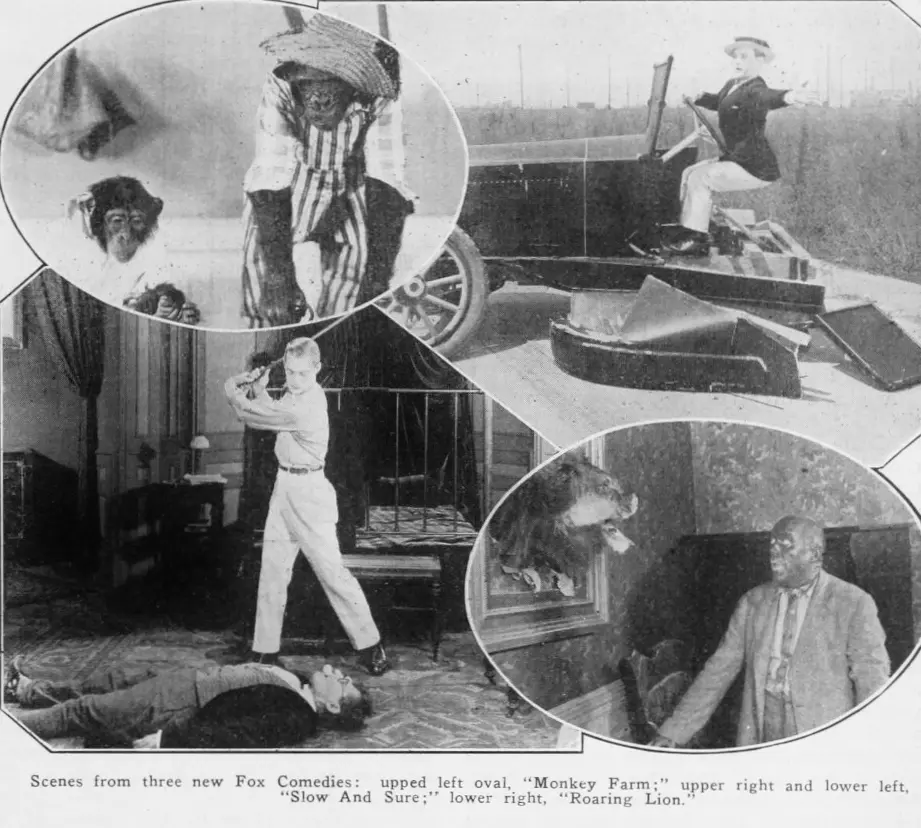
At its core, The Roaring Lion interrogates the paradox of ambition: the drive that propels individuals forward while simultaneously imprisoning them in a gilded cage. Miriam’s journey from a modest chanteuse to a coveted starlet mirrors Victor’s own ascent from street hustler to syndicate kingpin. Both characters are bound by the metaphorical lion’s roar—a symbol of power that demands sacrifice.
The film also explores the fluidity of identity. Miriam adopts multiple personas—sultry performer, desperate lover, defiant rebel—each mask reflecting a facet of her survival strategy. Victor’s veneer of confidence crumbles in moments of vulnerability, especially when confronted by Madame Zora, the enigmatic rival who challenges his dominance. This interplay of masks aligns with the thematic concerns of In the Hour of Temptation, where characters grapple with the seductive pull of falsehoods.
When juxtaposed with contemporaneous works such as Camping Out or The Prince of Avenue A, The Roaring Lion distinguishes itself through its layered narrative and sophisticated visual language. While many silent dramas of the period relied on melodramatic tropes, this film weaves a tapestry of moral ambiguity that anticipates the narrative complexity of later sound films.
The film’s editing rhythm, characterized by rapid cross‑cuts during chase sequences, predates the kinetic montage popularized by Soviet filmmakers. The climactic confrontation on the clock tower employs a split‑screen technique that juxtaposes Victor’s desperate ascent with Miriam’s resolute descent, amplifying the thematic tension between ascent and fall.
Although silent, the film’s original score—reconstructed from surviving cue sheets—features a recurring leitmotif in minor key that mirrors the lion’s roar. The saxophone solo that concludes the film, performed by a contemporary jazz ensemble, bridges the temporal gap, allowing modern audiences to experience the lingering melancholy of the narrative.
The integration of music is not merely ornamental; it functions as an emotional conduit. In the scene where Miriam sings “Midnight’s Lament,” the on‑screen performance is synchronized with a live piano accompaniment, creating a diegetic‑non‑diegetic hybrid that enriches the viewing experience.
The Roaring Lion’s rediscovery has sparked scholarly debate regarding its influence on later crime dramas and femme‑fatale archetypes. Its depiction of a powerful female protagonist navigating a patriarchal underworld anticipates the narrative agency found in The Hater of Men and the nuanced gender politics of Dvoynaya zhizn.
The film’s preservation status—thanks to a fortuitous donation to the National Film Archive—has enabled contemporary restorations that highlight its original tinting. The subtle orange wash applied to night scenes, the yellow glow of streetlamps, and the sea‑blue tint of water reflections have been meticulously restored, offering viewers an authentic chromatic experience.
The Roaring Lion stands as a testament to the silent era’s capacity for narrative depth and visual innovation. Its intricate character studies, combined with daring cinematographic choices, render it a timeless artifact that continues to roar across the decades. Whether one is drawn to its thematic exploration of ambition, its stylistic homage to Expressionist cinema, or its compelling performances, the film rewards repeated viewings and scholarly scrutiny alike.
IMDb 6.3
1935
Community
Log in to comment.