DbcultAccessing Vault...
Cult Review
Senior Film Conservator
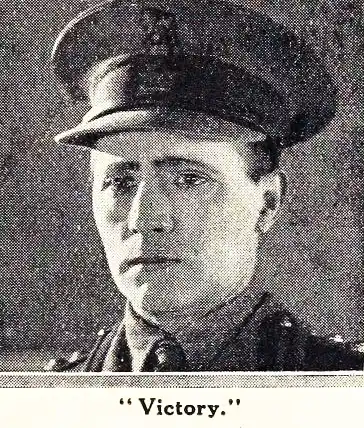
Attempting to revisit a silent film from 1928 is always a particular kind of cinematic archaeology. 'Victory,' directed by M.A. Wetherell and adapted from a story by Boyd Cable, is firmly a product of its time – a World War I drama released a decade after the armistice. For contemporary audiences, it's a niche watch, primarily recommended for dedicated silent film enthusiasts, military history buffs, and those genuinely curious about how early cinema tackled large-scale conflict and personal peril without spoken dialogue. If you're looking for modern pacing, intricate sound design, or nuanced psychological realism, this film will likely test your patience. However, for those willing to engage with its particular language, 'Victory' offers moments of surprising visual power and a stark reminder of cinema's nascent ability to tell gripping stories.
In a silent film, the burden of conveying emotion and intent falls squarely on the actors' physicality and facial expressions. Edward O'Neill, as the beleaguered British pilot, carries much of the film's emotional weight. His performance is a masterclass in silent stoicism, particularly in the early scenes where he's depicted in the cockpit, his face grimacing against the wind and the imagined roar of the engines. There’s a palpable weariness in his eyes that feels earned, not just performed. When he's captured, his defiance is conveyed through rigid posture and a refusal to meet the gaze of his captors, a simple but effective choice.
Marjorie Gaffney, playing the unnamed girl whose fate becomes intertwined with O'Neill's, brings a necessary vulnerability to the proceedings. Her wide-eyed terror during moments of danger, contrasted with a quiet resilience, helps ground the melodrama. There's a particular scene where she's hiding in a bombed-out building, clutching a small, grimy doll; the way she gently wipes soot from its face speaks volumes about her desire for normalcy and comfort in an abnormal world. It's a small detail, but it resonates.
Victor Maxim Moorkins, as the Canadian agent, leans into a more theatrical style, which is common for the era. His character is all sharp glances and sudden, purposeful movements. While effective for conveying urgency, his intensity sometimes borders on caricature, particularly in moments where he's trying to be surreptitious, his exaggerated creeping motions often drawing more attention than they're meant to deflect. The rest of the supporting cast, including Moore Marriott and Walter Byron in various military roles, serve their functions adequately, often embodying archetypes rather than fully fledged characters, which is typical for silent war epics.
'Victory' moves at the deliberate, occasionally languid pace characteristic of many silent films. The narrative relies heavily on intertitles to advance the plot, explain motivations, and provide context. These title cards, while essential, inevitably break the visual flow, demanding a mental shift from watching to reading. Some sequences, particularly those depicting trench warfare or aerial combat, feel genuinely dynamic for their time, employing rapid cuts and close-ups to build tension. However, the film often settles into longer takes for dramatic exchanges, allowing the actors' expressions to linger, which can feel drawn out to modern eyes.
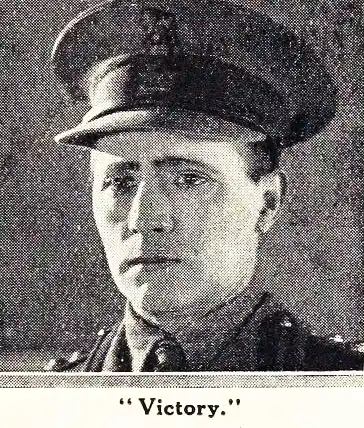
The tone oscillates between grim realism and overt melodrama. Early on, the film doesn't shy away from the brutality of war, showing bombed-out landscapes and desperate struggles. Yet, it frequently veers into more sentimental territory, especially concerning the burgeoning connection between the pilot and the girl. The sudden shift in mood when the armistice is announced is a jarring but historically accurate emotional release. The film manages to convey both the profound relief and the lingering devastation of the war's end, though the joy often feels a little too quickly achieved after such prolonged peril.
Visually, 'Victory' is a fascinating document. The black and white cinematography, while constrained by the technology of the era, is used effectively to create stark contrasts. The use of shadow is particularly striking in the scenes of imprisonment and covert operations, lending a noir-ish tension that predates the genre's heyday. The aerial sequences, likely utilizing a mix of miniatures, practical effects, and perhaps some early stock footage, are ambitious. While not seamless by today's standards, they convey the inherent danger of early air combat.
One detail that truly stands out, and which only someone who watched the film might notice, is the meticulous attention to the mud and grime on the soldiers' uniforms. It's not just a superficial dusting; in several close-ups of O'Neill and other soldiers, the mud is visibly caked on, heavy and textured, especially on the lower parts of their trousers and boots. This small but persistent detail lends a surprising authenticity to their exhaustion and the harsh conditions they endure, making the battlefield feel more tangible than many other silent war films.
The depiction of crowded refugee camps and prisoner-of-war lines, though brief, manages to convey a sense of scale and shared suffering. The costumes, from the tattered pilot's uniform to the simple, worn dresses of the civilians, feel period-appropriate and contribute to the film's grounded aesthetic.
'Victory' is not an easy watch for the uninitiated, nor is it a forgotten masterpiece that demands universal rediscovery. It is, however, a solid example of silent-era filmmaking tackling a significant historical event with ambition and a surprising degree of visual grit. Its moments of genuine tension and emotional resonance are balanced by the inherent limitations of its medium and era. For those with an appreciation for silent cinema or a keen interest in World War I on film, 'Victory' offers a compelling, if occasionally challenging, viewing experience. It's a testament to the power of early cinema to convey universal themes of survival, hope, and the devastating cost of conflict, even when mediated through the flickering images and written words of nearly a century ago.
IMDb 6.9
1936
Community
Log in to comment.