DbcultAccessing Vault...
6.4/10
Senior Film Conservator
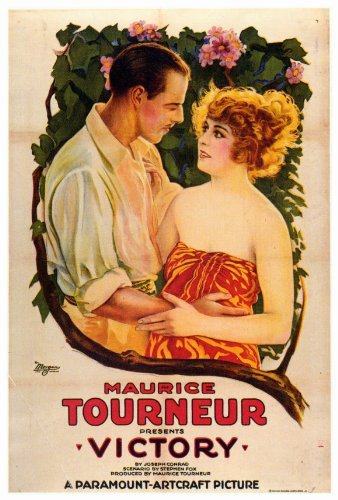
A definitive 6.4/10 rating for a film that redefined the boundaries of cult cinema. Victory remains a cornerstone of transgressive art.
Stepping back into the hallowed halls of early cinema, one often encounters works that, despite their age, resonate with an astonishing contemporary relevance. Jules Furthman's 1919 adaptation of Joseph Conrad's novel, simply titled 'Victory', is precisely such a film. Far from being a mere historical curiosity, this silent epic delves into the profound psychological depths that define Conrad's literary universe, translating them onto the silver screen with a surprising degree of nuance and power. It's a testament to the enduring potency of its source material and the nascent artistry of filmmaking during that era.
Conrad's novel is a masterpiece of atmospheric tension and character study, exploring themes of isolation, human connection, and the insidious nature of evil. Furthman, as the screenwriter, faced the formidable challenge of distilling this intricate narrative into a visual language suitable for the silent era. The result is a film that, while perhaps simplifying some of Conrad's more philosophical musings, captures the essential spirit of the story: the tragic folly of attempting to exist outside the human condition. The narrative thrust, centered around Axel Heyst's self-imposed exile and the calamitous intrusion of villainy, remains compellingly intact.
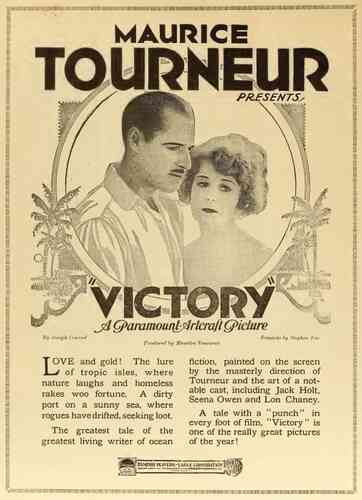
At the heart of 'Victory' lies Axel Heyst, portrayed with a brooding intensity by Jack Holt. Heyst is a man who has consciously chosen to detach himself from the world, a self-proclaimed observer rather than a participant. His island retreat in the South Seas isn't just a geographical location; it's a metaphysical construct, a fortress against the perceived vulgarity and corruption of human society. Holt's performance, reliant entirely on physicality and expressive facial work, conveys this profound weariness and intellectual aloofness. His posture, his measured movements, and the subtle shifts in his gaze communicate a man who has seen too much and deliberately chosen to see no more. Yet, beneath this veneer of stoicism, one senses a latent humanity, a spark waiting to be reignited or, tragically, extinguished.
The film excels in establishing Heyst’s world before its violent disruption. The early scenes paint a picture of idyllic solitude, a life of quiet contemplation. This deliberate pacing allows the audience to understand the profound peace Heyst has cultivated, making the subsequent intrusion all the more jarring. It’s a classic setup: the calm before the storm, amplified by the silent film's ability to use visual cues and evocative intertitles to build atmosphere. The sheer audacity of Heyst's philosophy – to simply 'not be' in the world – is rendered palpable through Holt's nuanced portrayal.
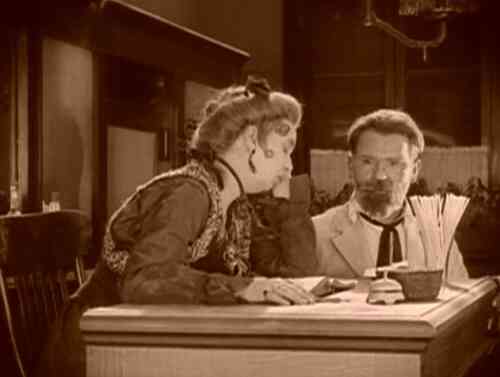
Heyst's carefully constructed world begins to unravel with the arrival of Lena, played by Seena Owen. Lena is everything Heyst is not: vulnerable, emotionally exposed, and desperately seeking refuge from a cruel world. Her plight, trapped in an exploitative situation, serves as the irresistible force that finally breaks through Heyst's immovable object. Owen’s performance is a masterclass in silent film acting, conveying Lena's fear, her burgeoning hope, and her fierce loyalty through expressive gestures and a captivating gaze. She doesn't just react; she embodies the emotional turmoil of a woman on the precipice, and her presence introduces the very human element Heyst has so assiduously avoided.
The burgeoning relationship between Heyst and Lena is central to the film's emotional core. It's a delicate dance between two wounded souls, one seeking to connect, the other terrified of the implications of that connection. The silent medium, paradoxically, often amplifies these unspoken emotions, allowing the audience to project their understanding onto the characters' expressions. The tenderness and awkwardness of their early interactions are beautifully portrayed, laying the groundwork for the tragic events that follow. Lena’s journey from a victim to a figure of strength and sacrifice is a compelling arc, demonstrating the profound impact one person can have on another, even a man as guarded as Heyst.
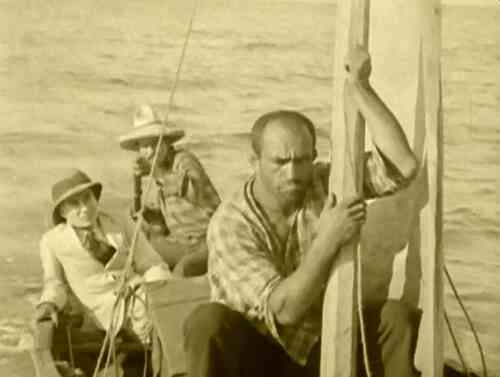
The true terror of 'Victory' arrives in the form of Mr. Jones, a character of pure, unadulterated malevolence, brought to life with chilling effectiveness by Lon Chaney. Chaney, renowned for his transformative roles and grotesque characterizations in films like The Bird of Prey, delivers a performance here that is less about overt monster makeup and more about an unsettling, reptilian menace. Jones is not merely a villain; he is an embodiment of nihilistic evil, driven by an insatiable greed and a perverse enjoyment of others' suffering. Chaney's gaunt features, his piercing eyes, and his controlled, predatory movements create a truly unforgettable antagonist. His very presence on screen is a palpable threat, a dark cloud descending upon Heyst's fragile peace.
Accompanying Jones are the equally memorable, if less psychologically complex, figures of Ricardo and Pedro. Wallace Beery, in an early but impactful role as Ricardo, brings a brutish sensuality and a dangerous cunning to the character. His fascination with Lena adds another layer of tension and threat, creating a complex web of desires and dangers. Bull Montana as Pedro, the silent, hulking brute, completes the terrifying trio, a force of raw, unthinking violence. The ensemble of villains is perfectly cast, each contributing a distinct shade of darkness to the encroaching menace. Their arrival transforms the idyllic island into a battleground, not just for survival, but for the very soul of Heyst.
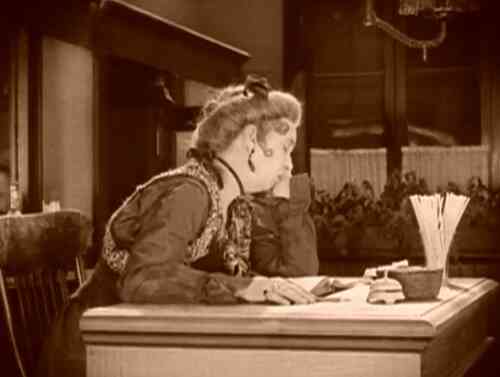
The cinematography of 'Victory', typical of the era, relies heavily on establishing shots of the South Seas landscape, contrasting the serene beauty of nature with the ugliness of human depravity. The visual language is direct yet effective, using close-ups to emphasize emotional states and wider shots to convey the isolation of the island and the vastness of the ocean. The film's pacing allows for moments of quiet observation, which are crucial for building the sense of impending doom. The lack of dialogue forces the filmmakers to be incredibly articulate with their visuals, a skill that silent cinema mastered beautifully.
The film's thematic resonance is profound. It explores the impossibility of true isolation, arguing that even the most determined recluse cannot escape the gravitational pull of humanity, for better or worse. Heyst's attempt to opt out of life is ultimately futile, as life, in its most brutal and beautiful forms, comes crashing onto his shores. The 'victory' of the title becomes ambiguous; is it the triumph of love over cynicism, or the tragic realization that some battles, once engaged, can only end in destruction? This moral ambiguity is a hallmark of Conrad's work and is surprisingly well-preserved in this adaptation.
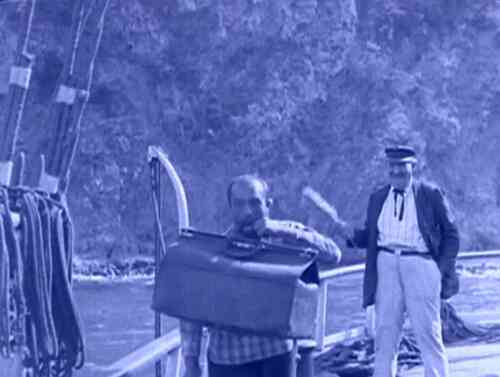
Beyond its narrative, 'Victory' serves as a fascinating artifact of early filmmaking. The performances, while adhering to the more theatrical conventions of the silent era, demonstrate a remarkable ability to convey complex emotions without spoken words. The supporting cast, including Ruth Renick, Laura Winston, Ben Deeley, Betty Bouton, George Nichols, and William Bailey, contribute to the tapestry of this cinematic world, each playing their part in building the tension and drama. It’s a collective effort in visual storytelling, where every gesture, every expression, and every movement carries significant weight.
Comparing 'Victory' to other films of its period highlights its strengths. While Sodoms Ende might explore moral decay within a societal context, 'Victory' focuses on the personal, almost existential decay that threatens Heyst's isolated existence when confronted by external evil. Similarly, where films like Mysteries of Paris delve into the dark underbelly of urban life, 'Victory' shows that depravity knows no geographical bounds, reaching even the most remote havens. The sense of creeping dread and the psychological torment inflicted upon the protagonists echo in a similar vein to what one might find in a film like The Mystery of the Yellow Room, though with a different flavor of threat – one more physical and less cerebral.
The film also shares thematic kinship with works exploring survival against overwhelming odds, much like the implied struggles in Sands of Sacrifice, though 'Victory' injects a potent psychological dimension into its survival narrative. It's not just about enduring physical hardship, but about the fight to maintain one's moral and emotional integrity. This blend of adventure, romance, and profound psychological drama sets 'Victory' apart, demonstrating the nascent power of cinema to tackle complex literary works.
In its totality, 'Victory' stands as a compelling testament to the power of silent cinema. It’s a film that asks profound questions about human nature, the allure and fallacy of isolation, and the inescapable entanglement of fate and free will. Jack Holt, Seena Owen, and particularly Lon Chaney deliver performances that transcend the limitations of the medium, creating characters that are vivid and memorable. For aficionados of silent film, for those who appreciate the rich tapestry of early adaptations, and for anyone curious about the foundational narratives that shaped cinematic storytelling, 'Victory' is an essential viewing experience. It's a journey into the heart of darkness, illuminated by the flickering light of a bygone era, yet its themes remain as stark and relevant as ever. It reminds us that sometimes, the most profound 'victory' is simply the act of engaging with life, even when it threatens to consume you.
IMDb —
1923
Community
Log in to comment.