DbcultAccessing Vault...
Cult Review
Senior Film Conservator
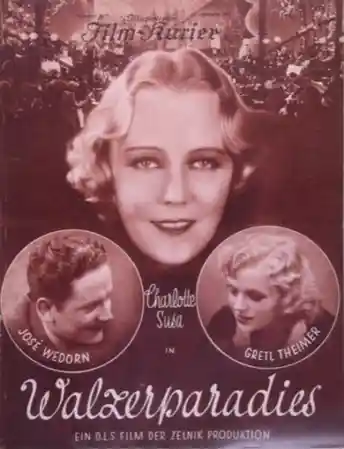
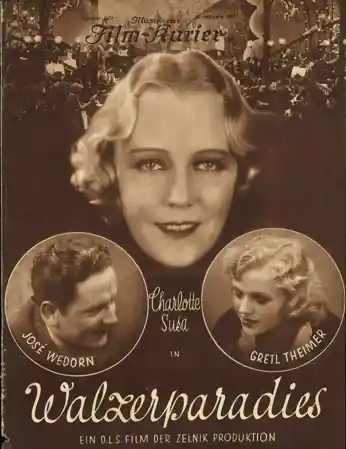
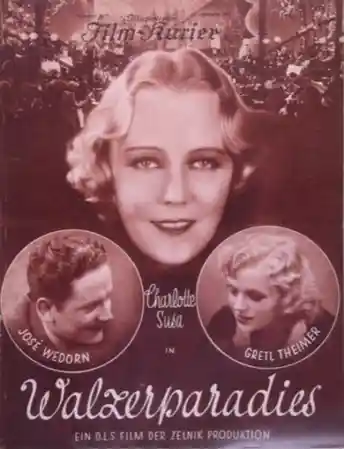
If you have eighty minutes to spare and a very specific tolerance for scratchy 1931 audio, Walzerparadies is a weirdly charming relic. People who love old-school operetta antics and seeing a pre-Hollywood S.Z. Sakall will probably find it cute, but anyone expecting modern pacing or actual laugh-out-loud jokes is going to turn this off in five minutes flat. 📻
The plot is about as thin as a piece of strudel dough. We got a famous opera star in Vienna, lots of people pretending to be other people, and a massive amount of waltzing.
Honestly, the whole thing feels like it was filmed in a giant biscuit tin. The echo on the voices is wild.
There is this one scene early on where a guy is trying to sing, and you can literally hear the furniture creaking in the background. It is so loud it actually made me laugh.
If you want something with actual dramatic tension, you are better off trying Das Schweigen am Starnbergersee. This movie is strictly for people who want to watch fancy folks in tuxedos get confused about love letters.
But let's talk about S.Z. Sakall. He is easily the best part of this.
Even back in 1931, before he became the cuddly guy we all know from classic Hollywood, he had those incredibly expressive cheeks. He does this flustered hand wave thing that just makes you smile.
The lead actress, Charlotte Susa, has this incredibly intense gaze. In one close-up, she stares so hard at her co-star that it feels less like romance and more like she is trying to read his mind.
And the music! Is is just endless waltzes.
After about the fourth musicall number, they all start to sound exactly the same. It is like the composer had one really good tune and just decided to play it at different speeds.
I did appreciate the set designs, though. They have these massive, glossy floors that look so slippery I was genuinely worried someone was going to wipe out during a dance number.
There is a bit in the middle where two characters are arguing over a piano, and the camera just sits there, completely frozen, for like three minutes. It is so awkward.
You can almost feel the director, Frederic Zelnik, standing behind the camera holding his breath, praying nobody trips over a wire.
It is definitely not a masterpiece. In fact, it is pretty messy.
But there is something very sweet about how hard everyone is trying to make this new "talking picture" thing work. It has a clumsy energy that you just do not get in movies anymore.
IMDb 6.1
1915
Community
Log in to comment.