DbcultAccessing Vault...
5.8/10
Senior Film Conservator
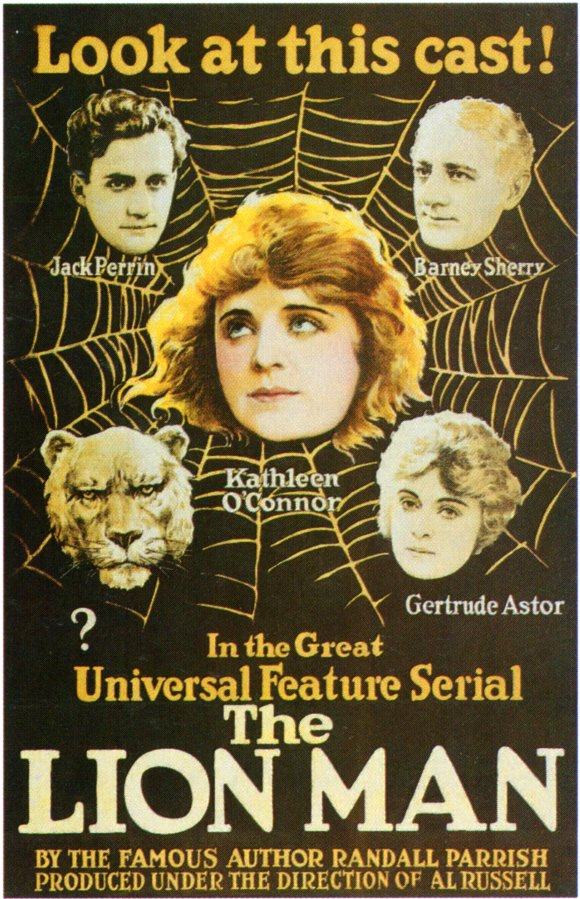
A definitive 5.8/10 rating for a film that redefined the boundaries of cult cinema. The Lion Man remains a cornerstone of transgressive art.
Russell Parrish's The Lion Man pirouettes on the razor's edge between civilization and savagery—a thematic tension mirrored in Stella Donovan's literal wire-walking debut. Gertrude Astor's portrayal transcends mere plucky-reporter tropes; her Stella moves with the coiled precision of a jungle cat, eyelids fluttering not with flirtation but tactical calculation as she navigates Cavendish's gilded world. Watch how director Mack V. Wright frames her first appearance—not through dialogue cards, but through the trembling focus of a circus patron's monocle, distorting her form into something fluid and dangerous. This is silent storytelling at its most eloquent, where William A. Carroll's chiaroscuro lighting carves Astor's silhouette against the big top canvas like an Art Deco vengeance statue.
Henry A. Barrows' Frederick Cavendish embodies decaying aristocracy, his gouty movements and jeweled walking stick whispering of inherited corruption. His circus isn't entertainment but a memento mori for the Jazz Age—acrobats become falling stock tickers, lion tamers mirror his own faltering control. J. Barney Sherry's Enright slithers through scenes with reptilian stillness, his pince-nez glinting like knife points during the will-destruction sequence. Note the Freudian symbolism as he feeds legal documents to the fireplace: the law consumed by its own flame.
"Westcott's entrance—dusty boots on Persian carpets—is class warfare made kinetic. Robert Walker plays him not as noble savage but as tectonic force, all contained seismic rage."
Cinema's first proto-superhero emerges not from gamma rays or alien planets, but from humanity's discarded shadows. Jack Perrin's Lion Man remains deliberately spectral—a blur of matted hair and claw-like hands in the negative space of Carroll's compositions. His interventions play like panther attacks: sudden, violent, and vanishing. Wright's genius lies in restraint; we glimpse him through smoke or shattered glass, his growls rendered not by title cards but by the audience's collective imagination. This abstraction makes him infinitely more terrifying than any later costumed crusader.
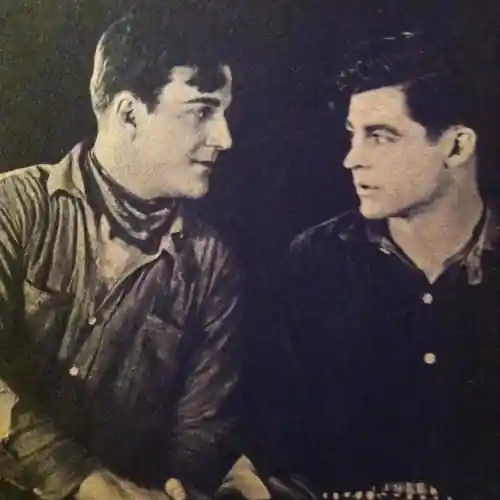
The mansion fire sequence remains a masterclass in tension-building. Wright cross-cuts between three movements: Stella crawling through choking smoke like a wounded nymph, Westcott battling henchmen amidst geysers of orange-tinted flame (hand-painted frame by frame), and Enright calmly pocketing Cavendish's silverware as walls collapse. It's Griffith's pacing filtered through German Expressionism—the fire's dance becomes a character itself, licking at the edges of the frame with demonic sentience.
Where Sadounah exoticizes the wild man trope, The Lion Man internalizes it. Similarly, while The Serpent explores deception through femme fatales, here duplicity wears many skins—Westcott's blunt honesty becomes its own disguise among society's preening peacocks. Kathleen O'Connor's Celeste La Rue deserves special mention; her lounge singer performs predatory seduction like a spider weaving silk, a darker counterpoint to Astor's pragmatic heroine. Watch her fingernails—always curved like talons, even when caressing a champagne flute.
The circus setting predates The Raggedy Queen's carnival chaos but with inverse purpose: Cavendish's circus is a gilded prison where wild creatures (human and animal) perform for the elite. Wright composes crowd scenes like Bruegel reinterpreted through a kaleidoscope—each extra meticulously choreographed to reveal societal hierarchies. Cavendish's balcony perch mirrors the lion tamer's platform; both wield whips of different materials.
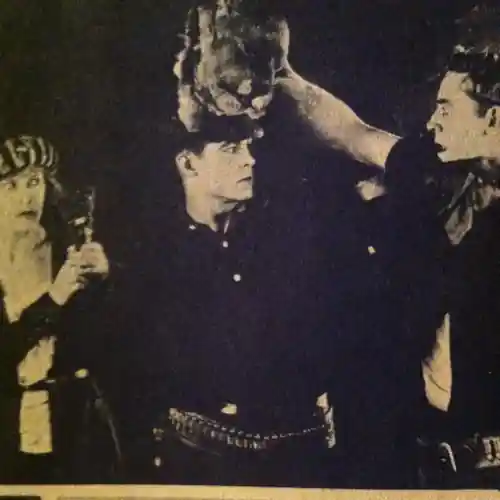
Karl R. Coolidge's screenplay weaponizes legal documents with shocking violence. The contested will isn't mere MacGuffin but a character—its vellum pages rustle like snakeskin whenever Enright approaches. Modern viewers might miss the audacity of a lawyer as primary villain in 1923; Sherry plays against type, rejecting bombastic villainy for glacial precision. His most terrifying moment comes not during the fire, but in a close-up of him moistening a fingertip to turn a page while Stella dangles from a burning chandelier.
Astor performed 80% of her wire-walking stunts—a fact that electrifies every frame. Wright shoots these sequences not as spectacles but as psychological portraits. When Stella first mounts the wire, the camera adopts her vertiginous POV: the crowd dissolves into a blur of tuxedos and pearls, the net yawns like a grave below. Compare this with the climactic factory chase where Westcott scrambles across steel girders; male heroism as brute force versus female as balletic precision. Their alliance works precisely because they aren't romanticized—they're survivors circling each other like wary wolves before uniting against a common enemy.
The Lion Man's final revelation—no spoilers here—resonates with post-war disillusionment. Is he id unleashed? Colonial guilt made flesh? Wright offers no easy answers. His denouement in the rain-slicked docks channels both Dickensian gloom and nascent noir, the fog swallowing characters whole as if the earth itself rejects their moral compromises. Unlike Shark Monroe's tidy resolutions, this ambiguity feels radically modern.
"Cavendish's circus lions aren't threats but mirrors—their roars echo the millionaire's off-screen death cries, their cages reflect Stella's societal constraints."
Ninety years haven't dulled the film's bite. Its DNA surfaces in Robbery Under Arms's bush justice, The Midnight Burglar's class-conscious crime, even Nolan's Prestige. But what truly astonishes is its prescience about performance culture—Stella's undercover role prefigures reality television, social media personas, our endless shape-shifting for survival. The Lion Man himself feels eerily contemporary; in an age of manufactured authenticity, his raw, unfiltered existence strikes deeper than any CGI creation ever could.
The restored print reveals details modern audiences might miss: the hieroglyphic scratches on the Lion Man's cave wall, the tarot cards Celeste fans during conspiracy scenes, the recurring clock motifs signaling civilization's collapse. These aren't accidents but Parrish and Coolidge weaving mythic threads into pop entertainment. Like its titular creature, the film remains elusive—defying genre cages, its meanings shifting with each viewing. In Stella's final gaze at the camera, equal parts triumph and exhaustion, we see silent cinema's entire revolutionary spirit distilled. She—and The Lion Man—demand we walk the wire with them.

IMDb 5.6
1936
Community
Log in to comment.