DbcultAccessing Vault...
Cult Review
Senior Film Conservator
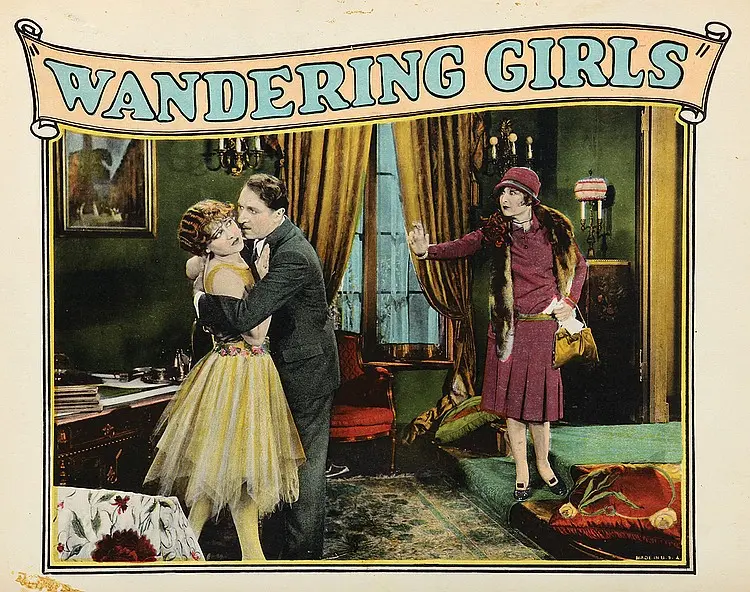
Is 'Wandering Girls' worth watching today? Short answer: yes, but with significant caveats. This 1927 silent drama offers a fascinating, if sometimes frustrating, glimpse into a bygone era of filmmaking, particularly for those with a deep appreciation for the silent screen's unique narrative language and its pioneering performers. However, viewers accustomed to modern pacing and nuanced character development might find its melodramatic flourishes and occasionally simplistic plot points a hurdle.
It's a journey into a specific kind of storytelling, one that relies heavily on visual cues and broad emotional strokes, making it an essential watch for film historians and silent film enthusiasts, but potentially less engaging for casual viewers seeking contemporary narrative complexities.
This film works because of Dorothy Revier’s magnetic performance, which anchors the melodrama with genuine emotional weight and provides a compelling window into the societal anxieties of the Jazz Age.
This film fails because its plot, while engaging, often succumbs to predictable silent-era tropes and a pacing that can feel sluggish, particularly in its second act, diminishing the impact of its more dramatic moments.
You should watch it if you are a dedicated silent film aficionado, interested in the early careers of Hollywood stars, or a student of 1920s cultural history looking for cinematic representations of the era's changing morals and allure of urban life.
‘Wandering Girls’ presents a narrative that, on its surface, feels like a classic cautionary tale. Peggy Marston, played by Dorothy Revier, is not just a small-town girl; she’s a vessel for the emerging cultural shifts of the 1920s. Her “jazz-mad” disposition isn't merely a character quirk; it’s a symbol of a generation yearning for freedom, excitement, and a break from staid traditions. This yearning is precisely what makes her susceptible to the charms of Maurice Dumond (Armand Kaliz) and Maxine (Mildred Harris), a pair of society thieves.
The film cleverly establishes their world as one of deceptive glamour. It’s a world where glittering jewels and sophisticated soirées mask a darker undercurrent of illicit activity. Peggy isn't drawn to crime itself, but to the perceived sophistication and liberation that Dumond and Maxine embody. This distinction is crucial, as it elevates the plot beyond simple morality play to a more nuanced exploration of temptation and consequence.
Her false accusation of jewel possession isn't just a plot device; it’s the inevitable collision of her innocent aspirations with the harsh realities of a life she barely comprehends. The narrative, while sometimes leaning into overt melodrama, effectively captures the precariousness of newfound freedom, particularly for young women navigating the roaring twenties.
The story’s strength lies in its ability to highlight the stark contrast between Peggy’s provincial background and the intoxicating, dangerous allure of the urban underworld. It’s a classic fish-out-of-water scenario, but one steeped in the specific cultural anxieties of its time, giving it a historical resonance that transcends its sometimes simplistic storytelling.
Revier’s portrayal of Peggy Marston is, without doubt, the beating heart of 'Wandering Girls'. In an era where acting often veered towards the theatrical, Revier delivers a performance that feels surprisingly grounded and emotionally accessible. Her expressive eyes and subtle shifts in posture convey a rich inner life, allowing the audience to intimately understand Peggy's journey from wide-eyed innocence to fearful confusion.
Consider, for example, the scene where Peggy first encounters Dumond and Maxine. Revier doesn't merely look impressed; her gaze holds a mixture of awe, curiosity, and a touch of naiveté that immediately establishes her character's vulnerability. Later, when she finds herself falsely accused, her silent panic – the trembling hands, the desperate, pleading glances – is genuinely impactful, transcending the limitations of the silent medium.
Her ability to convey complex emotions without dialogue is a testament to her skill. She manages to make Peggy’s initial infatuation believable, her subsequent fear palpable, and her eventual resolve inspiring. It’s a tightrope walk between ingénue and victim, and Revier nails it.
While other actresses of the period might have exaggerated these emotional beats, Revier employs a restraint that makes her performance feel more modern than many of her contemporaries. She doesn't just emote; she embodies. Her presence is so strong that it often elevates scenes that might otherwise fall flat due to predictable plotting or less inspired direction. She is the reason this film, despite its flaws, remains compelling.
One might even argue that the film’s greatest flaw is its inability to fully commit to the dark glamour it teases, often pulling its punches when a bolder, more morally ambiguous stance could have made Peggy’s predicament even more gripping.
Harry O. Hoyt, as director, navigates the demands of a silent-era melodrama with competence, though not always with innovation. The film’s visual language, while often rudimentary by today's standards, occasionally offers striking compositions that enhance the narrative. The contrast between the smoky, vibrant, albeit briefly glimpsed, jazz clubs and the stark, almost clinical police station settings is particularly effective, using environment to reflect Peggy's changing fortunes.
The cinematography often relies on classic silent film techniques: clear, well-lit shots for exposition, and a heavier use of shadows and close-ups to emphasize emotional distress or villainous intent. There's a notable sequence depicting Peggy's initial foray into the city's nightlife, where the quick cuts and dynamic angles, for its time, successfully convey the intoxicating rush of new experiences, even if the actual jazz performance is left to the viewer's imagination and the theater's live orchestra.
However, the film sometimes struggles with visual pacing. Certain scenes linger longer than necessary, perhaps to allow for the audience to fully absorb the emotional weight, but occasionally resulting in a drag. The set designs, particularly for the opulent homes of the thieves, are suitably grand, though they lean more into theatricality than gritty realism, which is typical for the period. The depiction of crime, too, is sanitized, reflecting a sensibility that prioritizes moral instruction over verisimilitude. Frankly, the film’s handling of the criminal underworld feels less like a gritty exposé and more like a cautionary tale penned by a Sunday school teacher.
Despite these limitations, Hoyt successfully creates a world that, for 1927 audiences, would have felt both alluring and dangerous, effectively setting the stage for Peggy's dramatic arc. His direction, while not groundbreaking, is solid and serves the story well, allowing Revier's performance to truly shine.
The pacing of ‘Wandering Girls’ is distinctly of its era. Silent films often had a rhythm that allowed for greater contemplation of visual information and emotional beats, and this film is no exception. The narrative ebbs and flows, sometimes with a languid grace, at other times feeling unduly stretched. The initial setup, introducing Peggy's small-town life and her jazz aspirations, moves quickly, capturing the excitement of her burgeoning independence.
However, once Peggy becomes entangled with Dumond and Maxine, and especially during the investigation and accusation phases, the pace slows considerably. While this allows for a deeper exploration of Peggy's emotional turmoil, it can test the patience of modern viewers. The drawn-out courtroom scenes, for instance, while intended to heighten suspense, occasionally feel repetitive.
The tone is unashamedly melodramatic. Every emotion is writ large, every conflict presented with stark moral clarity. This isn't a film interested in ambiguity; it's interested in the clear triumph of good over perceived evil, or at least the clear consequences of straying from the straight and narrow. This directness is both a strength and a weakness. It provides immediate emotional impact, but it also limits the depth of character and thematic exploration.
The film leans heavily into the 'fallen woman' trope, common in silent cinema, but tries to redeem its protagonist through her inherent goodness and unfortunate circumstances. It works. But it’s flawed. The tension often comes from the audience's anticipation of Peggy's inevitable downfall or redemption, rather than genuine surprise. Despite this, the melodrama often hits its mark, especially when Revier is on screen, her performance elevating the material.
Maurice Dumond and Maxine, portrayed by Armand Kaliz and Mildred Harris respectively, embody the archetypal silent film villains. Kaliz's Dumond is suave, cunning, and outwardly charming, perfectly fitting the mold of the gentleman thief. His performance relies on a familiar set of gestures and expressions that immediately signal his duplicitous nature to the audience. He’s effective in his role, but never truly transcends the stereotype to become a memorable antagonist.
Mildred Harris as Maxine is equally conventional. Her character is the more overtly malicious of the pair, often seen manipulating situations and Peggy herself. Harris plays Maxine with a cold, calculating demeanor, her eyes often narrowed in suspicion or contempt. While her performance is competent, it doesn't offer the same level of nuance or emotional resonance that Revier brings to Peggy. They are foils, designed to highlight Peggy’s innocence, rather than fully fleshed-out characters in their own right.
The supporting cast, including Eugenie Besserer and William Welsh in smaller roles, provide solid, if unremarkable, contributions. They fill their narrative functions adequately, but the film's focus remains squarely on Peggy. The lack of truly complex supporting characters occasionally leaves the film feeling a bit one-sided, relying almost entirely on Revier to carry the emotional weight. This isn’t necessarily a flaw of the actors themselves, but rather a characteristic of silent-era storytelling that prioritized clear-cut heroes and villains.
For a deeper dive into the era's character dynamics, one might compare it to films like The Luck o' the Foolish or 30 Below Zero, which sometimes offered more ensemble-driven narratives, though often still adhering to similar archetypes.
For silent film enthusiasts, 'Wandering Girls' offers a compelling, if imperfect, journey. It's a historical artifact. It showcases a star in the making in Dorothy Revier. It reflects societal anxieties of the 1920s. The film provides a valuable insight into the narrative conventions and moral leanings of its time. It’s an accessible entry point for those curious about the silent era. However, it demands a certain patience from its audience. Contemporary viewers might find its pacing challenging. The melodrama can feel dated. Its predictability is sometimes an issue. But the central performance makes it worthwhile. It's not a lost masterpiece. Yet, it's far from forgettable. It holds a specific charm for the right viewer.
Ultimately, 'Wandering Girls' stands as a compelling, albeit imperfect, artifact of its time. Its true value lies not in groundbreaking cinematic techniques or revolutionary storytelling, but in its ability to transport the viewer to a specific moment in history through the lens of a captivating central performance. Dorothy Revier's Peggy Marston is a character worth discovering, her journey a poignant reminder of the allure and dangers of the Jazz Age.
While it may not appeal to everyone, particularly those unaccustomed to the unique language of silent cinema, for the right audience, it offers a rich and rewarding experience. It's a film that asks for patience and an open mind, rewarding those who give it with a glimpse into a bygone era of Hollywood and a performance that truly shines. It doesn't redefine the genre, nor does it strive for the avant-garde like some of its European counterparts such as Queen of Spades or Midnight Molly, but it carves out its own respectable niche through sheer star power and earnest storytelling.
IMDb —
1925
Community
Log in to comment.