DbcultAccessing Vault...
5.6/10
Senior Film Conservator

A definitive 5.6/10 rating for a film that redefined the boundaries of cult cinema. Éducation de prince remains a cornerstone of transgressive art.
Should you invest your time in this nearly century-old French comedy? Short answer: Yes, but only if you have an appetite for social satire that values wit over slapstick.
This film is for the viewer who enjoys deconstructing the absurdity of the upper class and the 'lost generation' vibes of 1920s Paris. It is definitely not for those seeking the high-octane action found in modern blockbusters or even the frantic physical comedy of some American silent shorts.
1) This film works because it treats its royal subject as a prop in a much larger, more cynical game of social climbing and political theater.
2) This film fails because its middle section becomes bogged down in repetitive training sequences that test the patience of a modern audience.
3) You should watch it if you want to see Pierre Batcheff before he became the face of Surrealism, or if you appreciate the sophisticated humor of Henri Diamant-Berger.
Éducation de prince is a sharp, satirical look at the absurdity of royal tradition in a modern world. It is worth watching for its clever intertitles and the charismatic performance of Pierre Batcheff. If you enjoy early European social comedies that prioritize character over plot, this is a vital entry in the genre.

The 1927 version of Éducation de prince is a fascinating artifact of its time. Directed by Henri Diamant-Berger, a man who understood the rhythm of French humor better than most, the film feels surprisingly modern in its cynicism.
We are introduced to a prince who is effectively a refugee. Unlike the high-stakes drama of Souls Enchained, the stakes here are almost entirely social. The prince doesn't want to rule; he wants to live.
Pierre Batcheff plays the prince with a lethargic grace that is magnetic. He isn't the heroic figure we see in Desert Driven. Instead, he is a young man who finds the weight of his ancestors to be a boring, heavy cloak.
There is a specific scene where the prince is forced to practice his 'royal gaze' in a mirror. Batcheff captures the internal eye-roll perfectly. It is a moment of pure humanity in a world of artificial posturing.
Armand Bernard plays the tutor, Cercleux, with a dry, calculating energy that anchors the film. He isn't a mentor in the traditional sense; he is a branding agent. He sees the prince as a project, not a person.
This dynamic provides the film's strongest comedic beats. While other films of the era like The Lion and the Souse relied on broader gags, Éducation de prince finds its laughs in the gap between what is said and what is meant.
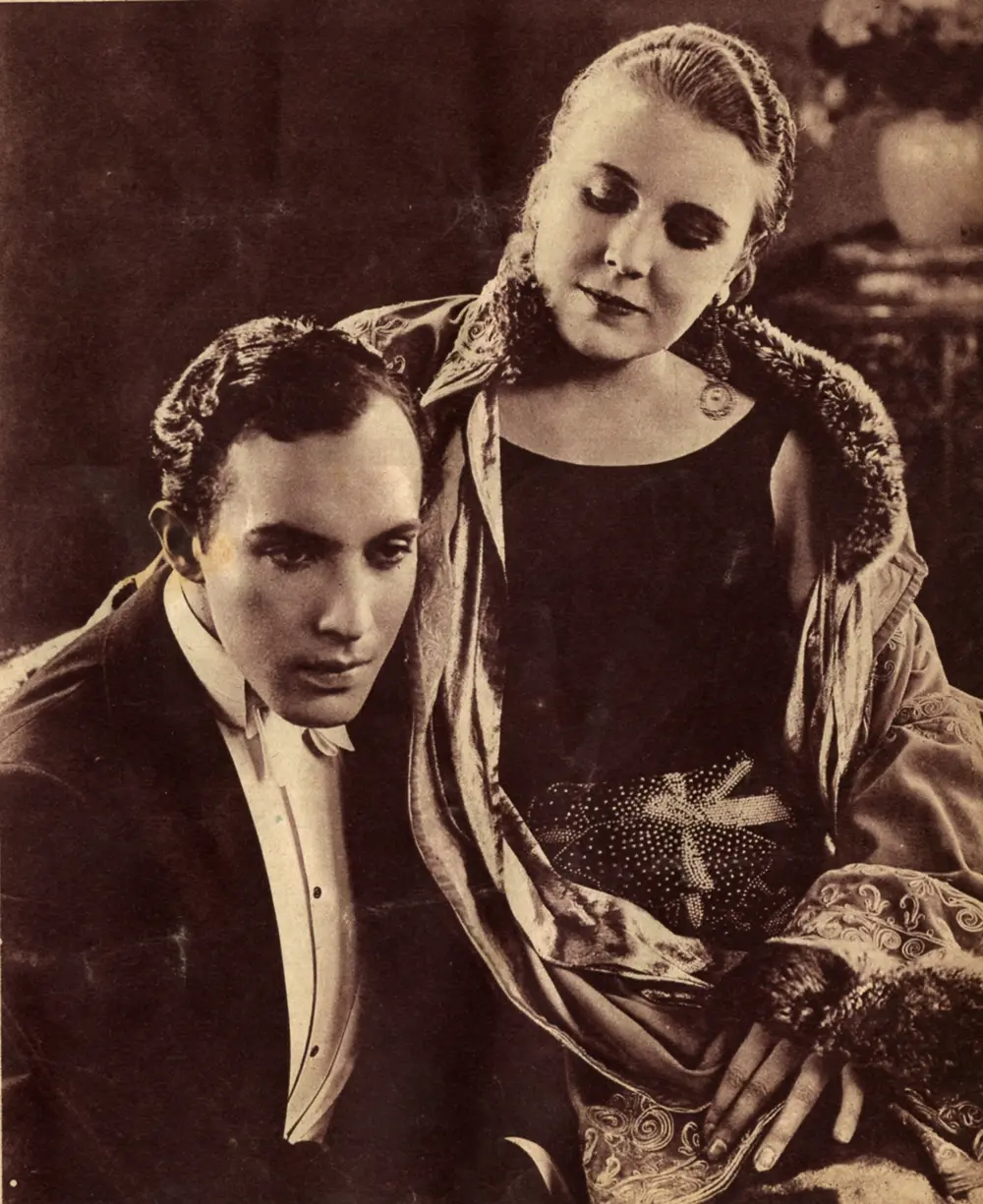
The tutor’s cynical monologues about the necessity of 'appearing' royal while 'acting' common are highlights. It’s a masterclass in the kind of sophisticated dialogue that would later define French cinema in the 1930s.
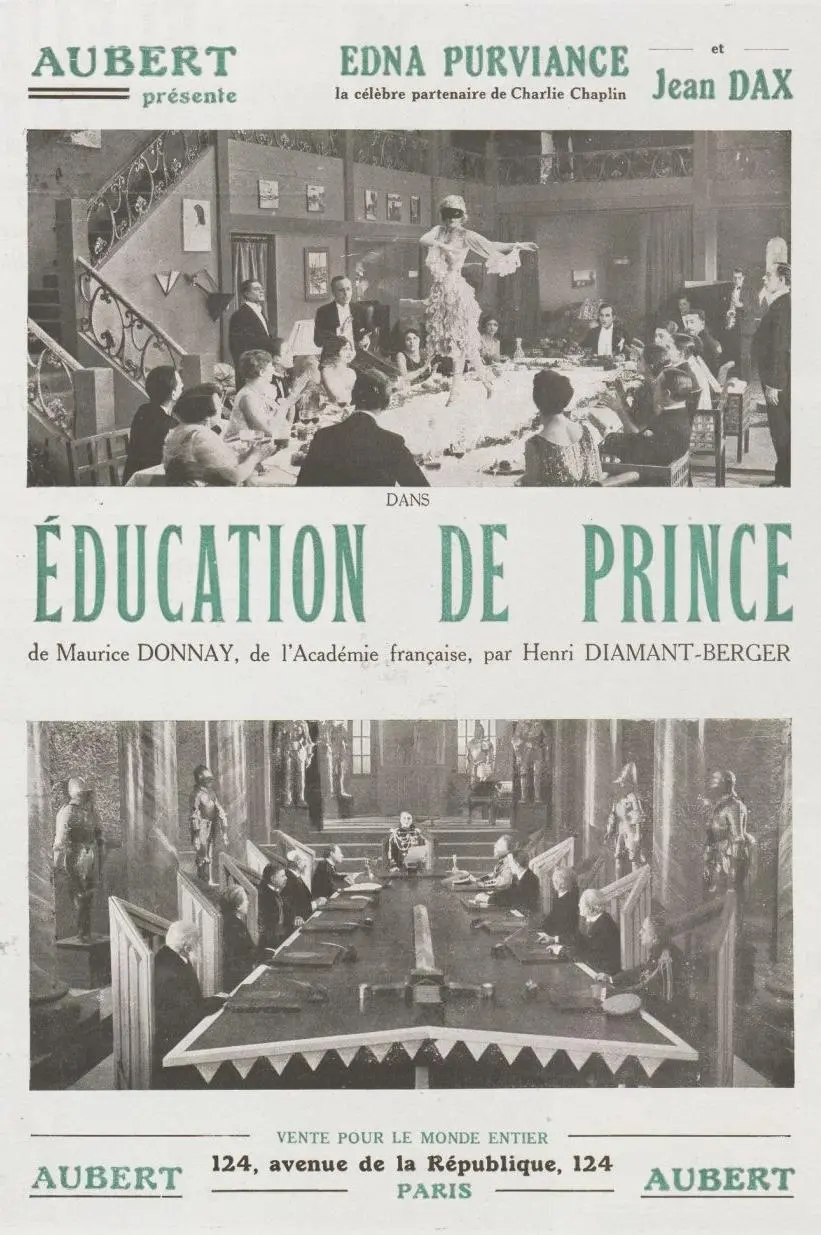
The supporting cast, including the legendary Edna Purviance, adds a layer of international flair. Purviance, famously associated with Chaplin, brings a quiet dignity that contrasts sharply with the frantic energy of the Parisian socialites.
Visually, the film is a love letter to 1920s Paris. Diamant-Berger uses the city not just as a location, but as a character. The contrast between the dusty, fading grandeur of the royal exile’s home and the vibrant streets is palpable.
Unlike the gritty, industrial urbanism of The City, the Paris of Éducation de prince is a playground. The camera lingers on the cafes and the wide boulevards, capturing a sense of freedom that the prince desperately craves.
The lighting in the night scenes is particularly effective. There is a sequence where the prince escapes his handlers to wander the city. The play of shadows and light on the cobblestones creates a mood of romantic melancholy.
It isn't just about the pretty pictures, though. The framing often places the prince in the center of large, empty rooms, emphasizing his isolation. He is a small figure in a large, outdated history.
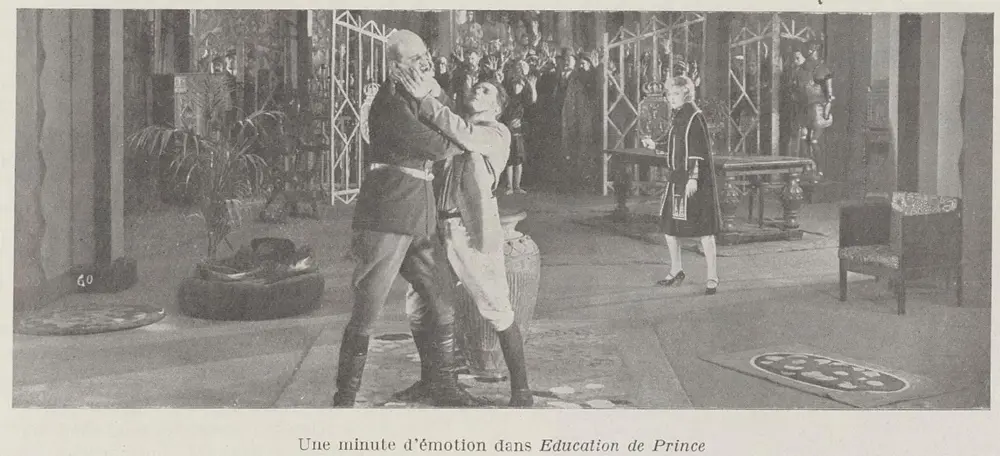
If the film has a weakness, it is the pacing. The 'education' of the title takes up a significant portion of the runtime. At times, the repetitive nature of the prince’s lessons can feel as tedious to the viewer as they are to the character.
However, this might be a deliberate choice by Diamant-Berger. By making the audience feel the boredom of the prince’s life, he aligns our sympathies with the boy’s eventual rebellion.
The tone is consistently ironic. Even in moments that could be sentimental, such as the prince’s budding romance, the film maintains a sharp edge. It refuses to let the characters off the hook.
Compare this to the more straightforward sentimentality of The Awakening. Éducation de prince is far more interested in the social machinery that dictates human behavior than in the human heart itself.
For the casual viewer, Éducation de prince might feel like a slow burn. But for the cinephile, it is a treasure trove of early French wit. It captures a specific moment in history when the old world was dying and the new world didn't yet know what to replace it with.
The film is a fascinating bridge between the early silent era and the more complex social dramas of the 1930s. It lacks the slapstick of Dog Scents, but it replaces it with a maturity that is rare for its time.
It works. But it’s flawed. The flaws, however, are what make it interesting. It is a film that demands your attention and rewards it with subtle insights into the nature of power and identity.
Pros:
The dialogue (intertitles) is genuinely funny and cynical. The location shooting in Paris is gorgeous and adds immense production value. The chemistry between Batcheff and Bernard is a highlight.
Cons:
The plot is relatively thin and predictable. Some secondary characters, like those in Wanted: A Baby, feel more like caricatures than real people.
Here is a stance some might disagree with: The prince is the least interesting person in the movie. The real protagonist is Cercleux, the tutor. He is the one driving the narrative, the one with the vision, and the one who understands the world.
The prince is merely a vessel for other people's ambitions. While we are meant to sympathize with him, his passivity can be frustrating. He is a 'hero' who doesn't actually do much until the very end.
This subversion of the hero's journey is what makes the film so modern. It suggests that in the modern world, the people behind the scenes are the ones who matter, while the 'leaders' are just faces on a coin.
It is a cynical observation, but a poignant one. It reminds me of the social dynamics in Chickie, where the individual is constantly at the mercy of social expectations.
Éducation de prince is a minor masterpiece of French silent cinema. It doesn't have the grand scale of some of its contemporaries, but it has a sharpness that many films today lack. It is a movie that understands that the crown fits, but it pinches.
If you can look past the occasionally slow pacing, you will find a film that is rich in character and social commentary. It is a testament to the talent of Pierre Batcheff and Henri Diamant-Berger that a story about a deposed prince from 1927 still feels relevant in an age of celebrity obsession and political branding.
The bottom line: Watch it for the history, stay for the wit. It’s a sophisticated piece of filmmaking that deserves to be remembered alongside the more famous works of the era like The Hell Ship or Nuit de carnaval.
IMDb 6.2
1929
Community
Log in to comment.