DbcultAccessing Vault...
Cult Review
Senior Film Conservator

In the annals of cinematic history, certain films possess an ephemeral quality, existing more as whispers and tantalizing fragments than fully preserved artifacts. 'Eva, wo bist du?', a German production from the early 20th century, stands as one such phantom limb of the silent era. Though its complete form may elude contemporary audiences, the sheer ambition of its narrative, the psychological depth attributed to its characters, and the socio-cultural commentary it was said to embody, cement its status as a work deserving of meticulous re-examination. This isn't merely a tale of a missing person; it’s a profound meditation on selfhood, societal shackles, and the fervent, often desperate, quest for authenticity in a world intent on conformity.
The film, crafted by the insightful pens of Julius Urgiss and Max Jungk, plunges us into the world of Eva, a young woman of considerable artistic talent and independent spirit, living under the suffocating expectations of a prominent bourgeois family. Her impending marriage to Herr Schmidt, a respectable but utterly conventional businessman, represents not a union of love, but a societal contract, a gilded cage designed to secure her position rather than her happiness. Eva, however, possesses a soul too vibrant to be confined. Her disappearance, the central mystery around which the film revolves, is not an act of simple rebellion, but a carefully orchestrated performance, a radical act of self-liberation. It’s a flight not from a person, but from a predetermined life, a vanishing act designed to reclaim her identity from the societal blueprint laid out for her.
Herr Schmidt, initially bewildered and then increasingly desperate, embarks on a quest to find her. What begins as a search for his fiancée quickly morphs into an unintentional archaeological dig into Eva’s hidden life. He uncovers fragments: a clandestine studio filled with impassioned, subversive artwork; correspondence with bohemian poets and radical thinkers; and glimpses into a vibrant, underground world of artists and intellectuals that stands in stark contrast to the staid drawing rooms of his own acquaintance. Each clue, meticulously rendered through Urgiss and Jungk’s evocative narrative, serves to peel back layers of Eva's public persona, revealing a woman of fierce intellect and profound emotional depth, far removed from the demure bride he thought he knew. The film cleverly uses Schmidt's pursuit as a narrative device to expose the audience, and indeed Schmidt himself, to the societal hypocrisies and rigid class structures of the era.
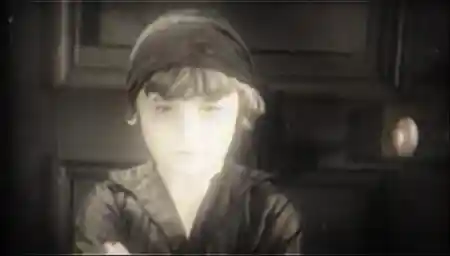
At the heart of this intricate narrative is the mesmerizing performance of Eva Brock. Her portrayal of the titular Eva is nothing short of transcendent, particularly within the expressive confines of silent cinema. Brock eschews the broad, often melodramatic gestures common to the period, opting instead for a nuanced, deeply internalised performance. Her eyes, often shadowed with a melancholic determination, convey volumes: the stifled yearning for artistic freedom, the quiet defiance against societal expectations, and the burgeoning courage to forge her own path. There's a particular scene, described in contemporary reviews, where Eva, alone in her hidden studio, tears up a letter from her fiancé, not with anger, but with a profound, almost ritualistic sadness, her movements imbued with a poignant grace. This moment, devoid of dialogue, speaks to the immense internal conflict and the weighty decision she has made.
Brock's ability to communicate such complex emotional states through subtle facial shifts and controlled physicality places her among the finest performers of her generation. She imbues Eva with an intelligence and resilience that elevate the character beyond a mere victim of circumstances, transforming her into an active agent of her own destiny. Her performance is a masterclass in silent film acting, demonstrating how less can indeed be more, drawing the audience into Eva's inner world with an almost hypnotic intensity. It is this depth that prevents Eva from becoming a mere symbol, grounding her instead as a relatable, albeit extraordinary, individual navigating universal human struggles.
Julius Urgiss and Max Jungk, the screenwriters, deserve immense credit for crafting a narrative that, even in its partial form, resonates with such power. Their screenplay transcends simple melodrama, delving into the psychological underpinnings of Eva's actions and the societal pressures that necessitate them. They employ a non-linear investigative structure, revealing Eva's past and motivations through the lens of Schmidt's discoveries, which allows for a gradual unfolding of character and theme. This narrative approach mirrors a detective story, but one where the true mystery isn't 'who did it?' but 'who is she, truly?' The intertitles, often poetic and philosophical, serve not just to convey dialogue but to deepen the film's thematic resonance, guiding the audience through the labyrinth of Eva's mind and the societal critiques embedded within the plot.
Their writing is particularly adept at creating a contrast between the stifling opulence of high society and the vibrant, if precarious, freedom of the bohemian art world. This juxtaposition is key to understanding Eva's motivations. Unlike many contemporary films that might have portrayed Eva as simply rebellious or ungrateful, Urgiss and Jungk imbue her actions with a profound sense of purpose and intellectual justification. They are not merely telling a story; they are making an argument about the right to individual self-determination, an argument that was particularly potent in post-WWI Germany, a society grappling with rapid change and questioning traditional values.

The visual storytelling, a cornerstone of silent cinema, is reportedly exquisite in 'Eva, wo bist du?'. The cinematography, though details are scarce, is said to have utilized chiaroscuro lighting to great effect, particularly in scenes depicting Eva's hidden world. Shadows and light are employed not just for aesthetic beauty but as symbolic representations of concealment and revelation, of societal darkness versus personal enlightenment. The set design, too, plays a crucial role, with the ornate, claustrophobic interiors of Eva’s family home starkly contrasting with the airy, unpretentious, yet undeniably vibrant, spaces of the artists’ collective she seeks out. These visual metaphors reinforce the central conflict between convention and freedom, between the material and the spiritual.
The film’s themes resonate deeply with other works of the era that explored female agency and societal constraints. One might draw parallels to films like His Father's Wife, which similarly delves into the complexities of women navigating patriarchal structures, albeit perhaps with a more direct focus on marital duty. While What Every Woman Wants might examine a woman's desires, 'Eva, wo bist du?' elevates this exploration to an almost philosophical level, questioning the very definition of a 'desirable' life. The film's psychological depth and its focus on an individual's internal journey also find echoes in the burgeoning German Expressionist movement, though 'Eva, wo bist du?' maintains a more realist aesthetic in its portrayal of societal interactions.
The film's exploration of a mystery, a search for an elusive truth, could be superficially compared to thrillers like Zelyonyy pauk or In the Hands of the Law. However, 'Eva, wo bist du?' transcends mere genre. The 'mystery' is a vehicle for profound character study and social critique, rather than solely a plot device for suspense. The audience is less concerned with *where* Eva is and more with *why* she chose to disappear, and what that choice reveals about the human condition.
Beyond its individual narrative, 'Eva, wo bist du?' serves as a powerful piece of social commentary. It critiques the rigid class structures, the suffocating expectations placed upon women, and the hypocrisy inherent in a society that values appearances over genuine human connection. Eva’s journey is a microcosm of a larger societal shift, a yearning for modernity and individual expression that characterized the Weimar Republic era. Her embrace of the bohemian lifestyle, with its emphasis on artistic freedom and intellectual discourse, represents a direct challenge to the antiquated values she was expected to uphold. This theme of social critique, of individuals struggling against an oppressive system, aligns it with the profound humanism found in works such as Les misérables, though on a more intimate, personal scale.
The film also touches upon the precariousness of such freedom. While Eva finds liberation in her chosen path, the narrative doesn't shy away from depicting the challenges and uncertainties that accompany a life lived outside conventional boundaries. This nuanced portrayal prevents the film from becoming a simplistic polemic, instead offering a more complex and realistic view of self-determination. The risks Eva takes, the sacrifices she makes, underscore the profound commitment required to truly live on one’s own terms. This struggle for authenticity and the pursuit of a life beyond the superficial can be seen as a precursor to narratives found in later films that explore individual journeys of self-discovery, like The Rainbow, which also delves into a woman's search for identity and fulfillment against a backdrop of societal change.
The enduring relevance of 'Eva, wo bist du?' lies in its timeless exploration of the human desire for freedom and self-expression. Even in an age vastly different from the one in which it was produced, Eva’s struggle resonates. The question of whether one should conform to societal expectations or bravely forge an individual path remains a central dilemma for many. The film, in its quiet power, reminds us that true liberation often demands a disappearing act, a shedding of the old self to embrace the new, even if it means becoming a phantom in the eyes of those who once claimed to know us best. Its final moments, often described as ambiguous yet profoundly hopeful, leave the audience with a powerful sense of Eva's ultimate triumph, not necessarily in being found, but in having truly found herself.
Though much of 'Eva, wo bist du?' may exist only in the realm of critical memory and scholarly reconstruction, its impact, even as a concept, is undeniable. It stands as a testament to the sophistication of early German cinema, showcasing how the silent medium could convey complex psychological narratives and profound social commentary. The collaborative genius of Julius Urgiss and Max Jungk in crafting such a compelling story, coupled with Eva Brock's unforgettable performance, solidifies its place as a significant, albeit tragically underseen, work. The film challenges us to consider what it truly means to be seen, to be known, and to be free. It’s a powerful echo from the past, reminding us that some stories, even when silenced, continue to speak volumes about the eternal human quest for identity and purpose. The question, "Eva, wo bist du?" ultimately asks not about her physical location, but about her spiritual and existential whereabouts, and in answering that, the film delivers a profound and lasting resonance. It demands that we look beyond the surface, into the soul, to truly understand where a person, or indeed, where humanity, resides.

IMDb —
1931
Community
Log in to comment.