DbcultAccessing Vault...
6.2/10
Senior Film Conservator
A definitive 6.2/10 rating for a film that redefined the boundaries of cult cinema. War Feathers remains a cornerstone of transgressive art.
Is 'War Feathers' worth watching today? Short answer: yes, but with significant caveats. This particular Hal Roach short is a fascinating historical artifact best suited for silent film enthusiasts, cinephiles interested in early slapstick, and those with a deep appreciation for the foundational elements of American comedy. It is decidedly not for viewers seeking modern pacing, sophisticated narratives, or high-definition polish.
For a contemporary audience accustomed to rapid-fire CGI and intricate character arcs, 'War Feathers' might feel like a quaint relic, charming but ultimately simplistic. However, for those willing to adjust their expectations and engage with a piece of cinematic history, it offers a delightful glimpse into a bygone era of filmmaking and comedic genius.
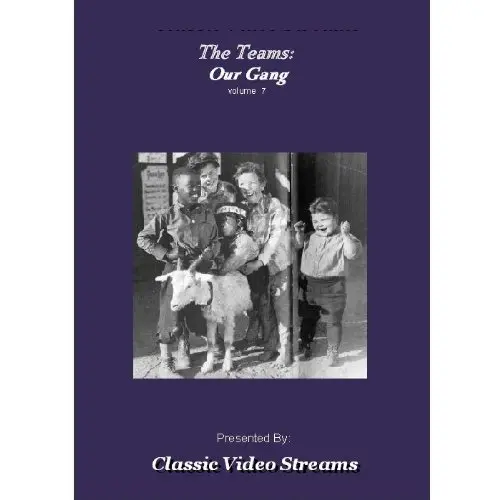
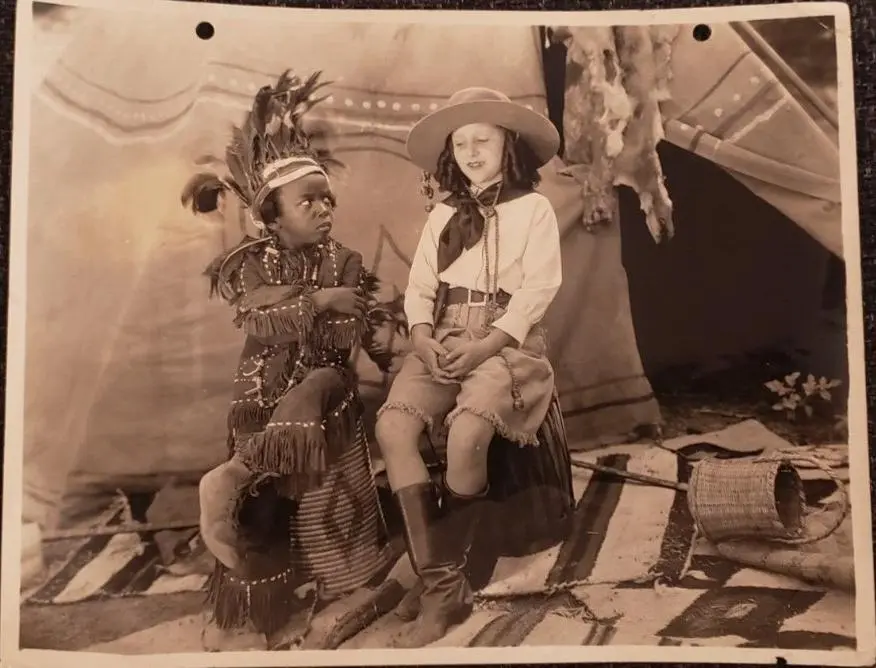
At its core, 'War Feathers' is a testament to childhood fantasy made real, albeit through the lens of early Hollywood. The narrative, penned by Hal Roach and H.M. Walker, orchestrates a classic Western adventure through the eyes of its pint-sized protagonists. Our intrepid gang of children, including the memorable Peggy Ahern, Jay R. Smith, and Allen 'Farina' Hoskins, are initially passengers on a train traversing the fabled 'Old West'.
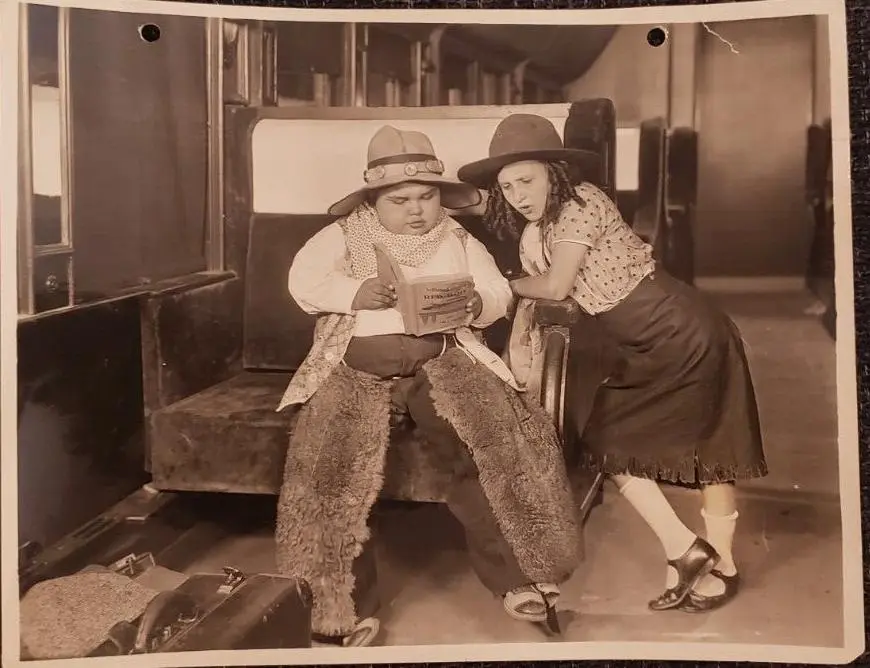
Boredom, that timeless catalyst for mischief, compels them to disembark surreptitiously at a dusty whistle-stop named Hot Dog. This seemingly innocent detour catapults them directly into the heart of a full-blown Western trope-fest. From the chaos of a street-level gunfight to the unexpected acquisition of a covered wagon, and culminating in the discovery of a bandit hideout, their escapade is a condensed, slapstick rendition of every boy's adventure novel. It’s a beautifully simple premise, allowing the natural exuberance of the children to drive the comedic momentum.
This film works because of its unadulterated energy and the raw, unpolished charm of its child stars, who deliver physical comedy with an earnestness rarely replicated. Hal Roach's direction, even in this nascent stage of his career, shows a remarkable ability to harness and orchestrate the natural chaos of a children's ensemble, creating moments of genuine, if broad, humor.
This film fails because its plot is extremely thin, relying heavily on situational comedy and the novelty of children in adult scenarios, which can feel repetitive. The humor, while foundational to slapstick, is undeniably dated, and some gags might not land with a modern audience, lacking the sophistication or subversiveness found in later comedies.
You should watch it if you are a student of silent film, a historian of comedy, or someone who appreciates the sheer historical value of early cinema. It's a foundational piece, not a peak experience, but essential for understanding the lineage of American humor. It’s also surprisingly effective for a casual, lighthearted viewing if you're in the mood for something truly different from today's offerings.
The heart of 'War Feathers' beats loudest in the performances of its young cast. Hal Roach's 'Our Gang' shorts, of which this is an early example, were groundbreaking for their use of actual children playing naturalistic roles, rather than miniature adults. This authenticity is palpable here. Allen 'Farina' Hoskins, with his wide-eyed expressions and impeccable timing, is a consistent source of delight.
His reactions to the unfolding chaos, whether it's a startled jump during a gunfight or a mischievous grin while pilfering a covered wagon, are pure, unadulterated comedic gold. Farina’s unique blend of innocence and street smarts makes him an anchor in the ensemble, often stealing scenes with a glance or a perfectly timed physical gag. One particular moment, where he attempts to 'drive' the covered wagon with a comical seriousness, is a standout example of his understated brilliance.
Similarly, Joe Cobb brings a wonderful, often deadpan, presence to the group. His sturdy, slightly bewildered demeanor acts as a perfect foil to the more overtly expressive children. The dynamic between Cobb's groundedness and the more impulsive actions of the others creates a believable, if exaggerated, camaraderie that underpins the entire adventure. His ability to convey so much with minimal facial expression is a masterclass in silent film acting for a child.
The spirited Peggy Ahern adds a much-needed dose of feminine tenacity to the male-dominated group, proving herself just as capable and adventurous. Her presence ensures the group dynamic feels more balanced and less like a typical boys' club. The natural rapport among the children is evident throughout, a testament to Roach's skill in fostering genuine interactions rather than forcing stilted performances. This organic chemistry is what elevates 'War Feathers' beyond a mere collection of gags, differentiating it from more staged child performances seen in other films of the era, such as some moments in Penrod and Sam.
The ensemble, including Jackie Condon and Johnny Downs, works as a cohesive unit, each child contributing to the overall comedic rhythm. Their lack of self-consciousness, a hallmark of early 'Our Gang' films, allows for a spontaneity that is genuinely infectious. It’s a type of performance that modern child actors often struggle to replicate, having grown up in an era of more polished, self-aware media.
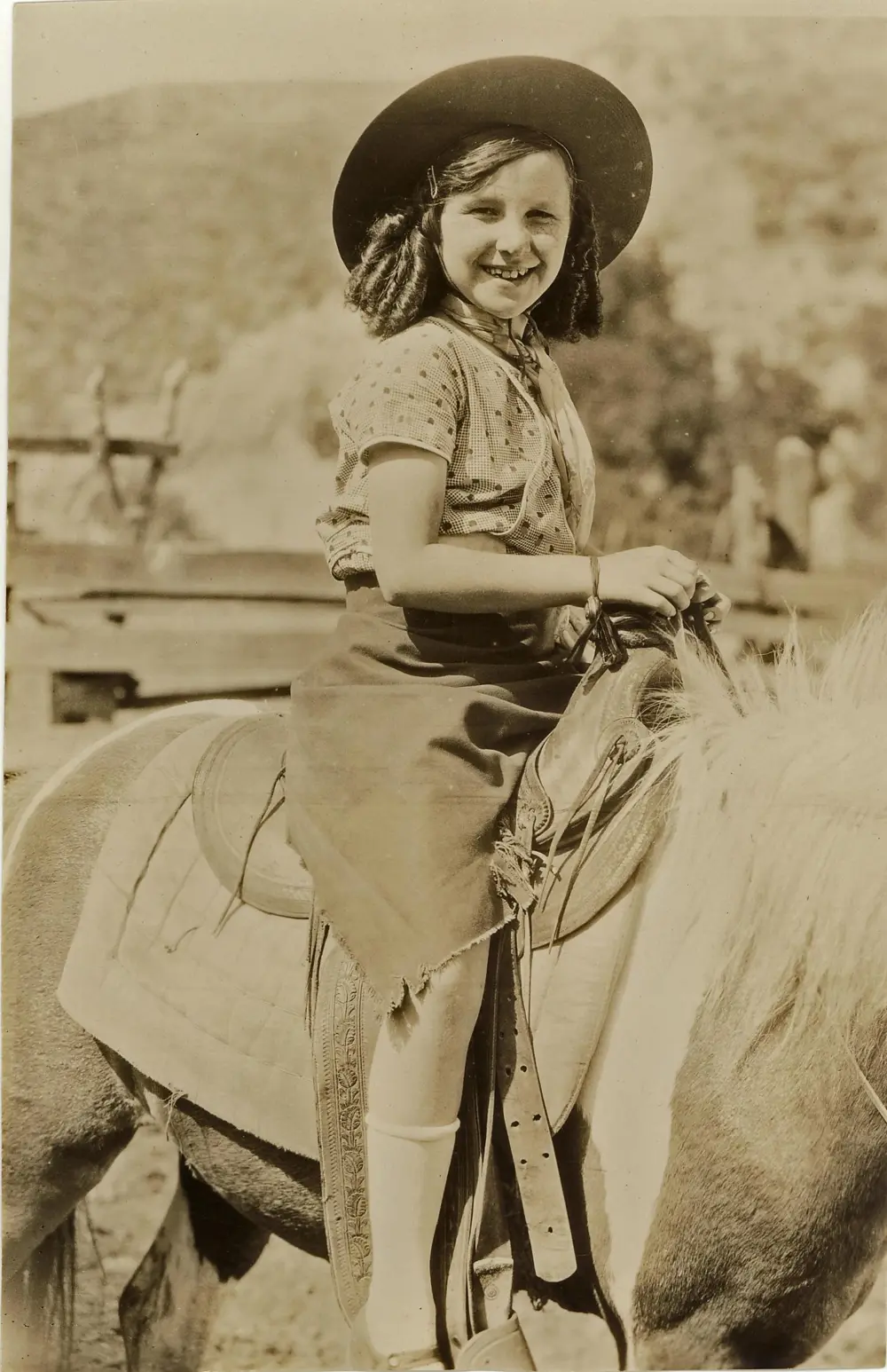
Hal Roach, a name synonymous with early American comedy, demonstrates his nascent genius in 'War Feathers'. His ability to direct a large cast of children, often in chaotic scenarios, is nothing short of remarkable. Roach doesn't just point the camera; he orchestrates a symphony of innocent mischief, allowing the children to embody their roles with a freedom that feels almost improvisational.
The staging of the gunfight in the town of Hot Dog is a prime example. Instead of a typical, gritty Western shootout, Roach turns it into a playground for the children. They duck, weave, and mimic the adult actions around them with an endearing clumsiness. The scene isn't about the stakes of the gunfight itself, but about the children's imaginative engagement with it. This reinterpretation of adult conflict through a child's lens is a recurring motif in Roach's work.
The pacing of 'War Feathers' is typical of silent shorts: brisk and relentless. Gags come one after another, leaving little room for narrative contemplation. This rapid-fire approach ensures that even if one joke doesn't land, another is right around the corner. While some might find this relentless pace exhausting, it's a crucial element of its charm, reflecting the energetic spirit of the children themselves. The film moves with an almost breathless abandon, much like children on an unexpected adventure.
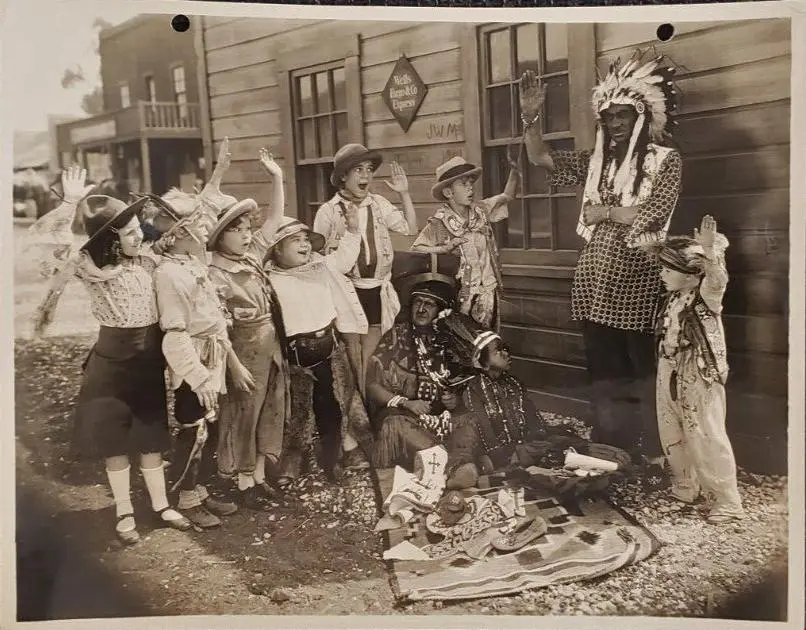
Roach’s direction of the covered wagon sequence is another highlight. The children's struggle to control the runaway wagon is a masterclass in physical comedy, utilizing broad movements and exaggerated reactions to maximize humor. It’s simple, effective, and perfectly suited to the silent film format, relying on visual cues rather than dialogue. This sequence, in particular, showcases Roach's understanding of how to extract comedy from everyday objects and situations, a skill he would hone throughout his illustrious career.
As a film from 1926, 'War Feathers' is a fascinating study in early cinematic techniques. The cinematography, while rudimentary by today's standards, effectively captures the action. Wide shots are frequently employed to showcase the physical comedy and the ensemble nature of the children's antics. There's a raw, almost documentary-like quality to some scenes, particularly those shot outdoors, that lends an authentic feel to the 'Old West' setting.
The use of intertitles, a necessity in silent films, is economical and punchy, serving to advance the plot or highlight a comedic moment without bogging down the visual flow. The editing, while not as sophisticated as later films, is functional, ensuring a clear progression of events and maintaining the film's energetic pace. There's a certain unpolished charm to these technical limitations, a reminder of the foundational artistry involved in early filmmaking.
The set design for the town of Hot Dog, though clearly a studio backlot, evokes the quintessential Western frontier town with enough detail to sell the illusion. The bandit hideout, too, is effectively rendered, providing a suitably dramatic backdrop for the children's final confrontation. It’s a testament to the ingenuity of early filmmakers working within significant budgetary and technological constraints.
Yes, 'War Feathers' is worth watching, particularly for specific audiences. It’s a vital piece of film history. It showcases the foundational elements of slapstick. It offers a rare glimpse into the early careers of iconic child stars. It is a charming, innocent adventure. However, it requires an appreciation for silent cinema’s unique language. It will not appeal to those seeking modern, fast-paced entertainment. It’s a time capsule, not a contemporary blockbuster.
'War Feathers' might not be as widely recognized as some of Hal Roach's later, more polished 'Our Gang' shorts, but its historical significance is undeniable. It represents an early, confident step in the development of child-centric comedy, paving the way for countless films and television shows that would follow. It’s a testament to Roach's pioneering vision, proving that children, given the right direction, could be compelling comedic performers in their own right.
The film’s influence, while subtle, can be seen in the enduring appeal of child ensembles and the timeless humor of kids getting into adult-sized trouble. It’s a simple story, yet it captures an essence of childhood adventure that remains universally appealing. I'd argue 'War Feathers' is more significant as a historical document than a laugh-out-loud comedy for contemporary audiences, though its charm is undeniable.
War Feathers is a delightful, if slight, piece of cinematic history. It’s less a roaring comedy for today’s audiences and more a fascinating window into the origins of American slapstick and the enduring appeal of children at play. While its plot is threadbare and its humor broad, the sheer exuberance of its young cast, under Hal Roach’s confident direction, makes it an essential watch for anyone interested in the foundational elements of film comedy. It’s simple. It works. But it’s flawed. Approach it with historical appreciation, and you’ll find a charming, energetic relic that still manages to raise a smile.
IMDb —
1921
Community
Log in to comment.