DbcultAccessing Vault...
5.6/10
Senior Film Conservator
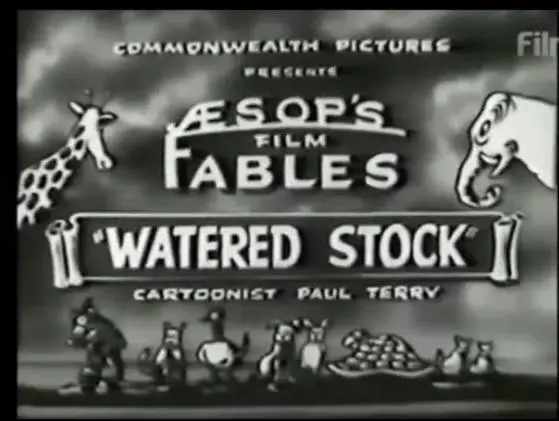
A definitive 5.6/10 rating for a film that redefined the boundaries of cult cinema. Watered Stock remains a cornerstone of transgressive art.
Is Watered Stock worth watching today? Short answer: yes, but only if you value the raw, unpolished evolution of physical comedy over narrative complexity.
This film is for the silent cinema completionist and those who enjoy the 'poker-faced' absurdity of the 1920s. It is definitely not for viewers who require high-definition spectacle or a plot that moves beyond a single, recurring pun.
1) This film works because Lloyd Hamilton possesses a unique, wobbling physical presence that makes even the most predictable gags feel organic.
2) This film fails because it relies entirely on a linguistic pun that loses its comedic momentum halfway through the second act.
3) You should watch it if you want to see the missing link between the broad slapstick of the 1910s and the sophisticated character-driven comedy of the mid-1920s.
Watered Stock is a fascinating artifact of a time when cinema was still figuring out how to translate stage vaudeville into a visual language. Lloyd Hamilton, often overshadowed by the 'Big Three' (Chaplin, Keaton, Lloyd), offers a different flavor of comedy here. He doesn't have Chaplin's pathos or Keaton's stoic athleticism. Instead, he has a frantic, almost nervous energy that makes the brokerage setting feel particularly hostile. It works. But it’s flawed.
The central gag—the literal watering of stocks—is a masterclass in the 'literalist' comedy trope. When Hamilton enters the office, he is a blank slate. He is the 'Ham' persona, a character defined by his oversized clothes and an expression of perpetual, mild confusion. Unlike his work in The Duck Hunter, where the environment is the primary antagonist, Watered Stock pits him against the social and economic structures of the city.
Consider the scene where he first picks up the watering can. The camera stays static, a common trait of the era, but Hamilton fills the frame with a series of micro-expressions. He isn't just pouring water; he is performing a duty. The humor comes from the contrast between his earnestness and the absolute destruction of the ledgers. It’s a brutally simple sentence in visual form: Man pours water, money disappears.
When comparing this to other films of the period, such as the more domestically focused Too Much Married, one notices a distinct shift in tone. While many comedies of 1920 were content with 'comedy of manners,' Watered Stock is a comedy of errors rooted in the industrial machine. It shares some DNA with Golf, another Hamilton vehicle, in its obsession with a protagonist failing to master a 'gentlemanly' pursuit.
The pacing of the film is its biggest hurdle. In an era where shorts were being pumped out weekly, the editing often feels like an afterthought. There are moments where a gag lingers three seconds too long, sucking the oxygen out of the room. Contrast this with the tight, rhythmic editing found in A Milk Fed Hero, and you can see that Watered Stock is more interested in the 'bit' than the 'flow.'
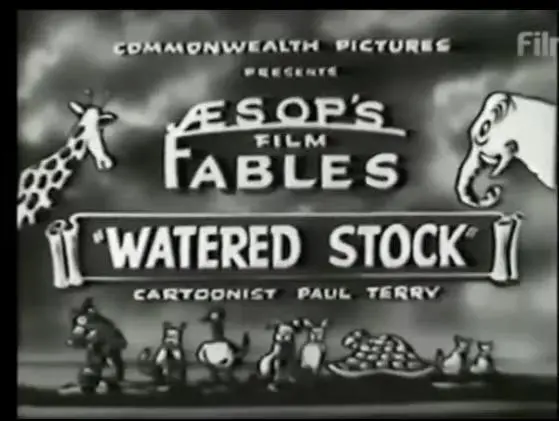
Is Watered Stock a lost masterpiece? No. But is it a vital piece of the comedy puzzle? Absolutely. For a modern audience, the film serves as a window into the anxieties of the post-WWI economic boom. The stock market was a place of mystery for the average person, and seeing a clown literally drown the 'experts' in water must have provided a cathartic release for 1920s audiences.
The cinematography is functional, typical of the Educational Pictures output. The lighting is flat, designed to ensure every physical movement is visible, which robs the film of any atmospheric depth but enhances the clarity of the slapstick. It lacks the visual experimentation seen in European imports of the time, like Gengældelsens ret, but it isn't trying to be art. It’s trying to be a laugh riot.
One surprising observation: Hamilton’s 'Ham' character is actually quite subversive. He represents a total failure of the American Dream. In a world of 'go-getters' and 'self-made men,' Hamilton is a 'stay-putter.' He doesn't want to conquer the market; he just wants to follow instructions. This makes the eventual destruction of the office feel less like an accident and more like a subconscious protest against the complexity of modern life.
The way he moves through the office furniture is a masterclass in spatial awareness. He treats a desk not as a piece of furniture, but as an obstacle course. This is where the film shines. The scene involving the filing cabinets is particularly inventive, as Hamilton manages to get himself entangled in the very system he is supposed to be organizing. It’s a sequence that feels like a precursor to the more elaborate set pieces Keaton would perfect years later.
Pros:
Cons:
To truly appreciate Watered Stock, one must look at the landscape of 1920. This was the year of She Couldn't Help It and The Border Legion. Cinema was branching out into various genres, from the Western to the social drama. In this context, the Lloyd Hamilton shorts were the 'comfort food' of the era. They provided reliable, low-stakes entertainment that focused on the common man’s struggle against an increasingly mechanized world.
The film lacks the dramatic weight of something like Her Honor, the Governor, but it isn't trying to change the world. It’s trying to make a tired worker laugh for fifteen minutes. In that regard, it succeeds. The use of water as a comedic element is a timeless trope—water is the great equalizer. It ruins the fancy suits of the bankers just as easily as it ruins Hamilton’s oversized trousers.
The directing, likely a collaborative effort within the Educational Pictures studio, is utilitarian. There are no sweeping pans or dramatic close-ups. The 'stage' is set, and the actors are allowed to perform within it. This can feel stagnant to modern eyes, but it places the emphasis entirely on the performer’s body. Hamilton’s ability to sell a fall or a double-take is the only thing keeping the film afloat.
"Hamilton was better than Keaton at playing the 'everyman' who is actually a 'no-man'—a character so devoid of ego that he becomes a walking disaster area."
The tone of the film shifts from mild workplace comedy to full-blown surrealism by the end. When the office is literally flooded, the film abandons all pretense of reality. This shift is jarring but necessary. Without the escalation into absurdity, the film would have been just another forgotten workplace short. The water acts as a cleansing force, washing away the stuffiness of the brokerage and leaving only the pure, chaotic joy of the clown.
Watered Stock is a fascinating, if slightly repetitive, example of 1920s slapstick. It doesn't have the emotional depth of the era's greatest works, but Lloyd Hamilton's performance is a masterclass in physical timing. The central pun is a bit thin for a full short, but the execution of the chaos is handled with a frantic energy that is hard to dislike. It is a minor work, but a significant one for those who want to see how the grammar of film comedy was written, one bucket of water at a time. It’s a pun. That’s the whole movie. And sometimes, that’s enough.
IMDb —
1924
Community
Log in to comment.