DbcultAccessing Vault...
Cult Review
Senior Film Conservator
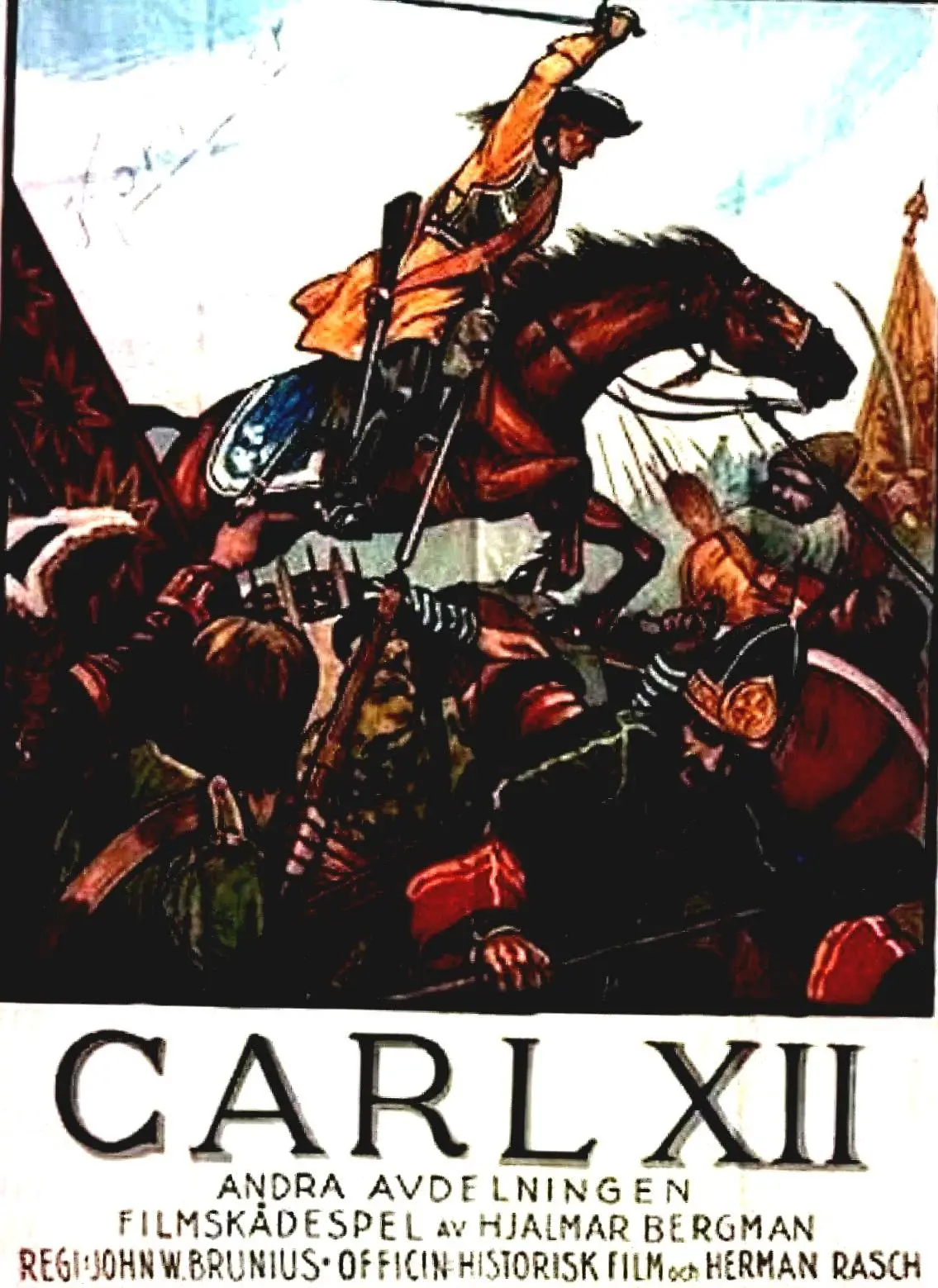
To witness Karl XII: Del II is to observe the slow, rhythmic dissolution of a titan. While the first installment of this monumental Swedish production laid the groundwork for the King’s ascent, this second chapter—penned with surgical precision by Hjalmar Bergman—serves as an autopsy of the Carolinian dream. The film is less a sequence of events and more a geological survey of a soul under immense pressure. In the annals of silent cinema, few works attempt such a somber synthesis of national identity and personal tragedy. It stands as a monolithic achievement, a celluloid monument to a man who was both the architect and the victim of his own legend.
The visual language here is drenched in a peculiar Nordic melancholy. Unlike the satirical, almost playful military pageantry found in Ernst Lubitsch's The Wildcat (1920), Karl XII: Del II treats the uniform not as a costume of farce, but as a shroud. Every frame is imbued with the weight of the Swedish snow, a white silence that threatens to swallow the remnants of an army that once dictated the terms of European power. The cinematography utilizes the stark contrast of the era to highlight the isolation of the King, often placing him in the center of vast, desolate compositions that emphasize his growing detachment from the world of the living.
At the heart of this storm is Gösta Ekman. His portrayal of Charles XII is a masterclass in internalised acting. In an era where many performers leaned into the histrionics of the stage, Ekman offers a performance of startling stillness. He captures the King’s legendary asceticism—the refusal of luxury, the shared hardships with his men—not as a political stunt, but as a fundamental rejection of the self. His eyes, often fixed on some invisible horizon, suggest a man who has already departed the physical realm long before the bullet finds him at Fredrikshald.
When comparing this psychological depth to other contemporary works, one might look at Lon Chaney’s multifaceted vulnerability in The Unholy Three. While Chaney uses transformation and artifice to reveal the human condition, Ekman uses a terrifying consistency. His Charles XII is a pillar of salt, preserved by the brine of war. There is a scene, quiet and devastating, where the King surveys his dwindling troops; the lack of outward emotion conveys a far deeper grief than any weeping could achieve. It is the realization that his devotion to Sweden has demanded the ultimate sacrifice of the Swedish people themselves.
The involvement of Hjalmar Bergman as a writer elevates the film from a mere historical pageant to a literary inquiry. Bergman, known for his complex explorations of family dynamics and the grotesque, brings a unique texture to the script. He avoids the simplistic hagiography that often plagues nationalistic epics. Instead, he treats the later years of Charles XII as a Shakespearean final act. The dialogue (conveyed through intertitles) is sparse yet resonant, echoing the stoicism of the Carolean soldiers. The film doesn't shy away from the political intrigue of the court, nor the weariness of a nation that has been at war for nearly two decades.
This focus on the internal mechanics of power and the burden of legacy invites a fascinating comparison to the social critiques found in The Black Stork. While the latter deals with the controversial themes of eugenics and the 'fitness' of a lineage, Karl XII: Del II examines the 'fitness' of a monarch whose singular vision has become a blind spot. The film asks: what happens when a leader’s personal morality becomes a cage for his subjects? It is a question that resonates far beyond the 18th-century setting, touching upon the very nature of autocratic rule.
The technical execution of the siege sequences remains breathtaking even by modern standards. The production design avoids the staginess seen in films like Dorothy Vernon of Haddon Hall, opting instead for a gritty, tactile realism. The trenches are muddy, the air seems thick with the smell of gunpowder, and the cold is palpable. The lighting during the night scenes—flickering torches casting long, jagged shadows against the fortress walls—creates an atmosphere of impending doom that is almost operatic.
In these moments, the film finds a kinship with the visceral struggle depicted in The Italian. Though the settings are worlds apart—the immigrant experience in New York versus a royal siege in Norway—both films share an interest in the individual caught in the gears of a massive, indifferent system. In Karl XII: Del II, that system is the machinery of war, which eventually consumes everyone, from the lowliest foot soldier to the King himself.
While Ekman is the sun around which the film orbits, the supporting cast provides the necessary gravity. Nicolai De Seversky and Bengt Djurberg offer nuanced portrayals of men caught between their loyalty to the crown and their awareness of the impending catastrophe. The inclusion of figures like Märta Ekström adds a layer of domestic pathos that balances the grand strategic maneuvers. These characters represent the 'human' Sweden—the one that exists outside the maps and the treaties, the one that suffers in silence while the King seeks his 'just' peace.
This emphasis on the domestic and the personal amidst grand historical events is a technique also explored in Always in the Way, though in a much more sentimentalized fashion. In Karl XII, the sentiment is replaced by a hard-edged realism. There is no easy comfort to be found in the sacrifices of the Swedish people; the film presents their plight with a dignity that is both respectful and haunting.
The climax of the film—the death of the King—is handled with a restraint that is nothing short of masterful. There is no grand speech, no swelling orchestra to signal the end. Instead, there is a sudden, sharp interruption of life. The ambiguity of the shot—the question of whether it came from the enemy or his own ranks—is preserved with a historian's care. This moment serves as a Rorschach test for the audience’s own view of Charles XII: was he a martyr, a victim of fate, or a man whose time had simply run out?
This thematic preoccupation with the inevitability of time and the fading of youth or power can be seen in the rejuvenated anxieties of Black Oxen. However, while Black Oxen seeks a scientific or supernatural reversal of aging, Karl XII: Del II accepts the end with a grim, stoic grace. The King does not seek to be young again; he seeks to fulfill a destiny that he believes was written long ago.
Critics of the era often debated the film's adherence to historical fact, but such critiques miss the point of Bergman’s and the director's intent. This is a film about the feeling of history. It captures the psychological climate of the early 18th century with a fidelity that transcends mere dates and locations. It is a work that understands the soul of the Carolean era—a period defined by a strange mixture of extreme piety and ruthless militarism.
In its exploration of the legal and moral weight of leadership, the film shares a tangential connection with The Girl and the Judge. Both films deal with the burden of passing judgment and the consequences of one's decisions on the lives of others. For Charles XII, the 'judgment' is his entire reign, and the 'sentence' is the state of his kingdom at the time of his death.
Karl XII: Del II is not a film that invites a casual viewing. It demands an engagement with the silence, the cold, and the heavy weight of the crown. It is a film that rewards those who are willing to look past the surface of the historical epic and into the dark, churning waters of the human psyche. It remains a cornerstone of Swedish cinema, a testament to the power of the silent medium to convey complex, philosophical truths through light and shadow alone.
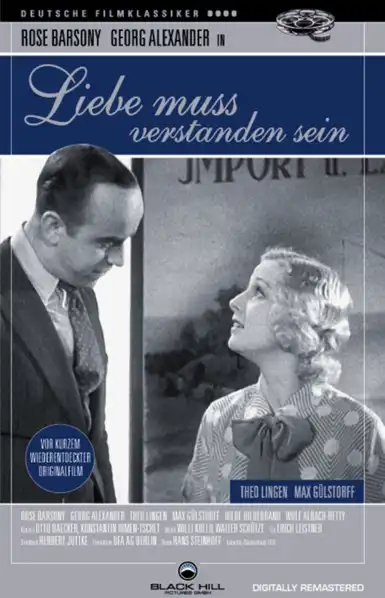
Whether compared to the romantic entrapment of Gefangene Seele or the domestic comedies like Pick Out Your Husband, Karl XII: Del II stands apart. It does not seek to entertain in the traditional sense; it seeks to commemorate. It is a funeral oration in moving images, a final salute to a king who turned his back on the world to face his God, leaving behind a nation that would never be the same again. It is, quite simply, essential cinema for anyone who wishes to understand the intersection of myth and history.
As the final credits roll—or rather, as the final intertitles fade—the viewer is left with a profound sense of closure. The King is dead, the empire is diminished, but the legend remains etched in the silver halide. It is a haunting, beautiful, and deeply necessary exploration of the cost of greatness. From the intricate costumes to the sweeping, snow-covered vistas, every element of the production works in harmony to create a world that is both alien and intimately familiar. It is a triumph of the Swedish spirit and a masterclass in cinematic storytelling.
IMDb 5.1
1933
Community
Log in to comment.