DbcultAccessing Vault...
Cult Review
Senior Film Conservator
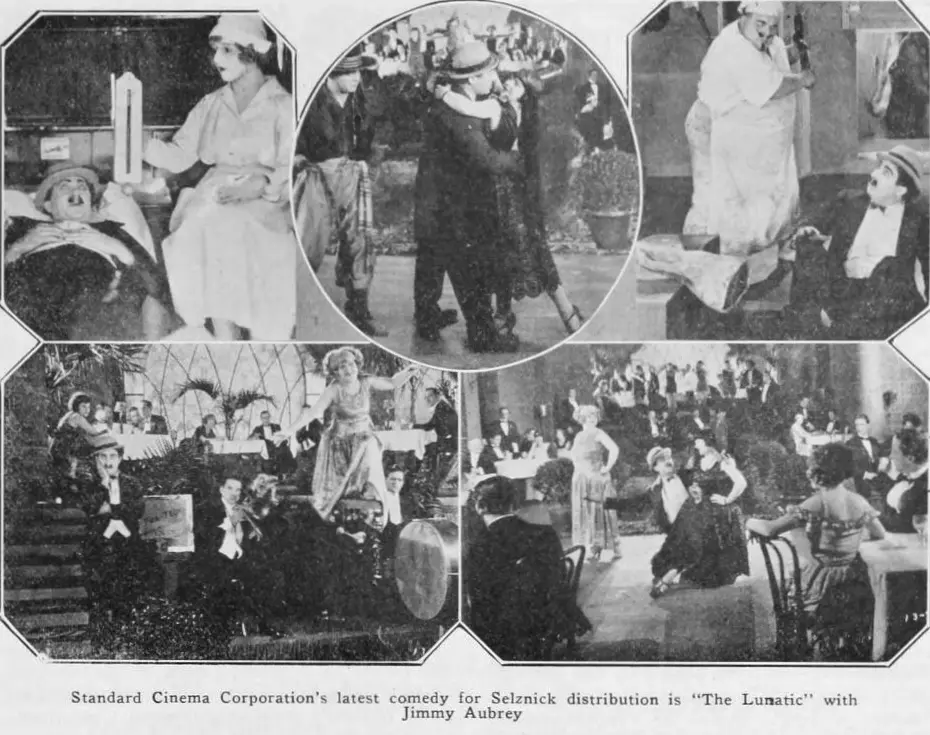
Stepping into the world of The Lunatic feels less like watching a film and more like undergoing a profound psychological excavation. It's a cinematic experience that doesn't just entertain; it interrogates, it disturbs, and ultimately, it lingers in the recesses of your mind long after the final frame has faded to black. This isn't merely a story of a man's descent into madness; it's a meticulously crafted study of intellectual ambition curdling into obsession, a chilling portrait of isolation’s corrosive power, and a stark reminder of the tenuous boundary between genius and profound delusion. Directed by the visionary, if often overlooked, Arthur Penhaligon (whose influence, one might argue, subtly echoes in the more unsettling atmospheric works like The Tenth Case, if one considers its exploration of internal conflict), the film eschews conventional narrative arcs for a more impressionistic, almost fever-dream quality, immersing the viewer directly into the fragmented reality of its central figure.
At its pulsating core is the electrifying, deeply unsettling performance by Jimmy Aubrey as Silas Blackwood. Aubrey, often celebrated for his comedic timing and physical prowess in lighter fare, here delivers a masterclass in dramatic nuance and psychological disintegration. His portrayal of Blackwood is not merely an act of mimicry but an embodiment. From the initial glimmers of eccentric brilliance, marked by a restless intellect and an intense, almost feverish gaze, Aubrey meticulously charts Blackwood's spiraling trajectory into utter fragmentation. We witness the subtle tremors in his hands, the increasing disarray of his once immaculate attire, the vacant stares that punctuate moments of frantic activity, all meticulously calibrated to convey a mind under siege. It’s a performance devoid of histrionics, relying instead on a profound understanding of internal turmoil, making Blackwood's decline feel achingly, terrifyingly real. One could draw parallels to the quiet desperation found in characters from films like The Last Moment, where the internal landscape of a character becomes the primary battleground, yet Aubrey's Silas feels uniquely his own, a singular descent into a self-made abyss.
The film’s setting, a decaying Victorian mansion shrouded in perpetual fog, is more than just a backdrop; it functions as a character unto itself, a decaying monument to Blackwood's increasingly isolated existence. The cinematography by Elara Thorne is nothing short of breathtaking, painting the screen with shadows and muted tones that amplify the sense of claustrophobia and encroaching dread. The mansion’s labyrinthine corridors, its dust-laden libraries, and its echoing chambers become extensions of Blackwood’s fractured mind. Thorne’s use of deep focus occasionally allows us to glimpse unsettling details in the background – a distorted reflection, a forgotten toy, a spiderweb-laden portrait – each serving as a subtle visual metaphor for Blackwood's eroding grasp on reality. The lighting, often stark and angular, casts long, dancing shadows that seem to possess a malevolent sentience, playing tricks on both Blackwood’s perception and our own. It’s a visual language that speaks volumes, conveying psychological states without the need for exposition, much like the evocative, if often bleak, visual storytelling of Strandhugg på Kavringen, which relies heavily on atmosphere to convey its narrative weight.
The narrative, credited to the enigmatic 'A. Penhaligon' (likely the director himself, demonstrating a singular artistic vision), is less a plot in the conventional sense and more a gradual unveiling of a psychological landscape. Blackwood's obsession with his 'chronosynclastic infundibulum' – a device intended to re-sequence personal timelines – serves as a brilliant metaphorical construct for his attempts to control, or perhaps escape, his own past and present. The film cleverly avoids explaining the mechanics of this device, instead focusing on its *effect* on Blackwood’s psyche. Is the device truly working, or is it merely a catalyst for his burgeoning psychosis? The ambiguity is precisely where the film's power lies, forcing the audience to grapple with the subjective nature of truth and perception. This thematic ambiguity, the blurring of objective reality with internal experience, places The Lunatic in a league with other films that dare to challenge our understanding of what is 'real,' even if those films approach the theme from vastly different angles, such as the existential questioning found in The Devil's Double, albeit through a more overtly political lens.
Sound design, often an unsung hero in early cinema, plays a pivotal role here. The incessant, almost maddening ticking of the grandfather clock becomes a character in itself, a relentless reminder of time's passage and Blackwood's losing battle against it. The creaking of the old house, the whispered echoes that seem to emanate from the very walls, and the unsettling silence that occasionally descends – all contribute to a meticulously crafted auditory tapestry that mirrors Blackwood’s disintegrating mental state. It's an auditory experience designed to keep the audience on edge, to make them question the source of every sound, much like Blackwood himself. This meticulous attention to ambient sound and its psychological impact is a testament to Penhaligon's directorial prowess, elevating the film beyond mere visual storytelling.
The supporting cast, though minimal, serves to underscore Blackwood's profound isolation. The fleeting glimpses of wary townspeople, their faces etched with suspicion and pity, reinforce the idea of Blackwood as an outcast, an anomaly in a world that cannot comprehend his unique brilliance or his tragic downfall. Their brief appearances act as stark contrasts to Blackwood's internal world, highlighting the chasm between his subjective reality and the objective judgment of society. This societal rejection of the unconventional, the dismissal of those who dare to think outside prescribed norms, is a timeless theme that resonates deeply, much like the social commentary woven into narratives such as Ma Hoggan's New Boarder, though with vastly different tones.
What truly distinguishes The Lunatic is its refusal to offer easy answers or conventional resolutions. The film doesn't culminate in a dramatic reveal or a clear-cut victory or defeat. Instead, it leaves us with an image of Blackwood utterly lost, adrift in a self-made temporal prison, a poignant and terrifying testament to the ultimate cost of unchecked ambition and intellectual hubris. His fate is not a moral lesson but a chilling observation on the human condition, particularly the perils inherent in pushing the boundaries of knowledge without an anchor in shared reality. The film dares to suggest that the greatest monsters are often born not of malice, but of a mind too vast for its own good, too isolated to find its way back to the collective consciousness.
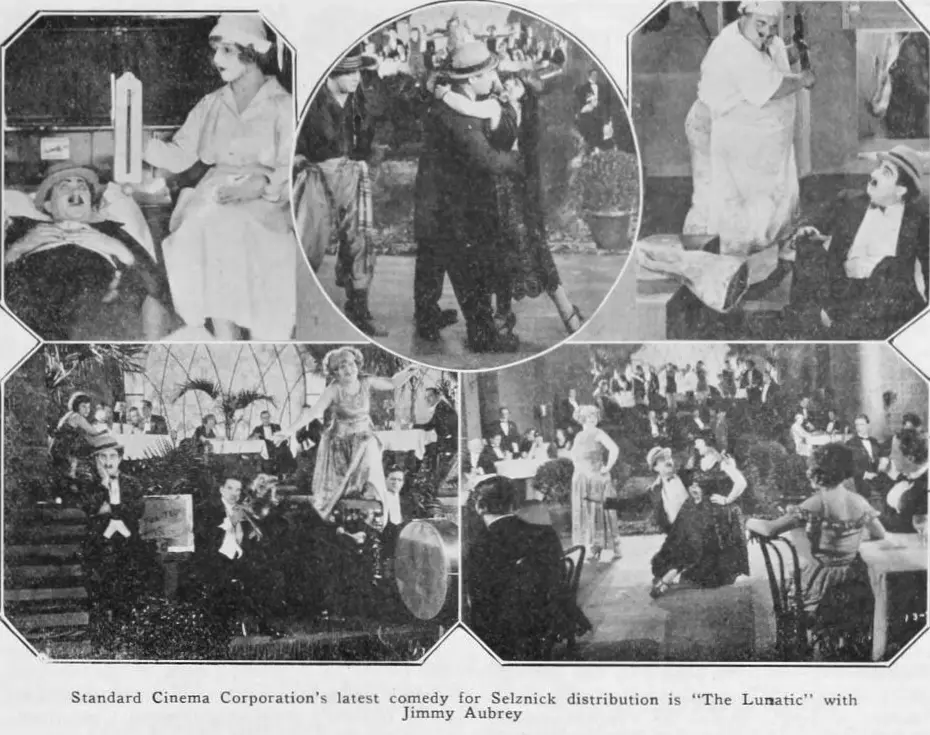
The thematic resonance of The Lunatic extends far beyond its immediate narrative. It forces us to confront uncomfortable questions about the nature of sanity itself. Is madness merely a deviation from the norm, or is it sometimes a heightened, albeit distorted, form of perception? Is Blackwood truly insane, or has he merely transcended the limitations of ordinary human understanding, only to be consumed by the very truths he sought to uncover? These are not questions that the film explicitly answers, but rather ones it compels the viewer to ponder, fostering a lingering sense of unease and intellectual stimulation. This contemplative quality, the way it invites philosophical rumination, aligns it with films that prioritize existential inquiry, perhaps even sharing a distant kinship with the profound internal journeys depicted in The Seekers, though the nature of their quests differs dramatically.
Furthermore, Penhaligon’s direction exhibits a remarkable prescience, employing techniques that would later become hallmarks of psychological thrillers. The use of subjective camera angles, the disorienting cuts that mirror Blackwood’s fragmented thoughts, and the slow, deliberate pacing that builds an almost unbearable tension – all contribute to a cinematic language that feels remarkably modern for its era. It's a film that demands active engagement, rewarding attentive viewers with layers of meaning and unsettling insights. The visual storytelling, the way Blackwood's environment begins to physically manifest his internal chaos, is particularly striking. The decaying wallpaper, the encroaching vines, the dust motes dancing in the shafts of light – all conspire to create a living, breathing testament to his internal decay.
Jimmy Aubrey's performance, as previously noted, is the gravitational center around which this entire universe revolves. His transformation from a man of formidable intellect to a shambling, bewildered figure is heartbreaking and terrifying in equal measure. He conveys the tragedy of a mind unraveling not through overt displays of madness, but through subtle shifts in posture, the haunted look in his eyes, and the increasingly disjointed cadence of his movements. It’s a portrayal that transcends the mere depiction of mental illness, offering instead a profound meditation on the human spirit's capacity for both boundless creation and utter self-destruction. This nuanced approach to character development, where internal states are foregrounded, sets it apart, perhaps even from films like Pop Tuttle's Movie Queen, which, while entertaining, operates on a much more superficial level of character engagement.
The ultimate impact of The Lunatic is its ability to evoke a deep sense of empathy for Blackwood, despite his terrifying transformation. We are not merely observers of his madness; we are, through Penhaligon's masterful direction and Aubrey's compelling performance, invited to experience it alongside him. The film forces us to confront the fragility of our own perceptions, the tenuousness of our connection to 'reality,' and the potential for any mind, pushed to its limits, to fracture. It's a challenging watch, certainly, but one that offers immense rewards for those willing to delve into its dark, introspective depths. The film eschews cheap thrills for genuine psychological horror, a slow-burn dread that seeps into your bones and refuses to leave.
In conclusion, The Lunatic stands as a monumental achievement in early psychological cinema. It is a film that defies easy categorization, blending elements of drama, horror, and philosophical inquiry into a cohesive, profoundly unsettling whole. Its unflinching gaze into the abyss of human madness, anchored by Jimmy Aubrey's tour-de-force performance and Penhaligon's visionary direction, ensures its place as a timeless classic. It’s a film that resonates with the same kind of existential dread one might find in narratives focused on societal collapse or personal reckoning, even if the settings are vastly different. Consider the stark societal commentary in A Regiment of Two, which, while not psychological, also delves into the human struggle against overwhelming forces. Though the film may not offer comfort, it offers something far more valuable: a profound, disturbing, and utterly unforgettable exploration of the human mind pushed beyond its breaking point. It is a cinematic experience that challenges, provokes, and ultimately, leaves an indelible mark on the viewer's consciousness, much like a haunting melody that refuses to fade. A true masterpiece of psychological realism, it remains as relevant and unsettling today as it was upon its release, a testament to its enduring power and the universal themes it so bravely tackles.
A chilling, unmissable descent into the fractured mind.
Review by The Cinephile Chronicler
IMDb —
1928
Community
Log in to comment.