DbcultAccessing Vault...
Cult Review
Senior Film Conservator
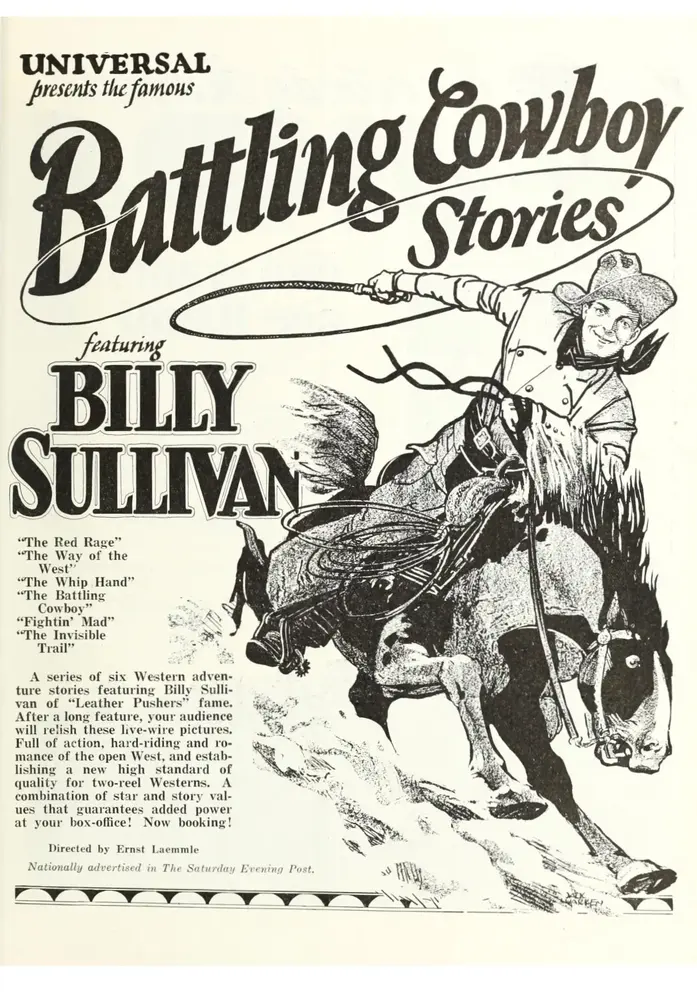
Is ‘Way of the West’ a lost classic worth unearthing in our modern cinematic landscape? Short answer: yes, but with a significant caveat. This early Western, featuring the charismatic Billy Sullivan, offers a fascinating, if sometimes quaint, window into the genre's formative years, serving as a delightful historical curiosity for film scholars and dedicated Western enthusiasts, yet likely to test the patience of those seeking contemporary narrative sophistication.
For those intrigued by the genesis of American cinema and the evolution of the Western genre, this film is an unexpected treat. It dares to present a hero who doesn't conform to the rugged, stoic archetype, instead relying on wit and a surprisingly deft touch rather than brute force or blazing guns. This alone makes it a compelling watch for specific audiences, but it’s crucial to temper expectations regarding plot complexity or deep character arcs.
This film works because... it introduces an unconventional hero whose wit and understated skill subvert typical cowboy tropes, offering a refreshing take on masculinity in the Wild West that feels surprisingly modern for its era.
This film fails because... its narrative simplicity and episodic structure prevent it from building genuine dramatic tension or character depth, leaving many fascinating elements underdeveloped in favor of quick resolutions.
You should watch it if... you are a student of early cinema, a devoted fan of Westerns looking for genre evolution, or appreciate a protagonist who wins with brains and subtle strength over conventional heroics.
The central pillar of ‘Way of the West’ is undeniably Billy Sullivan’s portrayal of Billy Regan. Sullivan, as Regan, embodies a character that actively defies the archetypes prevalent in early Westerns. He arrives not as a hardened frontiersman, but as a ‘dude,’ a figure of gentle ridicule, dressed in attire that signals his outsider status to the ranch hands who are steeped in traditional western regalia.
This initial presentation is a brilliant narrative sleight of hand. The film immediately establishes a contrast between appearance and capability. When the ranch hands try to give him the ‘razz’ and later the ‘badger’ trick, Billy takes it all good-naturedly, a smile playing on his lips, yet always with a hint of something more beneath the surface. He’s not a pushover; he’s simply observing, learning, and planning.
The most striking demonstration of his unconventional nature comes when Ann’s father and his party discuss almost capturing Slippery Pete. Billy, dismissive of their old-fashioned methods, boldly declares their guns useless in these ‘modern days.’ This statement, met with a gun in his ribs, sets up a pivotal moment.
Instead of a typical shootout, Billy, appearing helpless, executes a fast trick, rendering his opponent powerless. It’s a moment of pure, unexpected charm and skill, showcasing a hero who operates on a different plane. He’s a trickster, a strategist, and a master of misdirection, a refreshing departure from the era’s often one-dimensional protagonists.
I’d argue that Sullivan’s understated charm here is more potent than a dozen stoic, gun-slinging heroes. He doesn't need to be the toughest or the fastest draw; his intelligence and agility are his weapons. This makes Billy Regan a surprisingly relatable and enduring character, one who wins not through intimidation, but through cleverness and a quiet confidence that belies his ‘dude’ facade.
Ann Crandall, too, contributes to the film’s subtle subversion of tropes. Her insistence on riding a wild horse, despite Jack Weston’s protestations, positions her as a woman of spirit and independence from the outset. While she eventually falls into the traditional ‘damsel in distress’ role during the rustler confrontation, her initial agency sets her apart, making her rescue feel less like a passive event and more like a pivotal moment for Billy to prove his unique worth.
The direction, likely limited by the era’s technical constraints, nonetheless manages to capture the expansive, rugged beauty of the Western landscape, even if often through static, wide shots. There’s a raw, unpolished authenticity to the outdoor sequences, particularly the scenes involving the horses and the cattle rustlers. The film doesn't rely on elaborate sets; the natural environment is the star, grounding the narrative in a tangible reality.
Cinematographically, ‘Way of the West’ exhibits the straightforward, functional style characteristic of silent-era filmmaking. Shots are composed to convey information clearly, focusing on action and character reactions. While it lacks the intricate camera movements or experimental framing of later periods, it uses its limitations effectively.
Consider the scene in the blind canyon where Ann and Billy stumble upon Slippery Pete’s gang. The framing of the rustlers, initially unaware, then the sudden realization of Ann and Billy, is simple yet effective. It creates a sense of entrapment and immediate danger without needing complex visual language. The vastness of the canyon walls visually reinforces their predicament, a silent character in itself.
It’s a stark reminder that even rudimentary filmmaking could convey significant narrative weight through sheer environmental scale, predating the sweeping crane shots and intricate blocking of later eras. The directness of the visual storytelling ensures that the audience remains focused on the unfolding events, rather than being distracted by stylistic flourishes.
The film’s approach to action sequences, particularly the horse riding and the confrontation with the rustlers, feels authentic. There’s a tangible sense of physical effort and genuine danger, a stark contrast to the highly choreographed and often sanitized action of modern cinema. This rawness adds a layer of believability that is often missing from more polished productions.
The pacing of ‘Way of the West’ is remarkably brisk, almost episodic. The narrative moves from Ann’s initial defiance to Billy’s introduction, through various tests of his character, and then swiftly into the confrontation with Slippery Pete’s gang. There’s little time wasted on elaborate exposition or drawn-out emotional arcs, which is both a strength and a weakness.
The film feels like a series of interconnected vignettes designed to showcase Billy Regan’s unique qualities. We see him save Ann, endure the ranch hands’ pranks, demonstrate his quick wit with the gun trick, and finally, resolve the rustler conflict with another ingenious maneuver. Each segment builds upon the last, painting a fuller picture of our hero.
The tone is largely lighthearted, even during moments of peril. Billy’s good-natured acceptance of the ‘razz’ and ‘badger’ tricks infuses the early scenes with a sense of playful camaraderie. This jovial atmosphere makes the sudden shift to the more serious threat of the rustlers feel a little abrupt, but it also highlights Billy’s adaptability.
The climax, where Ann is attacked and their horses flee, rapidly transitions to Billy’s clever disarming of the gang. He steps behind the last man, pushes something against his spine, and orders him to command his confederates to surrender. It’s a swift, almost bloodless resolution that perfectly encapsulates Billy’s non-traditional approach to conflict.
This rapid resolution, while efficient, sacrifices some potential for sustained tension. The stakes are clear, but the build-up to the payoff is so quick that the audience barely has time to fully register the danger before it’s diffused. It works. But it’s flawed in its brevity, preventing a deeper emotional investment in the outcome.
Despite this, the film maintains an engaging rhythm. It never overstays its welcome, delivering its story with a charming simplicity that is often missing from today’s overstuffed blockbusters. It’s a testament to the power of concise storytelling, even if it leaves one wishing for a little more elaboration.
Yes, ‘Way of the West’ is worth watching, particularly for specific audiences.
It offers valuable insight into the evolution of the Western genre, showcasing early storytelling conventions.
The film introduces an early, atypical hero who relies on wit and intelligence, not just physical strength.
It’s a relatively short, engaging watch for those interested in silent-era cinema and its unique charm.
However, modern viewers accustomed to complex plots, deep character development, or high-octane action might find it simplistic.
Its historical value and the novelty of its protagonist often outweigh its pure entertainment factor for a general contemporary audience.
In the grand tapestry of early American cinema, ‘Way of the West’ might not possess the monumental status of a D.W. Griffith epic or the raw power of a Cecil B. DeMille spectacle. Yet, it carves out its own quiet niche. It stands as a testament to the genre’s early flexibility, demonstrating that even in its nascent stages, the Western was capable of producing heroes who challenged the mold, albeit subtly.
This film serves as a valuable historical document, illustrating how narratives were constructed and character archetypes were explored before the genre became more rigidly defined. It offers a counter-narrative to the prevailing image of the gun-toting cowboy, suggesting that wit and cunning could be just as effective, if not more so, than sheer firepower.
While films like The Conspiracy delved into more intricate urban narratives and moral ambiguities, ‘Way of the West’ kept its focus on the evolving mythology of the frontier, albeit with a fresh perspective on heroism. It shows that even within the confines of a popular genre, creators were experimenting with character and conflict resolution.
The ending, with Billy Regan choosing to ‘wander on’ after resolving the conflict and leaving the foreman to embrace Ann, is a classic Western trope. However, in Billy’s case, it feels less like a lonely hero’s destiny and more like a natural progression for a character who thrives on new challenges and avoids settling into a conventional role. He’s a drifter, not out of necessity, but out of a preference for his own unique ‘way.’
This film, in its quiet way, reminds us that the ‘Wild West’ was also a place of evolving social dynamics and diverse personalities. It’s not just about the landscape or the action, but also about the people, and how they adapted, or subverted, the expectations placed upon them.
Ultimately, ‘Way of the West’ is a delightful, if minor, entry in the silent Western canon. It’s a film that asks us to reconsider our notions of heroism, proving that sometimes, the sharpest tool in the shed isn’t a six-shooter, but a quick mind and a deceptive smile. It’s a fascinating character study wrapped in a simple genre package.
While it won’t redefine your understanding of cinema, it will certainly offer a charming, insightful detour into a forgotten corner of film history. Its value lies less in its dramatic impact and more in its historical significance and its surprisingly refreshing protagonist. For the curious cinephile, it’s a journey worth taking, a pleasant trot rather than a thunderous gallop, but a journey nonetheless.
It’s a film that doesn’t demand much, but delivers a quiet satisfaction, leaving you with a smile and a newfound appreciation for the cleverness that could define a hero in the early days of the silver screen. Don't expect a masterpiece, but do expect to be pleasantly surprised by its understated charm and unique approach to the Western legend.
IMDb 6.9
1933
Community
Log in to comment.