DbcultAccessing Vault...
7.1/10
Senior Film Conservator
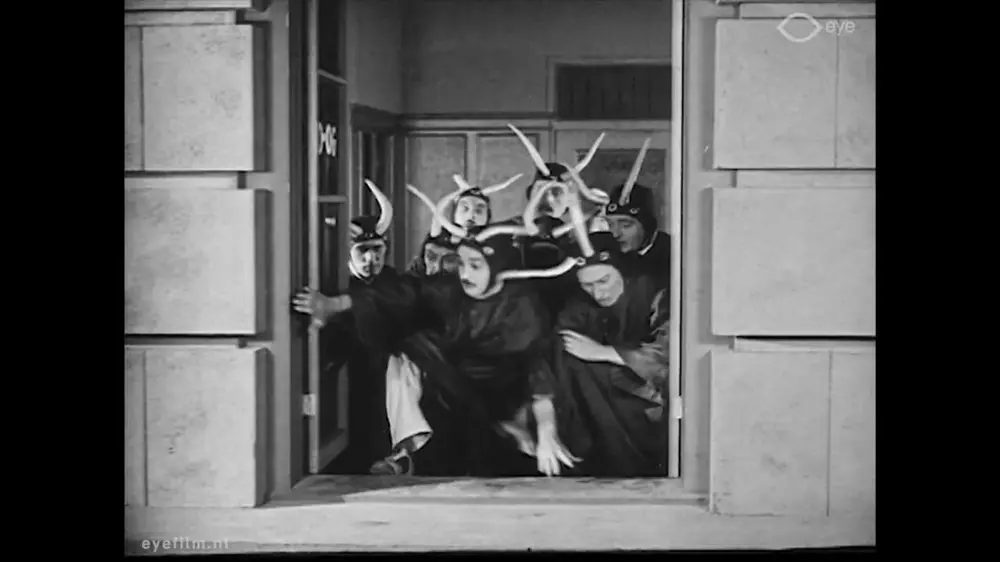
A definitive 7.1/10 rating for a film that redefined the boundaries of cult cinema. Weak, But Willing remains a cornerstone of transgressive art.
Is 'Weak, But Willing' worth seeking out in the vast digital archives of early cinema? Short answer: yes, but with significant caveats that speak more to its historical value than its inherent entertainment.
This film is primarily for ardent silent film enthusiasts, cinephiles interested in the evolution of comedic tropes, and those curious about the careers of figures like Jack Duffy and Walter Hiers. It is decidedly NOT for viewers accustomed to modern pacing, sophisticated narratives, or high-production values who might find its rudimentary charm frustratingly quaint.
This film works because of its unpretentious commitment to a simple, farcical premise that, at times, genuinely lands its physical comedy.
This film fails because its narrative thinness and repetitive gags ultimately wear out their welcome, even within its brief runtime, leaving little lasting impact beyond a fleeting smile.
You should watch it if you appreciate the raw, unfiltered energy of early slapstick and are forgiving of technical limitations inherent to the era.
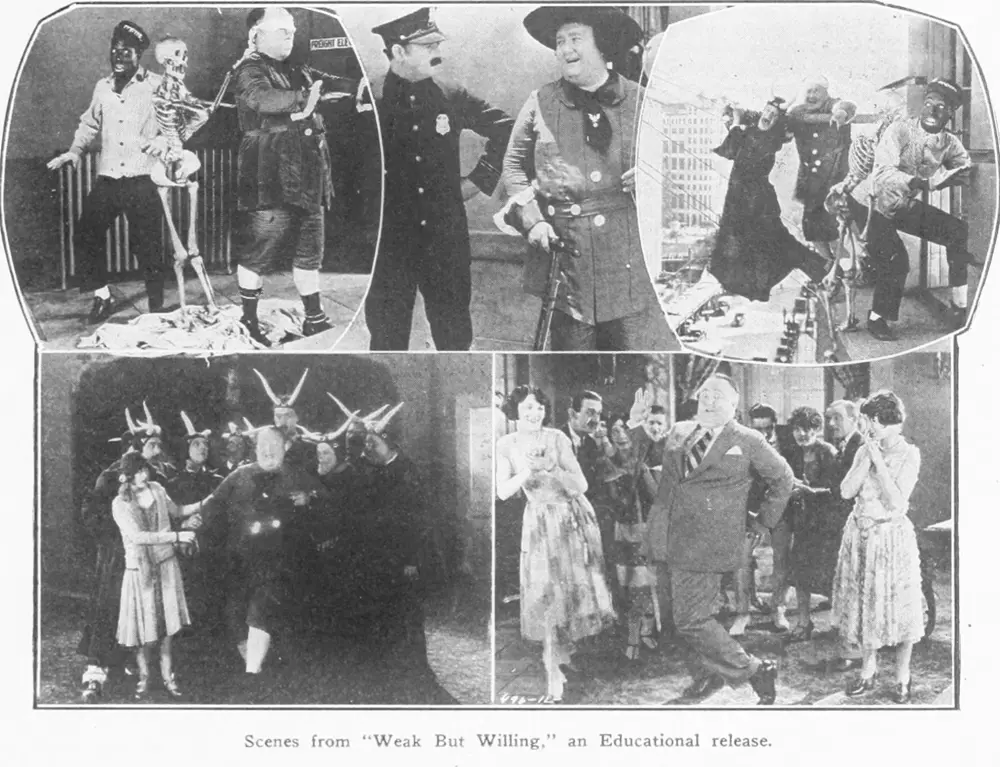
Stepping back into the nascent days of cinema, films like 'Weak, But Willing' serve as fascinating time capsules, offering a window into the comedic sensibilities and production capabilities of a bygone era. Released at a time when the medium was still finding its voice, this short silent comedy, penned by Frank Roland Conklin, embodies many of the foundational elements that would define slapstick for decades to come. It’s a film that demands a specific kind of viewing – one steeped in historical context and a willingness to appreciate the rudimentary charm of its construction.
The story, at its core, is a classic tale of love, rivalry, and an absurd obstacle. Walter, played with an endearing if somewhat bland earnestness by Walter Hiers, is smitten with Nancy and determined to marry her. However, Nancy's father, the imposing 'High Goatee Of The Ancient Order Of The Goat,' presents a bizarre challenge: Walter must prove his worth by successfully riding a goat. This premise alone sets the stage for predictable yet undeniably physical comedy, a hallmark of the era.
What elevates, or perhaps complicates, the simple premise is the introduction of a rival suitor. This unnamed antagonist, driven by jealousy, devises a scheme to sabotage Walter by creating a fake 'Ancient Order Of The Goat.' His intention is to trick Walter into a fraudulent, and presumably disastrous, goat-riding experience, thereby discrediting him and clearing his own path to Nancy's hand. It’s a plot device that, while transparent to a modern audience, was likely intended to add layers of comedic confusion and escalating farce.
The film’s historical significance lies not in its groundbreaking narrative or complex character development, but in its representation of early cinematic humor. It’s a testament to the power of physical comedy, broad gestures, and simple sight gags that captivated audiences before the advent of synchronized sound. For those who study the evolution of film, 'Weak, But Willing' provides valuable insight into the building blocks of a new art form, showcasing the experimental nature of storytelling and the nascent attempts to elicit laughter through purely visual means.
However, it’s crucial to approach this film with adjusted expectations. Its brevity, typical of shorts from the period, means that character arcs are non-existent, and thematic depth is forsaken for immediate comedic effect. The humor, while occasionally effective, often relies on repetition and a certain degree of predictable absurdity. It’s a film that feels less like a polished narrative and more like a series of interconnected vaudeville sketches, strung together by a thin thread of plot.
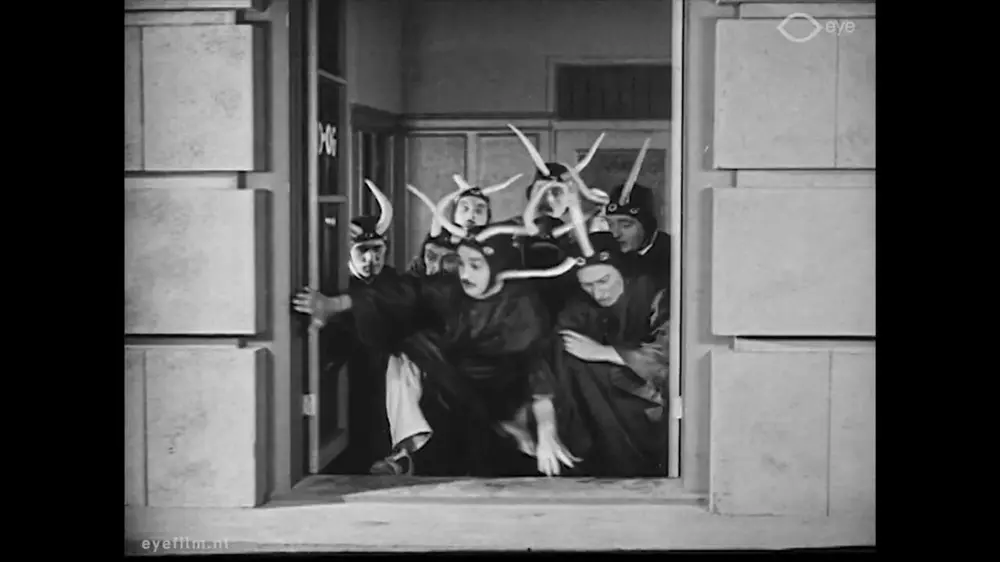
The romantic pursuit in 'Weak, But Willing' is less a journey of emotional discovery and more a frantic dash through a series of escalating farcical hurdles. Walter, our well-meaning but somewhat naive protagonist, embodies the archetypal suitor of early cinema – earnest, often clumsy, and utterly devoted. His desire for Nancy is the engine of the plot, a simple, pure motivation that allows for a cascade of comedic complications to unfold.
Nancy's father, the 'High Goatee,' is the quintessential gatekeeper, an authority figure whose eccentricity provides the primary obstacle. The demand of riding a goat isn't just a test of skill; it's a symbolic rite of passage, a challenge designed to prove worthiness in the most outlandish way possible. This element taps into a long tradition of fairy tale-esque quests, albeit filtered through the lens of silent film slapstick. It is, in essence, a comedic trial by ordeal.
The rival's machinations, while simplistic, introduce a layer of dramatic irony. We, the audience, are privy to his deceit, watching Walter stumble unknowingly into the trap. This kind of narrative setup relies heavily on the audience's anticipation of the inevitable chaos, a fundamental principle of farce. The creation of a false 'Ancient Order Of The Goat' is a delightfully absurd detail, highlighting the lengths to which the rival will go and the credulity of our hero. It’s a classic setup for mistaken identity and situational humor, reminiscent of many early comedies where misunderstandings drive the plot.
The film’s plot, therefore, is not about profound character development or intricate twists. It's a scaffolding for gags, a framework upon which physical comedy and visual humor are hung. The 'goat test' itself becomes a recurring motif, a source of predictable but often effective laughs as Walter attempts to master the unpredictable animal. The rival's schemes, while adding a narrative thread, primarily serve to amplify Walter's predicament, pushing him into increasingly awkward and embarrassing situations. It's a testament to the era's focus on immediate, visceral humor rather than nuanced storytelling.
I'd argue that the film's reliance on the 'secret society' trope, while common for its time, feels particularly uninspired here, serving merely as a flimsy excuse for the double-cross rather than contributing to any deeper comedic texture. While it facilitates the plot, it lacks the cleverness seen in other contemporary works. For instance, in a film like A Close Shave, though different in premise, the comedic beats feel more organically woven into the character interactions rather than imposed by a transparent plot device.
Directing in 'Weak, But Willing' is, by modern standards, straightforward and functional. The camera largely remains static, capturing the action in wide shots that allow the physical comedy to play out within the frame. There's a clear emphasis on staging and blocking, ensuring that the actors' movements and reactions are visible and comprehensible. This approach was typical of early silent films, where the primary goal was to clearly convey the narrative and gags without the benefit of complex editing or camera work.
The pacing of 'Weak, But Willing' is a curious blend of rapid-fire physical gags and moments of relatively slower narrative setup. Once the premise is established, the film moves quickly through Walter's various attempts to ride the goat and the rival's increasingly desperate schemes. The comedic sequences are often short, punchy, and reliant on immediate visual impact – a fall, a startled reaction, a chaotic scramble. This episodic rhythm keeps the audience engaged in the moment, even if the overall narrative momentum feels somewhat disjointed.
One particular scene that exemplifies the direction's effectiveness, despite its simplicity, is the actual goat-riding sequence. Director William Irving, or whoever was at the helm for these specific segments, understands the inherent humor in man versus animal. The camera holds steady, allowing the audience to witness Walter's futile attempts to control the unruly beast. The chaotic movements of the goat, often seemingly improvised, become the focal point, generating genuine laughs through their unpredictability. It’s a simple directorial choice, but an effective one for the material.
Conversely, the scenes involving the rival's plotting feel a bit more pedestrian, relying on exaggerated gestures and obvious villainy to convey intent. There’s less dynamism here, and the pacing slackens slightly as the narrative threads are laid out. This contrast highlights a common challenge in early comedies: maintaining a consistent energy level across both the physical gags and the plot exposition. While the film manages to return to its comedic core, these moments of exposition can feel like necessary but less engaging bridges between the more energetic sequences.
Compared to more sophisticated silent comedies like those of Keaton or Chaplin, the direction here lacks the intricate choreography or the subtle emotional depth. It’s a more blunt instrument, designed for immediate, broad appeal. However, within its own context, it largely achieves its aim, delivering a series of laughs through its commitment to the central farcical premise. The film doesn't aspire to be a grand narrative; it simply aims to entertain, and in its best moments, it succeeds.
The performances in 'Weak, But Willing' are quintessential silent-era portrayals, characterized by exaggerated expressions, broad physical comedy, and clear, often pantomime-like gestures designed to convey emotion and intent without dialogue. Jack Duffy, a veteran of early cinema, likely brings his seasoned comedic timing to the role of the 'High Goatee.' While the character is largely a plot device, Duffy's presence would have added a layer of familiarity and comedic gravitas for contemporary audiences.
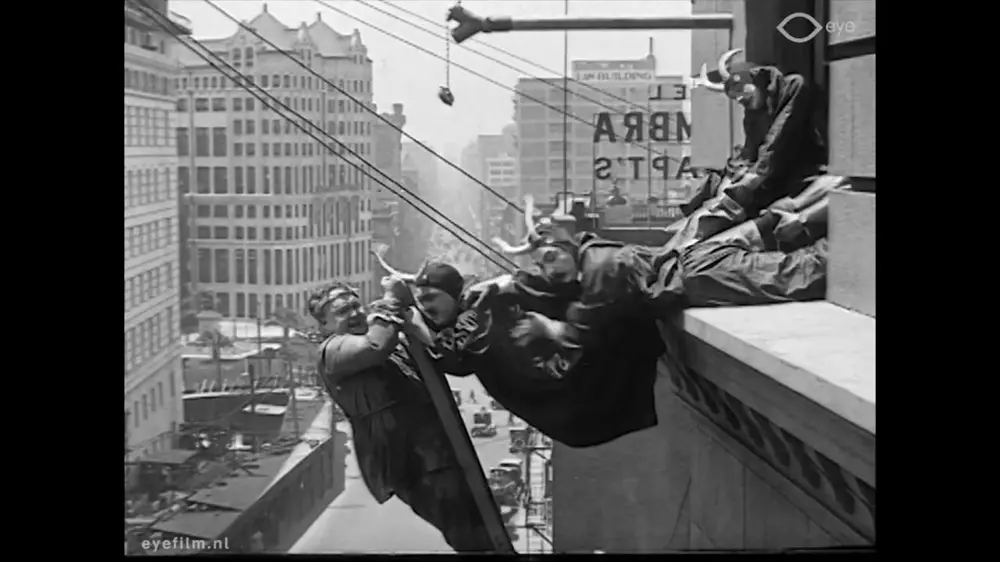
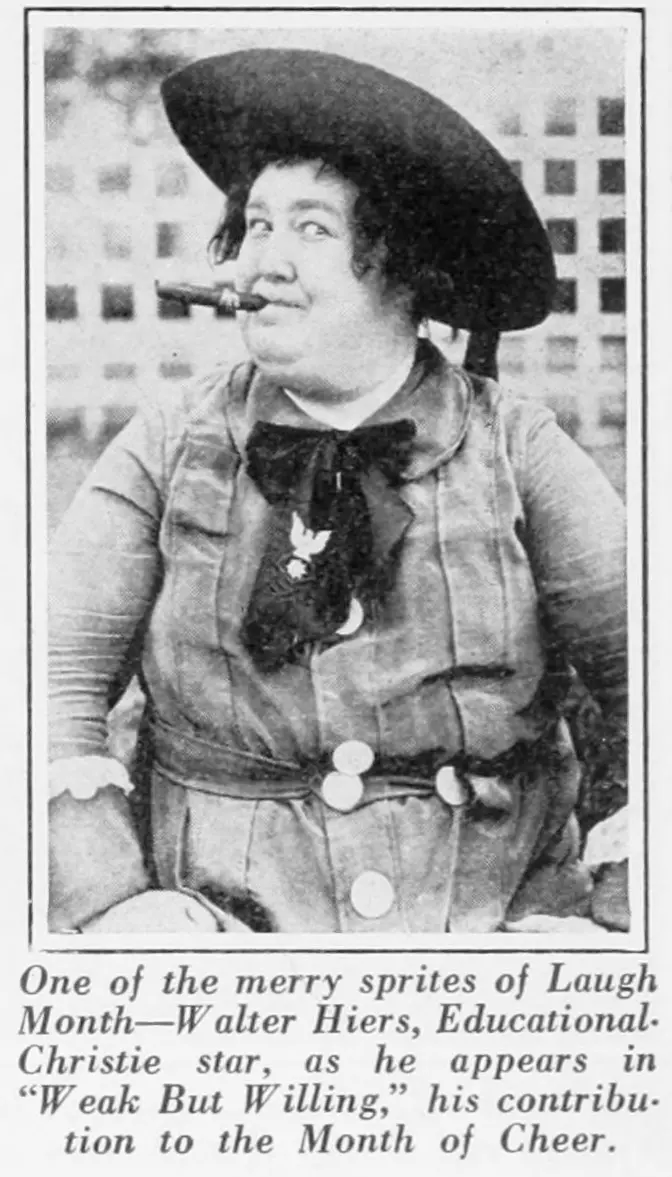
Walter Hiers, as the beleaguered Walter, delivers a performance that leans into the 'weak but willing' aspect of his character. He's not a master of physical comedy in the vein of a Buster Keaton; rather, his humor comes from his earnestness and his repeated failures. His reactions to the goat's antics and the rival's schemes are central to the film's comedic impact. Hiers' ability to project a sense of hapless determination makes Walter a sympathetic, if somewhat passive, protagonist.
The rival character, likely played by Duane Thompson or William Irving (who also directed some films), embodies the stock villain of the era: conniving, smug, and ultimately destined for comeuppance. His performance would have relied on clear visual cues of malice and trickery, often delivered with an almost cartoonish villainy. The effectiveness of such a character is in direct proportion to how convincingly he can be perceived as an obstacle to the hero's happiness.
What's striking about these performances is their reliance on pure physicality. Every emotion, every plot beat, had to be communicated through body language and facial expressions. There’s an almost theatrical quality to the acting, a direct lineage from vaudeville and stage melodrama. The actors are not just performing; they are narrating with their bodies, making the story accessible to an audience without spoken words or even intertitles for much of the action.
One unconventional observation: the true star, ironically, might be the goat itself. Its unpredictable movements and natural defiance often generate the most genuine, unforced laughs. The animal's performance is entirely authentic, a chaotic element that no human actor could fully replicate. It grounds the fantastical premise in a tangible, if unruly, reality, and its interactions with Walter are the comedic highlights of the film. It's a reminder that sometimes the most effective 'performers' are those least aware of the script.
The cinematography of 'Weak, But Willing' is, understandably, rudimentary by today's standards. The film employs a largely static camera, positioned to capture the entire scene in medium or wide shots. There's little in the way of complex camera movement, dynamic angles, or sophisticated lighting. The focus is on clarity and ensuring that all the action, particularly the physical comedy, is visible within the frame. This approach reflects the technological limitations and aesthetic conventions of early cinema, where the novelty of moving pictures itself was often enough to captivate audiences.
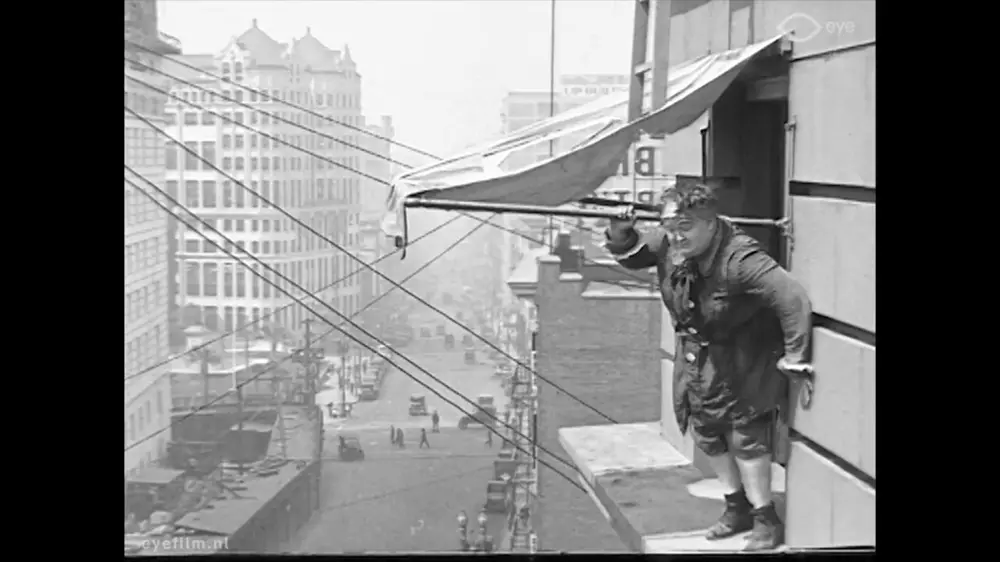
The lighting, likely natural or augmented by basic studio lamps, is flat and functional, designed to illuminate the scene rather than create mood or depth. There are no dramatic shadows or intricate compositions. The visual language is one of directness, prioritizing information over artistry. This isn't a critique, but rather an observation of the film's place in cinematic history, where the grammar of filmmaking was still being invented.
Despite these technical simplicities, the cinematography effectively serves the film's comedic purpose. By keeping the camera still, it allows the physical chaos to unfold naturally, giving the audience a clear view of Walter's struggles and the goat's defiance. The lack of close-ups means that much of the emotional nuance, if any existed, is conveyed through broad physical gestures rather than subtle facial expressions. This reinforces the film's identity as a broad farce, where subtlety is not the goal.
The tone of 'Weak, But Willing' is unequivocally lighthearted and farcical. There's no underlying drama or genuine tension; every obstacle is presented as a setup for a gag. The film exists purely to entertain, to elicit laughter through its absurd premise and the predictable misadventures of its hero. This innocence is a defining characteristic of many early silent comedies, which often shied away from darker themes in favor of pure escapism.
The film's tone is consistent throughout, maintaining a cheerful, if chaotic, atmosphere. Even the rival's villainy is played for laughs, never truly threatening or menacing. This unwavering commitment to a comedic tone ensures that the audience is always aware of the film's intentions. It's a simple, straightforward approach that, while lacking the satirical bite or emotional complexity of later comedies, offers a charming glimpse into the foundational elements of screen humor. It’s a piece of entertainment that, much like Bow Wow, prioritizes immediate, uncomplicated amusement.
Yes, for those with a deep appreciation for silent film history and the foundational elements of slapstick comedy. No, if you expect the narrative depth or technical polish of even early sound films. It serves as a valuable historical document. It offers rudimentary entertainment. Its place is in archives, not necessarily mainstream viewing queues.
For the casual viewer, its short runtime might make it an interesting curiosity, but it's unlikely to leave a lasting impression beyond a fleeting smile. Its humor is broad, its plot thin, and its production values reflective of its era. It's a film for the dedicated cinephile, the student of film history, or anyone with a particular fondness for the raw, unfiltered charm of early 20th-century cinema.
Ultimately, its worth is subjective, heavily dependent on the viewer's personal taste and their understanding of its historical context. It works. But it’s flawed. It's a film that asks for patience and an open mind, rewarding those who are willing to look beyond its rough edges to appreciate its place in the grand tapestry of film history.
'Weak, But Willing' is a film that, like many of its contemporaries, exists more as a historical artifact than a consistently compelling piece of entertainment for a contemporary audience. Its title, in a way, perfectly encapsulates its essence: it's a film that is narratively weak, but willing to throw itself into the chaotic embrace of physical comedy. It’s a document of a time when cinema was still figuring out its language, when a simple premise and a few well-executed sight gags were enough to draw an audience.
For the discerning film critic, and more importantly, for the curious cinephile, 'Weak, But Willing' offers a valuable, if brief, lesson in the evolution of cinematic humor. It reminds us of the raw, unpolished energy that characterized early filmmaking and the foundational tropes that would later be refined by comedic geniuses. It's not a film that will redefine your understanding of cinema or leave you breathless with its artistry. But it is a film that, for a few fleeting moments, can transport you back to a simpler time, when a man, a girl, a rival, and a stubborn goat were all that was needed for a good laugh.
Do not expect a profound narrative or groundbreaking technical achievements. Instead, approach 'Weak, Willing' as a charming, if somewhat quaint, relic. Its value lies in its authenticity as a product of its time, a small but significant piece of the puzzle that makes up film history. It's a film to be appreciated for what it represents, rather than for its inherent brilliance. It's a footnote, perhaps, but a rather amusing one. And sometimes, a good footnote is all you need to complete the story.
IMDb 6
1936
Community
Log in to comment.