DbcultAccessing Vault...
6.6/10
Senior Film Conservator
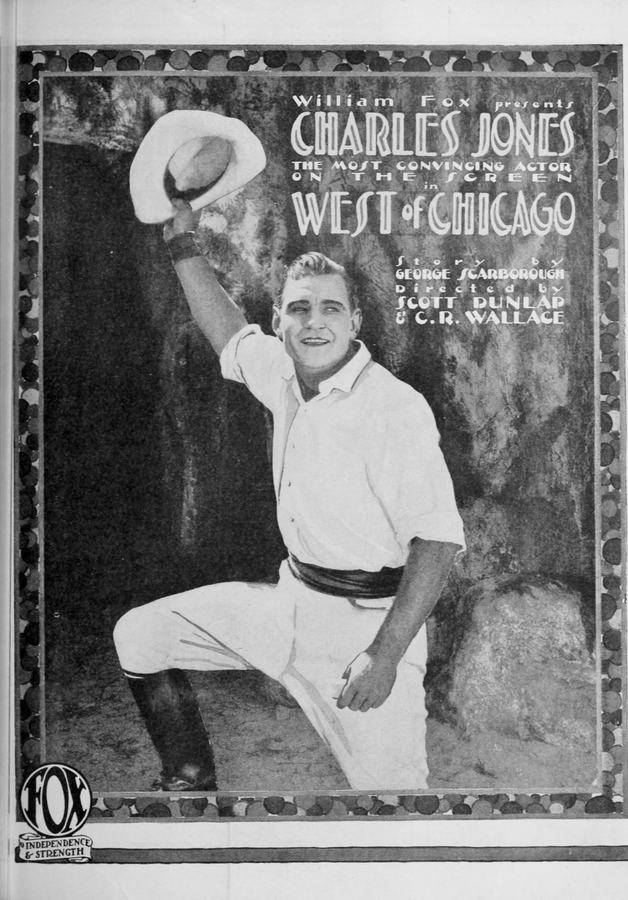
A definitive 6.6/10 rating for a film that redefined the boundaries of cult cinema. West of Chicago remains a cornerstone of transgressive art.
The first image George Scarborough and Paul Schofield allow us is a locomotive whistle slicing the prairie dusk—an auditory phantom in a silent film, yet the vibration quivers in the optical score. That paradox sets the temperature for West of Chicago, a 1922 six-reel western that refuses to behave like one. Instead of manifest destiny bravado, we inherit a moral hall of mirrors: identity as negotiable paper, kinship as hostile takeover, and landscape not as vista but ledger where sins accrue interest.
Conroy Daly—played with feline restraint by Sidney D’Albrook—steps off the train wrapped in city cloth, the antithesis of Buck Jones’s sun-cured foreman. D’Albrook’s gait whispers Broadway; Jones’s posture yells saddle sores. Their clash is not fistfight but dialectic, a debate on whether a man is the name on a deed or the marrow in his silence.
Hampton’s proposition—pretend you’re the heir so the cattle barons keep sleeping—feels lifted from Jacobean drama, not oater pulp. Con’s acceptance suspends ethical gravity: he becomes both executor and impostor, sheriff and outlaw. The film’s true tension is not who pulls a trigger first but who dares drop the mask, because here masks weld to skin.
Renée Adorée’s Della Moore arrives freighted with backstory—her brother condemned for the uncle’s murder—yet her first gesture is to barter her own surname for a stranger’s safety. Adorée translates that sacrifice into micro-gestures: a blink held half a second too long, a gloved hand that clenches when the word wife is uttered. Silent cinema ages poorly when actors semaphore; Adorée inhales emotion, letting the audience chase exhalation.
Cinematographer Ross Fisher (uncredited in most ledgers) shoots the ranch as Caravaggio might have—chiseled chiaroscuro, faces half-swallowed by stetson brims. Notice a late-night stable scene: a lantern swings, the light orbits like a drunken planet, and for three frames the flame lands on Della’s pupils, turning them into molten topaz. You cannot spell desire more eloquently without intertitles.
Compare this texture to the pastoral softness of In Mizzoura or the drawing-room glare of Soldiers of Fortune, both 1919 programmers trading in moral absolutes. West of Chicago instead luxuriates in umbra; its daylight exteriors feel overexposed on purpose, as if honesty can only survive under cover of night.
Scarborough’s plotting pirouettes on legal parchment: wills, bills of sale, wedding certificates. Hampton’s racket is not rustling but jurisdictional identity theft. The film anticipated today’s algorithms that trade selfhood for access. When Con finally confronts his supposedly dead uncle, the reveal arrives not via thunderclap revelation but through the quiet turning of a brand registration ledger—an ancestor to the modern blockchain, its ink immutable.
Buck Jones, often pigeonholed as the grinning saddle-virtuoso, here weaponizes reticence. Watch the way he removes a glove—three measured tugs, each a stanza about control—before announcing Con’s true lineage. Kathleen Key, as the visiting socialite enamored with Hampton, supplies a fluttering counter-rhythm; her laugh is all flute to Jones’s oboe.
Marcella Daly (no relation to the fictional clan) embodies the moral gyroscope as housekeeper Carmelita, humming frontier hymns that leak exposition. She’s the film’s Greek chorus, if Sophocles wrote cookstove wisdom.
The horse Silver receives above-title billing, and earns it. In a genre where livestock equals transport or spectacle, Silver functions as lie detector: ears flatten whenever Hampton fabricates, nostrils flare when Con contemplates confession. The climactic stampede—ostensibly action filler—doubles as emotional referendum: Con and Della, astride Silver, outrun not cattle but the collapse of their own forged marriage. When Della’s hair unravels in the wind, the film argues that truth, once loosed, can never be re-braided.
1922 westerns rarely grant women transactional power; here Della bargains her body, name, and future, yet emerges agent, not collateral. Her final refusal of Con’s initial proposal—not until the ranch remembers who owns it—rewrites the marital covenant into a business merger, predating similar negotiations in The Silver Horde by two production cycles.
Place this film beside The Homesteader, Oscar Micheaux’s 1919 race-conscious pioneer saga: both hinge on inheritance, both interrogate the paper-trail of American belonging. Whereas Micheaux exposes racial barriers, Scarborough foregrounds class pretense—white men barred from birthright by a forged signature rather than melanin. Together they form a diptych of how citizenship gets written in the margins.
Stack it also against Beatrice Fairfax Episode 10: Play Ball!, where female sleuthing is breezy consumerism; in West of Chicago, investigation is a grift that scars. One is Jazz Age fizz, the other is Reconstruction hangover.
Clocking fifty-four minutes, the picture still pauses for respiration: a campfire silence, a boot creak, the wind worrying a fence wire. Contemporary streamers, drunk on velocity, would excise these beats. Yet the pregnant lull is where viewers metabolize complicity; we, too, forge signatures on our own perceptions. The film’s refusal to gallop teaches patience—a currency more depleted than bitcoin.
Surviving prints reside at the Library of Congress, but the 2018 2K restoration bleaches Fisher’s chiaroscuro into muddied sepia. The sea-blue midnight climax now swims in pumpkin orange, an ironic betrayal given the film’s chromatic discourse on authenticity. Cinephiles petition for a 4K rescan; until then, YouTube bootlegs circulate like samizdat, pixelated ghosts testifying to analog majesty.
Silent exhibition demands musical prosthesis. Imagine a live score built from bowed banjo, pedal-steel drones, and breathy femur flute—Nicolas Jaar remixing Ennio Morricone. Each appearance of Silver could be announced by a slowed heartbeat at 42 BPM, audience thoraxes syncing, a communal ventriloquism.
Most westerns brand their ideology on a clean hide; West of Chicago scratches off successive layers until ownership itself is illegible. Identity, land, even matrimony—all are negotiable promissory notes. The closing shot tracks slowly back from the ranch gate as Con and Della walk toward a future neither can read; the camera ascends, revealing wagon-ruts forming the word TRUST in braille only the prairie can parse. Ninety-two years later, we still squint at that dusty inscription, wondering which of our own signatures are forged.
IMDb 6
1934
Community
Log in to comment.