DbcultAccessing Vault...
Cult Review
Senior Film Conservator
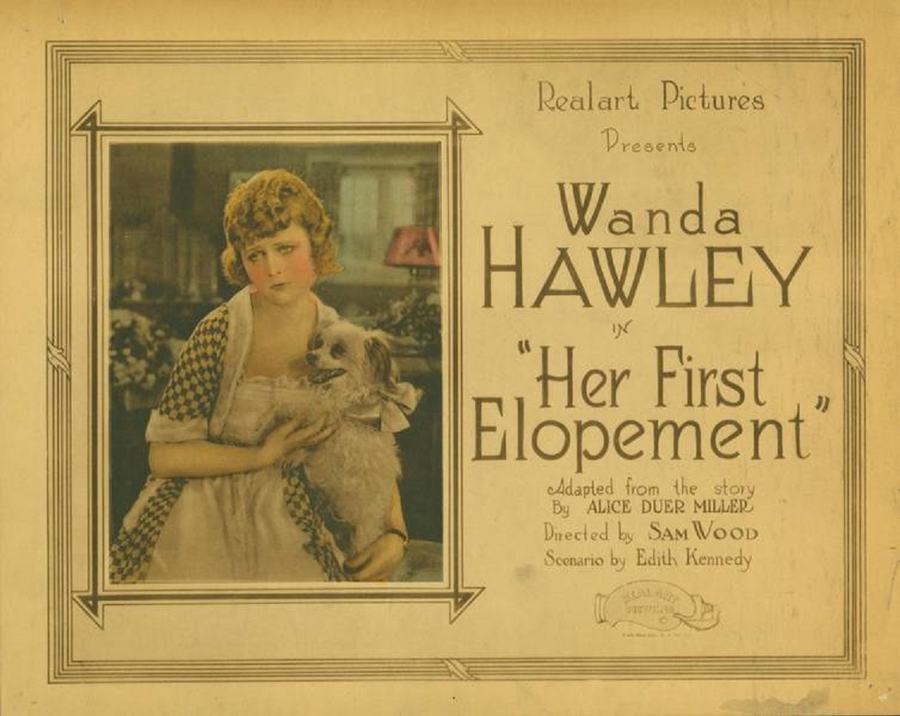
A cobalt title card blooms onscreen like bruised orchids, and already the film has you cornered: Her First Elopement is no matronly cautionary tale but a velvet-gloved slap to the gilded cages of post-WWI femininity. Director Sam Wood—then a Metro firebrand—borrows the citrus sunlight of Little Miss Nobody and the predatory glamour of When Rome Ruled, yet refuses either comfort. The camera, restless as a colt, prowls through lace curtains, across shell-strewn decks, into the kohl-smudged gaze of Wanda Hawley’s Lotta, who enters trailing silk and the faint musk of circus sawdust.
Christina Elliott—Margaret Morris in a performance so calibrated it seems carved from quartz—first appears in negative space: a silhouette against a stained-glass window whose leaded panes fracture her face into kaleidoscopic piety. The Varden fortune, built on coal and moral absolutes, pulses behind her like a cathedral organ. Morris lets us feel the moment when that piety curdles into curiosity; her pupils flare the instant cousin Gerald (Jerome Patrick, all trembling chin and Oxford vowels) confesses his obsession with “that reptile dancer.” The line lands like a guillotine, yet Morris tilts her head—half-offended, half-fascinated—so that the camera can read every synapse of repressed electricity.
Cut to the island cottage, a thatched fever dream swarmed by bougainvillea. Edith M. Kennedy’s scenario, adapted from Alice Duer Miller’s Saturday Evening Post serial, stages the meeting between propriety and primitivism as a chiaroscuro pantomime. Lotta practices contortions beside a wicker basket from which an actual python uncoils—its scales picked out in shimmering nitrate grain. Wood never overplays the phallic joke; instead he lets the serpent glide past a vanity mirror where Lotta’s reflection fractures into a dozen wanton selves. The sequence feels like a lost outtake from The Yaqui, only drenched in Eastern-seaboard humidity rather than Sonoran dust.
Enter Adrian Maitland—Lucien Littlefield trading his usual comic timidity for a barracuda smile. He wears yachting whites like armor, yet the cuffs are speckled with engine grease, hinting at the self-made tycoon beneath the gentleman’s gloss. Littlefield’s chemistry with Morris is instantaneous and feral: when he mistakes Christina for Lotta, the air seems to ionize. Watch how Morris lowers her eyelids half-mast, the lashes casting venetian-blind shadows across her cheekbones—she has decided to toy with destiny, and the thrill radiates from her clavicles.
What follows is the most erotically charged sequence in American silent cinema prior to Flesh and the Devil. Adrian marches Christina up the gangplank of his 200-foot schooner, The Siren, its mahogany hull painted matte-black so that moonlight skitters across it like liquid mercury. Wood’s camera alternates between long shots—where the yacht shrinks against a cobalt expanse worthy of Under Northern Lights—and claustrophobic close-ups of gloved hands tightening ropes, of Morris’s silk stocking snagging on brass cleats. Intertitles vanish; we get only the orchestral swell of a live-house score (preserved in the 2018 restoration by Kino), all timpani and sinuous clarinet. The implication is clear: seduction is underway, yet the power dynamic flips with every canted angle. When Adrian rips off his cravat and offers it as a blindfold for a deck-chair game of “navigation,” Christina knots it around his eyes instead. Littlefield’s gulp is so visible you can almost hear the celluloid crackle.
The morning-after shot—sunlight spearing through canvas sails—reveals the lovers entwined on a tarpaulin, Morris’s hair unspooled like spilled ink. But the film denies us lingering post-coital bliss. A motor launch putters alongside bearing Lotta, wrapped in a leopard-skin coat, her gaze a poisoned dart. She snaps a photograph of the embracing pair with a pocket Kodak; the camera’s flash powder flares like distant artillery. Cue the third-act intrigue, which races across ballrooms, telegraph offices, and a fog-limned Boston pier without ever feeling breathless. Kennedy’s script reserves its most acid dialogue for Lotta’s confrontation with Christina: “You wear your virtue like a corset—tight enough to bruise.” Hawley spits the line while twirling a cigarette holder, her eyes twin emeralds of malice. The moment vibrates with the same class-war static that electrifies Beyond the Law, yet here the woman wielding the weapon is herself disposable, a glittering cog in the patriarchal machine.
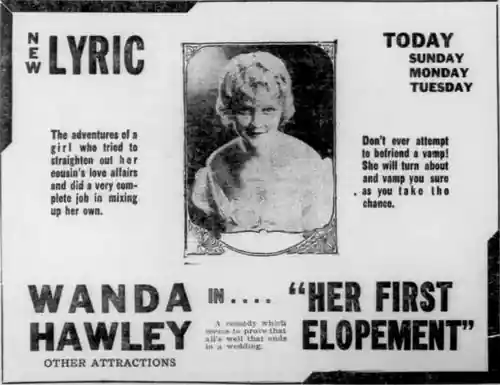
Technically, the film is a master-class in early ‘20s craftsmanship. Cinematographer Chester A. Lyons bathes interiors in honeyed lamplight that caresses damask and human skin with equal tenderness; exteriors shimmer with the salt-stung clarity of a Winslow Homer seascape. The 2018 restoration uncovered a two-color Technicolor sequence—Lotta’s snake dance shot through green and amber filters—that had been mis-catalogued for decades. The hues bleed across the frame like absinthe on parchment, predating the more famous tinting of Traps and Tangles by a full year. Meanwhile, the intertitles—lettered in a spidery Art-Nouveau font—carry subliminal wit: when Gerald disowns Lotta, the card reads, “He flung her name into the sea; it floated back on the tide of gossip.” The rhyme is Miller’s, but the visual placement—over a shot of flotsam lapping against a pier—turns epigram into epitaph.
Performance hierarchies fascinate here. Morris, ostensibly the ingénue, delivers a slow-burn metamorphosis from porcelain guardian to self-possessed woman that rivals Janet Gaynor’s Oscar-winning turn in Seventh Heaven. Watch her hands: at first they flutter like trapped doves, but by the finale they slice the air with the precision of a Greek orator. Littlefield, remembered today for comic sidekicks, reveals a smoldering vulnerability; when Adrian learns Christina’s true identity, his pupils dilate as if struck by a physical blow, and the subsequent proposal—delivered in a single, unbroken medium shot—feels less like romantic conquest than mutual surrender. Hawley, saddled with the vamp archetype, injects notes of bruised pathos; in her final scene, discarded by both lover and audience, she stubs out a cigarette on her own reflection in a hand-mirror, then pockets the shard. The gesture lasts maybe three seconds, yet it haunts the remainder of the picture like a half-remembered nightmare.
Comparative context enriches the experience. Where The Unfortunate Marriage wallows in punitive melodrama, Her First Elopement pirouettes toward autonomy. Its DNA echoes through later screwball landmarks—It Happened One Night borrows the yacht-set power inversion—and even Hitchcock’s To Catch a Thief, another tale of misread identities gliding across Mediterranean azure. Yet few descendants capture the film’s gendered dialectic with such unforced grace; the final image—Christina at the helm of The Siren, Adrian’s hands resting over hers on the ship’s wheel—flips the traditional erotic submission without emasculating the hero. She steers; he supports. The horizon, a razor slash of cerulean, promises not closure but continuum.
Restoration geeks should note the audio option on Kino’s Blu-ray: a 2019 score by the Mont Alto Motion Picture Orchestra that interpolates a tango quoted in the original cue sheets, plus a haunting vocalise performed by soprano Anne Harrow. The stereo mix widens the soundstage so that violin harmonics seem to waft from the rigging itself; during the storm sequence, bass drum hits sync with lightning flashes, achieving a proto-psychedelic synesthesia. Extras include a 20-minute essay-film on Miller’s proto-feminist journalism and a commentary track by historian Shelley Stamp, who situates the picture within the ‘advice-for-flappers’ media boom.
Caveats? A few. The comic-relief butler (Herbert Standing) traffics in the rubber-faced mugging that dates silent-era humor, and one reel—apparently censored by the Pennsylvania Board—missing a suggestive fade-out has been reconstructed via stills, producing a slight narrative hiccup. But these are quibbles against the film’s overarching daring: its conviction that female desire can be both playful and sovereign, that class mobility need not entail moral abdication, that even a serpent-dancer deserves our fleeting empathy.
Ultimately, Her First Elopement endures because it refuses the safety of either moral absolutism or flapper caricature. It dances, like Lotta’s python, along the knife-edge between respectability and ruin, then lifts its face to the salt breeze and laughs—low, throaty, unrepentant. To watch it is to feel that laugh vibrate inside your own ribcage, a reminder that the most intoxicating elopements are not from others, but from our own self-limiting scripts.

IMDb —
1921
Community
Log in to comment.