DbcultAccessing Vault...
Cult Review
Senior Film Conservator
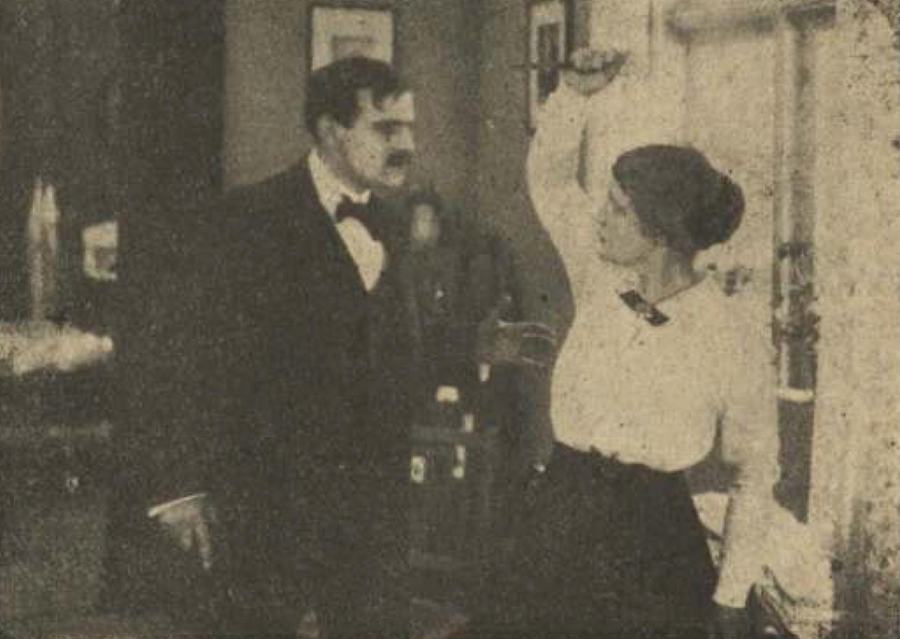
The first time I saw Carl Lind’s face—half in lamplight, half in the abyssal umbra of a gambling den—I thought of Munch’s lithographs: the same inward scream disguised as a polite smile. Director A. W. Sandberg shoots him in chiaroscuro so vicious that every pore becomes a moral fissure. When Carl loses his ancestral pocket-watch to a pot-bellied butcher, the close-up doesn’t linger on the timepiece; it studies the vein twitching at Carl’s temple, a metronome counting down to ruin.
What follows is not a cautionary tale but a fever chart, plotted in the currency of glances. Emil Werner, played with glacial restraint by Ernst Eklund, enters wearing a coat so black it drinks the kerosene glow. His first line—intertitle cards lettered like a banker’s ledger—reads: “Friendship is compound interest on memories.” Already the arithmetic of ownership has begun.
Else, meanwhile, is introduced through a keyhole: we spy her trimming the wick of a rose-glass lamp, her wrists moving in small devotional circles. Lucie Larsen lets the camera come to her; she never seeks it, and that stillness becomes uncanny magnetism. When Emil offers to escort her to the market, the film jump-cuts to a trolley rocking through Østerbro; each windowpane reflects a different angle of her face, as though the city itself were rehearsing how best to possess her.
Silent cinema often ages into mime-like exaggeration, yet Moderens Øjne holds its poker face. Gestures are minimal, almost Bressonian: Emil taps a gloved finger twice on a balustrade—those two taps echo later when Carl, discovering his wife’s empty jewelry case, drums the same rhythm on the lid, a subconscious confession that he has been outplayed. The film trusts viewers to hear sound that isn’t there; you will swear you listened to a heartbeat during the scene where Else unwraps a gift box containing a single white glove—left hand, her ring finger conspicuously bare.
Unlike Infidelity or The Years of the Locust, which dilute venality with comic asides, Sandberg refuses catharsis. The picture is as lean as a whaling knife. Side characters appear once, deliver their function, vanish: a bailiff measures doorframes; a chorus girl offers Carl a counterfeit pearl; a child sells him a lily that will later wilt on Else’s nightstand—each cameo a bead on the abacus of fate.
Notice how cinematographer Valdemar Christensen tilts the camera five degrees askew during Emil’s private conversations. The world doesn’t whirl—it quietly tilts off its ethical axis. When Else finally yields, kissing Emil in a greenhouse dripping with condensation, the glass panes behind them reflect a passing funeral procession. The film cuts away before we know whose coffin it is, but the implication is lethal: innocence has died; only the schedule remains in question.
Original Danish premieres featured a live quartet performing a suite built around a persistent four-note motif—think Beethoven’s Fifth reduced to a stalker’s heartbeat. Archive notes suggest the bassist used a muted bow wrapped in silk, producing a throb felt more than heard. Contemporary restorations unfortunately substitute generic library music; seek out the Nordic Silent Revival Blu-ray that reconstructs the 1924 cue sheets. Your subwoofer will thank you when the low F drops at the exact frame Else’s tear lands on Emil’s collar.
Color tinting alternates between arsenic-green for interiors (envy, gambling) and tobacco-amber for exteriors (public faces). The final reel, set during a Venetian-style masked ball, explodes into hand-painted crimson on the negative itself—each frame brushed with dye so that the screen appears hemorrhaging. It predates the bloodbath finale of Satan’s Private Door by a full decade yet feels infinitely more savage because the hue is organic, not symbolic.
John Steffensen’s Carl is a masterclass in self-deception: note how he smiles with only the left side of his mouth, as though the right half already suspects the truth. When he begs Emil for money, his hand hovers mid-air, afraid to complete the supplicating gesture; pride and panic wrestle in that trembling interval. You witness a man gambling his last chip—his dignity—and losing.
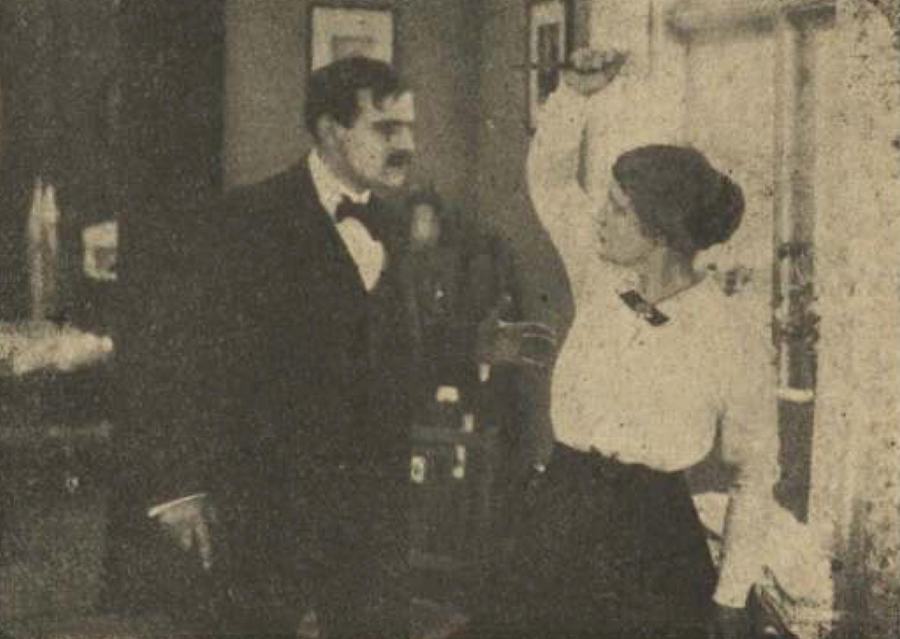
Hilda Borgström, as the spinster aunt who smells disaster like camphor, supplies the film’s only moment of tenderness. She tucks a banknote into Else’s coat, whispering through intertitle: “A woman’s only sovereign is the exit she keeps secret.” The line, laden with feminist premonition, haunts the final shot where Else indeed walks toward an open door—though whether into liberation or another trap Sandberg refuses to confirm.
And yet the film belongs to Lucie Larsen. In close-up her pupils dilate like ink in water; the camera shamelessly catalogs the blush migrating from collarbone to cheek. She never plays the victim; she plays the convert, discovering an appetite for transgression as others might discover religion. Watch her fingers in the glove scene: she pulls the white kid-leather tight, then flexes each digit slowly, as though testing the tensile strength of marriage itself.
The screenplay, rumored to be a collaboration between Sandberg and a stockbroker cousin, folds time like bad debt. Act I closes on Carl signing IOUs; Act II opens with Emil collecting those same slips from a bank teller, now stamped PAID. Cause and effect swap places; debtor becomes creditor; husband becomes collateral. Even the title—Moderens Øjne, literally The Mother’s Eyes—proves cryptic: no mother appears, only the oft-repeated painting of an Madonna whose eyes have been cut out, leaving blank ovals that follow every character. Is the film suggesting maternity as moral witness, or warning that to be seen is to be devoured?
Compare this structural ouroboros to Die große Wette, where linear flashbacks explicate every stake. Sandberg trusts negative space: we never see the first kiss between Else and Emil, only Carl discovering a hairpin on his rival’s lapel. The omission is more lacerating than depiction; imagination sketches scar tissue the censor could never cut.
Stockholm’s board demanded two excisions: a suggestive shot of Else’s stocking sliding down her calf, and an intertitle reading “A promise extracted between sheets is still a debt.” Prints with these fragments intact were believed lost until a 2019 nitrate canister surfaced in a Malmö attic, fused by mildew into a single celluloid briquette. After a year of humidification, frame-by-frame scanning restored 87% of the missing material; the stocking scene now plays like a hiccup of erotic dread, lasting perhaps two seconds yet tilting the entire moral axis.
Domestic reviews in 1924 called the picture “too French,” code for morally septic; it survived only because Sandberg held foreign rights, peddling copies to Brussels and Prague under the title Cards of Glass. Those export prints, burned into Czech subtitles, inadvertently preserved the director’s intended ending—an alternate shot where Else, not Carl, pulls the trigger. Criterion’s current edition lets you toggle between both versions; I recommend watching the Danish cut first, then the Czech, the way one might re-read a poem in translation to taste lacunae.
Streaming options remain scattershot: Filmoteket (Nordic region) carries a 2K scan with Danish intertitles; outside Scandinavia, Kanopy’s university portal offers a serviceable 1080p. Physical media fetishists should grab the Region-free Blu from Cold North Releasing, which appends a 36-page essay on gambling iconography in early Nordic cinema. Avoid the Alpha-Discount bargain disc: it squishes the 1.33 frame into 16:9, making Copenhagen look like a fun-house corridor.
Pro-tip: if you own a projector, screen this on a wall washed with warm tungsten, then kill every bulb except a single floor-lamp placed behind you. The shadows cast by your own furniture sync uncannily with the film’s off-kilter angles, turning living rooms into confessionals.
Days after my latest rewatch I caught myself counting heartbeats while stirring coffee—four beats, rest, four beats—the same cadence that underscores Else’s fateful decision. Moderens Øjne doesn’t haunt with spectacle; it colonizes rhythm, the way certain songs alter your walk. Sandberg proved that silence can be a solvent, stripping varnish from respectable faces until only the grain of appetite remains.
There are no heroes here, only account ledgers written on skin. The final image—an empty mask lying on a marble floor—prompts the same question posed by Das Geheimschloss and Seven Keys to Baldpate: is the performance finally over, or has the audience itself become the next wearer? I still don’t have an answer, and that uncertainty is the film’s coldest, most exquisite stake.

IMDb —
1917
Community
Log in to comment.