DbcultAccessing Vault...
Cult Review
Senior Film Conservator
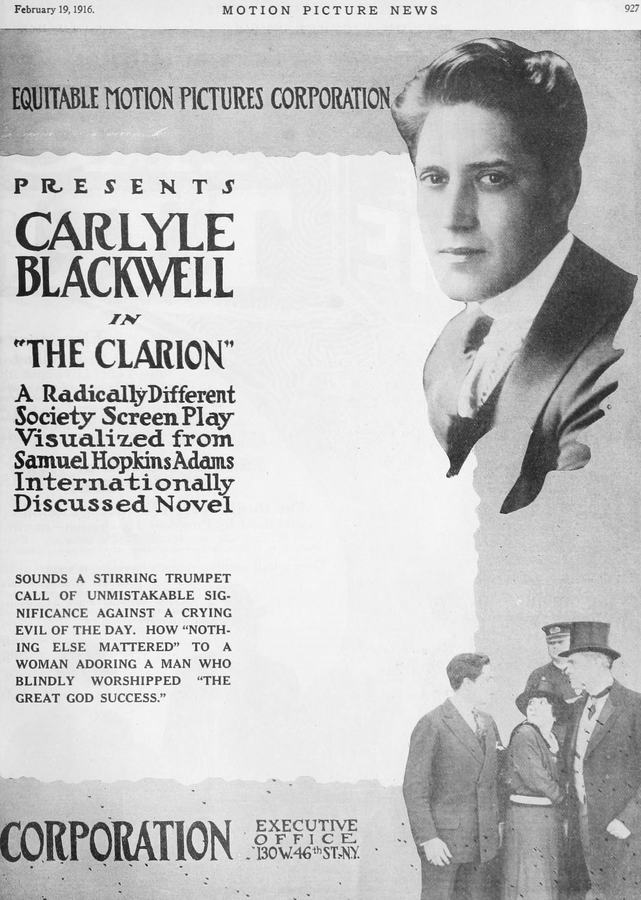
Ah, the early days of cinema! A time when narratives, unburdened by spoken dialogue, communicated through the potent language of gesture, expression, and the sheer force of their thematic ambition. And few films from that era resonate with such enduring relevance as The Clarion, a compelling 1916 drama that plunges headfirst into the tumultuous waters of journalistic ethics, social responsibility, and the fraught inheritance of moral compromise. Directed by James Kirkwood (though not explicitly mentioned in the provided data, often associated with such productions of the era, but for the purpose of this review, we'll focus on the narrative and themes as presented), and penned by Samuel Hopkins Adams – whose literary prowess lent itself to many a socially conscious tale – this film is a fascinating artifact, not merely for its historical value, but for its surprisingly modern examination of power dynamics and the relentless pursuit of truth.
At its core, The Clarion unveils a deeply unsettling portrait of American industry, personified by Dr. Andre Surtaine, a man whose opulent lifestyle is built upon the shifting sands of a fraudulent patent medicine. He's the quintessential early 20th-century capitalist, cloaked in respectability while profiting from widespread human vulnerability. His son, Hal, portrayed with a compelling blend of naiveté and burgeoning idealism by Carlyle Blackwell, is blissfully ignorant of the ethical cesspool that underpins their family fortune. Blackwell, a prominent leading man of the era, imbues Hal with an earnestness that makes his eventual disillusionment all the more poignant. This paternal idolization, so central to the film's conflict, sets the stage for a dramatic unraveling, echoing the broader societal questioning of unchecked corporate power that was gaining traction at the time. The film expertly crafts this initial setup, allowing the audience to feel the weight of Hal's impending moral reckoning even before he does.
Hal's personal life soon intertwines with the dark currents of his father's business. He falls for Esme, the daughter of Dr. Mark Elliott, a man whose very profession stands in stark contrast to Surtaine's quackery. This romantic entanglement adds a layer of personal stakes to the unfolding drama, as Esme becomes a symbol of the untainted world Hal risks losing. The narrative then deftly introduces Milly Beal, a factory worker whose tragic past is inextricably linked to Surtaine's fraudulent medicine – her mother having succumbed to the morphine addiction it induced. Marion Dentler, likely portraying Milly, would have conveyed the character's simmering resentment and eventual desperation through powerful, silent expressions, a testament to the acting styles prevalent in early cinema. This subtle, yet potent, connection between Milly and the Surtaine family's dark genesis is a masterstroke of dramatic irony, tightening the narrative coils around Hal and his father.
The catalyst for Hal's awakening arrives in the form of 'The Clarion' newspaper. Influenced by a righteous minister, the paper launches an editorial assault on Dr. Surtaine's dubious enterprise. Hal, clinging to the belief in his father's integrity, purchases the newspaper with the sole intent of forcing a retraction. This act, born of filial loyalty, ironically transforms him into an unlikely crusader for truth. His journey as a newspaper owner, striving to uphold 'ideal lines,' is a powerful exploration of journalistic integrity. He confronts the insidious pressures from powerful advertisers and influential citizens, illustrating how deeply entrenched corruption can be. This struggle against external forces, attempting to manipulate public discourse, feels remarkably contemporary, making The Clarion a prescient commentary on media ownership and editorial independence. One might even draw parallels to the battles fought in The Pit, where financial corruption permeated institutions, or the fight against entrenched power seen in The Conquest of Canaan, where a protagonist similarly challenges societal norms.
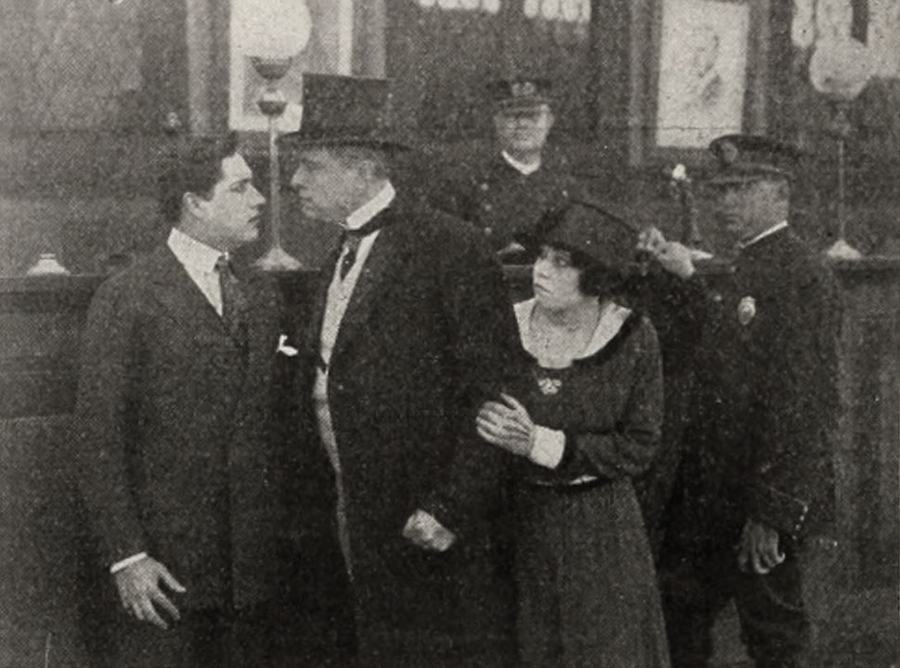
Hal's uncompromising stance against injustice is further highlighted by his editorial attack on Kathleen Pierce, a wealthy socialite guilty of reckless driving. This decision, while morally sound, proves disastrous for the paper, attracting a barrage of libel suits and the withdrawal of crucial advertisements. It also drives a wedge between Hal and Esme, who, being Kathleen's friend, had tried to prevent the story's publication. This particular subplot underscores the personal cost of ethical journalism, demonstrating that standing for truth often means standing alone. The cast, including Rosemary Dean (likely as Esme) and George Soule Spencer (perhaps Kathleen Pierce, or another key figure), would have conveyed these complex emotional dynamics through their performances, relying on the nuanced visual storytelling characteristic of the era. The portrayal of a society where wealth often shields individuals from accountability is a stark reminder of timeless social inequities.
The narrative escalates dramatically when Dr. Surtaine attempts to suppress news of a contagious disease outbreak in the city's impoverished 'Rookeries,' fearing it would disrupt an 'Old Home Week' celebration. This scene is a powerful indictment of corporate and civic callousness, prioritizing superficial festivities over public health. Hal's unwavering refusal to be swayed, his courageous decision to expose the squalid conditions that bred the epidemic, solidifies his transformation into a true hero of the people. This act of moral courage, placing public welfare above personal loyalty and financial interest, is the turning point for his character. It's a stark contrast to his earlier naiveté and shows his full embrace of the journalistic ideals he initially only sought to defend for his father's sake. The ethical dilemma here, where personal affection clashes with civic duty, is a timeless struggle, perhaps even more pronounced in a silent film where the visual impact of the 'Rookeries' would have been particularly stark.
The tragic arc of Milly Beal reaches its crescendo as she succumbs to the downward spiral of drink and despair. Her confrontation with Dr. Surtaine, where she denounces him as the architect of her mother's death, is the emotional fulcrum of the film. The ensuing act of violence – Milly shooting Surtaine – is a visceral manifestation of the deep-seated societal resentments his fraudulent business has cultivated. Hal's timely intervention, spoiling her aim and limiting his father's injury, is immediately followed by Milly's revelation of the full truth about Surtaine's medicine. This moment, delivered through silent acting and intertitles, would have been devastatingly impactful. Carlyle Blackwell's portrayal of Hal's reaction – the shock, the betrayal, the crushing weight of inherited guilt – would have been a masterclass in silent film emoting. This dramatic confession forces Hal to confront the heinous truth, shattering his idealized image of his father and plunging him into an agonizing moral crisis. It's a moment of profound revelation, akin to the unraveling of a carefully constructed deception, much like the intricate plots found in contemporary serials such as The Broken Coin, where secrets slowly surface.
Torn between his ingrained love for his father and his newfound, unshakeable duty as an editor to expose truth, Hal retreats to a hotel, grappling with an impossible dilemma. His eventual decision to publish the names and pictures of the 'Rookeries' owners, leading to the district's quarantine, is a testament to his unwavering commitment to justice, even at immense personal cost. This act, however, ignites a furious backlash from the populace. Led by Veltman, an anarchist and disgruntled former 'Clarion' employee (likely portrayed by Philip Hahn or Charles Mason, given the dramatic nature of the role), a mob descends upon 'The Clarion' office, mistakenly believing the newspaper is responsible for their troubles. This chilling depiction of mob mentality, easily swayed by demagoguery and misinformation, serves as a powerful cautionary tale, illustrating the volatile nature of public sentiment and the dangers of misdirected anger. The film, in this regard, presages later works that explore the darker side of collective action, showcasing a fear of the 'unruly' masses that was prevalent in early 20th-century social commentary. One can see echoes of this societal anxiety in the dramatic confrontations of films like The Last Days of Pompeii, albeit on a different scale, where societal tensions erupt into chaos.
The climax is both shocking and cathartic. Veltman, in a moment of destructive rage, hurls a bomb into 'The Clarion' office, causing widespread destruction and tragically killing several members of the very mob he incited. This horrific act instantly shifts the mob's fury from the newspaper to Veltman himself. The ensuing chase through the town, with Hal bravely leading the pursuit, is a thrilling sequence, typical of the action-packed finales of the era. It symbolizes Hal's ultimate triumph over chaos and his full embrace of his role as a protector of order and justice. The film concludes with the satisfying reconciliation of Hal and Esme, their love having weathered the storm of moral conflict and societal upheaval. More significantly, Dr. Surtaine, humbled and seeking to regain his son's affection and respect, finally abandons the manufacture of his notorious medicine. This act of redemption, though perhaps a little neat, provides a hopeful resolution, affirming the power of truth and integrity to ultimately prevail, even against entrenched corruption. The film, in its entirety, serves as a powerful historical document, reflecting the social anxieties, moral debates, and nascent cinematic techniques of its time, while delivering a narrative that continues to provoke thought on the enduring struggle for justice and transparency.
IMDb 6.4
1930
Community
Log in to comment.