DbcultAccessing Vault...
Cult Review
Senior Film Conservator
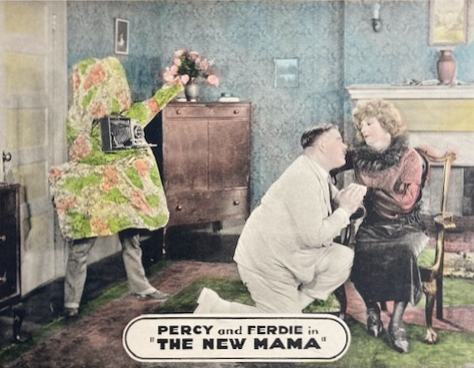
There is a peculiar, almost haunting quality to the ephemeral comedies of the early 1920s. They exist as flickering ghosts of a vaudevillian era, capturing a world that was rapidly modernizing yet still tethered to the broad, physical humor of the stage. The New Mama, released in 1922, stands as a quintessential example of this transition. Starring the often-underrated Sidney Smith and George Williams, the film is a masterclass in the economy of silent storytelling, packing a labyrinthine plot of deception and domestic parody into a compact runtime.
The premise is deceptively simple, yet it taps into a deep-seated cultural anxiety about the fluidity of social roles. When "The Boys" answer an ad for a man and wife to manage a summer hotel, they aren't just looking for a paycheck; they are engaging in a radical act of identity theft. Unlike the more polished romantic narratives found in The Lost Romance, this film revels in the gritty, desperate mechanics of the hustle. The transformation of one of the boys into the 'Mama' of the title is handled with a frantic, unpolished energy that feels more authentic to the era's rough-and-tumble comedy circuit than the more refined productions of the time.
Watching Sidney Smith navigate the screen in drag is a revelation of physical timing. It lacks the self-conscious wink of modern gender-bending performances, opting instead for a raw, survivalist commitment to the bit. Much like the comedic desperation seen in It's a Bear, the humor in The New Mama is derived from the constant threat of exposure. Every interaction with a hotel guest, every demand from the owner, and every domestic chore becomes a high-stakes gamble. The hotel itself, a sprawling microcosm of 1920s leisure, serves as the perfect arena for this chaos. It is a space where class distinctions are supposed to be clear, yet our protagonists blur every line imaginable.
To truly appreciate The New Mama, one must view it against the backdrop of its contemporaries. While A Love Sublime focused on the ethereal and the romantic, Smith and Williams were knee-deep in the mud of situational irony. There is a fascinating parallel to be drawn with Red Hot Love, which also utilized high-octane physical gags to drive its narrative. However, The New Mama feels more grounded in a specific kind of post-war American restlessness. The idea of the "summer hotel" as a site of employment and escapism was a burgeoning trope, reflecting a society that was beginning to value leisure as a commodity.
The cinematography, though standard for the period, utilizes the deep focus of the hotel lobby to create multiple layers of action. While the "husband" is struggling with luggage in the foreground, the "wife" is often seen in the background, failing miserably at some feminine-coded task—be it pouring tea or smoothing a tablecloth. This layering of gags ensures that the viewer’s eye is constantly moving, a technique that would later be perfected by the likes of Keaton or Lloyd, but is seen here in its formative, energetic state. It’s a far cry from the more static, stage-like presentations found in The Face of the World.
Sidney Smith’s performance deserves a doctoral thesis on the semiotics of the silent-era grimace. His face is a rubberized map of anxiety. When he is forced to play the maternal figure, he doesn't just put on a dress; he adopts a rigid, terrified posture that signals his constant fear of the 'mask' slipping. This tension is the engine of the film. Unlike the character studies in Conrad in Quest of His Youth, which rely on internal longing, Smith’s work is entirely externalized. It is a performance of the body, for the body.
George Williams provides the necessary foil, playing the straight man with a level of gravitas that makes the absurdity of their situation even more pronounced. Their chemistry is reminiscent of the partnerships explored in The Silent Partner, though with a significantly more manic edge. The way they move in sync—or, more often, in disastrous out-of-sync rhythms—creates a visual counterpoint to the orchestral scores that would have originally accompanied the screening. There is a rhythmic quality to their failure, a staccato beat of dropped trays, tripping feet, and misinterpreted glances.
If we peel back the layers of slapstick, The New Mama reveals a surprisingly sharp critique of the labor market. The requirement for a "man and wife" team suggests a desire for domestic stability that the protagonists clearly cannot provide. By subverting this requirement, the film mocks the employer’s rigid expectations. In this sense, it shares a DNA with The Answer, though it chooses laughter over melodrama. The Boys are the ultimate disruptors; they enter a controlled environment and systematically dismantle it through their mere presence.
The film also touches upon the themes of youth and maturity, much like Die Minderjährige - Zu jung fürs Leben, but through a lens of satirical aging. One of the men must age himself up to play the "Mama," highlighting the performative nature of adulthood itself. It suggests that being a "manager" or a "wife" is just as much a costume as the wigs and padding they employ. This existential levity is what keeps the film from becoming a mere historical curiosity.
The setting of the summer hotel is utilized with remarkable efficiency. The long hallways, the swinging doors of the kitchen, and the wide-open porches provide a variety of stages for the physical comedy. The set design reflects the breezy, somewhat superficial elegance of the early 20s—all wicker furniture and floral arrangements. This aesthetic is frequently punctured by the protagonists' clumsiness. There is a particularly memorable sequence involving a tea service that rivals the chaotic energy of Bubbles, where the fragility of the environment serves to emphasize the protagonists' out-of-place nature.
The editing by the uncredited cutters of the era is surprisingly tight. The transitions between the "public" face of the couple and their "private" moments of panic are handled with sharp cuts that enhance the comedic timing. It lacks the experimental flourishes of Words and Music by -, but it possesses a functional brilliance that keeps the pace from flagging. Every frame is dedicated to the escalation of the central conflict.
While history often remembers the giants like Chaplin or Keaton, it is films like The New Mama that provide the connective tissue of the silent era. It represents the "bread and butter" of the cinema—the reliable, hilarious shorts that kept audiences coming back week after week. It shares a certain irreverent spirit with William Hohenzollern Sausage Maker, showing that no subject—be it gender, class, or international politics—was safe from the satirist's lens.
Even when compared to the more dramatic undertones of Breakers Ahead or the social critiques of So ein Mädel, The New Mama holds its own through sheer, unadulterated moxie. It is a testament to the power of the gag and the enduring appeal of the underdog. In the end, the film isn't just about two men in a hotel; it's about the universal human desire to survive in a world that demands we be something we aren't. And if we have to put on a dress and manage a hotel to do it, then so be it.
Final Verdict: A riotous artifact of 1922 that proves gender-bending comedy has always been a vital part of the cinematic vernacular. Sidney Smith is a forgotten titan of the silent screen, and this film is his frantic, sweat-soaked crown jewel.
IMDb —
1933
Community
Log in to comment.