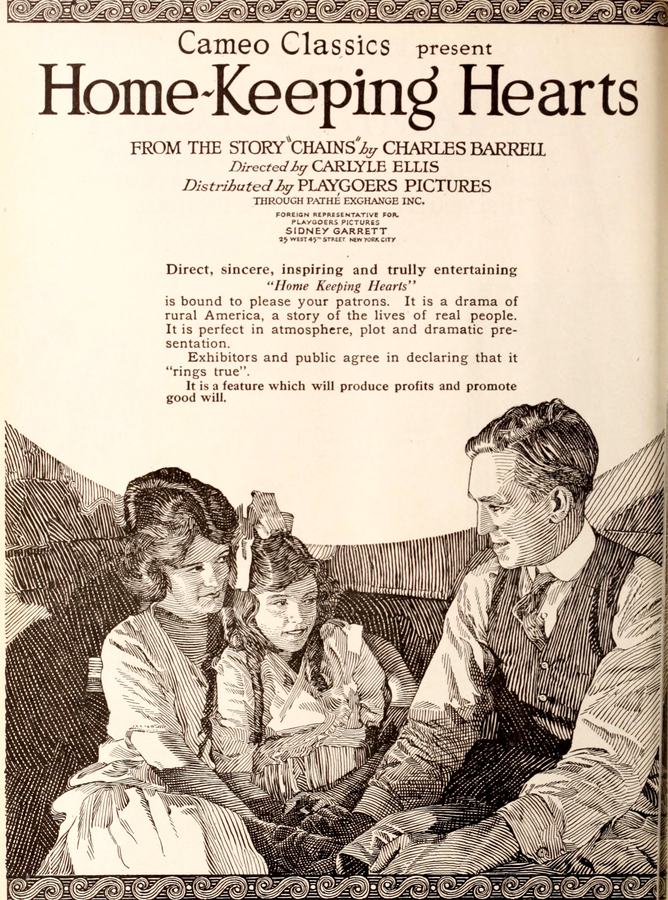
Diver Robert Colton is imprisoned for 10 years when found guilty, on circumstantial evidence, of causing the death of his employer; and his motherless daughter, Mary, is brought up by Squire Tead and his stern wife. When freed, Colton obtains work in Tead's creamery.
*Home-Keeping Hearts* (1920) is a masterclass in silent-era storytelling, blending social critique with intimate drama to create a film that feels both period-specific and eerily prescient. Directed with a sure hand by an uncredited collective of Carlyle Ellis and Charles W. Barrell, it thrives on the raw authentici...

Comparing the cinematic DNA and archive impact of two defining moments in cult history.
Carlyle Ellis
Eduardo Notari
Community
Log in to comment.
" *Home-Keeping Hearts* (1920) is a masterclass in silent-era storytelling, blending social critique with intimate drama to create a film that feels both period-specific and eerily prescient. Directed with a sure hand by an uncredited collective of Carlyle Ellis and Charles W. Barrell, it thrives on the raw authenticity of its lead, Thomas H. Swinton, whose portrayal of Robert Colton is a masterstroke of physical and emotional restraint. The film’s opening act is a slow-burn tragedy. Colton,..."
Carlyle Ellis, Charles W. Barrell
United States


Deep dive into the cult classic
Discover similar cinematic experiences
A Directorial Spotlight on Carlyle Ellis