DbcultAccessing Vault...
Cult Review
Senior Film Conservator
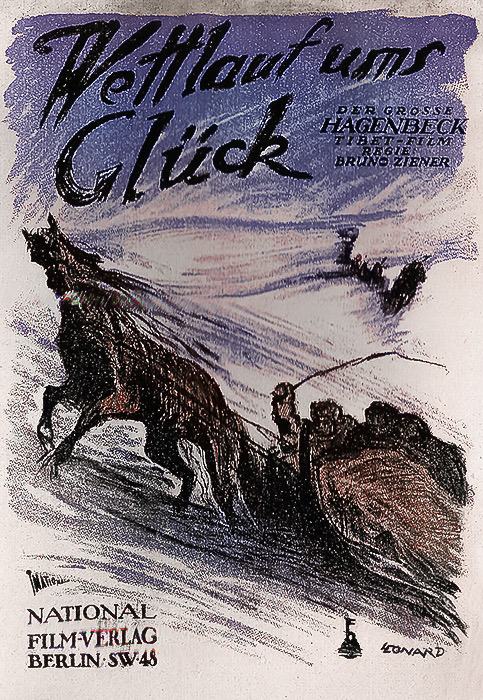
There's a certain magic that emanates from the silent era, a unique ability to convey profound human emotion and intricate narratives through gesture, expression, and the sheer artistry of visual storytelling. Wettlauf ums Glück, a film whose very title, 'Race for Happiness,' whispers of grand ambitions and perilous journeys, stands as a testament to this era's enduring power. Crafted by the prolific Franz Schulz, whose pen shaped countless narratives for the silver screen, this particular cinematic endeavor, featuring a diverse and compelling cast including Nien Soen Ling, Ernst Winar, and Colette Brettel, transcends mere entertainment, offering a profound reflection on the human condition. It’s a film that, even a century removed from its creation, speaks volumes about the timeless pursuit of what it means to be truly content, or perhaps, truly victorious.
Schulz, with his characteristic flair for intricate plotting, constructs a narrative that is both expansive in its scope and intimate in its emotional core. The film plunges us into a world where a vast inheritance, tied to a venerable family legacy and an enigmatic heirloom, becomes the focal point of a gripping contest. At the heart of this maelstrom is Nien Soen Ling, portrayed with an exquisite blend of grace and inner fortitude. Her portrayal is a masterclass in subtlety, conveying a spectrum of emotions – from vulnerability to steely determination – with a mere glance or a delicate shift in posture. She is not merely a prize to be won, but an active participant, a woman whose intellect and spirit are as formidable as the fortune she seeks to protect. Her journey resonates with the struggles of strong female characters in films like De Luxe Annie, where women navigate societal pressures and personal desires with unwavering resolve.
Opposing her is Kurt Brenkendorf, a character that embodies the very essence of avarice and calculated charm. Brenkendorf is not a mustache-twirling villain, but a more nuanced antagonist, whose refined exterior masks a ruthless ambition. His schemes are not crude, but cleverly devised, making him a truly formidable foe. This dynamic opposition sets the stage for a dramatic conflict, one that extends beyond mere legal battles into a psychological and moral struggle. The stakes are elevated not just by the monetary value of the inheritance, but by the clash of fundamentally opposing worldviews.
Ernst Winar steps into this volatile arena as the earnest architect, a figure of inherent nobility and unwavering principle. His initial entanglement is almost accidental, a twist of fate that draws him into Nien Soen Ling's orbit. Winar's performance is characterized by an understated sincerity that makes his transformation from an unwitting pawn to a devoted protector utterly believable. His burgeoning affection for Nien Soen Ling is depicted with a tender authenticity, a stark contrast to the transactional nature of the inheritance race. This romantic thread, while central, never overshadows the larger narrative of moral integrity versus unchecked greed. It rather serves as a powerful anchor, grounding the more fantastical elements of the plot in relatable human emotion. One might draw parallels to the steadfast devotion seen in characters from films such as Body and Soul, where personal integrity and love are tested against formidable odds.
The supporting cast adds crucial texture to this intricate drama. Colette Brettel, as the glamorous socialite, brings a captivating ambiguity to her role. Her character is a master manipulator, capable of charming smiles and calculated betrayals, adding a layer of romantic rivalry and heightened tension. Brettel's performance is a delicate balance of allure and cunning, making her character a fascinating, if sometimes frustrating, presence. Then there is Kock-Ling Shien, Nien Soen Ling's enigmatic aide, whose quiet wisdom and unconventional methods provide unexpected turns in the narrative. Shien embodies a sense of ancient mystery, a silent guardian whose loyalty is absolute but whose past remains shrouded in shadow. His actions, often subtle, prove pivotal in navigating the treacherous currents of the plot. And finally, Harry Hardt, as the persistent detective, offers a grounded perspective amidst the swirling intrigue. Hardt's character is a reminder of the rule of law, a persistent force seeking truth and justice, even when obscured by wealth and power. His methodical approach provides a counterpoint to the more impulsive actions of the protagonists and antagonists, akin to the investigative threads in The Eleventh Hour.
Franz Schulz's screenplay is a remarkable feat of structural integrity and thematic depth. He masterfully balances multiple narrative threads, ensuring that each character’s arc contributes meaningfully to the overarching story. His dialogue, conveyed through intertitles, is concise yet evocative, propelling the plot forward without sacrificing emotional resonance. Schulz's genius lies in his ability to craft scenarios that are both thrillingly dramatic and deeply human. He understood the nuances of silent film storytelling, knowing precisely when to allow the actors' expressions and the film's visual language to carry the weight of emotion, and when to interject with sharp, impactful text. His work here echoes the sophisticated plotting seen in films like Human Desire, where the intricate dance of human motivations drives the narrative.
The direction, while often uncredited or attributed broadly in the silent era, clearly orchestrates a visually rich experience. The film utilizes a diverse array of settings, from opulent ballrooms brimming with socialites to dimly lit back alleys where clandestine meetings unfold, and the serene, yet haunting, grandeur of ancient family estates. Each locale is not merely a backdrop but an active participant in the storytelling, enhancing the mood and reinforcing the narrative's tension. The cinematography, with its expressive use of light and shadow, creates an atmosphere that is at once glamorous and foreboding. The editing maintains a brisk pace, ensuring that the 'race' aspect of the title is palpable, keeping the audience on the edge of their seats as the plot twists and turns. The visual storytelling is so compelling that it allows the audience to fully immerse themselves, much like the experience of watching The Knight of the Pines, where visual artistry takes center stage.
At its core, Wettlauf ums Glück is a profound meditation on the nature of happiness itself. Is it found in the accumulation of wealth, the triumph over rivals, or in the more intangible treasures of love, loyalty, and integrity? The film subtly argues for the latter, demonstrating through its characters' trials and tribulations that true happiness is not merely a destination but a journey, fraught with moral choices and personal sacrifices. The 'race' is not just for the inheritance, but for the soul of its participants. The film invites viewers to ponder whether the price of ambition is sometimes too high, and whether genuine connection is ultimately the most valuable currency. This thematic depth resonates with other films exploring moral dilemmas and the corrupting influence of wealth, such as One Million in Jewels or Sins of Great Cities, though Wettlauf ums Glück maintains a distinctive, hopeful undertone.
The film also subtly critiques the societal values of its time, where appearances often trump reality and where social standing can dictate one's fate. The opulent settings and the characters' elaborate costumes serve not just as visual splendor but also as a commentary on the gilded cages of high society. The contrast between the outward show of wealth and the inner turmoil of its inhabitants is a recurring motif, a poignant reminder that not all that glitters is gold. This social commentary places it alongside other films that explored the hidden lives of the wealthy, such as A napraforgós hölgy, which often delved into the complexities of aristocratic life.
The performances in Wettlauf ums Glück are uniformly excellent, a testament to the actors' ability to convey complex emotions without the aid of spoken dialogue. Nien Soen Ling, in particular, captivates with her expressive eyes and graceful movements, creating a character who is both strong and deeply empathetic. Her presence commands attention, and her emotional arc is utterly compelling. Ernst Winar, as her noble counterpart, projects an earnestness that makes him an easily rooting interest for the audience. His portrayal of burgeoning love and steadfast loyalty is genuinely moving, providing the film with its emotional anchor.
Colette Brettel, with her magnetic screen presence, perfectly embodies the femme fatale archetype, adding a layer of sophisticated danger to the proceedings. Her ability to switch between charming allure and calculating froideur is remarkable. Kock-Ling Shien's portrayal of the mysterious aide is subtle yet impactful, his silent observations often speaking volumes. Kurt Brenkendorf, as the primary antagonist, manages to be both suave and menacing, a truly memorable villain whose motivations are driven by a believable, albeit destructive, ambition. Even Harry Hardt, in his more measured role, conveys a sense of quiet determination that is essential to the film's grounding in reality. These nuanced performances elevate the film beyond a simple potboiler, transforming it into a rich character study, much like the ensemble work in The Unknown Purple, where each actor contributes to a complex tapestry of human behavior.
While specific details of its original reception may be lost to time, Wettlauf ums Glück undoubtedly contributed to the vibrant cinematic landscape of its era. It represents a particular brand of sophisticated, internationally-flavored drama that was popular in the late silent period, blending elements of romance, adventure, and social commentary. Its narrative structure and thematic depth would have resonated with audiences seeking more than just escapism, offering a mirror to their own aspirations and anxieties. The film's intricate plot and compelling characters ensure its enduring appeal, serving as a fascinating artifact for modern viewers interested in the evolution of storytelling on screen. It stands proudly alongside other forgotten gems that deserve rediscovery, like Le sept de trèfle or Der Fall Dombronowska...!, each offering a unique window into the past.
The film's impact lies not just in its individual merits, but in its contribution to the broader tapestry of silent cinema. It showcases the versatility of Franz Schulz as a writer and the undeniable talent of its international cast. For those who appreciate the artistry of a bygone era, Wettlauf ums Glück offers a compelling experience, reminding us that the 'race for happiness' is a timeless pursuit, one that continues to define and challenge us, regardless of the era. Much like the comedic timing of Back Stage or the adventurous spirit of A Harem Hero, this film adds another dimension to the rich history of early cinema, proving that stories of ambition and romance have always found a way to captivate.
In conclusion, Wettlauf ums Glück is more than just a historical curiosity; it is a vibrant, emotionally resonant piece of cinema that continues to engage and provoke thought. Its intricate plot, compelling characters, and timeless themes make it a worthy subject of re-evaluation and appreciation. It’s a powerful reminder that the pursuit of happiness, in all its forms – be it wealth, love, or personal integrity – is a universal human endeavor, a race that we all run in our own unique ways. The film's ability to convey such depth without spoken words is a testament to the profound artistry of the silent era, leaving a lasting impression that transcends linguistic and temporal barriers. It's a film that, much like The Midnight Patrol, offers a captivating journey into a world of complex characters and high stakes, solidifying its place as a significant, if perhaps underappreciated, work within the canon of classic cinema.
IMDb —
1932
Community
Log in to comment.