DbcultAccessing Vault...
6.1/10
Senior Film Conservator
A definitive 6.1/10 rating for a film that redefined the boundaries of cult cinema. God's Half Acre remains a cornerstone of transgressive art.
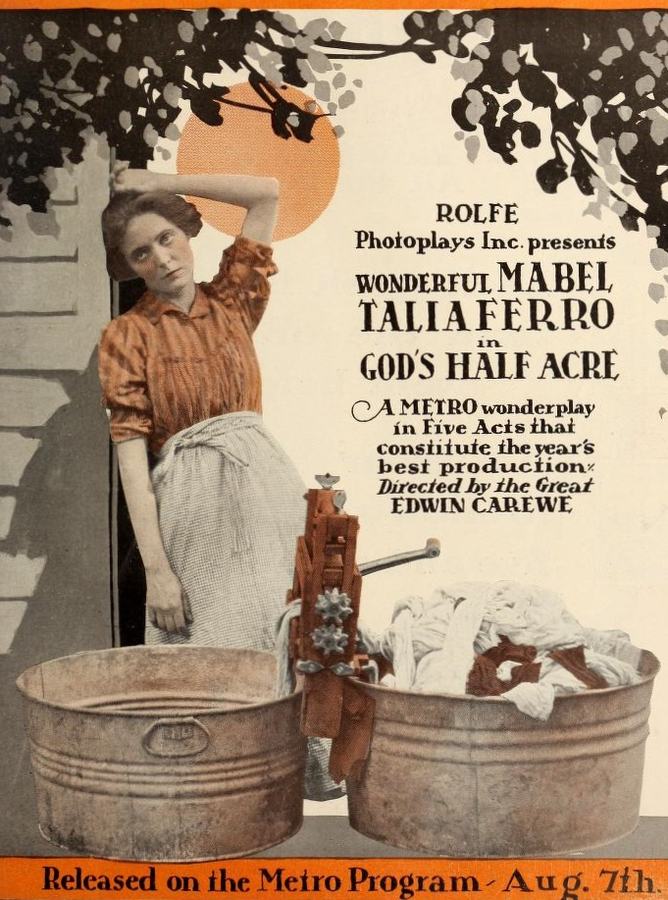
The flickering shadows of early cinema often hold within them narratives of surprising depth and emotional resonance, and 1919's God's Half Acre is a testament to this enduring power. Far from being a mere relic, it is a finely crafted cinematic experience that, even a century later, speaks to the timeless human condition. It delves into the labyrinthine complexities of love, loss, and the serendipitous pathways that lead us to our true selves, all while navigating the social landscapes of its era. This silent film, penned by the collaborative talents of Shannon Fife and June Mathis, unfolds with a narrative precision that belies its age, drawing the viewer into a world where intellectual detachment clashes with genuine human connection, only to be reshaped by the cruel hand of fate and the quiet strength of unyielding affection.
At its heart, God's Half Acre introduces us to Henry Norman, portrayed with a compelling blend of intellectual fervor and emotional aloofness by John Smiley. Henry is not merely a character; he is an archetype of the driven artist, a novelist whose current muse leads him to a home for the elderly, a temporary sanctuary where he intends to research his next literary endeavor. His departure from his wife, Rose, for this immersive experience, immediately establishes a subtle, yet significant, emotional distance, hinting at a life where professional ambition might overshadow personal intimacy. It’s a premise that subtly critiques the self-absorption that can accompany artistic pursuit, placing Henry in a crucible where his preconceived notions of life are destined to be challenged.
Within the structured confines of the aged care facility, Henry encounters Blossom, a character brought to life with exquisite sensitivity by Miriam Hutchins. Blossom is the antithesis of Henry's intellectual detachment; she is pure, earnest, and embodies an unassuming grace. As the young maid, her daily interactions with the residents and, crucially, with Henry, foster a quiet, burgeoning affection. Her love for him is not born of grand gestures or dramatic declarations, but of a subtle appreciation for his presence, a silent adoration that grows organically in the shared spaces of their temporary world. When she finally summons the courage to express her feelings, Henry's response, though delivered with a gentle honesty, is a stark reminder of his marital status. This moment of polite rejection, devoid of malice yet heavy with consequence, is a turning point, showcasing Blossom's resilience and Henry's unwitting blindness to the depth of feeling he has inspired. It’s a scene that could easily descend into melodrama, but the nuanced performances elevate it, making it a poignant reflection on unrequited love and the complexities of human connection.
The narrative then takes a dramatic, almost cataclysmic turn, one that underscores the film's exploration of fate's arbitrary nature. Upon completing his research, Henry returns home, presumably to resume his life with Rose, only to be confronted by a shattering truth. His wife has eloped with his friend, Perry Westley, and in a cruel twist of destiny, both have been killed by a lightning bolt that struck Perry's car. This sudden, almost biblical act of nature serves as a brutal awakening for Henry, shaking him from his intellectual complacency into the raw, visceral pain of loss and betrayal. The sheer abruptness of this tragedy, reminiscent of the often-unforeseen calamities in films like Anna Karenina or even the stark melodrama of Passion, leaves an indelible mark, transforming Henry from a detached observer to a man grappling with profound grief and existential questions. John Smiley's portrayal of Henry's shock and subsequent recovery is particularly compelling, conveying a deep internal struggle without the aid of spoken dialogue, relying instead on expression and gesture to communicate the character's turmoil.
As Henry navigates the treacherous waters of his double shock, the story shifts its focus back to Blossom, whose journey post-rejection is equally transformative. Rather than succumbing to despair, she embodies a quiet resolve, leaving her position at the aged home to find work at an orphanage – the very God's Half Acre of the title. This transition is profoundly symbolic, moving her from a place of care for those at the end of their lives to one dedicated to nurturing new beginnings. It highlights her innate compassion and her capacity for selfless love, a stark contrast to Henry's earlier, more self-serving motivations. The orphanage, a beacon of hope and resilience for forgotten children, becomes a crucible for Blossom's character, allowing her natural empathy to flourish. Miriam Hutchins imbues Blossom with a quiet dignity, portraying her as a woman whose inner strength shines brightest in adversity, a quality that sets her apart from many of the more histrionic female characters typical of the era, perhaps even more grounded than the romantic leads in films like A Venetian Night.
It is here, amidst the joyful chaos of a children's picnic, that the threads of fate, so cruelly intertwined earlier, begin to weave a new pattern. Henry and Blossom, two souls forever altered by their individual trials, meet again. This second encounter is imbued with a different kind of magic, a quiet recognition born of shared experience and a deeper understanding of life's unpredictable currents. For Henry, this reunion is an epiphany. The intellectual facade he once wore has been shattered by grief, revealing a heart now open to the genuine, unpretentious love that Blossom had always offered. He realizes, with a profound clarity, that his affection for her is not merely a rebound or a solace, but a deep, abiding love that transcends the superficialities of his former existence. This moment of realization is masterfully understated, conveyed through subtle glances and expressions that speak volumes, a testament to the power of silent acting.
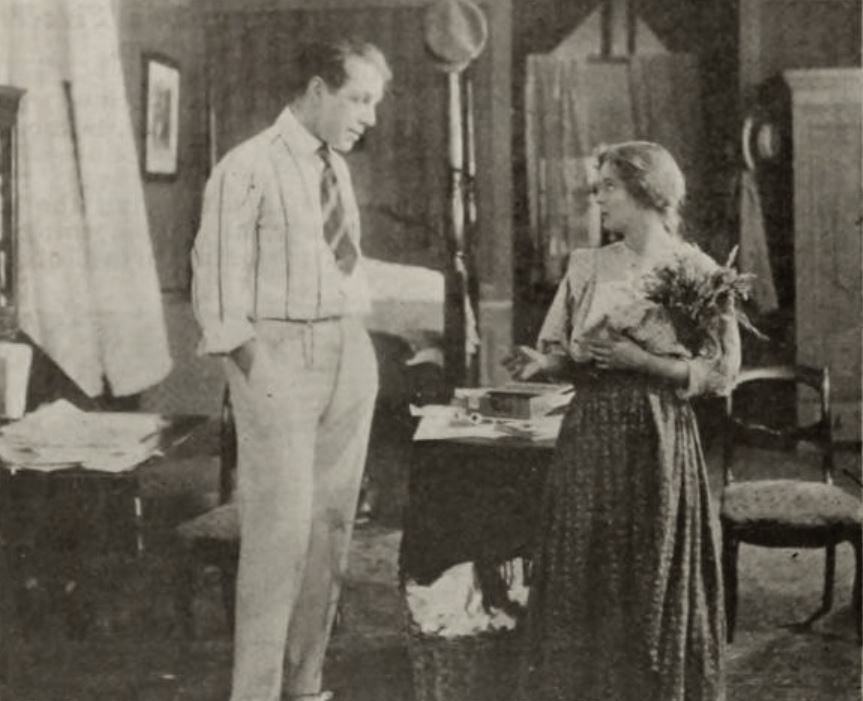
The final act of God's Half Acre culminates in their marriage, a union that feels less like a conventional happy ending and more like a hard-won peace. It is a testament to the idea that love can blossom from the ashes of tragedy, finding its truest form when stripped of pretense and superficiality. The film, through the journey of Henry and Blossom, suggests that true love often requires a tempering by adversity, a profound understanding of oneself and the world, before it can truly flourish. This narrative arc, moving from initial misunderstanding to tragic loss and finally to redemptive love, is skillfully orchestrated by writers Shannon Fife and June Mathis. Their screenplay, though bound by the conventions of the silent era, exhibits a sophisticated understanding of character development and emotional pacing, ensuring that each twist and turn feels earned rather than contrived.
The performances across the board are commendable, capturing the nuanced emotions required for a silent film to truly resonate. John Smiley, as Henry, navigates a complex emotional landscape, beginning as a somewhat detached intellectual and evolving into a man humbled by fate and awakened to profound love. His transformation is credible and moving. Miriam Hutchins, as Blossom, is the film's quiet anchor. She conveys innocence, heartbreak, and an unwavering spirit with remarkable grace, her eyes often speaking volumes where intertitles might fall short. The supporting cast, including Jack W. Johnston, Daniel Jarrett, and Lorraine Frost, provide solid performances that flesh out the world of the film, adding depth to the various social settings Henry and Blossom inhabit.
Visually, God's Half Acre employs the aesthetic sensibilities of its time, utilizing expressive camera work and evocative set designs to convey atmosphere and emotion. The contrast between the sterile, albeit well-intentioned, environment of the aged home and the vibrant, hopeful chaos of the orphanage is visually striking and thematically resonant. The film's direction (though uncredited in some historical records, the visual storytelling is clear) understands the power of framing and composition, using these tools to emphasize character isolation, moments of intimate connection, and the grandeur of fate's interventions. The use of natural elements, such as the lightning strike, while perhaps rudimentary by modern standards, effectively communicates a sense of larger forces at play, echoing the dramatic flair seen in other contemporary works exploring human vulnerability against nature, perhaps even a distant cousin to the existential dread sometimes found in films like The Sky Monster or The Cloud, albeit with a focus on personal tragedy rather than overt horror.
Thematically, the film is rich with layers. It explores the nature of love – romantic, selfless, and redemptive – contrasting it with intellectual pursuits and societal expectations. It subtly critiques the self-absorption of the artist, suggesting that true understanding often comes through lived experience and profound suffering. The juxtaposition of the aged home and the orphanage highlights the cyclical nature of life, underscoring the universal need for care, compassion, and connection at all stages of existence. This social commentary, delivered with a gentle hand, places it in conversation with other character-driven dramas of the era that sought to illuminate human struggles and triumphs, perhaps drawing parallels to the poignant social observations in Parentage or the empathetic portrayals of the marginalized in Mice and Men.
Furthermore, God's Half Acre delves into the concept of second chances. Both Henry and Blossom endure significant emotional hardships, yet neither is entirely broken by them. Instead, their experiences serve as catalysts for growth and self-discovery, leading them to a more authentic and fulfilling connection. This theme of resilience and the possibility of finding happiness after loss is a powerful message that transcends the specific historical context of the film, resonating with audiences then and now. It suggests that even in the face of insurmountable sorrow, there remains a 'half acre' of hope, a fertile ground where new life and love can take root, much like the enduring hope found in tales of perseverance, such as Till I Come Back to You.
In conclusion, God's Half Acre is far more than a historical curiosity; it is a compelling piece of cinematic artistry that offers a nuanced exploration of human relationships, fate, and redemption. Its enduring appeal lies in its ability to tell a deeply human story with grace and emotional honesty, proving that the silent era was anything but silent in its capacity to move and provoke thought. The journey of Henry and Blossom, from initial misunderstanding through profound tragedy to a final, hard-won union, remains a potent reminder of life's intricate dance between sorrow and joy, and the unexpected places where true love can be found. It’s a film that deserves to be rediscovered, appreciated not just for its historical significance but for its timeless narrative and the powerful performances that bring its poignant story to life. Its narrative depth and emotional impact stand as a testament to the collaborative genius of its writers and cast, cementing its place as a quiet yet profound gem of early cinema.

IMDb —
1921
Community
Log in to comment.