DbcultAccessing Vault...
Cult Review
Senior Film Conservator
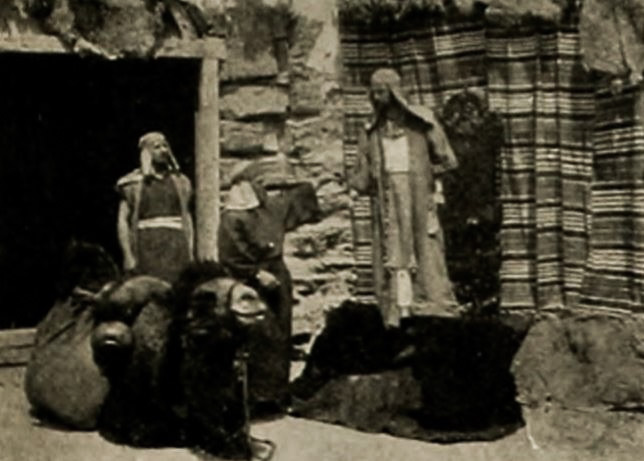
Imagine, if you can, a reel discovered in a sealed biscuit tin beneath the floorboards of a deconsecrated Kentish chapel—nitrate still clinging to its vinegar scent—and you begin to approximate the hallucinatory resurrection that is Joseph and His Coat of Many Colors. The surviving 23-minute fragment (the remainder succumbed to lab fire in ’29) pulses like a stained-glass window hurled against a brick wall: each shard retains doctrinal iconography yet refracts a carnal, almost heretical, spectrum of light.
The coat itself—hand-painted directly onto 35 mm with camel-hair brushes dipped in aniline dyes—behaves less like costume than like a parasitic organism. In close-up (rare for 1908) the fabric’s weave seems to breathe, chromatic bubbles rising and collapsing, so that Joseph’s torso becomes a living potlatch of hues. One thinks not of scripture but of the infernal cabaret sequences in Den sorte Varieté, where scarlet curtains bled onto the faces of the audience, turning spectators into accomplices. Here, the coat’s flamboyance is equally indicting: every sibling’s gaze that lands upon it registers as a miniature crucifixion of envy.
Parker’s screenplay condenses decades into elliptical bursts. The pit into which Joseph is flung is rendered by a simple chalked circle on a studio floor, yet cinematographer Emile La Croix (doubling as actor) tilts the camera downward until the circle becomes a solar eclipse. The effect predates the vertiginous well-shaft shot in Tigris by a good fourteen years, and it heralds a cinema that recognizes the void as a character in its own right. Once in Egypt, Joseph’s prison cell is staged like a proscenium: the stone walls are visibly canvas, but the shadows cast by the iron grille are inked so deeply they appear to tunnel into the viewer’s retina. This is not set design; it is an initiation rite for the optic nerve.
Where later biblical epics would use Technicolor to sanctify, here color corrupts, accuses, redeems. When Potiphar’s wife—played by an uncredited tragedian whose kohl-black eyes seem gouged into the film itself—unfurls her crimson kimono, the dye leaches across the emulsion like a hemorrhage. The screen’s rectangle becomes a Petri dish where morality is cultured and killed within seconds. Joseph’s refusal is staged in an insert shot: his hand, tinted livid amber, pushes away the fabric, and for a single frame the red touches his palm. That one crimson smudge—no intertitle needed—reads as both temptation resisted and blood already spilled, the future price of integrity.
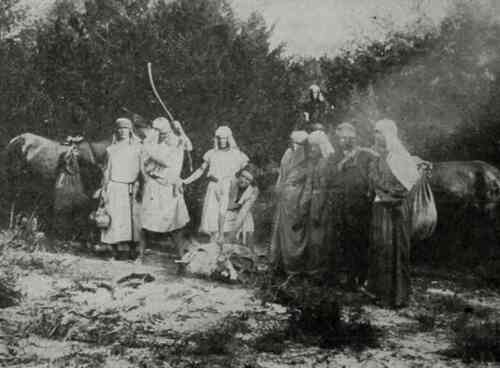
The dream sequence arrives without warning: a jump-cut transports us to a granary corridor whose walls are painted with bureaucratic ledgers. Wheat stalks, drawn in chalk, sprout from the ledgers, only to be devoured by stencil-painted cows that march in staccato silhouette. The effect is closer to Max Weber than to Genesis—a prophecy not of famine but of institutional collapse. One is reminded of the expressionist ledgers in Der Millionenonkel, where wealth metastasizes into paper tumors. Joseph’s interpretation, delivered via a title card lettered in fractured Hebrew-tinged typography, becomes a bureaucratic memo: rationing schedules, tax percentages, storage rotas. Salvation, the film implies, is a matter of middle management.
No musical cue survives; the projector’s rattle is the only soundtrack. Yet the absence amplifies the film’s haptic obsession. When Jacob, wrinkled like a topographical map, presses the restored coat to his face, the gesture is so prolonged that the viewer begins to taste the dust embedded in the fibers. The silence becomes tactile, like licking the communion wafer of someone else’s memory. Compare this to the suffocating hush in De levende ladder, where the gallows creaks only in the mind; here the coat itself creaks, its colors rubbing together like flints trying to spark a voice.
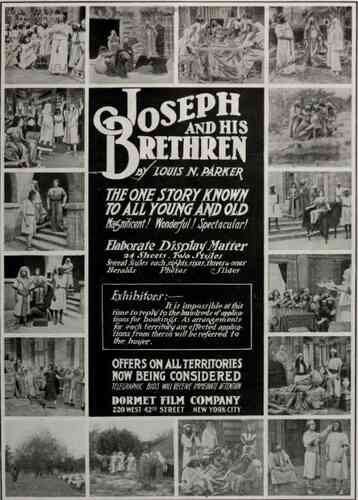
The film’s DNA contaminates later biblical retellings, yet it converses most eerily with non-biblical siblings. The punitive monochrome of Robbery Under Arms uses landscape as divine verdict, whereas Joseph uses pigment. The suffragette martyrdom in A Militant Suffragette shares Joseph’s structural logic: a body (female or technicolor) paraded before a leering crowd, then punished for its visibility. Meanwhile, the imperial pageant in The Lady of Lyons anticipates Pharaoh’s court, though Lyons adores satin sheen while Joseph interrogates the stain beneath the gloss.
Shot in 1908 London with sets recycled from a failed operetta about the Raj, the film cannot escape its own colonial echo. The Egyptian extras are Kensington dockworkers darkened with cocoa powder; their eyes betray Thames-side boredom. Yet this very fakery sharpens the parable: Joseph’s ascent from slave to vizier is staged as the fantasy of every indentured laborer who ever unloaded Empire’s crates. The coat, imported from a Leeds mill and painted to look Levantine, becomes a passport fabricated by the very power that demands assimilation. In this reading, the biblical coat is the first green card, and Jacob’s final embrace is less fatherly than bureaucratic: welcome to citizenship, son, now dye yourself in our colors.
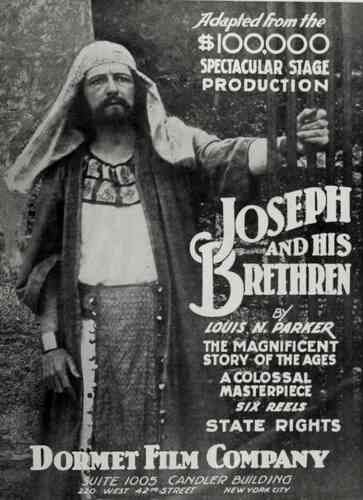
Parker, a lapsed Anglican, claimed he wanted to prove that divine providence operates through supply-chain logistics. The true miracle, his intertitles insist, is not dream-interpretation but inventory software avant-la-lettre. Joseph’s granaries, mapped via overhead shots that prefigure Eisensteinian montage, resemble the card-index cathedrals of On the Trail of the Spider Gang—bureaucracy as sacrament. Grace, then, is a matter of accurate bookkeeping, and salvation is the ultimate audit.
The surviving print ends mid-reconciliation: Jacob’s mouth agape, Joseph’s coat draped across both their shoulders like a wounded flag. The image burns white, then dissolves into fungal decay. No “The End,” no scripture verse—just the acrid perfume of celluloid death. You leave the screening with the taste of aniline on your tongue, convinced that you have not watched a story but ingested a pigment that will metabolize into dream. Weeks later, colors leak into your peripheral vision: a traffic light becomes Joseph’s sleeve, a neon sign mutates into Potiphar’s leer. The film has done what only the greatest silents achieve: it has colonized your afterlife, one tinted frame at a time.
In the taxonomy of lost films, Joseph is neither tragedy nor relic; it is a migratory stain, a covenant between dust and dye. And like any covenant, it demands a response: you will either spend your nights scouring archives for the missing reels, or you will dye your own garments in impossible colors and walk through the city, hoping strangers will throw you into pits, elevate you to courts, tear you apart, re-stitch you—anything to keep the story, and its colors, circulating.
IMDb 6.6
1933
Community
Log in to comment.