DbcultAccessing Vault...
Cult Review
Senior Film Conservator
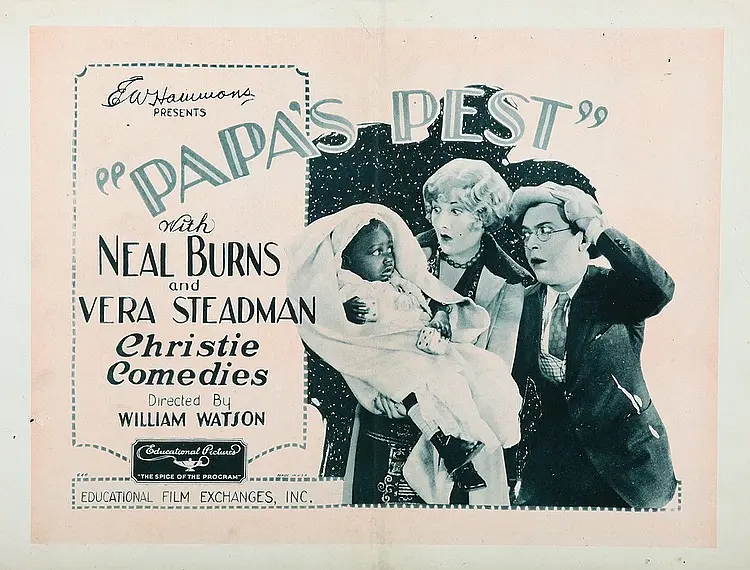
Is Papa's Pest worth watching for a modern audience? Short answer: Yes, but only if you have an appetite for the frantic, logic-defying energy of 1920s short-form comedy. This isn't a high-brow drama; it is a mechanical marvel of physical gags and social anxiety.
The film is specifically for fans of the 'henpecked husband' subgenre who enjoy seeing domestic stability completely dismantled by one man's poor decision-making. It is certainly not for those who find the 'endangered baby' trope of early cinema too stressful to be funny.
1) This film works because of Neal Burns’ incredible physical commitment to the absurdity of his situation, particularly during the nursery sequence.
2) This film fails because the pacing in the second act feels slightly redundant, repeating the 'nearly caught' beat one too many times.
3) You should watch it if you want a 20-minute masterclass in how silent cinema could turn a simple domestic chore into a city-wide catastrophe.
Yes, Papa's Pest is a highly effective example of silent-era slapstick. It succeeds by taking a relatable anxiety—getting caught doing something you shouldn't—and escalating it to an extreme level. The direction by Leslie Goodwins ensures the movement is fluid and the jokes land with rhythmic precision.
The setup of Papa's Pest is a classic trope: the husband who just wants a night out with the 'boys.' But writers Leslie Goodwins and Frank Roland Conklin elevate the stakes by introducing a literal infant into the mix. Neal Burns plays the lead with a nervous, jittery energy that feels distinct from the more stoic Buster Keaton or the overtly pathetic Charlie Chaplin. He is a man of the world who is simply out of his depth. When he brings the baby to the poker game, the visual contrast between the hardened gamblers and the innocent child provides the film’s first major comedic peak.
The cinematography, while static in the way most films of 1923 were, uses the frame effectively to create a sense of claustrophobia. As Neal tries to hide the baby from the other players, the camera captures the frantic geometry of the room. It reminds me of the spatial awareness found in The Cat's Nine Lives, where the environment itself becomes an antagonist. In Papa's Pest, every door, every table, and every curtain is a potential site for discovery or disaster.
One of the more interesting elements of the film is the portrayal of Vera, played by Vera Steadman. While the 'nagging wife' is a tired archetype, Steadman gives the character a sense of agency. She isn't just waiting at home; she hires a detective. This introduces a noir-lite element to the comedy that differentiates it from more straightforward farces like Pep of the Lazy J. The detective, played by the legendary Hank Mann, brings a deadpan tenacity to the chase that keeps the tension high.
The film truly finds its wings in the final ten minutes. After Neal realizes he has lost the baby, the movie shifts from a domestic comedy into a surrealist nightmare. The nursery scene is the standout. Neal’s decision to disguise himself as a bear is the kind of 'logic' that only exists in silent cinema, yet within the context of his desperation, it makes a twisted kind of sense. It works. But it’s flawed. The internal logic of why a nursery would have a bear costume readily available is never addressed, but in the heat of the chase, you simply don't care.
The chase through the corridors is choreographed with the precision of a ballet. Doctors and nurses become a rhythmic obstacle course. Unlike the more dramatic tension found in The Invisible Enemy, the stakes here are purely social and physical. If Neal is caught, he isn't just in trouble with the law; he's in trouble with his wife. For a 1920s audience, that was a fate arguably worse than death. The use of speed-ramping during the chase adds to the hallucinatory quality of the sequence.
What is most striking about Papa's Pest is how it treats the baby. In a modern film, the child would be the center of emotional gravity. Here, the baby is essentially a MacGuffin—a prop to be moved, hidden, and forgotten. There is a brutal simplicity to this approach that modern audiences might find shocking, but it allows the comedy to remain unsentimental. It’s a stark contrast to the more moralistic tones of films like Prodigal Daughters.
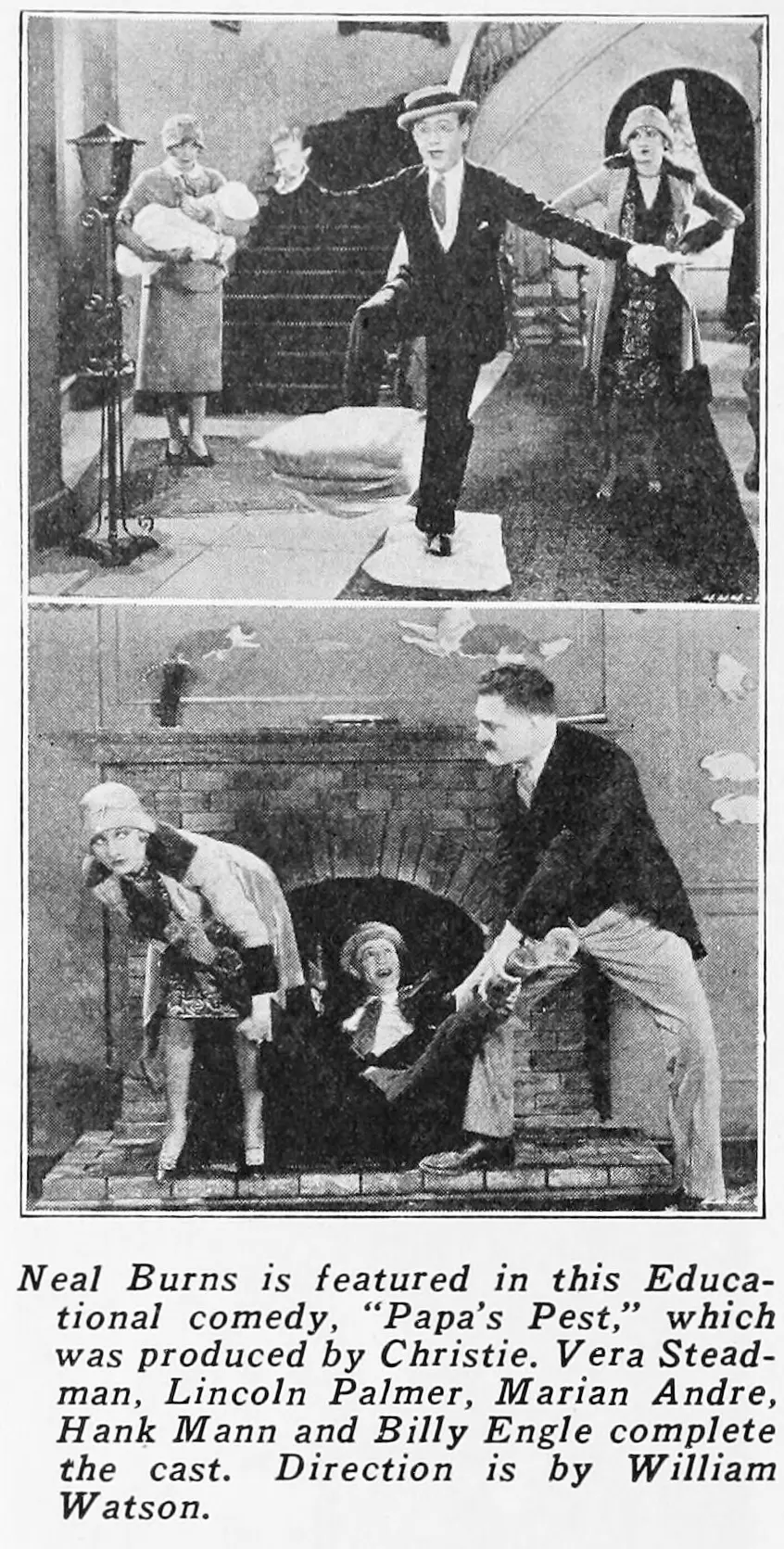
Leslie Goodwins’ direction is remarkably efficient. There isn't a wasted frame in the opening five minutes. We understand Neal's desire, Vera's suspicion, and the baby's presence almost instantly. This economy of storytelling is something many modern directors could learn from. The pacing only stumbles slightly when the detective first enters the fray; there’s a brief period where the film seems unsure if it wants to be a mystery or a comedy. However, once the bear suit appears, all doubts are cast aside.
The acting by the ensemble cast is top-tier for the era. Billy Engle and Lincoln Palmer provide solid support, but the film lives and dies on Neal Burns. His face is a canvas of escalating panic. There is a specific moment when he looks at the empty space where the baby should be at the poker table—the slow realization dawning on him is a perfect piece of comic timing. It’s a more nuanced performance than you might find in a more action-oriented silent film like Der Eisenbahnkönig, 2. Teil - Lauernder Tod.
"Papa's Pest is a reminder that in 1923, the funniest thing a man could do was fail at his basic domestic duties while wearing a carnivalesque disguise."
When comparing Papa's Pest to other films of the time, such as The Argyle Case or The Easiest Way, it becomes clear that this film represents the 'pure' entertainment side of the industry. It wasn't trying to make a grand social statement like Life; it was trying to make people laugh until they couldn't breathe. In that specific mission, it succeeded brilliantly.
The film also serves as a fascinating time capsule of 1920s urban life. The poker rooms, the nurseries, the fashion—all of it provides a rich backdrop for the absurdity. It’s a world that feels both distant and strangely familiar. The anxiety of balancing personal desires with family obligations is, after all, a universal theme, even if most of us don't end up in a bear suit because of it.
Papa's Pest is a sharp, punchy, and occasionally bizarre comedy that deserves a spot in the conversation about 1920s cinema. While it may lack the poetic grace of the silent era's greatest masterpieces, it more than makes up for it with sheer, unbridled energy. It is a film that understands the fundamental truth of comedy: the closer a man comes to total social ruin, the funnier his struggle becomes. If you have twenty minutes to spare, let Neal Burns take you on a journey through the most stressful babysitting gig in history. You won't regret it, but you might never look at a bear suit the same way again.
IMDb —
1924
Community
Log in to comment.