DbcultAccessing Vault...
Cult Review
Senior Film Conservator
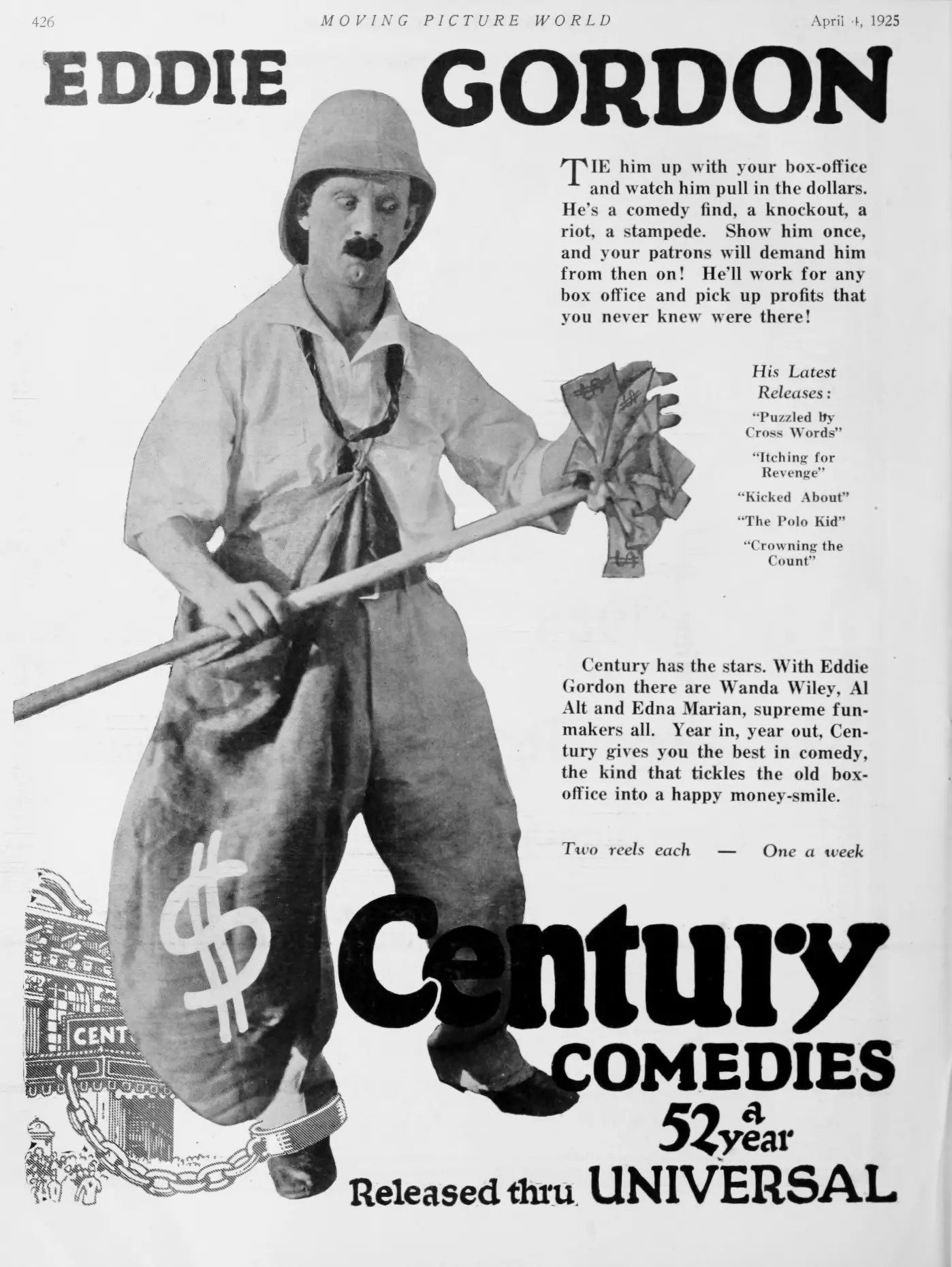
To witness Kicked About is to step into a vortex of early cinematic energy where the laws of physics are merely suggestions and the judicial system operates with the logic of a fever dream. Directed by the prolific Noel M. Smith, this piece of celluloid history serves as a fascinating specimen of the transition from pure pantomime to the more structured narrative slapstick that would eventually define the golden age of comedy. The film doesn't merely present a story; it orchestrates a symphony of impact, gravity, and redemption through sheer physical endurance.
The opening sequence, involving the systematic harassment of a fruit dealer, establishes a gritty yet whimsical urban landscape. Pete Gordon, as Eddie, embodies a specific type of cinematic delinquent—one whose malice is tempered by a profound clumsiness. Unlike the more sinister atmospheres found in Trapped by the London Sharks, the criminality here is buoyant, almost celebratory. The deprivation of the merchant's living is not portrayed as a tragedy of the proletariat, but as the catalyst for a grander, more absurd social mobility.
Noel M. Smith’s direction utilizes the frame as a playground of consequence. When Eddie is brought before the Judge, we see a pivot in the narrative that feels almost Shakespearean in its irony. The thirty-year sentence looming over Eddie’s head acts as a Sword of Damocles, yet the alternative—becoming a police officer—is where the film truly begins to interrogate the concept of identity. It is a metamorphosis forced by the state, a theme we occasionally see explored with more gravity in works like The Branded Woman, though here it is played for maximum percussive effect.
Pete Gordon’s performance is a masterclass in what I like to call "impact acting." The prompt’s description of him being "kicked out of buildings and hurled through fences" only scratches the surface of the visceral experience. Each fall is captured with a stark, unblinking camera that emphasizes the lack of stunt doubles and the raw athleticism required of early screen stars. There is a rhythmic quality to his suffering that reminds one of the relentless pacing in A False Alarm, where the chaos is the point, and the resolution is merely an excuse for more movement.
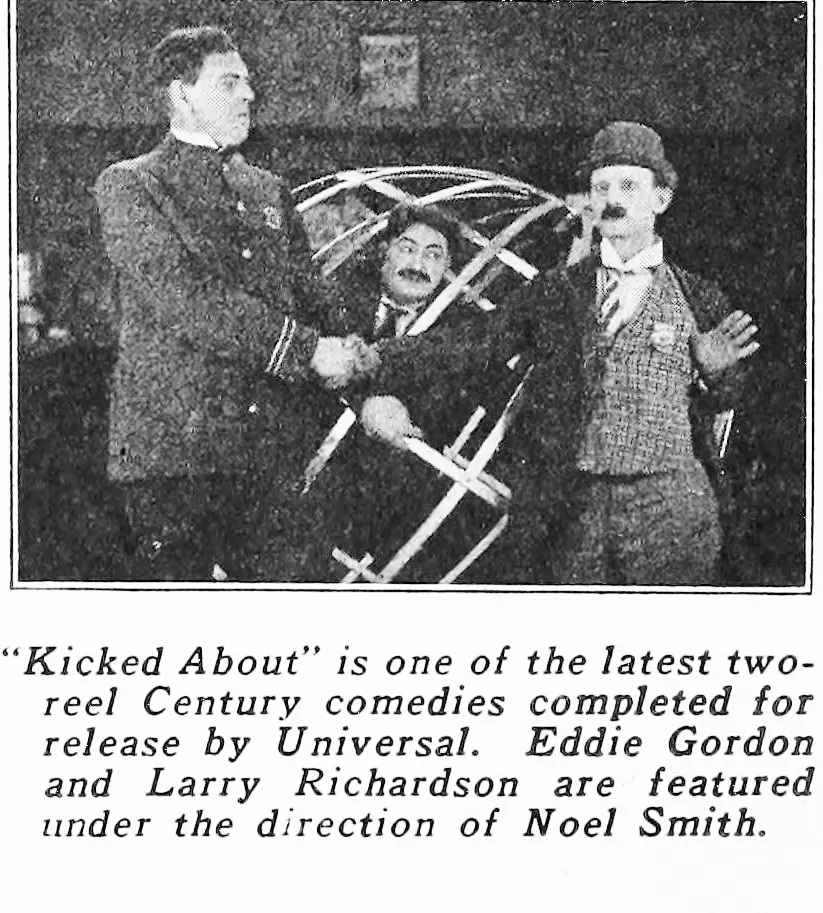
Larry Rich, providing the counterpoint to Gordon’s kineticism, helps ground the absurdity. The chemistry between the hunter and the hunted—the fledgling cop and the chief desperado—is built on a foundation of slapstick choreography. The desperado isn't just a villain; he is a force of nature that Eddie must somehow harness. This dynamic creates a tension that is far more engaging than the standard hero-villain tropes of the era. It’s less about moral superiority and more about who can survive the most frequent collisions with stationary objects.
The climax of Kicked About involves a bird cage—a prop so magnificently oversized and literal that it borders on the surreal. When Eddie maneuvers the desperado into this cylindrical prison, the film transcends standard comedy and enters the realm of the avant-garde. The cage represents a containment of chaos. Rolling the villain through the streets to the police station is a visual metaphor for the taming of the wild urban frontier. While a film like The Isle of the Dead uses isolation to create dread, Smith uses the cage to create a spectacle of public triumph.
This rolling cage sequence is a technical marvel for its time. The logistics of filming a large, occupied cylinder moving through a set require a level of coordination that demonstrates Smith's burgeoning mastery of the medium. It’s a precursor to the elaborate mechanical gags that would later define the works of Buster Keaton. The audience isn't just laughing at the predicament; they are marveling at the sheer ingenuity of the capture. It is a moment of pure cinematic joy that justifies the preceding minutes of Eddie's physical torment.
One cannot ignore the biting irony of the film’s conclusion. Eddie, having survived the gauntlet of the streets, is rewarded with a position on the bomb squad. This is the ultimate "kick about." In the world of Noel M. Smith, there is no true rest for the weary. The hero’s reward is simply a more dangerous form of employment. This cynical edge distinguishes the film from more sentimental comedies like The Runt or the domestic simplicity found in Married in Name Only.
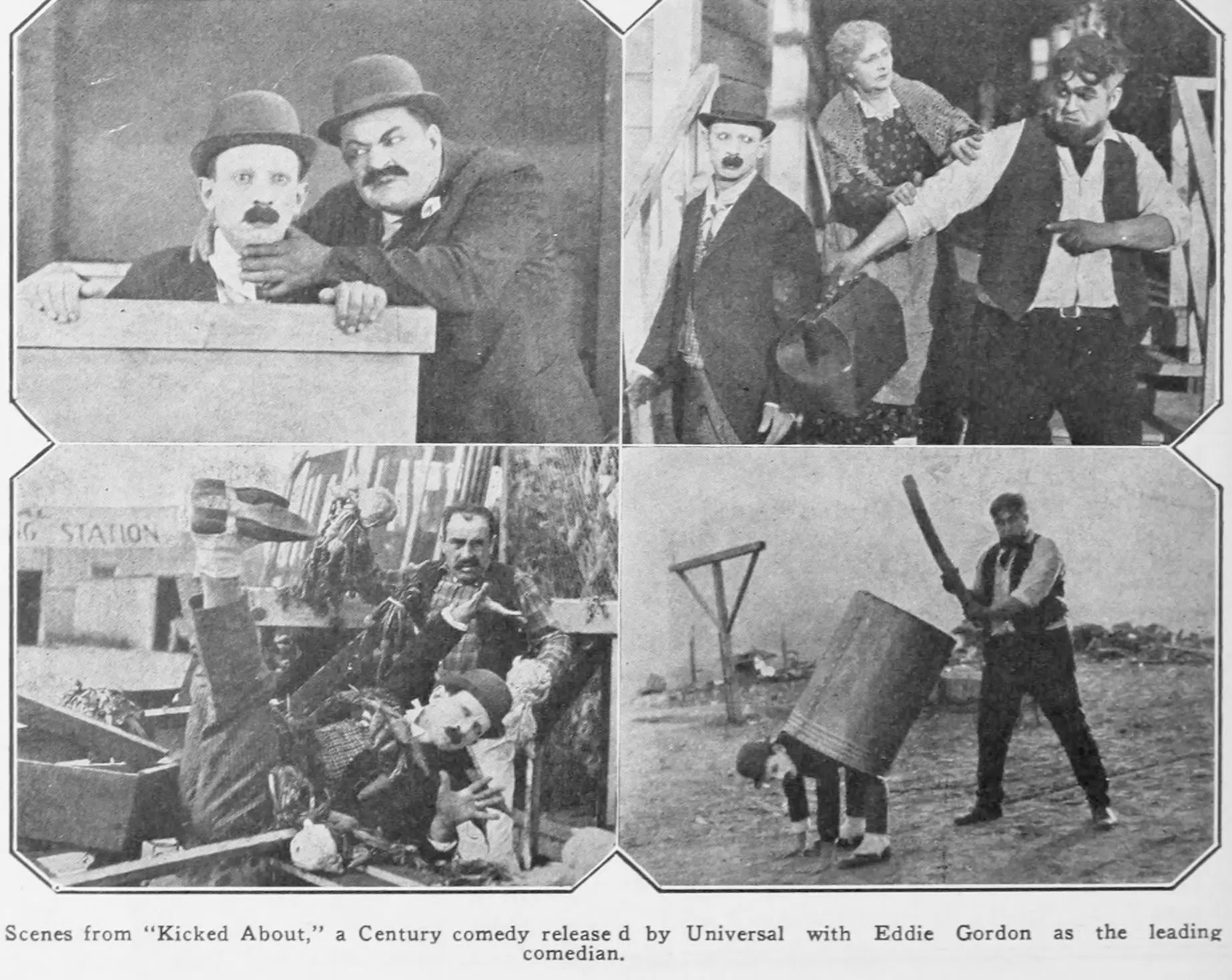
The bomb squad assignment serves as a meta-commentary on the life of a slapstick actor. Gordon, like Eddie, is constantly living on the edge of explosion—whether it be a literal pyrotechnic or a metaphorical collision. The film suggests that the transition from criminal to cop is merely a change of costume; the underlying violence of the world remains constant. This thematic depth is what allows Kicked About to resonate even a century later. It acknowledges that the world is a place where one is constantly being pushed, shoved, and rolled toward an uncertain future.
When placed alongside contemporaries like Broadway Gold or the more exotic Sadhu Aur Shaitan, Kicked About stands out for its lack of pretension. It does not aim for the historical grandeur of Christopher Columbus, nor the naturalistic tranquility of In a Naturalist's Garden. Instead, it embraces the "low art" of the tumble and the pratfall, elevating it through clever writing and impeccable timing. The script by Noel M. Smith is lean, focusing entirely on the escalation of stakes.
There is also a fascinating parallel to be drawn with Loose Lions in terms of how animals (or in this case, the concept of a bird cage) are used to amplify the chaos. While The Shuttle or Syndig Kærlighed might focus on the complexities of human relationships, Kicked About is interested in the relationship between a man and his environment. The environment is the antagonist here—the fences, the buildings, and the very gravity that pulls Eddie toward the earth.
In the grand tapestry of silent cinema, Kicked About is a vibrant, neon-lit thread of pure energy. It represents a time when the cinema was still discovering its own power to manipulate time and space for the sake of a laugh. Pete Gordon’s journey from fruit-stealing hoodlum to bomb-squad hero is a trajectory that mirrors the medium itself: born in the gutter, refined through trial and error, and ultimately settling into a position of high-stakes entertainment.
For the modern viewer, the film offers more than just historical curiosity. It offers a reminder that comedy, at its most primal level, is about resilience. It is about the ability to be "kicked about" by life and still find a way to roll your enemies home in a bird cage. Whether you are a fan of the psychological depth in Green Eyes or the structural complexity of Seven Bald Pates, there is something undeniably foundational about the work done here. Noel M. Smith didn't just make a movie; he captured the frantic heartbeat of an era that refused to sit still.
Ultimately, the legacy of Kicked About lies in its refusal to take the easy path. It chooses the fence over the gate, the window over the door, and the bird cage over the handcuffs. It is a testament to the enduring power of physical storytelling and a must-watch for anyone who appreciates the art of the fall. As Eddie stands ready for his first assignment with the bomb squad, we are left with the exhilarating realization that the next explosion is just around the corner, and in the world of Pete Gordon, that is exactly where the fun begins.

IMDb —
1917
Community
Log in to comment.