DbcultAccessing Vault...
Cult Review
Senior Film Conservator
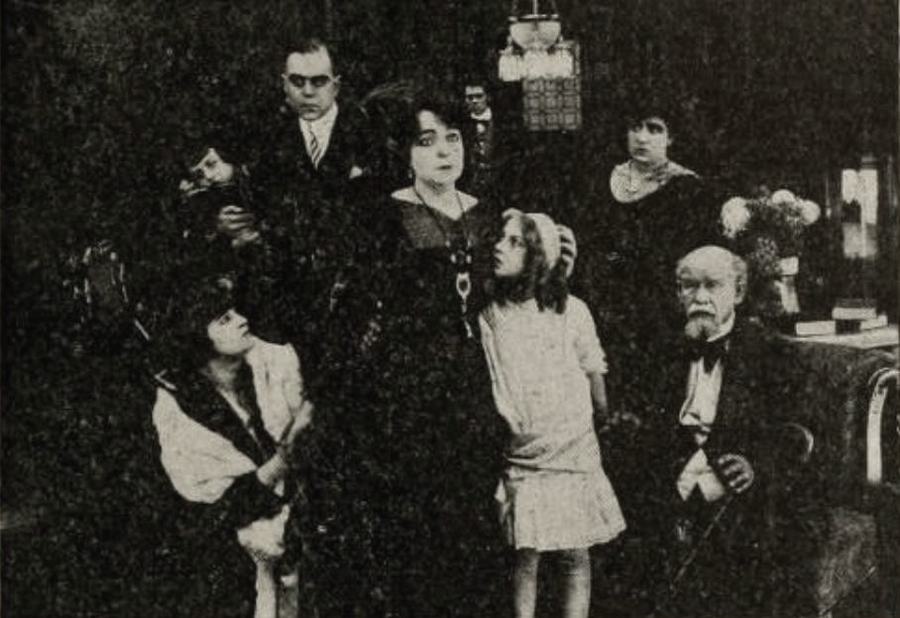
It is 1915; the Lusitania has just been swallowed by the Atlantic, D. W. Griffith’s racism still flickers across screens, and out slithers The Unwelcome Wife, a film whose very title advertises the social death of womanhood. Ivan Abramson, that indefatigable peddler of domestic apocalypse, packages lunacy like lingerie here: soft lace over jagged bone. The plot—ostensibly a cautionary fable about hereditary madness—reveals itself, frame by frame, as an autopsy of matrimonial capitalism. Every close-up feels dipped in chloroform; every intertitle stinks of ether.
Blanche’s opulent brownstone, all mahogany and gaslight, is filmed like a diorama: velvet drapes swallow sound, mirrors multiply bodies without souls. Abramson blocks his actors in rigid tableaux reminiscent of proto-European decadence rather than the kinetic Keystone mayhem Americans were already devouring. When Blanche’s touring mind detours into remembered roles—Tosca, Juliet, Lady Macbeth—the film ruptures itself, splicing staged excerpts into domestic footage. The device is primitive yet uncanny: we watch an actress playing an actress playing a part, a Russian doll of identity hemorrhage.
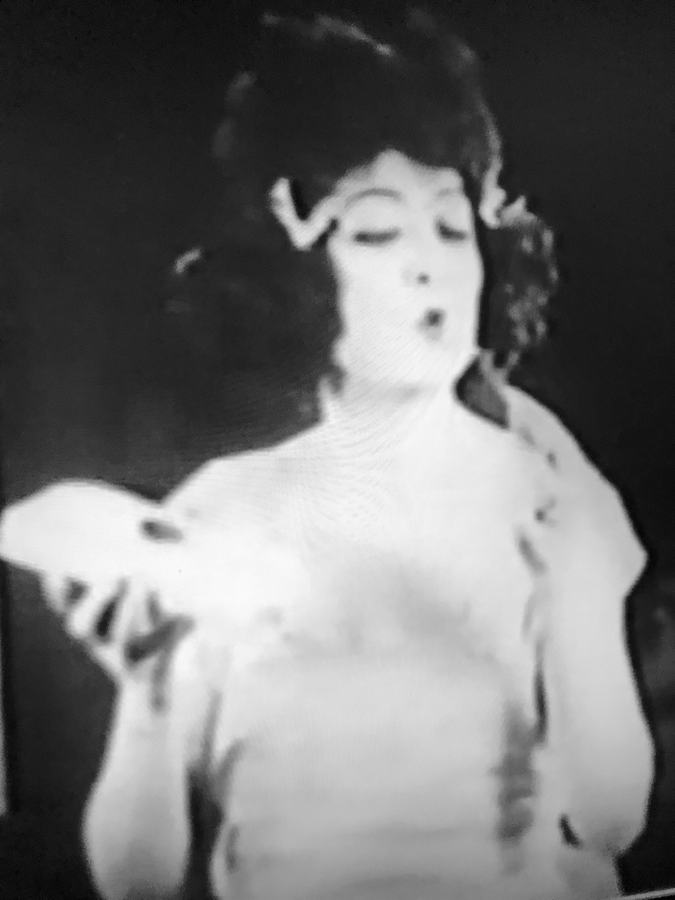
Vivian Prescott’s Blanche is a crystal vase hurled down a stairwell—every gesture registers a new crack. In the first reel she pirouettes through soirées with predatory grace; by the sixth she is clawing at wallpaper, convinced the fleurs-de-lis are her dead parents whispering libretto. The transition is so vertiginous it makes contemporary reviewers invoke Sarah Bernhardt’s asylum tours. R. G. Don’s Martin, meanwhile, projects lawyerly rectitude like a breastplate; his smile never travels north of the jawline. When he petitions for annulment, the intertitle card reads: "The law allows a man to un-wed a memory." The sentence detonates: here is legalized amnesia wrapped in ermine.
William McNulty’s George Moore, cataracts glazed like opals, wanders corridors with a cane that taps Morse code on the parquet. He alone intuits the moral mathematics: his granddaughter’s sanity sacrificed for a male heir, her maternity erased by statute. In a film otherwise addicted to hysterics, McNulty underplays exquisitely; his pallor seems to absorb all available candlepower. When he collapses at finale, the camera lingers on his hand still gripping Blanche’s blood-flecked gown—a Pietà inverted, the old man cradled by ruin.
Malvine Lobel’s Elsie enters as bruised ingénue and exits mater dolorosa, yet the screenplay refuses her the balm of villainy. Notice the dissolve where she rocks newborn Eddie while Viola—technically her cousin, legally her daughter—plays in the background: two mothers, one child, zero genetics. The moment crystallizes the picture’s obsession with substitution—marriages annulled, children adopted, identities swapped like theater programs. Lobel’s eyes telegraph perpetual apology; even when she achieves the lawful bed, guilt gnaws her lower lip raw.
Early cinema trafficked in carnivals of affliction: epileptics, morphine fiends, hunchbacks. Abramson, ever the entrepreneur, recognized that female insanity packed a prurient wallop without requiring costly prosthetics. Hence the asylum sequences: white-clad patients arranged like chess pawns, hydrotherapy tubs steaming like witches’ cauldrons, Blanche straitjacketed yet spitting rhymed couplets from Macbeth. Contemporary audiences reportedly gasped; reformers brandished pamphlets. One Chicago critic sniped the film was "a five-reel indictment against the masculine race," thereby ensuring sold-out houses for weeks.
Modern viewers, marinated in no-fault divorce, may miss the scandal of annulment: it voids the sacrament retroactively, bastardizes offspring, rewrites censuses. Martin’s successful plea—that Blanche entered marriage already mad—weaponizes medical patriarchy. Physicians in celluloid starched collars testify that trauma-induced derangement is chronic, heritable, feminine. The film thus anticipates eugenic horrors soon to sterilize thousands. When the judge slams the gavel, the intertitle erupts in bold: "As though the years had never been." A marriage, a motherhood, a name—deleted with the flourish of a fountain pen.
Viola—eight years old, cherubic, property—functions as the narrative’s ticking metronome. Her transfer from biological mother to cousin-cum-stepmother transpires off-screen, a sleight-of-hand that spares censors yet compounds cruelty. When she finally chirps, "Mamma Elsie is my new mamma," the line lands like a shiv between Blanche’s ribs. Silent-film historians compare the moment to The Unwelcome Mrs. Hatch, where a similar child-confession detonates domestic bombs. Yet Abramson refuses the recuperative ending; once innocence speaks, only the asylum door awaits.
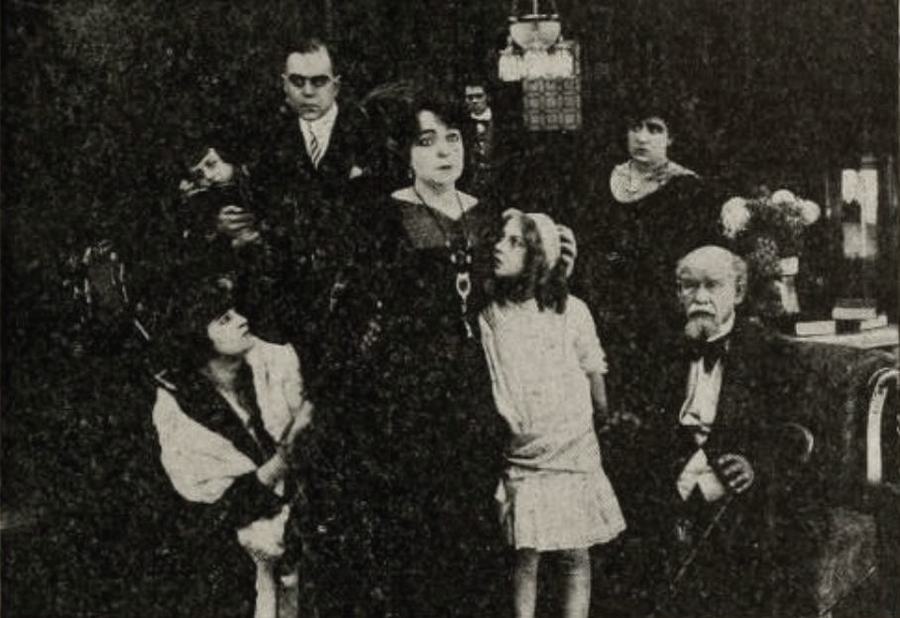
Though technically black-and-white, the surviving 35 mm print at MoMA carries hand-tinted flourishes: asylum windows washed in arsenic green, Blanche’s crimson stage cloak daubed by stenciled brushes. The final tableau—her throat slashed in pantomime, blood suggested by a swirl of orange on the positive—prefigures the crimson coat in Schuldig. Critics who dismiss silent horror as quaint forget these chromatic jolts; audiences of 1915 had nightmares in vermilion.
Abramson compresses half a decade into a single iris shot: Elsie’s belly swells, deflates, a boy learns to walk, Blanche’s name becomes taboo. Such ruthless ellipsis would shame modern montage artists. The effect is whiplash; we feel history itself conspiring to erase women who inconvenience narrative. Compare the gentler cross-fades in Young Romance, where time passage retains affection. Here, time is a guillotine.
Original exhibition notes recommend a live accompaniment of Chopin’s Marche Funèbre interrupted by Offenbach can-can, a grotesque mash that mirrors tonal whiplash. Contemporary restorations often substitute a droning string quartet, neutering the film’s bipolar heartbeat. If you screen a homemade Blu-ray, cue Satie’s Gymnopédies for the asylum scenes and Verdi for the knife moment; the dissonance revives Abramson’s sadistic cabaret.
The camera repeatedly fetishizes Blanche’s delirium: lace chemise askew, hair undone, eyes rolling white. Yet there is counter-gaze too. When she confronts Martin and Elsie in the drawing room, Prescott positions herself center-frame, forcing both characters and viewers to witness her lucid fury. The power dynamic flips; suddenly the men behind the camera squirm. Feminist film scholars cite this as proto-gaze-returns, an antecedent to the righteous reckoning in In the Bishop’s Carriage.
Pair this screening with The Unwelcome Mrs. Hatch (also 1915) and you’ll notice Hollywood’s obsession with disposable wives reached pandemic proportions. Where Hatch weaponizes social humiliation, The Unwelcome Wife upgrades to psychiatric annihilation. A decade later, Hamlet, Prince of Denmark would pathologize Ophelia’s drowning, but Abramson got there first, Americanizing Shakespeare’s madwoman into a divorce-court exhibit.
No complete negative exists; what circulates is a 35 mm fine-grain struck from a 1923 re-release for the South American market, Spanish intertitles intact. Archive portals occasionally stream 2K transfers—check Silent Tuesdays on Criterion Channel or snag a region-free Blu from Edition Filmmuseum. Beware the 59-minute cut on bargain-bin DVDs; it excises the Tosca hallucination, eviscerating the film’s raison d’être.
The Unwelcome Wife is less entertainment than inquisition. It indicts marriage, medicine, jurisprudence, even the voyeuristic audience that paid nickels to gawk at female unraveling. Yet within its sordid machinery glimmers a radical honesty: happiness purchased through another’s exile tastes of ash. Watch it not for comfort but for the chill recognition that 1915 and 2025 share the same venal heartbeat. When the ambulance doors slam on Blanche’s second exile, you may taste copper on your tongue—the flavor of a century’s unresolved scream.
For further excursions into silent-era trauma, explore Der letzte Tag’s apocalyptic melancholy or Obryv’s Russian fatalism. But return to Abramson’s chamber of matrimonial horrors whenever you need reminding that the most frightening asylums are built not of stone but of contracts we sign in love’s delirious name.
IMDb —
1932
Community
Log in to comment.