DbcultAccessing Vault...
Cult Review
Senior Film Conservator
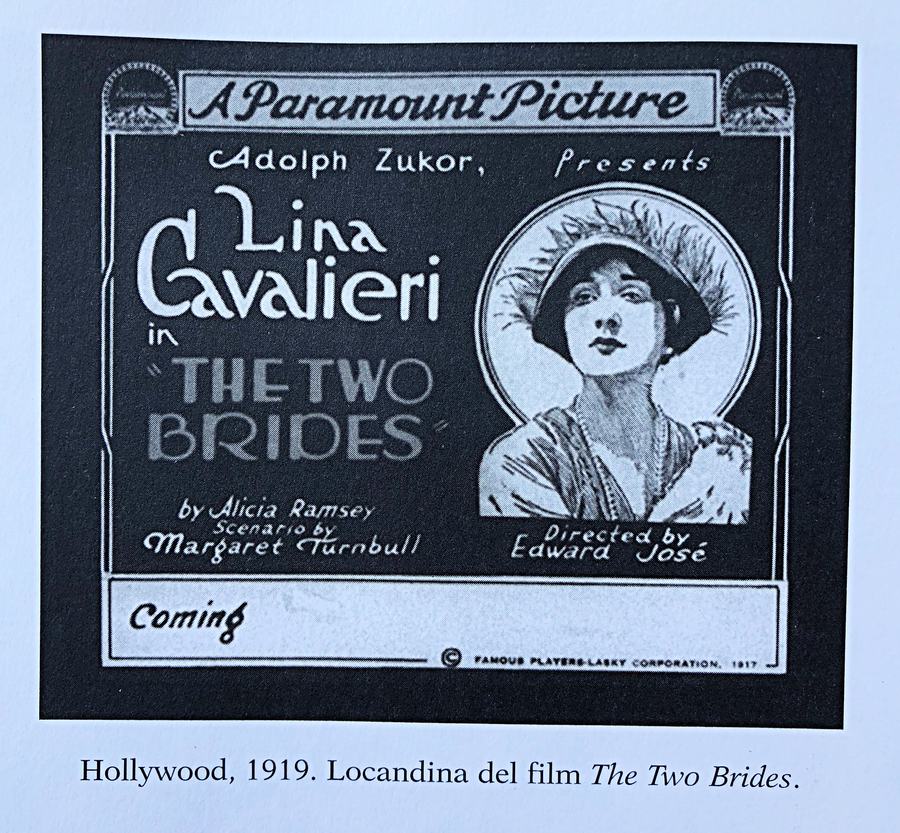
The year 1919 represented a significant epoch in the evolution of visual storytelling, a period where the primitive techniques of the early decade began to fuse with a more sophisticated, psychological approach to narrative. The Two Brides, directed with a keen eye for chiaroscuro and emotional resonance, stands as a quintessential example of this transition. Starring the operatic legend Lina Cavalieri, the film is less a static melodrama and more a moving canvas that interrogates the boundaries between the creator, the creation, and the consumer. It is a work that demands to be viewed through the lens of art history as much as cinematic history.
At the heart of the film lies the concept of the 'Island Goddess.' This isn't merely a plot device; it is a metaphysical anchor. The elder Marchesi, played with a weary, tactile gravitas by the supporting cast, seeks to immortalize his daughter in stone, an act that inherently suggests a desire to freeze time against the inevitable decay of the flesh. When we compare this to the thematic underpinnings of Gems of Foscarina, we see a recurring fascination with the female form as both a treasure and a burden. Cavalieri, known in her time as the 'Most Beautiful Woman in the World,' brings a unique meta-textual layer to the role. She is not just playing a model; she is playing a woman who is constantly being defined by how others perceive her beauty.
The cinematography captures the Italian coastline with a luminous, almost granular quality. The contrast between the jagged, sun-bleached cliffs and the dark, opulent interiors of the Roman estate serves as a visual metaphor for Diana’s internal journey. The film avoids the flat staging often found in contemporary works like The White Raven, opting instead for a depth of field that allows the environment to swallow the characters. This is particularly evident in the scenes where Gabrielle lurks in the background, a shadow haunting the periphery of Diana’s blossoming world.
Warburton Gamble’s portrayal of Count Gabrielle is a masterclass in silent-era villainy. He doesn't rely on the mustache-twirling tropes seen in The House of Hate; rather, he presents a man driven by a desperate, unctuous need for social maintenance. His crime is not just forgery, but the commodification of emotion. To Gabrielle, Diana is an accessory to the statue, a means to an end. This transactional view of humanity is what sets the tragedy in motion. The screenplay by Alice Ramsey and Margaret Turnbull expertly weaves this fiscal tension into the romantic plot, making the Prince’s intervention feel like a moral necessity rather than a mere plot convenience.
Prince Marko, played with a stoic nobility by Courtenay Foote, represents the antithesis of Gabrielle. His love for Diana is rooted in a recognition of her personhood, yet he falls into the trap of paternalistic protectionism. By 'buying' Gabrielle’s exit, he inadvertently treats Diana as a piece of property, a secret that eventually shatters their domestic bliss. This nuance is often missing from the more straightforward heroics found in Two-Gun Betty or the adventurous spirit of The Argonauts of California - 1849. In The Two Brides, the hero’s flaw is his silence, a silence that mirrors the very art form the film inhabits.
The pivotal moment of the film—the breaking of the statue—is a sequence of raw, unadulterated power. When Diana overhears the truth about Marko and Gabrielle’s deal, her world collapses. The statue, once a symbol of her father’s love and her own beauty, becomes a monument to her perceived worthlessness. Her act of iconoclasm is a rejection of the male gaze. She destroys the image to reclaim the self. This psychological depth elevates the film beyond the standard melodramatic fare of East Lynne, touching on themes of identity that feel surprisingly modern.
Her flight back to the island is a regression to a primal state. The island is the only place where she felt authentic, before the Roman artifice stripped her of her agency. The subsequent arrival of the two men leads to the inevitable confrontation on the cliffside. The staging of this fight is visceral. There is no choreographed grace here; it is a desperate, clumsy struggle for survival. Unlike the more polished action in In the Balance, the violence in The Two Brides feels heavy with consequence. When Gabrielle falls, it is not a moment of triumph, but a grim conclusion to a life of deceit.
The final act of the film is perhaps its most controversial and visually arresting. Marko’s illness, a 'brain fever' common in the literature and cinema of the era, serves as a bridge between the physical and the spiritual. He is trapped in a liminal space, unable to distinguish between the woman he loves and the statue he lost. Diana’s decision to pose as the 'Island Goddess' is a complex act of sacrifice. She becomes the object once more, but this time, it is an act of agency. She uses the very image that once imprisoned her to heal the man who sought to protect her.
The lighting in this final sequence is masterful. Draped in silk, bathed in a soft, ethereal glow, Cavalieri achieves a level of stillness that is truly haunting. It is a moment of pure cinema, where the narrative dissolves into a singular, powerful image. This thematic preoccupation with the 'living statue' can be seen as a precursor to more experimental works, and it stands in stark contrast to the more grounded, social realism found in The Little American or the wartime intensity of I Accuse. Here, the focus is entirely on the internal, the spiritual, and the transformative power of the image.
Lina Cavalieri’s performance is the spine of the film. While some critics of the era might have found her style too operatic, in the context of 1919, her grand gestures are perfectly calibrated to the film’s high-stakes emotionality. She possesses a magnetic screen presence that rivals the leads in Behind the Scenes or A Perfect 36. Her ability to transition from the playful innocence of the opening scenes to the shattered disillusionment of the Roman sequence is a testament to her range.
The direction ensures that the pacing never falters, even when the plot leans into the more fantastical elements of the climax. There is a rhythmic quality to the editing that builds tension effectively, particularly in the cross-cutting between Marko’s delirium and Diana’s preparations. This technical proficiency is what allows the film to maintain its dignity despite its melodramatic bones. It doesn't feel dated in the way that The Clock or The End of the Rainbow might to a modern viewer; instead, it feels like a timeless exploration of the human condition.
Ultimately, The Two Brides is a film about the price of beauty and the weight of secrets. It examines how we create idols of those we love and the devastation that occurs when those idols are toppled. It shares a certain DNA with The Ruling Passion in its exploration of obsession, yet it carves out its own unique niche through its artistic setting and its focus on the female experience. Diana is not a passive victim; she is a woman who navigates a world of men who wish to mold her—literally and figuratively—and she eventually finds a way to exist on her own terms, even if that means becoming the statue one last time.
In a landscape often dominated by simplistic morality plays like Love or Justice, The Two Brides offers a more complex, ambiguous tapestry. It is a film of shadows and light, of marble and silk, of death and rebirth. For the modern cinephile, it serves as a stunning reminder of the power of silent cinema to convey deep, resonant truths without the need for a single spoken word. It is a masterpiece of the era, a haunting, beautiful, and deeply moving work of art that continues to linger in the mind long after the final frame has faded to black. The 'Two Brides' of the title—the woman and the statue—are finally united in the end, suggesting that true love requires an acceptance of both the ideal and the reality, the goddess and the human.
IMDb 6.3
1928
Community
Log in to comment.