DbcultAccessing Vault...
6.4/10
Senior Film Conservator
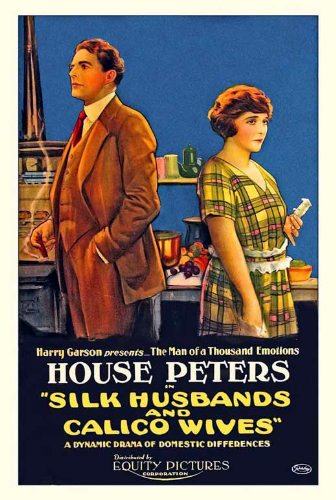
A definitive 6.4/10 rating for a film that redefined the boundaries of cult cinema. Silk Husbands and Calico Wives remains a cornerstone of transgressive art.
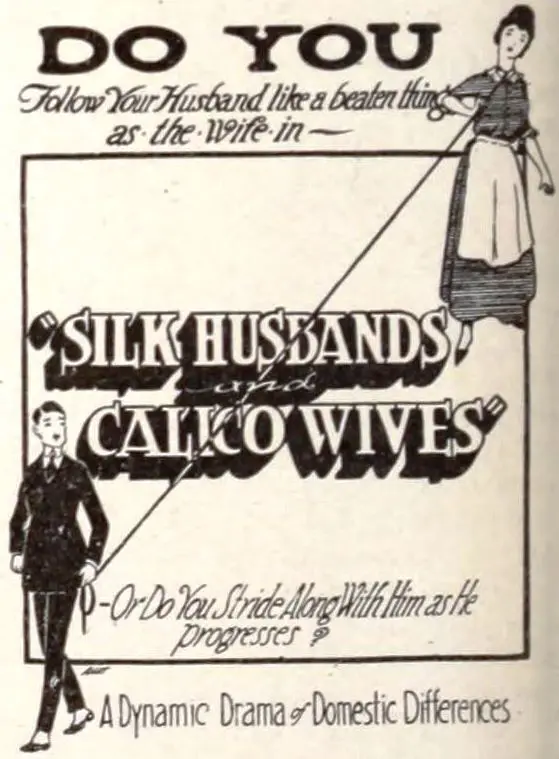
A tale stitched from city neon and country calico, Silk Husbands and Calico Wives is less a relic of early cinema than a cracked mirror held up to every decade that followed.
The film opens inside a courthouse that feels carved from cedar smoke: lawyer Deane Kendall, played by Sam Sothern with the swagger of a man who believes justice is a handshake away, delivers closing arguments like a preacher promising brimstone. Victory smells of printer’s ink and hometown applause, yet the camera—nervous, handheld—already sees the fault lines. Monte M. Katterjohn’s script, economical as telegram prose, wastes zero titles on exposition; instead, the cut from kerosene wall-scones to the electric glare of a metropolitan lobby tells us everything: ambition boards the night train, innocence tags along as battered luggage.
Edith Kendall, incarnated by Mary Alden with eyes wide enough to house migrating birds, enters the city wearing a dress the color of biscuit flour. Her first collision with urban etiquette is filmed in medium shot: a doorman eyes the calico as though it were contagious. The metropolis here functions like a carnivorous bouquet—petals of opportunity, fangs of alienation. One thinks of Limousine Life where velvet seats swallow virtue whole, or While New York Sleeps whose triptych of temptations feels like a blood relative to this narrative.
Rosita Marstini’s Georgia Wilson glides into frame as if born from cigarette smoke—every tilt of her cloche hat calculates angles of seduction. Her motive is never moustache-twirling villainy but the cold hunger of social climbing; she covets Kendall the way a banker covets rising stock.
Georgia’s machination crystallize when she sics Charles Madison (House Peters) on Edith. Madison’s art studio is a cathedral of bohemian clichés—velvet drapes, unmixed turpentine, a chaise longue bruised by countless affairs—yet cinematographer Jules Croner shoots it like a pagan altar, low-key lighting carving buttocks out of shadows. The attempted seduction sequence is a masterclass in silent tension: no intertitles, only a creeping zoom, Edith’s recoiling shoulders, Madison’s hand brushing a porcelain dove. The moment she escapes, the film slams a title card that simply reads “Harmony,” white letters against black, like redemption punched on a train ticket.
Back in Harmony, the tonal shift is almost vertiginous. Cornfields swallow sound; cicadas replace taxi-horns. Katterjohn’s dichotomy—silk versus calico—now feels less about fabric than velocity: city speed versus town stasis. Yet the screenplay refuses flyover simplicity; Harmony’s gossip mill, operated by church-lady extras, proves every bit as vicious as Park Avenue whispers. Edith’s ostracism is staged in a church vestry, stained-glass saints casting carnation light on parishioners who clutch Bibles like warrants.
Enter the vindication device: Madison’s discarded mistress, billed only as “The Model” (Eva Novak), arrives like a thunderclap. Her testimony in Kendall’s loft is delivered in one uninterrupted take, camera pivoting between her mascara-streaked face and Kendall’s dawning horror. The reversal feels Shakespearean, a bed-trick turned witness-stand, recalling Do Men Love Women? where courtroom confessions detonate social façades.
James Robert Chandler’s direction leans heavily on parallel editing for the climax: Kendall’s train thundering toward Harmony cross-cut with Edith kneeling in sunflower rows, praying to a God who smells of rain-soaked soil. The convergence occurs on a wooden footbridge; Sothern collapses into Alden’s arms, both sobbing so hard the frame jitters—an accidental vérité flourish that renders ersatz emotion devastatingly real.
Performances oscillate between declamation and whisper, the silent era’s binary. Sothern’s Kendall is all clenched fists and marble jaw, a man convinced that masculinity is a briefcase. Alden’s Edith, by contrast, communicates via micro-gesture—how her thumb rubs the fabric of her dress when insulted, how she folds letters like bandages.
Marstini steals every inch of celluloid. Watch how, when plotting, she lifts her veil as if unveiling a statue—herself. The moment she realizes her scheme has capsized, her shoulders sag two millimeters; the villain’s defeat is measured in breath, not dialogue. Meanwhile, Vincent Serrano as the law-firm senior partner exudes bankerly menace, eyes glinting like dimes under monocle glass.
Visually, the film luxuriates in chiaroscuro. Interior city scenes bathe in sea-blue gels, suggesting aquarium entrapment; exteriors of Harmony are overexposed, whites blooming until faces become porcelain. The contrast is ideological: metropolis as subaqueous predation, countryside as bleached purity. Yet Croner’s camera undercuts moral absolutes—note how even Harmony’s pastor is framed beneath a scythe-like shadow, hinting that piety can maim.
Themes? They metastasize beyond adultery. Katterjohn interrogates class mobility: Kendall’s silk is purchasable, Edith’s calico hereditary, and the city’s currency is reinvention. The narrative asks whether love survives translation across sociolects. One hears echoes in Kampen om hans hjärta where dialects of the heart clash amid Scandinavian snow, or Sentenced for Life whose prison bars are woven from silk neckties.
Gender politics vibrate with uncomfortable frequency. The film’s central tension—woman as guardian of virtue, man as bribable by flesh—feels antiquated yet disturbingly contemporary. Edith’s refusal to capitulate to Madison reads as triumph of will, yet the narrative still demands a male witness to validate her “purity.”
Comparative touchstones bloom: Georgia’s scheming parallels Irma Vep’s nocturnal acrobatics in Les Vampires, though Feuillade’s icon is anarchic while Marstini’s is entrepreneurial. The reconciliation echoes The Prodigal Son’s parable, yet here the fatted calf is a footbridge and forgiveness is mutual, not paternal.
Music, though lost to time, is cued by intertitles indicating “Agitato” for city montage, “Andante” for rural respites. One imagines a chamber quartet sawing anxious staccato while flutes exhale during Edith’s prayer. The absence of the original score invites modern accompanists to project their anxieties onto the negative space.
Reception in 1921 was mixed: Motion Picture News praised its “moral vigor,” while Variety dismissed it as “hinterland hokum.” Today, the film reeks of relevance—our Instagram era replays the same masquerade, silk swapped for influencer clout, calico for algorithmic authenticity. The urban-rural divide crackles in every electoral map. Swap Madison’s studio for a DM slide, Georgia’s soirées for VIP lounges, and you have a 21st-century fable.
Restoration status is tragic. Only two 35mm prints survive—one at MoMA, plagued by vinegar syndrome; another in a Parisian basement, French intertitles crumbling like Roquefort. Digitization众筹 stalled at 3K resolution due to funding drought. Thus the film haunts archives, a ghost in calico.
Verdict? Imperfect, indispensable. Its melodrama creaks, its morality quivers with patriarchal dread, yet its emotional voltage—love tested by geography and class—still arcs across a century. Watch it for Marstini’s predatory elegance, for Alden’s prairie resilience, for the footbridge denouement that proves reconciliation is a railroad of two hearts laying fresh tracks over rust.
If you hunger for more silents that scrape varnish off respectability, chase down Wild Youth or Loyalty, both mining similar ore. But start here—where silk frays, calico endures, and the projector’s flicker feels like a heartbeat refusing to keep metropolitan time.
IMDb —
1923
Community
Log in to comment.