DbcultAccessing Vault...
6.6/10
Senior Film Conservator
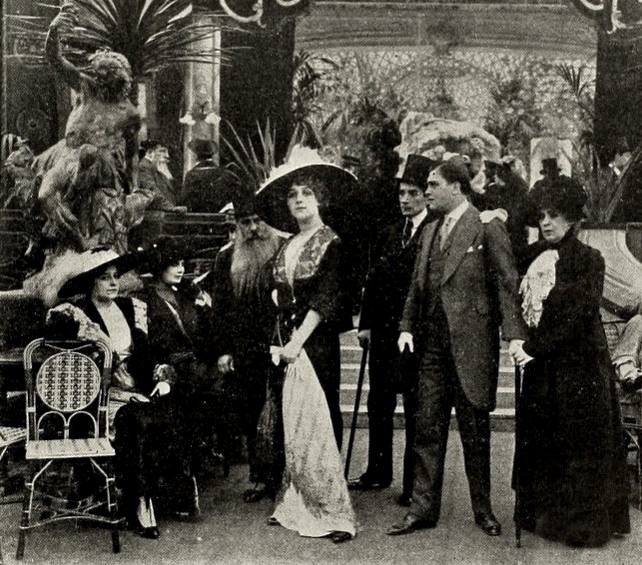
A definitive 6.6/10 rating for a film that redefined the boundaries of cult cinema. When Paris Loves remains a cornerstone of transgressive art.
Pierre Decourcelle’s 1910 one-reel vignette arrives like an ochre postcard slipped from a forgotten valise: edges foxed, emotions still wet. The film, a slender eleven-minute whisper, distills the entire Boulevard de Rochechouart into a single misunderstanding—fatherhood mistaken, love deferred, Paris herself cast as both accomplice and jury.
Rather than narrate, Decourcelle sculpts by subtraction. Jean’s studio is introduced only by its negative: a chair toppled, a half-carved maquette shrouded in drop-cloth, suggesting abandonment before we ever see the sculptor. Gabrielle’s first appearance is a brush-stroke blur reflected in a cracked mirror—her face never fully disclosed until the father’s intrusion. Even the titular doll is revealed upside-down, legs skyward like a crucifix, foreshadowing the moral inversion to come.
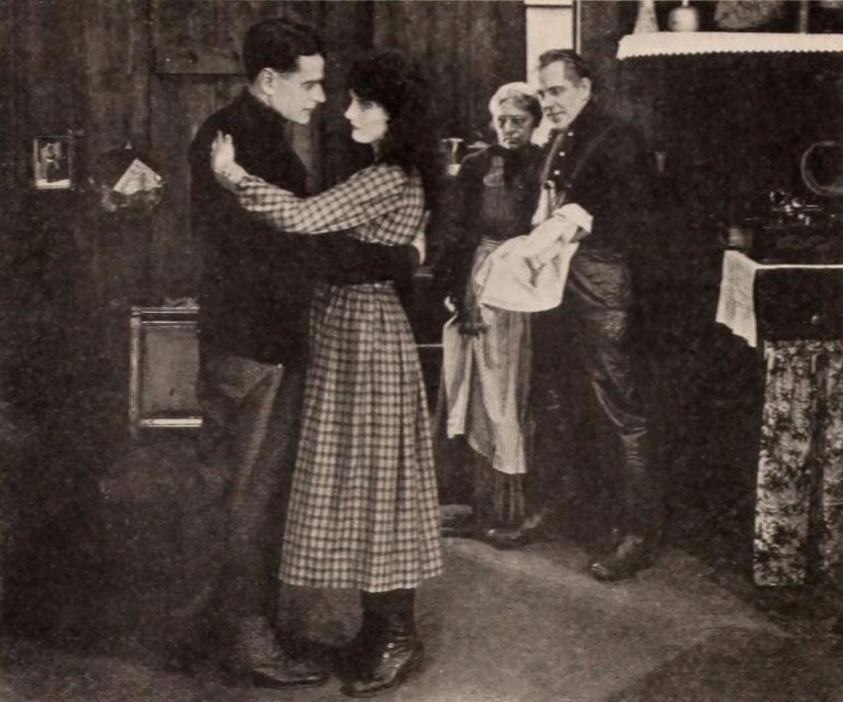
René Alexandre carries the stoic mien of a man who speaks in chisel scars; his cheekbones catch the carbon-arc light like quarried limestone. Gabrielle Robinne, all restless eyes and paint-flecked cuffs, seems perpetually mid-sketch, even when still. Louis Ravet’s patriarch exudes the mildewed authority of a provincial notary; every gesture suggests ledgers and heirlooms. Together they form a triptych of French social strata: the artisan, the bohemian, the rentier.
The film’s exteriors were shot on the rue Gabrielle before the butte was gentrified; cobblestones glisten with recent rain, echoing the slippery ethics within. Interior walls are mottled plaster, not yet renovated into the poster-bedecked cafés of tourist lore. Decourcelle’s camera drinks in this liminal moment—half village, half metropolis—mirroring Jean’s own suspended identity between marble dust and domestic duty.
Cinematographer Albert Durec employs a single source: a skylight slashed diagonally across the frame, turning every character into a Caravaggio study. When père Clédat discovers the doll, the beam spears the toy’s porcelain brow, igniting it like a false idol while Jean’s face recedes into umbral shame. The absence of intertitles at this juncture forces the viewer to decode guilt through chiaroscuro alone—cinema as silent tribunal.
Scholars often liken the porcelain figure to the automata in The Riddle of the Tin Soldier, yet here the object is less plot hinge than moral Rorschach. Clédat Senior sees bastardy; Jean sees childhood innocence; Gabrielle sees sibling responsibility. The toy never speaks, yet its hollow eyes refract every character’s unuttered dread of legacy.
Notice how the film elides mothers entirely: Marie-Claire awaiting in the provinces is a fiancée, not yet wife, while Gabrielle’s own mother is never mentioned. The narrative womb is vacant, allowing patriarchal anxiety to expand like gas. Decourcelle thus exposes the Edwardian fear that without maternal mediation, all bohemian liaisons birth only bastardy and ruin.
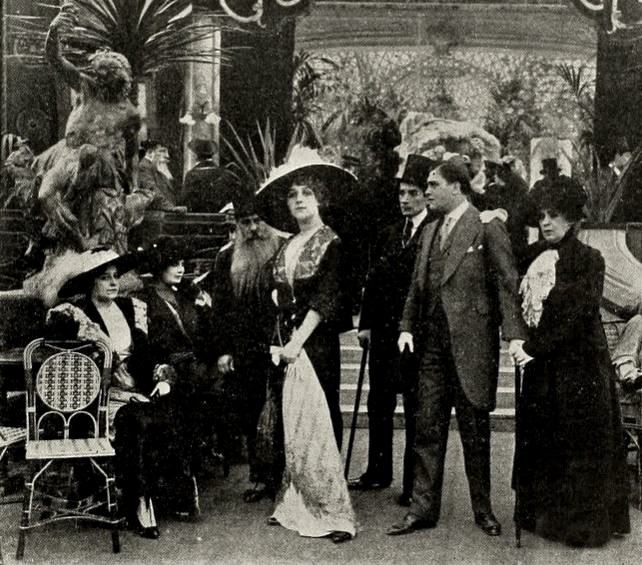
Editing rhythms mimic pedestrian flux: cuts arrive at the pace of passing fiacres, four seconds on average, enough to let street noise (audible in the mind’s ear) seep between frames. The final reconciliation—father embracing daughter-sister on the landing—is rendered in a single 14-second take, an eternity for 1910, allowing the emotional mortar to set before the fade-out.
Contemporary exhibitors would have accompanied the reel with a Chopin waltz or, in humbler maisons, a hurdy-gurdy. Modern restorations often choose Satie’s Gnossienne No. 1, whose modal unease matches the film’s asymmetrical guilt. Try watching without score: the hiss of the projector becomes the respiration of Paris herself, a city inhaling cigarette smoke and exhaling reprimands.
Place this beside the moral vertigo of The Sin of a Woman or the paternal dread in The Prodigal Son and you discern a pattern: early cinema obsessed with the moment bourgeois certainty fractures. Yet Decourcelle refuses punitive melodrama; his camera lingers on the father’s crushed epaulettes, soliciting pity rather than triumph.
Gabrielle never pleads; she paints. Her canvas—an unfinished Sacré-Cœur spiraling into abstraction—becomes her testimony. When the father rips it from the easel, the tear is both sacrilege and liberation: she is freed from the commodification of her own skyline. In 1910, such agency for a female protagonist borders on radical, predating the suffrage reels like What 80 Million Women Want by half a decade.
Jean’s medium demands geological patience; marble must outlast its sculptor. Gabrielle’s oils dry within hours, capturing fugitive light. Their romance is thus a contest between permanence and ephemera, resolved only when the father’s error forces both artists into the messy middle of human time—parentheses of regret, apology, faint hope.
Modern viewers, sensitized to consent narratives, may flinch at the patriarch’s right to relocate adult offspring. Yet the film’s brevity attenuates coercion; we intuit rather than witness Jean’s capitulation. The final shot—train steam obliterating the screen—implies not closure but deferral, a promise that Paris will re-absorb her runaway children.
Only two prints are known: a 35 mm nitrate at Cinémathèque Française (hand-coloured by Robinne herself) and a 16 mm reduction circulating among UK film clubs. Both bear water damage along the perforations, a fitting stigmata for a tale about flawed sight. Every screening risks further loss; the film survives by cultivating protectors rather than consumers.
Accounts from 1910 trade papers mention a denouement in which Jean sculpts a new figure—the sister’s portrait—thereby reconciling filial duty with erotic autonomy. No extant copy contains this scene; perhaps exhibitors excised it for brevity, or perhaps Decourcelle never filmed it, preferring to leave reconciliation implied, like a bronze yet uncast. The absence invites us to carve our own ending, chiseling hope from the raw block of misunderstanding.

IMDb 6
1935
Community
Log in to comment.