DbcultAccessing Vault...
Cult Review
Senior Film Conservator
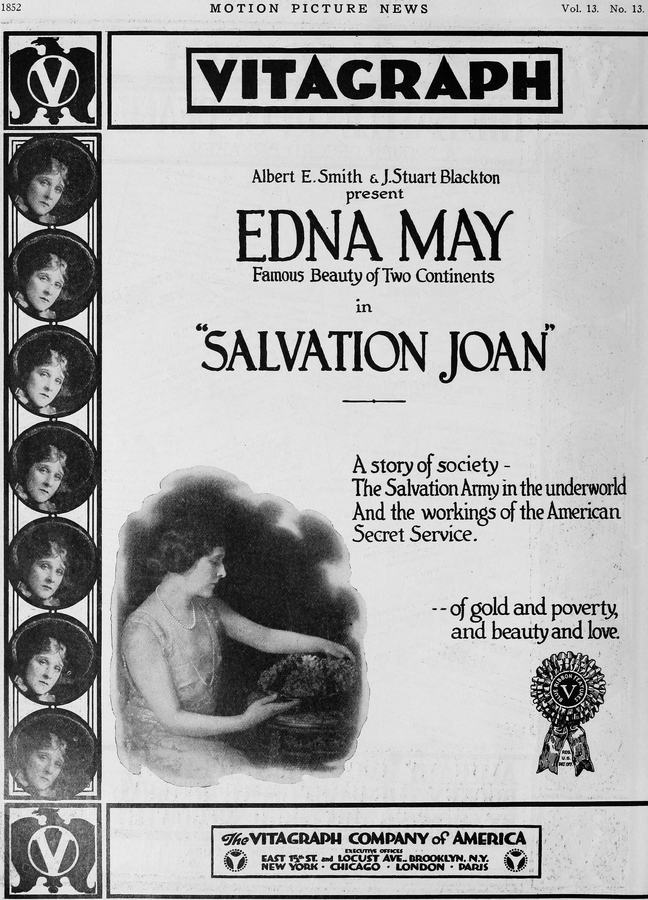
There are certain cinematic experiences that transcend mere storytelling, burrowing deep into the collective consciousness with their timeless themes and raw emotional power. 'Salvation Joan,' a silent era gem penned by the insightful Marguerite Bertsch, is unequivocally one such film. It’s a compelling exploration of moral fortitude, the intoxicating allure of the forbidden, and the arduous journey of the human heart caught between duty and desire. In an age often dismissed for its nascent cinematic language, Bertsch, along with a stellar cast led by Eulalie Jensen, crafts a narrative that feels as relevant and piercing today as it undoubtedly did upon its initial release.
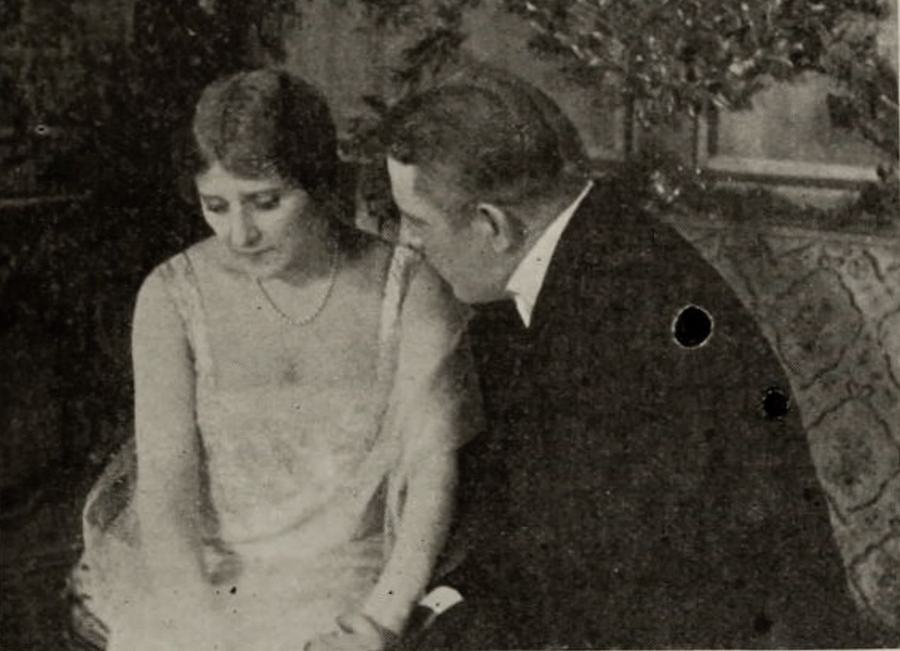
At its core, 'Salvation Joan' is a character study, a meticulous dissection of a soul in turmoil. Eulalie Jensen, with a presence that commands the screen, embodies Joan, a young woman whose life is a testament to unwavering devotion. As a Salvation Army volunteer, Joan personifies purity and selflessness, her days dedicated to ministering to the downtrodden, her spirit seemingly impervious to the grime and moral decay of the urban landscape she navigates. Her uniform is not merely attire; it is a spiritual shield, a declaration of her unwavering commitment to a higher calling. Jensen’s portrayal is nuanced, conveying an inner strength that belies Joan’s outwardly gentle demeanor, making her eventual emotional unraveling all the more impactful.
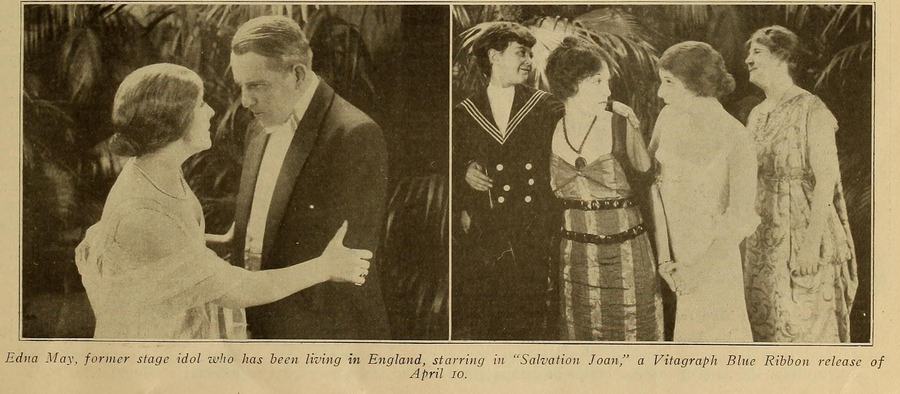
The film’s central conflict ignites when Joan's world of structured piety collides with the chaotic, alluring realm of a notorious gangster, portrayed with a brooding intensity by L. Rogers Lytton. Lytton avoids the caricature of the one-dimensional villain, instead infusing his character with a magnetic charm that makes his transgressions understandable, if not forgivable, in the eyes of an impressionable heart. This isn't merely a tale of good versus evil; it's a profound examination of the grey areas that exist within human nature, the unexpected connections that can form across seemingly insurmountable societal chasms. The gangster, a figure of danger and illicit power, represents everything Joan has been taught to shun, yet he offers a different kind of salvation—one rooted in raw passion and a defiant freedom that her disciplined life cannot provide.
Marguerite Bertsch’s screenplay is a masterclass in building dramatic tension through character psychology rather than relying solely on external events. She doesn't just present the plot; she delves into the internal landscape of Joan, allowing the audience to witness the subtle shifts, the hesitations, and the eventual surrender to a love that defies societal norms. This internal struggle is what elevates 'Salvation Joan' beyond a simple melodrama. It becomes a timeless parable about the human condition, the inherent conflict between our ideals and our primal urges. The narrative arc, while seemingly straightforward on paper, is rich with thematic complexity, inviting viewers to ponder the true meaning of redemption and the sacrifices one is willing to make for love.
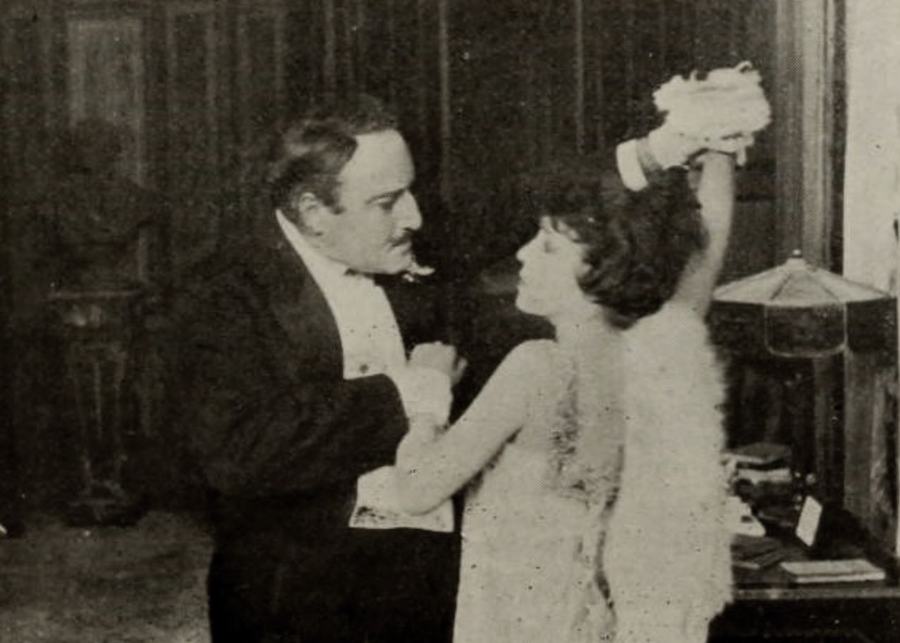
Beyond the central performances, the supporting cast contributes significantly to the film’s rich tapestry. Edna May and Donald Hall, though perhaps in less prominent roles, add layers of authenticity to the community surrounding Joan, reflecting both the judgment and the burgeoning understanding of her predicament. Belle Bruce and Harry T. Morey, with their nuanced portrayals, further populate this moral landscape, sometimes serving as foils, other times as catalysts for Joan's evolving perspective. Even the brief appearances of Dorothy Kelly and Bobby Connelly underscore the film's commitment to creating a believable world, where every face tells a story, every gesture carries weight. The collective effort of this ensemble ensures that the emotional stakes feel genuine, the societal pressures palpable.
The directorial choices, while not explicitly attributed in the provided information, are evident in the film's pacing and visual storytelling. Silent films often relied heavily on visual cues and the expressive power of their actors, and 'Salvation Joan' is a testament to this art form. The use of close-ups to capture Joan’s internal conflict, the contrasting mise-en-scène between the stark order of the Salvation Army halls and the shadowy dens of the underworld, all contribute to a heightened sense of drama and thematic clarity. It's a testament to the era's filmmakers that they could convey such intricate emotional narratives without the aid of spoken dialogue, relying instead on the universal language of human expression.

The thematic resonance of 'Salvation Joan' is profound. It grapples with the perennial question of whether love can truly conquer all, even when it demands the abandonment of deeply held beliefs and a complete re-evaluation of one's identity. Joan's journey is one of immense personal sacrifice, not just in choosing one path over another, but in reconciling the disparate parts of herself. Her struggle mirrors the broader societal anxieties of the time, where traditional values were constantly being challenged by an evolving world. The film doesn't offer easy answers; instead, it presents a mirror to the audience, inviting introspection into their own moral compasses.
One cannot help but draw parallels to other films that explore the complexities of moral compromise or the disruptive power of love. Consider, for instance, a film like The Folly of Sin, which also delves into the consequences of deviation from a righteous path, though perhaps with a more overtly cautionary tone. Or perhaps At the Cross Roads, where characters face similarly weighty decisions that determine the trajectory of their lives. What sets 'Salvation Joan' apart is its empathetic portrayal of Joan's internal world, allowing us to understand, if not always agree with, her choices. Her humanity shines through, even in her moments of greatest moral quandary.
The film also touches upon the idea of societal judgment and the often-harsh consequences of stepping outside prescribed roles. Joan's internal battle is exacerbated by the external scrutiny she faces, both from her spiritual community and from the criminal underworld. The film subtly critiques the rigidity of certain institutions, suggesting that true compassion often lies beyond the black-and-white strictures of dogma. In this regard, it shares a thematic thread with films that examine the individual's struggle against oppressive societal norms, even if those norms are well-intentioned. It prompts us to question what 'salvation' truly means – is it purely spiritual adherence, or can it be found in the courage to embrace a more complex, albeit perilous, human experience?
The film's exploration of duality—of light and shadow, sacred and profane—is particularly striking. Joan's initial embodiment of light is gradually challenged by the shadow of her forbidden love, forcing her to confront her own capacity for what might be perceived as 'darkness.' Yet, through this confrontation, she arguably gains a deeper, more authentic understanding of herself and the world. This journey from naive purity to experienced complexity is a powerful narrative arc, reminiscent of the profound personal transformations seen in works like Alone with the Devil, albeit with a different moral compass guiding the protagonist.
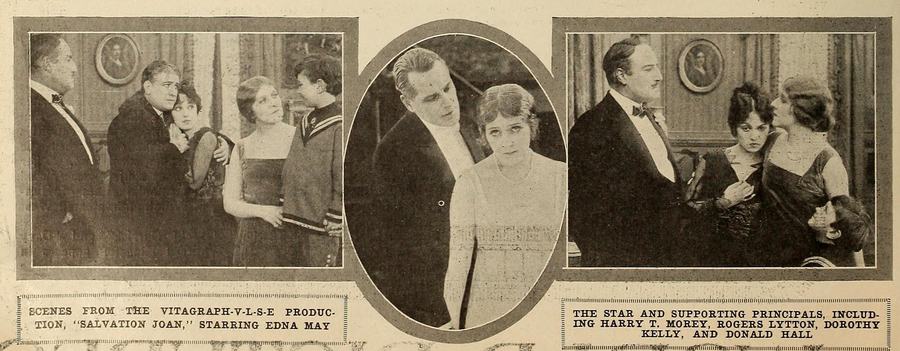
It’s crucial to acknowledge the incredible artistry of silent film, and 'Salvation Joan' is a stellar example. The actors' ability to convey such profound emotion through facial expressions, body language, and subtle gestures is a testament to their craft. Eulalie Jensen, in particular, masters this, allowing us to read Joan's internal turmoil in her eyes, the set of her jaw, the way she carries herself. This reliance on visual storytelling demands a heightened sense of empathy from the viewer, drawing them into the narrative in a way that can feel intensely personal. The lack of dialogue forces a focus on the universal aspects of human emotion, making the film's themes resonate across time and cultural divides.
The meticulous framing of shots, the interplay of light and shadow—these elements are not just aesthetic choices but integral components of the narrative. They heighten the dramatic tension, underscore thematic elements, and guide the audience's emotional response. The visual language of 'Salvation Joan' is rich and evocative, painting a vivid picture of a world on the cusp of change, where traditional values clashed with burgeoning modernity. This visual poetry is a hallmark of the silent era, and Bertsch’s collaboration with the directorial vision (whoever it may have been) resulted in a film that speaks volumes without uttering a single word.
'Salvation Joan' challenges us to consider our own definitions of 'right' and 'wrong,' and how often those definitions are shaped by societal expectations rather than an authentic understanding of the human heart. Joan’s journey is not one of simple moral instruction but a complex exploration of agency, consequence, and the often-unforeseen paths that love can lead us down. It’s a powerful reminder that even the most dedicated individuals can be swayed by forces beyond their immediate control, and that true strength often lies in navigating those complexities with integrity, even if it means defying convention.
The enduring appeal of 'Salvation Joan' lies in its ability to tap into universal human experiences: the desire for connection, the struggle with temptation, and the quest for identity. It’s a film that asks profound questions without offering simplistic solutions, inviting viewers to engage with its characters and themes on a deeply personal level. While other films of the era might have focused on grand historical events, like The Battle and Fall of Przemysl, or fantastical adventures, such as The Extraordinary Adventures of Saturnino Farandola, 'Salvation Joan' grounds itself in the intimate drama of the human soul, making its impact all the more resonant and timeless.
In conclusion, 'Salvation Joan' is far more than a historical artifact; it is a vibrant, emotionally charged piece of cinema that continues to provoke thought and stir the soul. Marguerite Bertsch’s masterful writing, combined with the compelling performances of Eulalie Jensen, L. Rogers Lytton, and the entire cast, creates a narrative that is both specific to its time and universally applicable to the human condition. It stands as a powerful testament to the enduring allure of forbidden love and the complex, often contradictory, nature of redemption. For anyone seeking a film that delves into the profound moral and emotional landscape of its characters with grace and unflinching honesty, 'Salvation Joan' remains an essential viewing experience, a beacon in the rich tapestry of early cinema.
IMDb —
1928
Community
Log in to comment.