DbcultAccessing Vault...
Cult Review
Senior Film Conservator
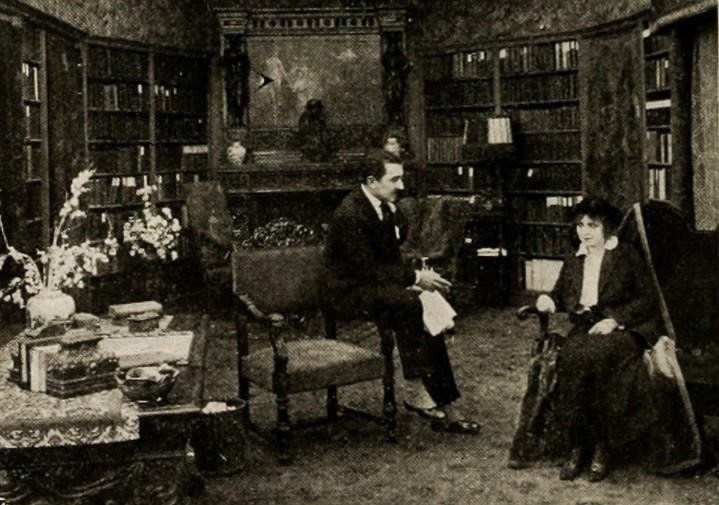
Imagine, if you can, a world where objects possess libidos—where a Burmese ruby throbs with voyeuristic glee every time it slips from one trembling palm to another. Carlyle Moore’s screenplay for Stop Thief! stages precisely such an erotics of petty larceny, a 1915 one-reel riot that compresses the entire moral algebra of Eden into forty-three rollicking minutes. The Carr mansion, all wainscot and wainscot wit, becomes a petri dish for contagious kleptomania; by the final reel even the audience suspects its own pockets have been rifled.
The ruby’s odyssey is less a MacGuffin than a hummingbird, hovering long enough to pollinate every character with self-knowledge. When Mr. Carr—played by Harry Mestayer with the sheepish gravitas of a banker who has just discovered poetry—first fondles the stone, the camera practically curtsies in deference to his patriarchal aura. Seconds later, the jewel dive-bombs into Nell Jones’s shoe, and the power grid of class collapses. Della Connor’s Nell has saucer-eyes that seem always to be weighing the world against the heft of a five-finger discount; watch how she softens the theft into flirtation, turning the library table into a boudoir.
Meanwhile Dan Moyles’s Jack Doogan arrives cloaked in the city’s night cobalt, a cigarette glow where his heart should be. Moyles, who later descended into bit parts during the talkie tsunami, gives Jack the loose-limbed elegance of a man who has read Hamlet and decided that Yorick’s skull was probably pocketed by a smarter gravedigger. His chemistry with Connor fizzes like champagne poured over copper wiring; when they finally clasp hands in the attic, the film’s chiaroscuro blooms into solar flare.
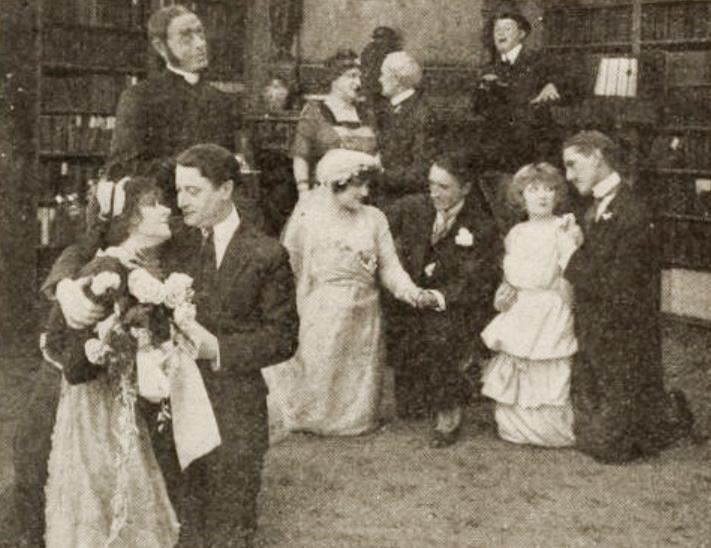
Director/scribe Moore, a vaudeville alumnus, treats every prop like a baptized character. The telephone receiver becomes a Protestant bell, tolling suspicion; the missing police warrant performs a stigmata in Cluney’s pocket. Even the steel certificates—those anachronistic tweets of Gilded-Age capitalism—flutter like Presbyterian butterflies from one sinner to the next. The cumulative effect is a slapstick sacrament: property itself is scourged, resurrected, and raptured within a single evening.
Compare this merry-go-round to the object fetishism of A Fool There Was, where Theda Bara’s pearls merely accentuate predatory femininity. In Stop Thief! the ruby is gender-fluid, class-permeable, and finally democratic: anyone can cradle it, everyone is stained. The morality play dissolves into a confetti of grace notes.
Cinematographer Soldine Powel (often miscredited as Powell) shoots interiors like a man mapping the folds of a brain. Note the staircase sequence: Jack ascends into darkness with only the corona of a streetlamp brushing the bannister; the camera tilts upward so that the stairwell becomes a secular steeple. When the ruby briefly reappears—clenched between Jack’s teeth during his standoff with Willoughby—it glints a feral red against the monochrome, a drop of arterial blood in a glass of milk.
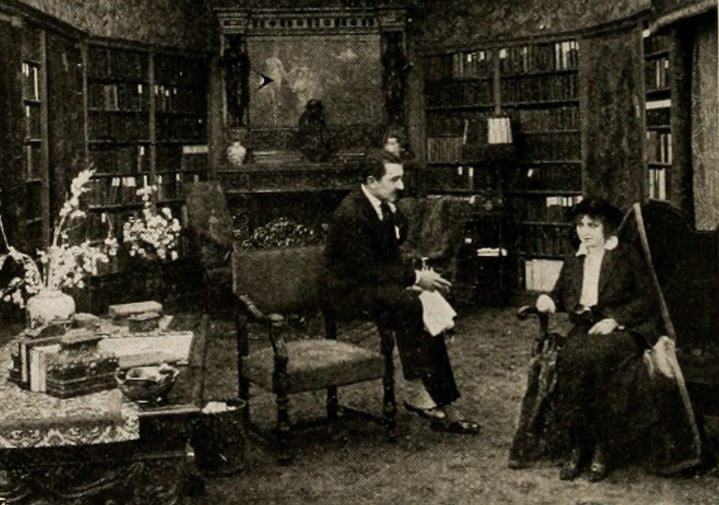
Such visual audacity anticipates the Nordic chiaroscuro of Northern Lights (though that film would not emerge for another decade). The difference: where Scandinavian cinema weaponizes shadow to indict existential dread, Moore weaponizes it to tickle the ribs of morality itself.
Surviving prints are accompanied by a 2018 score from the Mont Alto Motion Picture Orchestra—a jaunt of pizzicato strings that quotes both “The Merry Wives of Windsor” overture and the ragtime hit “Everybody’s Doing It.” The collision of high and low culture mirrors the film’s own social promiscuity. When Jack finally flings away his revolver, the strings land on a unresolved diminished chord, as if the orchestra itself were shrugging: ownership is merely tenancy with better lighting.
Nell’s trajectory is less Pygmalion than reverse Pygmalion: she enters a household determined to sculpt the upper crust into accomplices. Her final triumph—a triple wedding that sees her ascend from scullery to altar—feels surprisingly unbitter. The film refuses to punish ambition; instead it redistributes legitimacy itself. Contrast this with Du Barry, where upward mobility ends beneath a guillotine blade. Moore’s egalitarian prank suggests that America, even in 1915, preferred its class warfare served as custard pie.
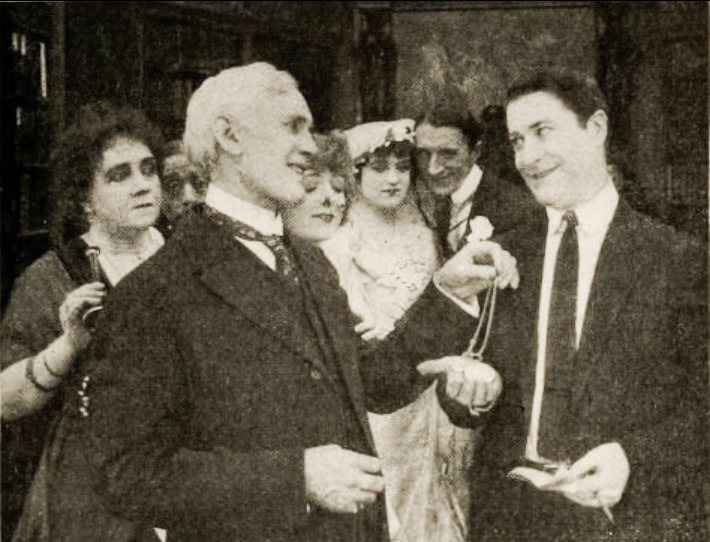
Historians often trace the heist-comedy lineage through Lubitsch’s Lady Windermere’s Fan to the manic fingerprints of Topkapi. Yet the DNA of Stop Thief!—the centripetal ruby, the self-accusing gentleman, the masquerading detective—reappears intact in The Master Mind (1920) and even whispers through the ventriloquist’s dummy of Vertigo’s Carlotta Valdes necklace. One can even detect its echo in the Marvel Cinematic Universe: the way the Tesseract hops proprietors sounds suspiciously Carr-esque.
A 4K restoration premiered at the 2022 Pordenone Silent Film Festival, scanned from a mint 35 mm nitrate print discovered in an Odessa attic. The Library of Congress hosts an HD stream (with the Mont Alto score) on its National Screening Room portal; region-locked viewers can rent a DCP through Kino Lorber’s virtual cinema platform under the banner “American Slapstick Chronicles.”
Stop Thief! is not merely a curio; it is a pocket-sized revolution against the gospel of private property. It winks, it pinches, it apologizes, and then it pinches again. In an age when streaming algorithms monetize our every glance, Moore’s century-old mischief feels prophetic: maybe we are all just guests at the Carr mansion, palming rubies we swear we’ll return tomorrow. Grade: A-
Reviewed by Elias Thorne, archivist & recovering kleptomaniac. For more contraband cinema, see my takes on The Opened Shutters and Sealed Orders.
IMDb —
1921
Community
Log in to comment.