DbcultAccessing Vault...
Cult Review
Senior Film Conservator
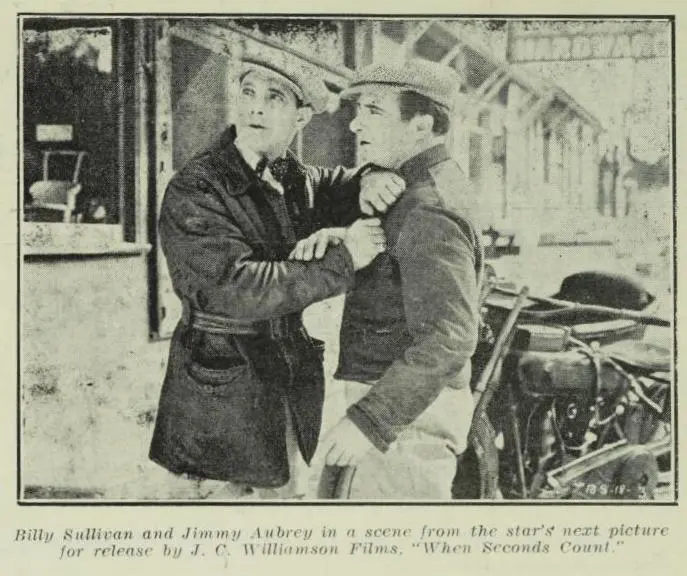
Is "When Seconds Count" worth watching today? Short answer: yes, but with significant caveats that demand a particular kind of viewer. This film is an earnest, if somewhat dated, artifact best suited for silent film enthusiasts and those curious about early cinematic storytelling, definitely not for audiences seeking modern pacing or sophisticated character arcs.
For those accustomed to the rapid-fire editing and complex narratives of contemporary cinema, a dive into the 1922 drama When Seconds Count will feel like stepping into a different world entirely. Directed with a straightforward sincerity typical of its era, this film offers a fascinating glimpse into the moralistic storytelling prevalent in early Hollywood. It’s a simple tale, but its simplicity is precisely what gives it a peculiar, enduring charm. It asks its audience to slow down, to engage with a different rhythm of storytelling, and to appreciate the raw, unadorned power of visual narrative.
This film works because: Its straightforward narrative of good versus evil remains universally appealing, and Billy Sullivan's earnest performance provides a solid anchor, making his journey from wastrel to hero genuinely engaging.
This film fails because: The pacing often drags, particularly in its expositional sequences, and its melodramatic flourishes can feel overwrought to a contemporary audience, lacking the subtle nuance found in more celebrated silent features like those of Buster Keaton or Charlie Chaplin.
You should watch it if: You appreciate the historical context of early cinema, enjoy clear-cut morality tales where virtue is rewarded, and have a high tolerance for silent film conventions, including the reliance on intertitles and broad physical acting.
At its heart, When Seconds Count is a classic redemption story, a narrative archetype that has resonated with audiences for centuries. We are introduced to Billy Mathewson, a young man adrift, seemingly content to squander his inheritance and his potential on Broadway frivolities. His estrangement from his wealthy, perhaps overly stern, father sets the stage for a journey of self-discovery. This initial setup, while brief, effectively establishes Billy's privileged but unfulfilled existence, painting him as a character ripe for transformation.
His flight to Salino, a town grappling with the construction of a significant dam, isn't just a change of scenery; it's a forced confrontation with real-world problems. The dam project, a symbol of progress and prosperity, becomes the backdrop for a more insidious conflict. A crooked foreman, driven by greed, exploits the project for personal gain, jeopardizing both the company's integrity and the welfare of the local villagers. This immediately grounds Billy's personal drama within a larger, more tangible struggle, elevating the stakes beyond mere familial discord.
The film then pivots into a clear-cut battle between nascent heroism and blatant villainy. Billy, initially a mere observer, is compelled to act. His journey from an aimless 'Broadway wastrel' to the town's unlikely savior is predictable, certainly, but it’s delivered with an earnestness that bypasses cynicism. The plot, penned by Suzanne Avery, understands its audience, delivering a straightforward moral message without unnecessary complexities. The resolution, where Billy defeats the villain and wins the hand of Elinor, the local luminary's daughter, neatly ties together his personal and public triumphs. It's a satisfying, if conventional, arc that reinforces the idea that true worth is found not in inherited wealth, but in courageous action.
Silent film acting is a unique art form, relying heavily on exaggerated gestures, expressive facial movements, and the judicious use of intertitles to convey emotion and dialogue. The cast of When Seconds Count largely adheres to these conventions, delivering performances that, while broad by today's standards, were perfectly intelligible to audiences of the era.
Billy Sullivan, as the central figure Billy Mathewson, carries the film with an admirable, if somewhat unrefined, energy. His portrayal of the carefree wastrel is marked by a certain physical buoyancy, a casual disdain for responsibility that slowly gives way to a determined resolve. One particularly memorable sequence sees Sullivan use his whole body to convey Billy's initial shock and subsequent anger upon discovering the foreman's treachery – a subtle shift from playful disinterest to righteous indignation that is surprisingly effective. He embodies the classic 'good-hearted but misguided' hero with a convincing sincerity, making his transformation believable within the film's melodramatic framework. His earnestness is the film's strongest acting asset, preventing the character from becoming merely a caricature.
Joseph W. Girard, playing Billy's wealthy father, projects the stern authority expected of the patriarch, his gestures conveying disappointment and eventual pride with economy. Mildred June, as Elinor, the love interest, embodies the wholesome charm of the small-town heroine. Her performance is less about overt dramatics and more about conveying quiet strength and moral rectitude, a foil to Billy's earlier capriciousness. The chemistry between Sullivan and June, while understated, blossoms through shared glances and moments of mutual understanding, hinting at a genuine connection that transcends the simple 'damsel in distress' trope.
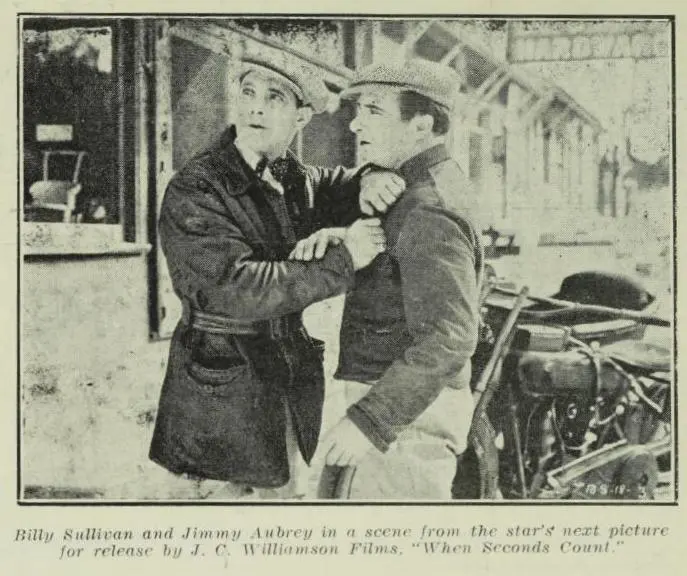
The film’s villain, the unnamed crooked foreman, is a masterclass in silent-era bad guy theatrics. While the cast list doesn't explicitly name the actor, their performance is quintessential: a sneering smile, furtive glances, and exaggerated gestures of greed and malice. In a scene where he manipulates ledgers, the actor's sly, almost gleeful expressions leave no doubt about his nefarious intentions, a clear visual shorthand for evil that requires no dialogue. Jimmy Aubrey, as Dizzy Durby, provides much-needed comedic relief, his antics and physical comedy serving as a light counterpoint to the more serious dramatic elements. His character is reminiscent of sidekicks in other films of the period, like those found in The Luck o' the Foolish, offering moments of levity that prevent the film from becoming too heavy-handed.
Overall, the performances are exactly what one would anticipate from a silent film of this period: expressive, occasionally theatrical, but always clear in their intent. They successfully communicate the emotional landscape of the story without the aid of spoken words, a testament to the actors' skill in a demanding medium.
The direction of When Seconds Count, while not groundbreaking, is competent and serves the narrative effectively. The filmmaker employs a straightforward visual style, prioritizing clarity over artistic flourish. Scenes are generally framed to showcase character interactions and plot developments, with the camera often remaining static, allowing the actors' movements and expressions to drive the scene.
There are moments, however, where the direction elevates the material. The sequences involving the dam construction, for instance, are captured with a sense of scale and industrial might, using wide shots to emphasize the project's importance and the potential devastation if the foreman's corruption were to compromise its integrity. The contrast between the bustling, dangerous construction site and the quieter, domestic scenes in Salino is well-managed, giving the film a sense of both grand ambition and intimate community. One particularly effective visual shows the foreman subtly tampering with blueprints in a dimly lit office, the shadows playing across his face, visually reinforcing his underhanded nature without a single intertitle needed to explain his actions.
Cinematography, typical of the early 1920s, relies on natural light where possible and often stark, high-contrast lighting indoors. While not as sophisticated as the German Expressionist films emerging around the same time, it effectively creates mood and highlights key dramatic moments. The use of close-ups is sparing but impactful, reserved for moments of intense emotion or revelation, drawing the audience's focus to the subtle shifts in an actor's expression. This deliberate choice makes those close-up moments feel more potent. The visual storytelling is functional, perhaps even utilitarian, but it gets the job done. It's not aiming for the visual poetry of Mania. Die Geschichte einer Zigarettenarbeiterin, but for a clear, accessible narrative.
The pacing of When Seconds Count is undeniably a product of its time. It unfolds at a more deliberate speed than modern audiences are accustomed to, allowing scenes to breathe and emotions to register without the urgency of rapid cuts. This can feel slow, especially in the initial setup, but it also fosters a meditative quality, inviting viewers to immerse themselves fully in the narrative's unfolding. The film builds its tension gradually, letting the threat of the crooked foreman simmer before erupting into direct confrontation. The final act, involving Billy's heroic intervention, picks up the pace considerably, delivering a satisfying, if conventional, climax.
The tone is largely melodramatic, leaning into the clear-cut morality of its plot. There's little ambiguity in its portrayal of good and evil; the villain is overtly villainous, and the hero is unequivocally good. This earnestness, while sometimes feeling heavy-handed, is also part of the film's charm. It’s a moral fable, plain and simple, designed to entertain and uplift. The inclusion of Dizzy Durby's comedic antics provides a welcome counterpoint, preventing the drama from becoming too relentlessly serious. This blend of melodrama and light humor is a hallmark of many silent films, creating a viewing experience that is both emotionally resonant and playfully engaging.
Intertitles play a crucial role, not just in conveying dialogue, but also in setting the scene, explaining motivations, and providing narrative bridges. They are an integral part of the silent experience, demanding active engagement from the viewer to read and absorb the information. This isn't passive viewing; it requires a different kind of focus, a willingness to participate in the storytelling process. For those unfamiliar with silent film, this can be an initial hurdle, but once overcome, it reveals a rich and rewarding form of cinematic expression.
Yes, When Seconds Count is worth watching for specific audiences. It's a valuable historical document, showcasing the storytelling conventions and acting styles of early 20th-century cinema. Silent film enthusiasts will find much to appreciate in its earnest performances and clear narrative. It’s a solid example of a genre film from the era.
However, it is not for everyone. If you struggle with slower pacing, the absence of spoken dialogue, or find melodrama difficult to engage with, this film might test your patience. It requires an open mind and an appreciation for cinematic history. Think of it less as a modern blockbuster and more as a window into a bygone era of filmmaking.
For those who enjoy exploring the roots of cinema, films like When Seconds Count offer unique insights into how stories were told before sound. It provides a foundational understanding of character archetypes and plot structures that continue to influence filmmaking today. It works. But it’s flawed. Its historical significance alone makes it a worthwhile, if not universally enjoyable, watch.
"When Seconds Count" is not a forgotten masterpiece, nor is it a cinematic revolution. What it is, however, is a thoroughly earnest and surprisingly engaging piece of early Hollywood. It's a film that asks for a certain kind of patience, a willingness to meet it on its own terms. For those who accept this invitation, it offers a rewarding glimpse into the foundational elements of storytelling that continue to define cinema. Billy Sullivan's performance alone makes it worth a watch for silent film enthusiasts, serving as a reminder that even in the absence of sound, compelling human drama can shine through. It’s a film that, despite its rough edges and conventionality, manages to deliver a clear, resonant message about integrity and heroism. A solid entry for historical curiosity, but perhaps not for a casual Friday night viewing unless you’re specifically seeking out the charms of the silent era.

IMDb 6.2
1931
Community
Log in to comment.