DbcultAccessing Vault...
4.7/10
Senior Film Conservator
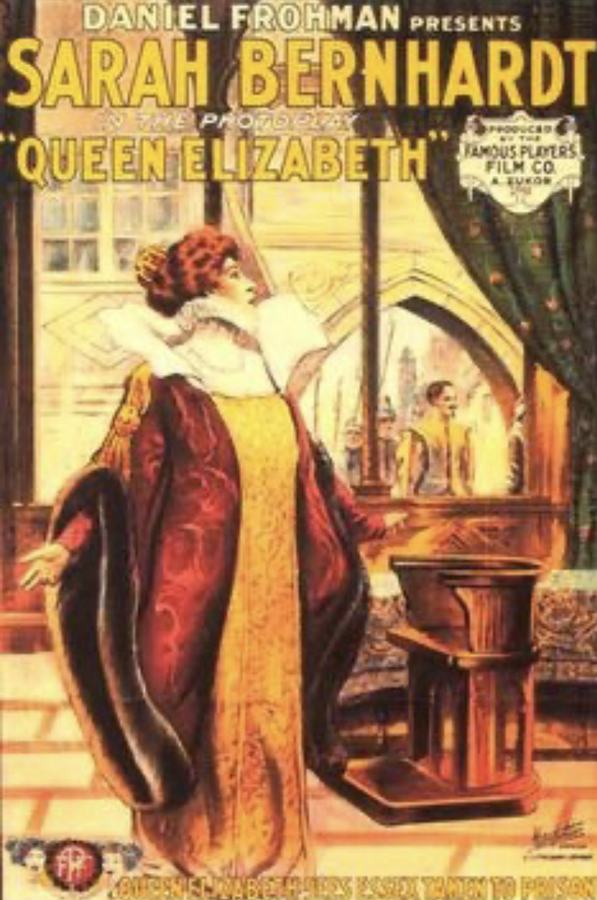
A definitive 4.7/10 rating for a film that redefined the boundaries of cult cinema. Les amours de la reine Élisabeth remains a cornerstone of transgressive art.
The Proscenium of History: A Critical Dissection of Les amours de la reine Élisabeth
To witness Les amours de la reine Élisabeth (1912) is to step into a time capsule that preserves the precise moment when the theatrical stage collided with the burgeoning medium of the moving image. This was not merely a film; it was a cultural event, a vessel for the legendary Sarah Bernhardt to immortalize her stage presence before the ravages of time could claim it. At a time when cinema was often dismissed as a vulgar amusement for the masses—akin to the spectacle of The Corbett-Fitzsimmons Fight or the brief ethnographic glimpses of Images de Chine—this French production sought to elevate the art form through the sheer gravity of its subject and the prestige of its star.
The film, directed by Louis Mercanton and Henri Desfontaines, operates with a stylistic philosophy that modern viewers might find alien. It eschews the fluid editing and dynamic camera movements that would later define the medium. Instead, it embraces the 'tableau' style. Each scene is a meticulously composed painting, a static shot where the actors move within the frame as if on a stage. This approach shares a lineage with other early narrative attempts like The Life of Moses or the religious fervor of From the Manger to the Cross. However, where those films often felt like instructional illustrations, *Les amours de la reine Élisabeth* pulses with the operatic intensity of its lead actress.
Bernhardt: The Divine Spectacle
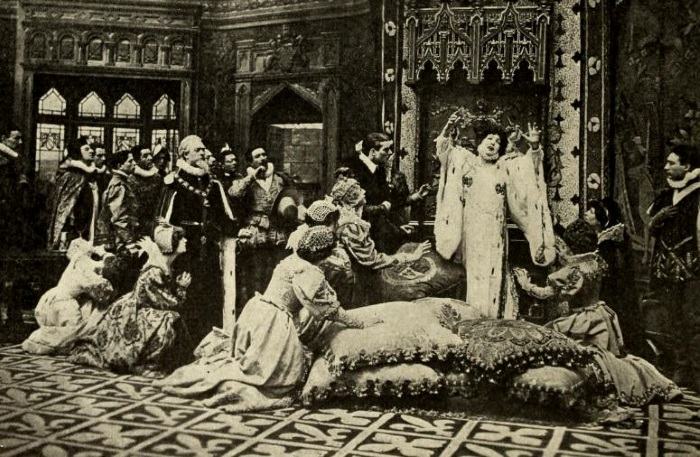
Sarah Bernhardt’s performance is the sun around which all other elements of the film orbit. By 1912, Bernhardt was already an icon, a woman whose name was synonymous with dramatic excellence. In portraying Elizabeth I, she utilizes a vocabulary of gesture that is both archaic and mesmerizing. In an era without sound, the body became the primary instrument of narrative. Every tilt of her head, every expansive sweep of her arm, communicates the internal conflict of a woman who is simultaneously a god-like sovereign and a vulnerable lover. Her interaction with Lou Tellegen, who plays the Earl of Essex, is fraught with a tension that transcends the silent medium. Tellegen, though perhaps less nuanced than Bernhardt, provides a sturdy foil to her mercurial energy.
When comparing this to other contemporary character studies, such as the 1912 version of Oliver Twist or the tragic undercurrents of Anna Karenina (1911), Bernhardt’s Elizabeth feels more monumental. She is not merely playing a character; she is inhabiting a myth. The film focuses on the Earl of Essex’s downfall, his rebellion, and the tragic misunderstanding of the ring—a plot point that emphasizes the cruelty of fate. This preoccupation with royal tragedy was a common theme in early European cinema, seen in works like The Independence of Romania or the Serbian epic Karadjordje, yet none possessed the sheer star power that Bernhardt brought to the screen.
The Architecture of the Silent Frame
Technically, the film is a masterclass in early set design and costume. The richness of the Elizabethan court is rendered with a tactile density that was rare for the period. While films like Glacier National Park relied on the raw majesty of nature, *Les amours de la reine Élisabeth* relies on the artifice of the studio to create a sense of historical weight. The costumes are heavy, ornate, and seemingly restrictive, which serves as a visual metaphor for the constraints of the Queen’s life. The cinematography, handled by the capable hands of the Éclair company’s technicians, captures the textures of velvet and lace with a clarity that must have been breathtaking to 1912 audiences.
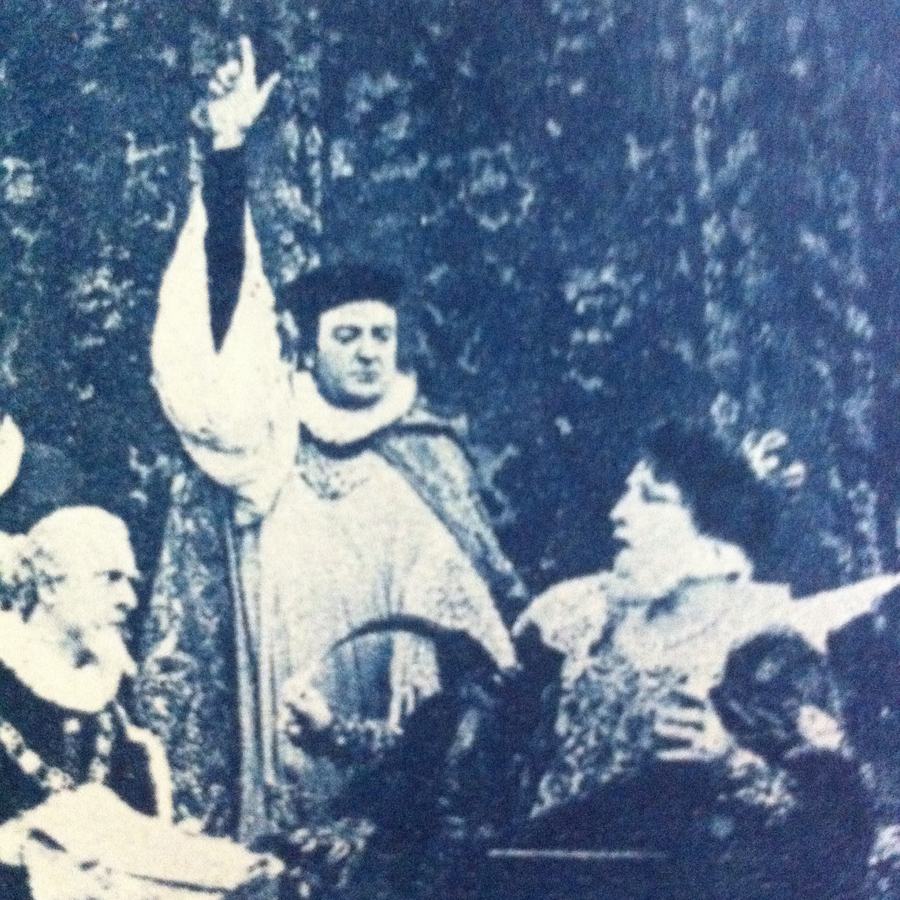
The pacing of the film is deliberate, almost processional. It does not hurry through the plot but allows the emotional weight of each scene to settle. This is particularly evident in the scenes of Elizabeth’s solitude. Unlike the frantic action of The Story of the Kelly Gang or the suspense of Robbery Under Arms, this film finds its power in stasis. The Queen’s grief is not shown through a chase or a battle, but through a slow, agonizing realization of her own loneliness. It is a proto-psychological drama that anticipates the depth of later silent masterpieces like Dante's Inferno (1911).
A Legacy of Industry: Zukor and the Birth of Paramount
One cannot discuss this film without acknowledging its pivotal role in the American film industry. Adolph Zukor, a visionary immigrant, purchased the American distribution rights for a staggering sum. He used the film’s success to prove that audiences would sit through a multi-reel feature if the content was sufficiently prestigious. This success provided the foundational capital for what would eventually become Paramount Pictures. In this sense, *Les amours de la reine Élisabeth* is the godmother of the Hollywood studio system. It bridged the gap between the short, ephemeral films of the early 1900s—like Westinghouse Works or Solser en Hesse—and the era of the feature-length blockbuster.
The film’s influence can be seen in the subsequent wave of historical biopics. It set a precedent for the 'prestige' film, a genre that prioritizes high production values and celebrated actors. While other films of the era, such as The Black Chancellor or Pyotr Velikiy, explored similar themes of power and intrigue, they lacked the global distribution and cultural impact that Bernhardt’s vehicle achieved. It even stands in contrast to the more experimental Danish cinema of the time, such as Den sorte drøm, by remaining steadfastly committed to a traditional, almost reverent, portrayal of history.
The Final Act: A Lesson in Pathos
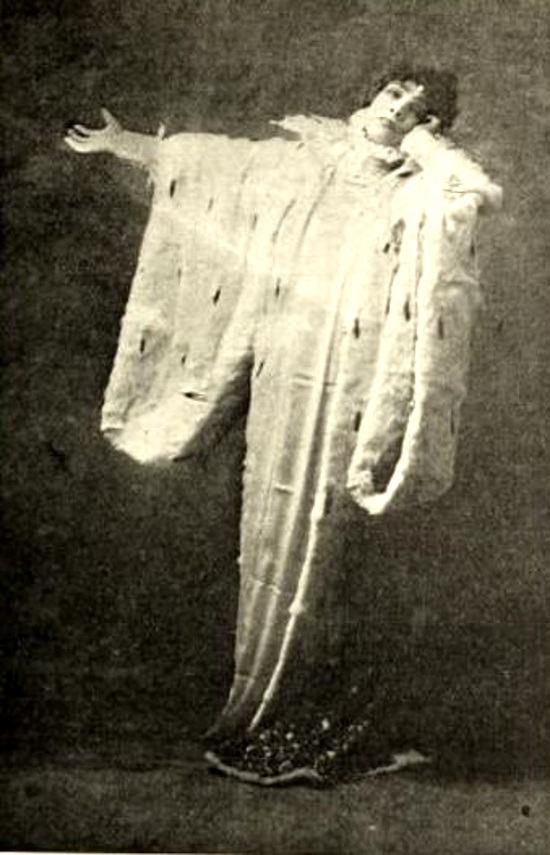
The climax of the film—the death of Elizabeth—remains one of the most iconic sequences in early cinema. Bernhardt’s collapse is not a mere fainting spell; it is a choreographed descent into the abyss. She uses her entire body to convey the total exhaustion of a life lived in the public eye. It is a moment of pure theatricality that somehow feels intimately cinematic. When compared to the more grounded death scenes in films like The Redemption of White Hawk or the stylized martyrdom of Life of Christ, Bernhardt’s finale is uniquely operatic. It is the end of an era, both for the Queen and for the style of acting she represented.
In conclusion, *Les amours de la reine Élisabeth* is a monumental achievement that requires a shift in perspective to truly appreciate. It is not a film that seeks to hide its artifice; it revels in it. It is a celebration of the actor as an icon and the screen as a canvas for high drama. While the medium has moved toward a more naturalistic aesthetic, the raw emotional power of Bernhardt’s Elizabeth remains undimmed. It stands alongside other giants of the era, like Chûshingura or Defense of Sevastopol, as a testament to the universal human desire to see our greatest tragedies and triumphs reflected in the flickering light of the projector. To watch it today is to pay homage to the very foundations of cinematic storytelling.
Film analyzed: Les amours de la reine Élisabeth (1912) | Cast: Sarah Bernhardt, Lou Tellegen | Writer: Émile Moreau | A cornerstone of the silent era and the catalyst for the modern feature film.
IMDb 6.1
1919
Community
Log in to comment.