DbcultAccessing Vault...
Cult Review
Senior Film Conservator
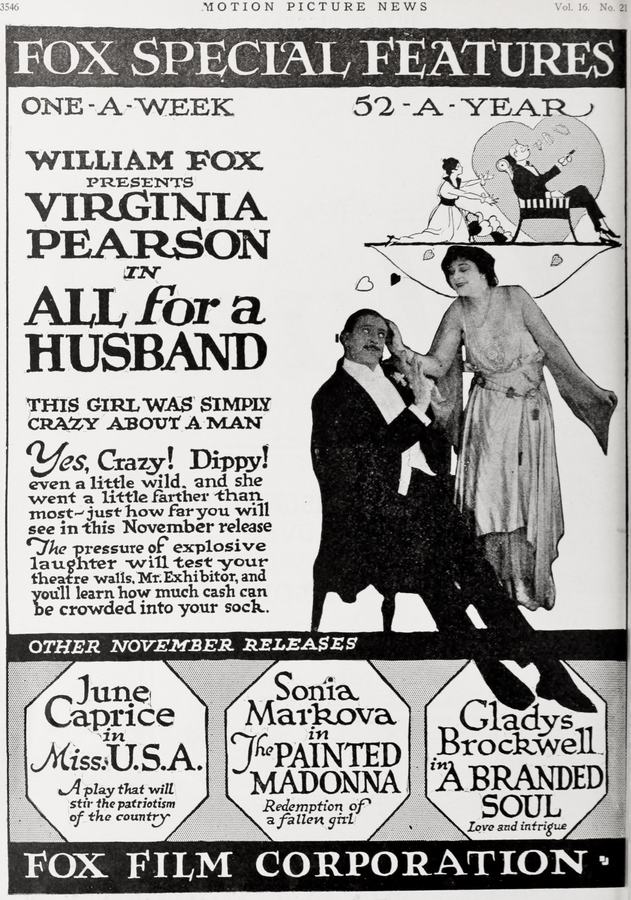
The Architecture of the Absurd
There is a peculiar, almost intoxicating energy in the way 1917’s All for a Husband navigates the treacherous waters of social expectation. Directed with a nimble hand by Carl Harbaugh, this film serves as a fascinating specimen of the silent era’s obsession with identity fluidity. While contemporary audiences might be accustomed to the gritty realism found in adaptations like Oliver Twist, Harbaugh’s work here is a vibrant rebuttal to the dourness of the period’s melodrama. It is a film that breathes through its deceptions, thriving on the friction between what we perform for society and the chaotic truths that lie beneath the surface.
The narrative propellant—a sister’s desire to see her bachelor brother wed—is a trope as old as the medium itself. Yet, the screenplay by George Scarborough and Harbaugh elevates this beyond the mundane. When Henry (William W. Crimans) and Henrietta (Gladys Kelly) decide to weaponize Celeste’s interference against her, the film transitions from a domestic comedy into a sophisticated meta-commentary on acting. Unlike the somber psychological weight of The Third Degree, the 'madness' here is initially a costume, a playful subversion of the 'hysterical woman' archetype that was so prevalent in early cinema.
The Duel of the Myras
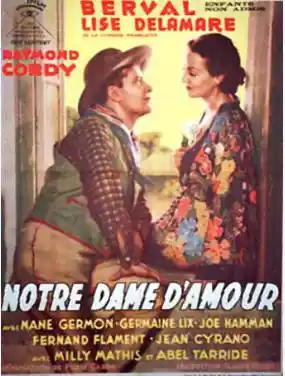
The brilliance of the central conflict lies in the doubling of Myra Haynes. When Henrietta dons the mantle of the 'escaped lunatic,' she is engaging in a safe, controlled form of rebellion. She is mocking the very idea of the 'ideal wife' that Celeste seeks to impose. However, the arrival of the actual Myra Haynes (Dorothy Quincy) introduces a genuine unpredictability that shatters the artifice. This isn't the romanticized tragedy one might find in Les Misérables, Part 2: Fantine; rather, it is a collision of realities that feels startlingly modern.
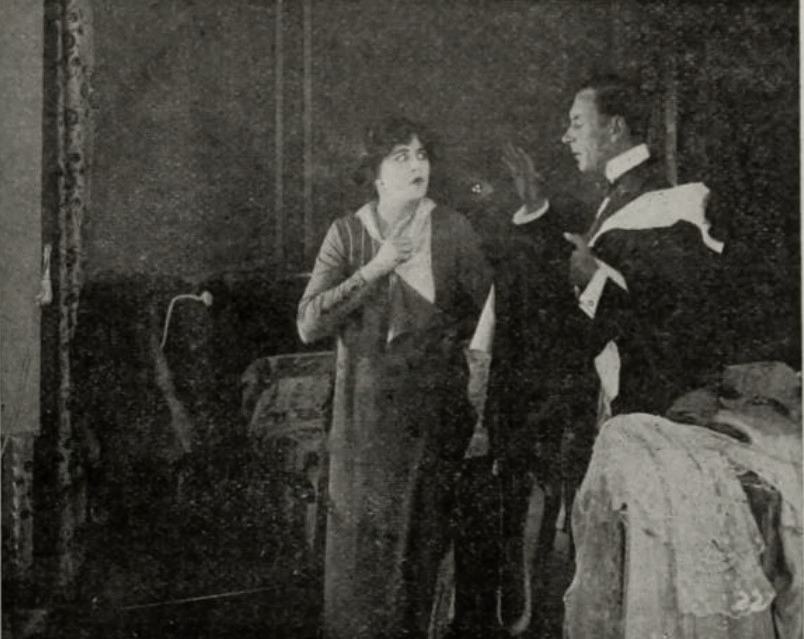
The political rally sequence serves as the film’s thematic zenith. Henry, portrayed with a delightful blend of pomposity and panic by Crimans, is attempting to project the image of a stable, civic-minded leader. The intrusion of his 'past'—in the form of a woman he has never met but who claims him with the ferocity of a jilted lover—is a masterstroke of situational irony. It exposes the fragility of the male public persona, a theme that resonates far beyond the confines of 1917. While films like Her Father's Son explored gender roles through direct masquerade, All for a Husband uses the chaos of mental instability as a wrecking ball for social standing.
A Technical and Performance Appraisal
Visually, the film utilizes the limited depth of field of the era to emphasize the claustrophobia of the Hardin household versus the sprawling, disorganized energy of the political rally. The cinematography doesn't possess the haunting, atmospheric qualities of The Lost Chord, but it excels in capturing the kinetic movement of its actors. Gladys Kelly is a revelation; her transition from the poised Henrietta to the 'mad' Myra is executed with a physicality that borders on the gymnastic. She understands that in farce, the body must communicate what the intertitles cannot fully encapsulate.
The supporting cast, including Herbert Evans and Virginia Pearson, provides a sturdy framework for the lead trio’s antics. There is a rhythmic quality to the editing, particularly during the climax, that avoids the stagnant pacing sometimes seen in lesser works like På livets ödesvägar. Instead, the film hurtles toward its resolution with a momentum that mirrors Henry’s spiraling political career. The writers avoid the easy out of a purely sentimental ending, opting instead for a resolution that acknowledges the absurdity of the entire endeavor.
One cannot overlook the satirical edge directed at the institution of marriage. Celeste’s belief that she can curate a perfect union for her brother is presented as a form of hubris. The film suggests that human attraction and social compatibility are far too volatile to be engineered. In this way, it stands in stark contrast to the more traditionalist views of family found in Little Women. Here, the 'family' is a site of trickery and counter-trickery, a battleground where autonomy is fought for through deception.
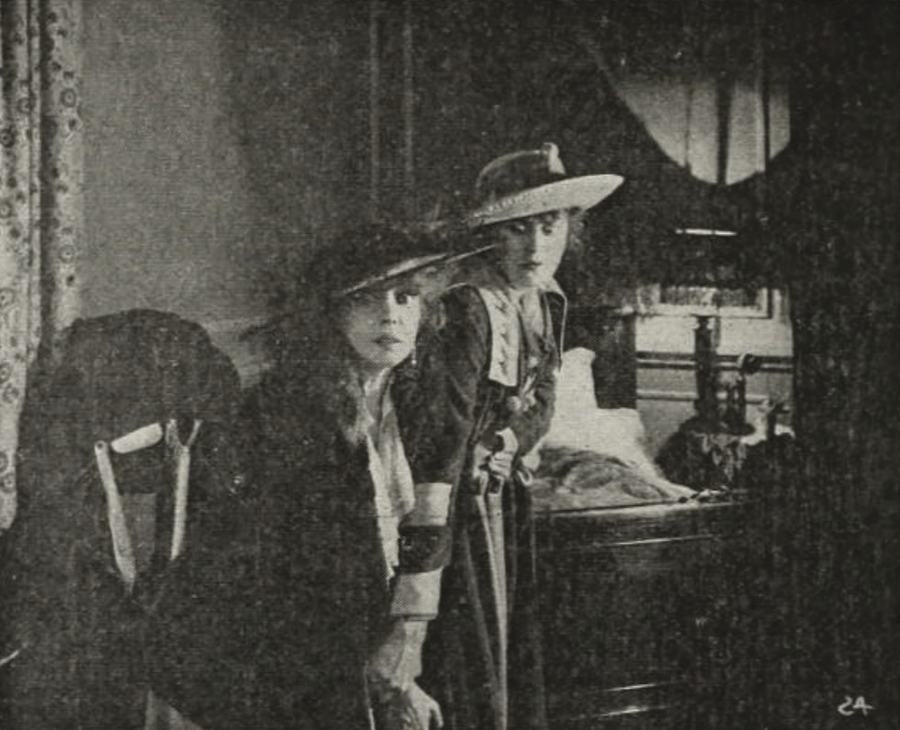
Furthermore, the depiction of the 'escaped lunatic'—while undeniably a product of its time—functions as a fascinating mirror to the era's anxieties about women’s agency. By having Henrietta choose to play the part of a madwoman to escape a forced social role, the film touches on the idea that 'sanity' is often just a synonym for 'compliance.' This is a much more subversive layer than what is typically found in contemporary shorts like Assisi, Italy or even the episodic nature of Beatrice Fairfax.
Comparative Aesthetics and Legacy
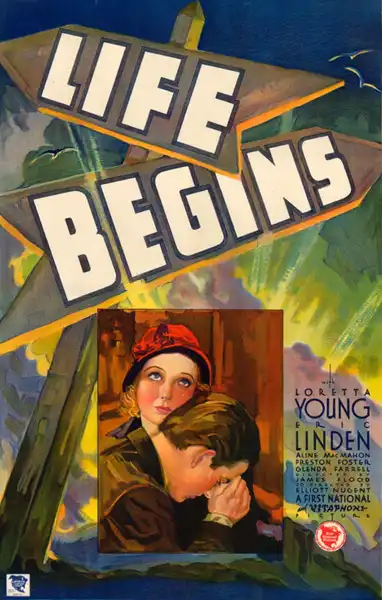
When comparing All for a Husband to other films of the mid-1910s, its sharp wit becomes even more apparent. It lacks the heavy-handed moralizing of Through Fire to Fortune and possesses a much more coherent narrative structure than the fragmented In the Python's Den. There is a lineage one can trace from this film to the later screwball comedies of the 1930s; the DNA of the 'fast-talking, high-stakes deception' is clearly visible in the interactions between Henry and the two Myras.
Even the more obscure international contemporaries, such as William Voß. Der Millionendieb, which deals with themes of theft and identity, lack the specific domestic warmth that Harbaugh manages to maintain amidst the chaos. The film doesn't just want to laugh at its characters; it wants us to understand the desperation that drives them to such ridiculous lengths. Whether it’s Celeste’s desperation for her brother’s stability, or Henry’s desperation for his political survival, the motivations are grounded in a recognizable human frailty.
All for a Husband remains a compelling artifact of a time when cinema was still figuring out how to balance slapstick with social critique. It is far more than a simple 'boy meets girl' story; it is a 'boy meets girl, sister tries to force boy to marry girl, girl pretends to be crazy, real crazy person shows up, boy's political career nearly implodes' story. This complexity is its greatest strength. While it may not have the epic scale of La Destinée de Jean Morénas or the intricate plotting of The Grandee's Ring, it possesses a charm and a cynical bite that feels remarkably fresh.
For the silent film enthusiast, this is an essential watch—not just for the performances, but for the way it captures the burgeoning American obsession with public image and private reality. It is a loud, boisterous, and ultimately thoughtful exploration of the lengths people will go to—literally all for a husband (or to avoid becoming one).
A masterclass in silent farce that deserves a place in the pantheon of early 20th-century comedy.
IMDb —
1919
Community
Log in to comment.