DbcultAccessing Vault...
Cult Review
Senior Film Conservator
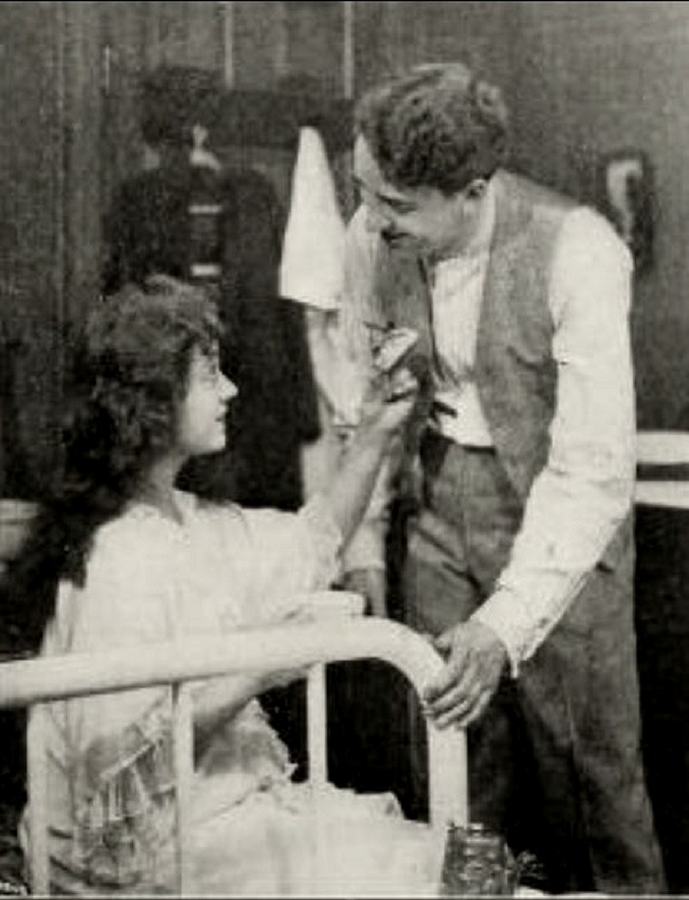
A cathedral of shadows, celluloid incense, and a lullaby that chokes on its final note—this is Cosmo Hamilton’s 1915 morality play, resurrected for the flicker-hungry 2020s.
George LeGuere’s Archibald arrives like a penitent lordling from some half-remembered Fragonard: powdered vanity cracking under rural dusk. Watch how cinematographer Duke Hayward frames him through vicarage lattices—each pane a verdict. The camera lingers on LeGuere’s glove removal, a striptease of privilege, before the reverend’s austere study swallows him whole. Compare this visual grammar with Ghosts’ claustrophobic parlours or the Siberian void in Escaped from Siberia; here, the jail is lace-curtained and scented with blackberry jam.
John Cossar’s Reverend Pemberton preaches like a man who has read St. Paul but never met a menstruating woman. His cadence—heard only in title-card italics—oscillates between honeyed charity and Old Testament thunder. Cossar lets the corners of his mouth twitch downward in close-up, a micro-gesture that predicts the film’s central rupture: virtue blindfolded becomes scaffold.
Edna Mayo’s Effie is the pearl inside this suffocating shell. She twirls parasols she doesn’t need, asks why swallows vanish in winter, and believes babies arrive by stork-post. Mayo plays her with an eerie centrifugal calm—imagine Lillian Gish minus the tremolo. When she perches on a tombstone reciting Christabel, wind teases ribbons against the stone’s eroded cherubs: innocence flirting with its own epitaph.
Enter Winstanley—Bryant Washburn at his most oleaginous, part poet, part pimp, all teeth. The narrative pivots on his carnivorous promise to Mary Ann, the laundress’s daughter whose only crime is coveting silk stockings. Their elopement sequence cross-cuts between a moon-blanched village green and a London gin-palace awash in hand-tinted crimson. The tinting is not mere spectacle; it foreshadows the scarlet letters Mary Ann will carry home. Observe how the film refuses to show the actual seduction—Hamilton understood that the abyss is always off-screen, gnawing soundlessly.
Archie’s pursuit is shot like a Stations of the Cross: railway steam becomes Pilate’s courtyard, Thames fog a Veronica veil. He arrives too late, a structural inevitability that announces the picture’s tragic backbone: knowledge delayed is innocence murdered. In 1915 this was dynamite, a direct assault on Comstockery and the white-slavery panic then dominating headlines.
Dawn. Effie, hearing hoofbeats, flits through corridors in a kimono the colour of tired jonquils. She enters Archie’s room, moon-eyed, clutching a missal as if it were a teddy bear. The door clicks—soft, almost polite—yet on the soundtrack of your mind it detonates like artillery. Camera setups alternate between Effie’s untroubled glow and Archie’s dawning horror: the moment when protective affection mutates into potential accusation.
Then Pemberton’s intrusion: the frame thirds into triptych—father, daughter, guest—each face a separate gospel. Archie’s explosion is less dialogue than exorcism: “You have fed her scripture and starved her of self.” The line, delivered in intertitle boldface, still sizzles a century later. Cossar’s collapse onto a prie-dieu is silent-film Shakespeare: crown of thorns replaced by patriarchal shame.
Her re-entry is framed through the vicarage kitchen—steam from washing tubs ghosts her face, a reminder of the social chasm she embodies. Betty Scott plays her brokenness without martyred cliché: eyes fixed somewhere beyond the lens, voice (via title card) flat as unrisen dough. She recounts Winstanley’s abandonment, the back-alley abortionist she evaded, the brothel matron who “taught her the price of bread.” Each clause lands like a flagellation on Pemberton’s conscience.
Notice the montage Hamilton employs—rapid-fire inserts of Mary Ann’s London wanderings, superimposed over Effie’s bedtime prayers. It is the film’s moral thesis: ignorance is not insulation; it is invitation.
The parents’ conversion is swift yet textured. Pemberton’s wife—Renee Noel in a too-brief turn—removes Effie’s picture of the Annunciation from the nursery wall and replaces it with a botanical diagram of human reproduction, petals labelled like Latin stamens. The camera observes Effie’s fingers tracing fallopian mysteries, her pupils dilating not with lust but with ontological vertigo. Compare this moment to the proto-feminist utopia of A World Without Men; Hamilton’s agenda is less separatist than integrative—knowledge as dowry.
Archie and Effie’s final garden scene—shot in long twilight, gnats haloing their hair—avoids the sacramental excess you’d expect. Their pledged troth is whispered, almost conspiratorial, as if acknowledging that innocence, once forfeited, can never be refunded, only transmuted into wary tenderness.
Hayward’s chiaroscuro owes as much to Rembrandt as to The Firefly’s nocturnal shimmer. Note the repeated motif of half-open doors: thresholds between knowledge and nullity. The color palette—hand-picked amber for interiors, cerulean for exteriors—creates temperature as metaphor: safety equals warmth, exposure equals chill.
Contemporary screenings often append saccharine strings. Seek instead a venue that commissions a solo piano improviser—someone who can fracture hymns with atonal shards when Mary Ann recounts her fall. The dissonance will rewire your nervous system.
Hamilton’s screenplay anticipated the Church of England’s 1949 Marriage Today pamphlet by three decades. Current battles over sex-ed curricula—from Texas to Lagos—make the film feel cryogenically preserved rather than antiquated. Swap kimono for hoodie, London for OnlyFans, and the parable stays intact.
Against Griffith’s The Octoroon, which fetishizes racial purity, Virtue interrogates sexual purity. Where Dionysus’ Anger externalizes desire as orgiastic spectacle, Hamilton traps eros inside Puritan crockery and waits for the porcelain to crack.
The middle reel sags under expository title cards—Hamilton the novelist unwilling to fully surrender to cinema’s visual grammar. Winstanley’s psychology is a sketch; we never learn why he loathes innocence. A 21st-century restoration could trim six minutes without moral dilution.
Yet these are hairline cracks in a cathedral ceiling. The Blindness of Virtue endures because it refuses to coddle either prude or libertine. It posits that the gravest sin is not carnal knowledge but communicative cowardice. In an age of algorithmic echo chambers and parental spyware, Hamilton’s silent sermon screams louder than ever: Tell the children truth, or the world will do it for you—with interest compounded nightly.
Seek this film in 35 mm if possible. Let the projector’s clatter become the vicarage door slamming—again, again—until conscience finally stays open.
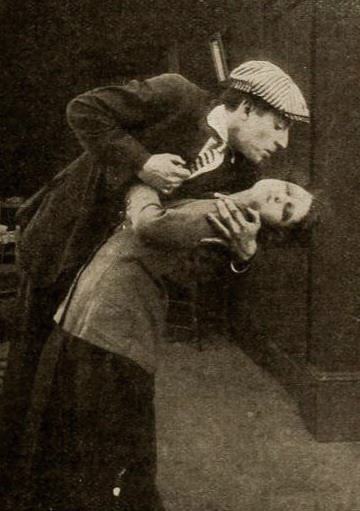
IMDb —
1915
Community
Log in to comment.